

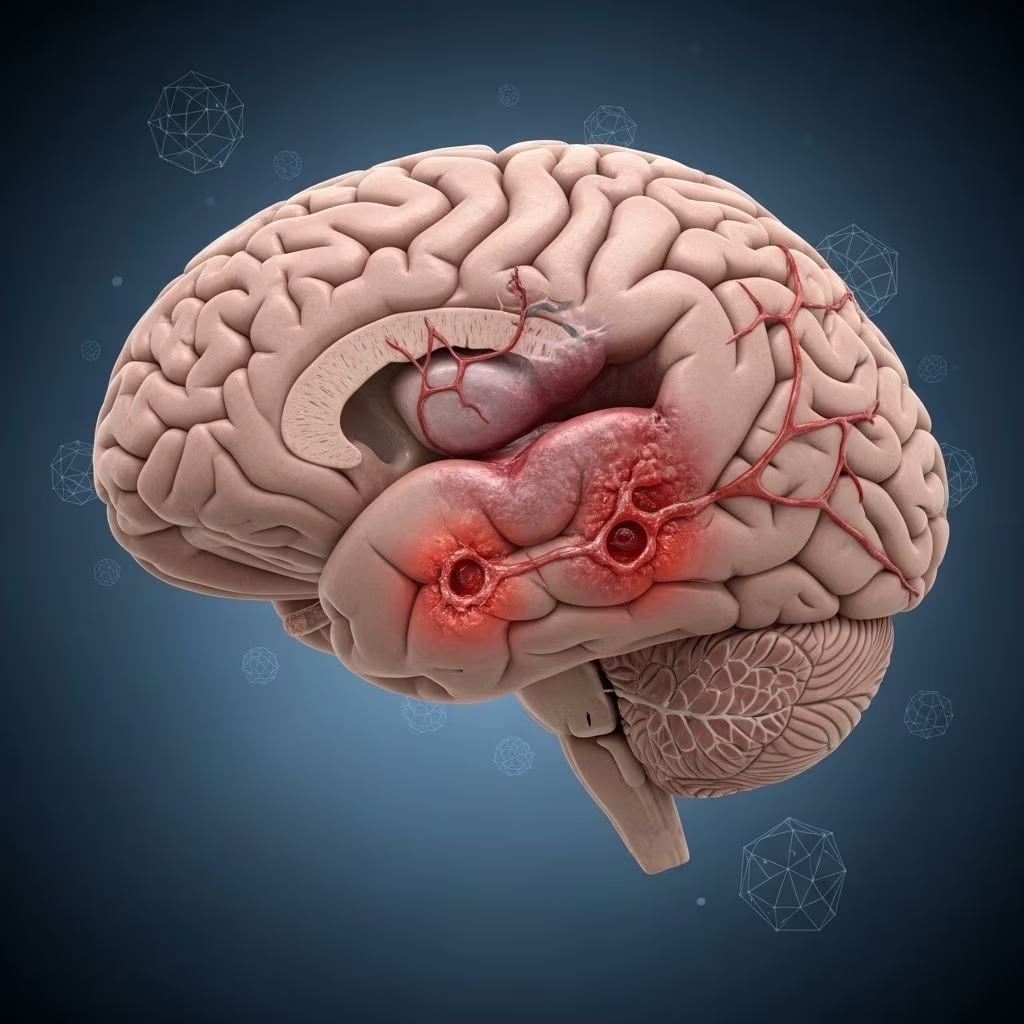
Teschovirus encephalomyelitis represents a significant threat to swine populations worldwide, manifesting as a severe neurological disorder triggered by infection with specific strains of Teschovirus A. This condition, historically linked to devastating outbreaks, leads to inflammation in the central nervous system, resulting in paralysis and often fatal outcomes. Understanding its pathology is essential for swine producers to implement timely interventions.
The Viral Culprit: Porcine Teschovirus
Porcine teschovirus (PTV), particularly serotype 1, serves as the primary agent behind this encephalomyelitis. These non-enveloped, single-stranded RNA viruses belong to the Picornaviridae family and exhibit remarkable stability in the environment, facilitating prolonged survival outside hosts. Highly virulent strains, such as the Zabreh variant, provoke the most aggressive disease forms, while milder serotypes may cause subclinical infections.
Genetic diversity among PTV serotypes influences disease severity. Over 20 serotypes exist, but only a subset demonstrates neurotropism—the ability to target neural tissues effectively. Experimental studies using gnotobiotic pigs have illuminated how strains like Toyama 2002 replicate in endothelial cells, breaching the blood-brain barrier via viremia.
Routes of Transmission and Spread
The fecal-oral pathway dominates transmission, with infected pigs shedding virus in feces for weeks post-infection. Contaminated feed, water, and premises perpetuate spread within herds. Aerosol transmission occurs less frequently but gains relevance in confined housing.
- Fecal shedding persists up to 7 weeks in recovering animals.
- Oral or intranasal exposure mimics natural routes in experiments.
- Intravenous inoculation accelerates severe outcomes, modeling bloodstream invasion.
Vertical transmission remains unproven, yet co-infections with other pathogens may exacerbate teschovirus effects. Wild boars and feral pigs act as reservoirs, posing risks to commercial operations.
Incubation and Clinical Progression
Incubation spans 1-4 weeks, with virulent strains inducing signs in 5-7 days. Initial fever, lethargy, and appetite loss escalate to profound neurological deficits.
Key clinical phases include:
- Prodromal stage: Fever (up to 41°C), depression, hypersensitivity (teeth grinding, squealing).
- Neurological onset: Ataxia, tremors, nystagmus, voice changes, seizures.
- Terminal phase: Ascending flaccid paralysis from hindlimbs, respiratory failure, death within 3-4 days.
Milder cases yield survivors with chronic deficits like weight loss or gait abnormalities. Experimental intravenous infections in pigs produced locomotor ataxia and paralysis by day 6 post-inoculation.
Pathological Hallmarks in Affected Swine
Post-mortem examinations reveal non-suppurative encephalomyelitis, characterized by lymphocytic perivascular cuffing, gliosis, and neuronal necrosis predominantly in gray matter. Lesions concentrate in the brainstem, cerebellum, thalamus, and spinal cord ventral horns.
| Region Affected | Lesion Characteristics | Severity by Route |
|---|---|---|
| Spinal Cord (Ventral Horn) | Neuronal necrosis, malacia, axonal swelling | Severe in IV; mild oral/intranasal |
| Brainstem (Pons, Medulla) | Perivascular cuffing, gliosis | Consistent across routes |
| Cerebellum/Thalamus | Focal infiltrates | Progressive in IV infections |
| Cerebral Hemispheres | No changes | Unaffected |
Electron microscopy confirms viral particles in neuronal cytoplasm and vascular endothelium. PCR detects PTV RNA in CNS, tonsils, and intestines. Secondary issues like dehydration mimic salt toxicosis, complicating gross pathology.
Diagnostic Approaches and Challenges
Diagnosis hinges on clinical signs, histopathology, and molecular confirmation, as teschoviruses ubiquitously circulate in healthy herds. Virus isolation from CNS tissue, immunohistochemistry for antigens, and RT-PCR for RNA provide definitive evidence.
- Histology: Mononuclear cuffing distinguishes from bacterial meningitis.
- Virology: Seroneutralization confirms serotype; avoid non-CNS recoveries.
- Molecular: RT-nested PCR targets CNS samples for specificity.
Differential diagnoses encompass pseudorabies, rabies, and other encephalitides. Experimental inoculation, though unethical routinely, validates causality in research.
Epidemiological Patterns and Outbreak History
Historically, Teschen disease ravaged Europe in the 1920s-1930s with near-100% mortality. Modern outbreaks, like Japan’s 2002 event in 6-week-olds and Canada’s in 4-7-week-olds, show variable fatality (0.1-100%). Piglets under 8 weeks suffer most due to immature immunity.
Endemic low-virulence strains confer partial protection, explaining sporadic severe episodes. Global surveillance tracks emerging neurotropic variants.
Management: No Cure, Focus on Support
No antiviral treatments exist; care emphasizes hydration, nutrition, and euthanasia for humane endpoints. Anti-inflammatories may alleviate hypersensitivity, but evidence lacks.
Prevention and Control Strategies
Vaccination remains elusive due to serotype diversity, though autogenous vaccines show promise in endemics. Core prevention relies on biosecurity:
- All-in/all-out production minimizes carryover.
- Sanitization eliminates environmental virus.
- Serological monitoring identifies naive herds.
- Avoid contaminated semen or feed.
Report suspicions to authorities; U.S. guidelines mandate state/federal notification. Quarantine and depopulation control outbreaks.
Research Frontiers and Future Directions
Gnotobiotic pig models advance pathogenesis insights, revealing viremia’s role and antibody limitations against CNS invasion. Genomic sequencing tracks virulence evolution, informing risk assessment. Vaccine development targets conserved epitopes for broad protection.
Frequently Asked Questions (FAQs)
What is the main cause of teschovirus encephalomyelitis?
Neurotropic strains of Porcine Teschovirus A, especially serotype 1.
How does the virus spread in pig farms?
Primarily fecal-oral via contaminated feces, feed, and water.
Can pigs recover from this disease?
Yes, milder cases may resolve, but survivors often face chronic issues.
Is there a vaccine available?
No commercial vaccine; biosecurity is key.
How is it diagnosed accurately?
Through CNS histopathology, IHC, and PCR.
Key Takeaways for Swine Health
Vigilance against teschovirus hinges on robust biosecurity and rapid diagnostics. While incurable, proactive measures safeguard herd productivity against this polio-like scourge.
References
- Experimental Teschovirus Encephalomyelitis in Gnotobiotic Pigs — PMC/NCBI. 2020-04-07. https://pmc.ncbi.nlm.nih.gov/articles/PMC7173091/
- Teschovirus Encephalomyelitis and Porcine Enterovirus Encephalomyelitis — Center for Food Security and Public Health, Iowa State University. 2018-01-01. https://www.cfsph.iastate.edu/Factsheets/pdfs/enterovirus_encephalomyelitis.pdf
- Teschovirus Encephalomyelitis — Merck Veterinary Manual. 2023-01-01. https://www.merckvetmanual.com/nervous-system/teschovirus-encephalomyelitis/teschovirus-encephalomyelitis
- Porcine Teschovirus Factsheet — Swine Health Information Center. 2021-07-07. https://www.swinehealth.org/wp-content/uploads/2021/07/shic-factsheet-porcine-teschovirus-2021Jul7.pdf
- Contagious Porcine Paralysis (Teschen Disease) — AGES Austria. 2023-01-01. https://www.ages.at/en/human/disease/pathogens-from-a-to-z/contagious-porcine-paralysis-teschen-disease



