

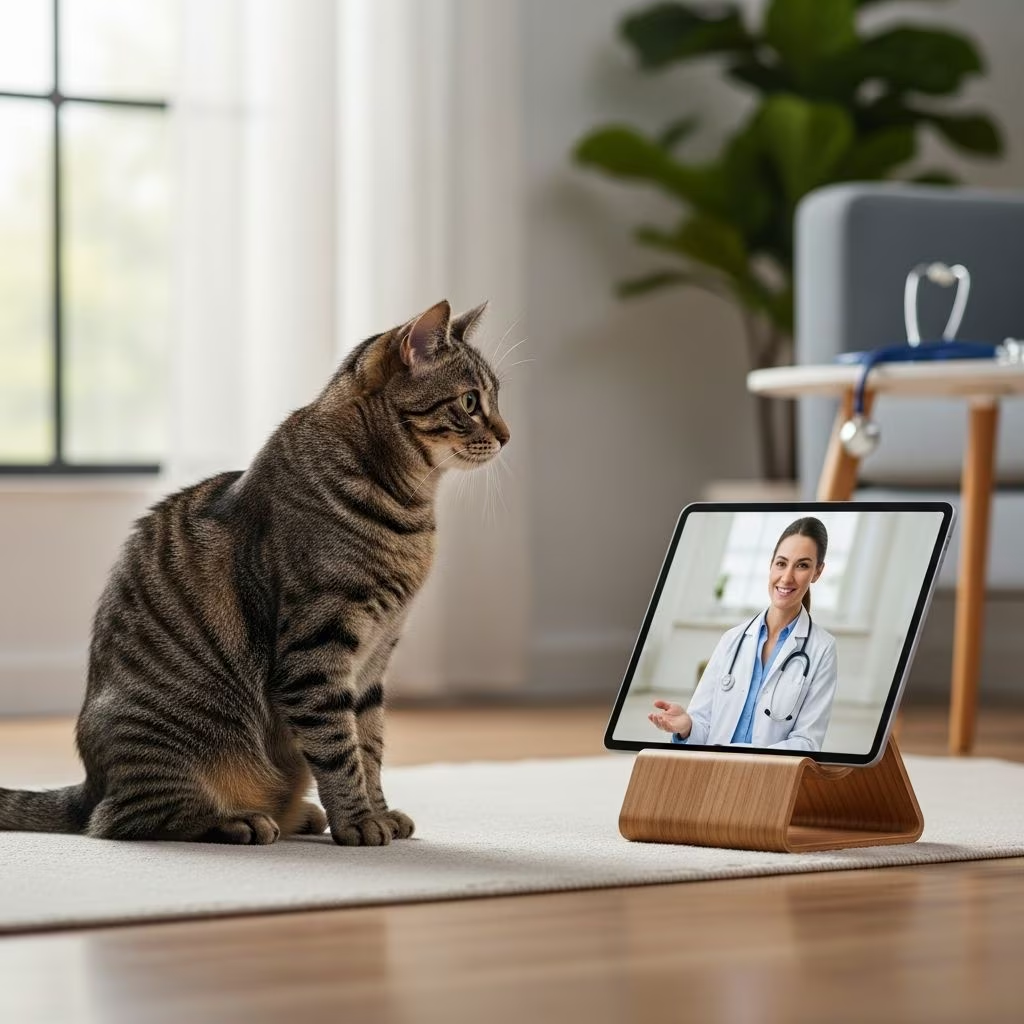
Telehealth for cats provides a convenient way for owners to consult veterinarians remotely, reducing stress associated with clinic visits and improving access to care, particularly for cats with chronic conditions like mobility issues or arthritis.
What Is Telehealth for Cats?
Telehealth, or telemedicine, in veterinary medicine involves using video calls, phone consultations, or messaging to deliver healthcare remotely. For cats, this means veterinarians can observe behavior, mobility, and home environment without the stress of a clinic visit, where cats often hide pain or act abnormally. Video telehealth is especially valuable as it allows assessment in the cat’s natural habitat, leading to more accurate evaluations of conditions like degenerative joint disease (DJD), affecting older cats with symptoms including reduced jumping and stair navigation.
Synchronous video visits enable real-time interaction, education on home management, and monitoring of chronic issues. Studies show caregivers of cats with mobility challenges prefer video telehealth, reporting increased knowledge and confidence in at-home strategies post-consultation.
Benefits of Telehealth for Cats
- Reduced Stress: Cats experience less anxiety at home, showing true behaviors; owners also avoid transport stress.
- Improved Accessibility: Ideal for rural areas, busy schedules, or fearful cats; bridges care gaps from vet shortages.
- Better Monitoring: Vets view home environment for tailored advice on modifications for arthritis or mobility.
- Follow-Up Efficiency: Quick check-ins for chronic conditions save time and money over in-person repeats.
- Quality of Life Support: Aids palliative care, end-of-life discussions, minimizing unnecessary trips for seniors.
Research confirms caregivers of severely mobility-impaired cats show highest interest in telehealth, with 80% having diagnosed chronic pain conditions. It enhances compliance and pet education without full exams.
When Can You Use Telehealth for Your Cat?
Telehealth suits follow-ups, behavioral advice, minor issues, or chronic management but not emergencies or initial diagnoses needing physical exams. Use for:
- Monitoring arthritis, mobility, or post-treatment progress.
- Behavioral concerns observable at home.
- Nutrition, medication reviews, or general wellness questions.
- Prescriptions where allowed, after establishing VCPR.
A valid Veterinarian-Client-Patient Relationship (VCPR) is required in most U.S. states, typically via prior in-person visit. It’s not for acute symptoms like vomiting, seizures, or wounds.
Limitations of Telehealth for Cats
While beneficial, telehealth cannot replace hands-on diagnostics, lab tests, imaging, or surgeries. Key drawbacks:
- No physical exams: Limits detecting subtle issues like lumps or heart murmurs.
- Medication restrictions: Many platforms can’t prescribe controlled drugs without VCPR.
- Access to history: Relies on owner records, risking errors.
- Tech issues: Poor video quality hinders assessments.
- Not for emergencies: Immediate in-clinic care needed for severe symptoms.
Vets note it complements, not substitutes, traditional care; annual exams remain essential.
Top Telehealth Platforms for Cats
Several platforms offer cat-specific telehealth. Compare options:
| Platform | Features | Pricing | Best For |
|---|---|---|---|
| TeleVet | Video calls, prescriptions, 24/7 access | Pay-per-visit or subscription | Chronic conditions |
| Vetster | Licensed vets, multi-pet support | $50-80/visit | Follow-ups |
| FirstVet | Quick consults, behavior advice | Subscription from $75/year | Behavioral issues |
| Pawp | Unlimited chats, emergency triage | $29/month | Daily monitoring |
Choose based on needs; subscriptions suit chronic cases, pay-per-visit offers flexibility.
Is Telehealth Legal for Cats?
Yes, in most U.S. states post-2023 AVMA guidelines, but requires VCPR established in-person. Federal laws support interstate telemedicine under certain conditions. Always confirm state rules and platform compliance. ASPCA endorses expanded use for access amid shortages.
How to Prepare for a Telehealth Visit with Your Cat
- Gather History: Note symptoms, diet, meds, recent changes.
- Tech Setup: Stable internet, quiet space, good lighting/camera.
- Observe Cat: Video normal/abnormal behaviors beforehand.
- Environment Scan: Show litter box, food areas, ramps for mobility advice.
- Questions Ready: List concerns for efficient consult.
Position camera for full views; have scales or tools for basic metrics if advised.
Cost of Telehealth for Cats
Affordable alternative: $40-100 per video visit vs. $150+ in-clinic. Subscriptions $20-50/month for multiples. Factors: platform, vet expertise, duration. Often cheaper for follow-ups; insurance may cover.
Frequently Asked Questions (FAQs)
Can telehealth vets prescribe medication for my cat?
Yes, if VCPR exists and state laws allow; not for controlled substances without exam.
Is telehealth safe for cats with chronic conditions?
Yes, enhances management; studies show improved owner knowledge for mobility issues.
Does my cat need a prior in-person visit for telehealth?
Usually yes, to establish VCPR.
What if my cat needs tests during telehealth?
Vet may recommend in-clinic labs/imaging.
Is telehealth covered by pet insurance?
Many plans do; check provider.
Can telehealth diagnose my cat’s illness?
No, best for monitoring, not initial diagnosis.
References
- Incorporating video telehealth for improving at-home management of cats with chronic mobility difficulties — Frontiers in Veterinary Science. 2025. https://www.frontiersin.org/journals/veterinary-science/articles/10.3389/fvets.2025.1510006/full
- Is telehealth for pets safe to use? — BetterPet. 2023. https://www.betterpet.com/learn/is-telehealth-for-pets-safe-to-use
- Veterinary telemedicine: A new era for animal welfare — PMC / NIH. 2024. https://pmc.ncbi.nlm.nih.gov/articles/PMC11128645/
- Position Statement on Veterinary Telemedicine — ASPCA. 2023. https://www.aspca.org/about-us/aspca-policy-and-position-statements/position-statement-veterinary-telemedicine
- The VCPR: Why it needs to be established in person — AVMA. 2023. https://www.avma.org/blog/vcpr-why-it-needs-be-established-person
- Seeing the benefits, but not taking advantage of them: Dog and cat caregiver intentions to use telemedicine — Veterinary Record (BVA Journals). 2023. https://bvajournals.onlinelibrary.wiley.com/doi/10.1002/vetr.3312



