
Tegu Basic Care: Complete Guide to Housing, Diet & Health
Master tegu care with expert guidance on housing, nutrition, lighting, and temperament management.
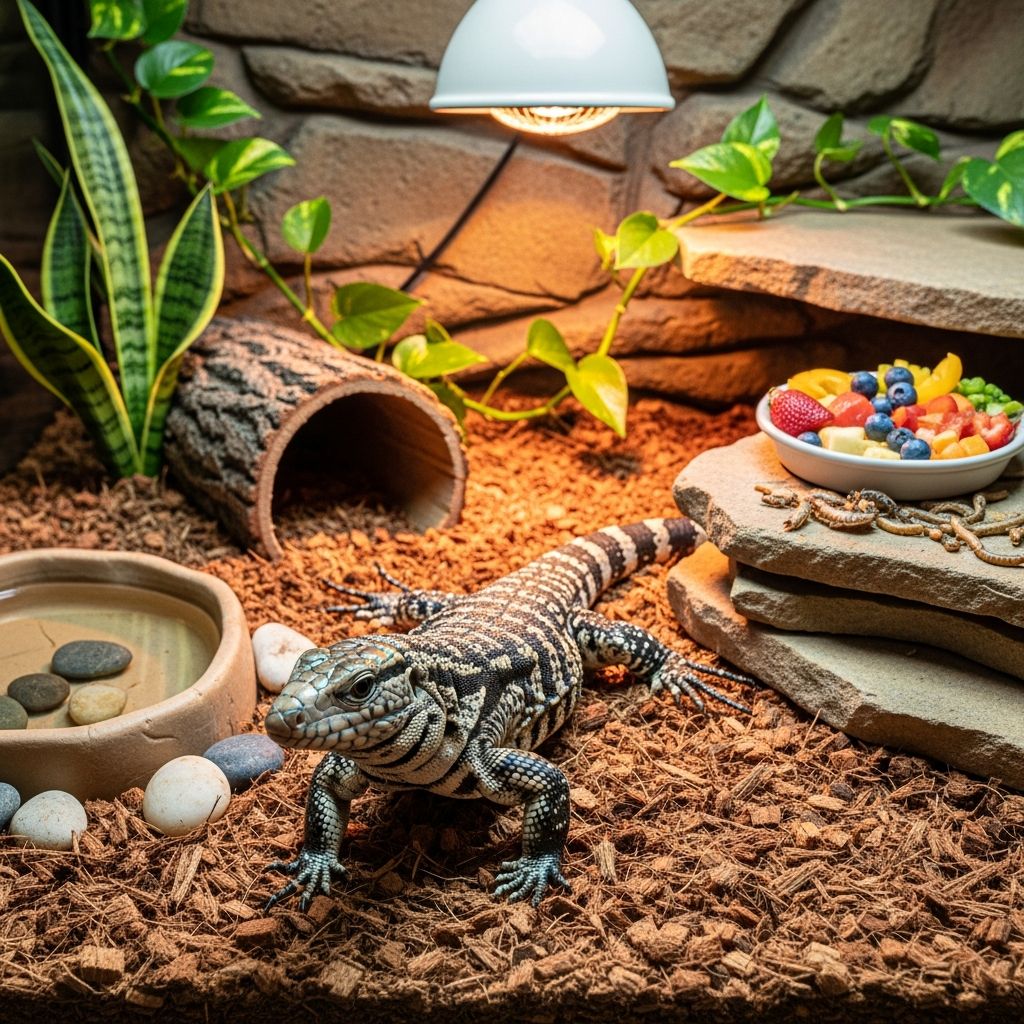
Tegu Basic Care: A Comprehensive Guide to Keeping Healthy Captive Tegus
Tegus are characterized by their large size, muscular limbs, distinctive spotted pattern, and long, forked tongue. These impressive reptiles can thrive in captivity when provided with a proper diet and an enclosure that is designed to recreate the conditions they would experience in their natural habitat. Understanding the specific requirements of tegus is essential for any owner looking to maintain the health and well-being of these intelligent and fascinating lizards.
Physical Characteristics and Species Overview
Depending on the species, adult tegus grow between 0.6 to 1.5 meters (2 to 5 feet) in length, including the tail, and typically weigh between 3.6 to 6.8 kilograms (8 to 15 pounds). The Salvator species represents one of the most commonly kept varieties in captivity. Understanding the specific needs of your tegu species is crucial, as different species may have slightly varying care requirements. Colombian tegus, in particular, have a reputation for displaying more aggressive feeding behavior and are considered a better choice for experienced reptile owners.
Enclosure Setup and Housing Requirements
Creating an appropriate living environment is fundamental to tegu care. The enclosure must be large enough to allow for natural behaviors and provide adequate space for exercise and exploration.
Substrate and Flooring
Proper substrate selection is critical for maintaining a healthy tegu enclosure. Start by providing a tarp or several layers of newspaper or butcher paper as an easy-to-clean base. This papered area serves multiple purposes: it provides a safe feeding zone while preventing accidental ingestion of bedding material. Cover the base with a deep layer of absorbent bedding material, approximately 0.6 meters (2 feet) in depth, to encourage natural burrowing behavior. Suitable substrate options include topsoil, mixtures of sand and peat moss, aspen shavings, cypress mulch, eucalyptus mulch, or orchid bark. Burrowing material can be contained within a large plastic container for easier cleaning and maintenance. Avoid wood chips, corn cob, or stone gravel bedding due to ingestion risks. Indoor-outdoor carpeting should also be avoided, as it will likely become shredded during digging, creating threads that can become entangled on tegu nails or toes.
Hiding Spaces and Visual Security
Tegus require adequate hiding places to feel secure. Provide a hiding spot, such as a log or box, at each end of the temperature gradient to ensure your tegu always has access to shelter. The substrate within these hides should consist of moist materials such as mulch or sphagnum moss, maintaining appropriate humidity levels within the shelter.
Lighting Requirements
Proper lighting is essential for tegu health and well-being. Tegus require 12 to 14 hours of daily UVB exposure to support proper calcium metabolism and prevent metabolic bone disease. In captivity, this UVB lighting requirement should be supplemented with opportunities to bask in natural, unfiltered sunlight as often as weather permits. Using a solar meter to verify proper UVB levels can help ensure your lighting setup provides adequate UVB radiation at the correct distance from your tegu’s basking area.
Temperature and Heating
Maintaining proper temperature gradients is crucial for tegu thermoregulation and digestive function. Cage temperature should range from 24°C (75°F) on the cool side to 29°C to 35°C (85°F to 95°F) on the warm side. The basking area temperature should reach 35°C to 38°C (95°F to 100°F) to allow tegus to achieve optimal body temperatures. Provide a log or shelf beneath the basking spot to allow your tegu to adjust its distance from the heat source based on its needs. During cooler months when temperatures dip below the low 20s°C (70s°F), typically beginning around mid-September, supplemental heating becomes increasingly important to maintain appropriate enclosure temperatures.
Humidity Management
Tegus originate from the tropical rainforests of South America, and therefore have high humidity requirements. Relative humidity should be maintained around 80 percent and should be regularly monitored using a hygrometer. A water container large enough to allow soaking will help achieve the ideal humidity level. Additionally, misting the enclosure with water on a daily basis contributes to maintaining proper humidity. Inadequate humidity levels can lead to shedding problems and other health complications. Regular monitoring and adjustment of humidity levels is therefore essential for preventing these issues.
Diet and Nutrition
A varied and balanced diet is essential for maintaining tegu health throughout their lives. Tegus are omnivorous and require both animal protein and plant matter to thrive.
Protein Sources
Young tegus should be offered a variety of feeder insects, including crickets, dubia roaches, superworms, mealworms, and wax worms. As tegus grow, they often show less interest in feeder insects and can gradually be transitioned to larger prey items, such as appropriately-sized, pre-killed or frozen-thawed rodents. Feeding live rodents is not recommended due to the risk of injury to your tegu. Lean ground meat, specifically low-fat ground turkey, fish, and raw eggs can be offered as occasional treats. Another feeding option for adults is the Chicken Pot Pie Gel Food Premix from Repashy Specialty Pet Products, which provides balanced nutrition in an easy-to-feed format.
Vegetables and Fruits
Tegus require a variety of vegetables in their diet, supplemented with smaller amounts of fruits such as strawberries, melons, tomatoes, and bananas. Fruit consumption tends to increase as tegus age, but vegetables should remain the primary plant-based component of their diet. A varied selection of greens and vegetables should be offered regularly to ensure nutritional diversity.
Feeding Frequency
Feeding frequency should be adjusted based on the tegu’s age and development stage. Young tegus should be fed every day to support growth and development. Tegus between 1 and 3 years old should be fed every other day. Once they exceed 3 years of age, tegus can be fed every 3 days, as their nutritional demands decrease and obesity becomes a concern in adults.
Obesity Prevention
Adult tegus are prone to obesity, which can lead to serious health complications. Monitor body weight regularly and provide sufficient time and room for exercise. Appropriate feeding frequency based on age and monitoring food portions will help maintain a healthy weight throughout your tegu’s life.
Bite Prevention and Feeding Management
Tegus are often voracious feeders, and all tegu species can display aggressive feeding behavior. Colombian tegus are particularly noted for aggressive feeding responses. To prevent accidental bites from your hungry lizard, feed your tegu from a bowl or with tongs rather than by hand. Some owners prefer to feed their tegus in a separate, paper-lined enclosure. This approach results in conditioned behavior that may decrease feeding-frenzy activity when the lizard is approached in their usual, non-feeding cage, creating a safer interaction environment.
Supplementation
Proper supplementation is critical for preventing nutritional deficiencies. A calcium supplement without vitamin D3 is recommended and should be sprinkled on or mixed with food at every meal. A multivitamin supplement is also recommended to be mixed into food once weekly. Importantly, supplementation recommendations do not vary with age, so maintain consistent supplementation throughout your tegu’s life.
Water and Hydration
Fresh water should be available at all times, preferably in a shallow container large enough for soaking. This water container serves the dual purpose of providing hydration and contributing to humidity maintenance within the enclosure. Regular water changes ensure water quality and cleanliness.
Behavioral Characteristics and Temperament
Tegus are curious, extremely intelligent lizards that can be tamed and trained with regular, daily interaction. Their intelligence and capacity for learning make them engaging pets for dedicated owners. Understanding their natural behaviors and temperament is essential for successful captive care and safe handling. Building trust through consistent, positive interactions will contribute to a well-behaved and sociable tegu.
Social Housing Considerations
While tegus can be social animals, housing multiple tegus together requires careful consideration. Adult tegus should generally not be housed together, as fighting may occur. Provide individual enclosures to prevent aggression and territorial disputes between animals.
Health and Safety Considerations
Maintaining proper hygiene is important for preventing disease transmission and maintaining a healthy environment. Always wash your hands with soap and water after handling your tegu or cage furniture. Regular enclosure cleaning, appropriate temperature and humidity maintenance, and a balanced diet will contribute to disease prevention and long-term health.
Key Care Summary Table
| Care Parameter | Requirement |
|---|---|
| Temperature (Cool Side) | 24°C (75°F) |
| Temperature (Warm Side) | 29°C-35°C (85°F-95°F) |
| Basking Area Temperature | 35°C-38°C (95°F-100°F) |
| UVB Lighting Duration | 12-14 hours daily |
| Humidity Level | Around 80% |
| Substrate Depth | 0.6 meters (2 feet) |
| Young Tegu Feeding Frequency | Every day |
| Tegu Age 1-3 Years Feeding | Every other day |
| Adult Tegu (3+ Years) Feeding | Every 3 days |
| Calcium Supplement | Every meal (without D3) |
| Multivitamin Supplement | Once weekly |
Frequently Asked Questions (FAQs)
Q: What is the ideal enclosure size for a tegu?
A: While specific dimensions may vary, the enclosure should be large enough to accommodate the full length of your tegu, allow for natural burrowing behavior, and provide adequate space for a proper temperature gradient from cool to warm zones. Larger enclosures are generally better for promoting natural behaviors and exercise.
Q: Can tegus be housed together?
A: Adult tegus should generally be housed individually to prevent aggressive interactions and territorial disputes. Fighting may occur when multiple adult tegus are housed in the same enclosure.
Q: How do I know if my tegu is getting enough UVB?
A: Use a solar meter to measure UVB levels in your enclosure at the distance where your tegu basks. Ensure that appropriate UVB bulbs are used and positioned at the correct distance according to manufacturer specifications.
Q: What should I do if my tegu refuses to eat?
A: Loss of appetite can indicate illness, stress, or environmental problems such as incorrect temperatures or humidity. Ensure all care parameters are being met, and consult a reptile veterinarian if the problem persists.
Q: How can I prevent my tegu from biting during feeding?
A: Always feed your tegu using a bowl or tongs to keep your hands away from the food. Consider feeding in a separate enclosure to establish that feeding occurs only in that space, reducing feeding-frenzy behavior in the main enclosure.
Q: Are there differences in care requirements between tegu species?
A: While basic care requirements are similar across species, Colombian tegus are known for more aggressive feeding behavior and are better suited to experienced reptile owners. Research your specific species to identify any unique requirements.
References
- Tegu Basic Care — Lafeber Company Veterinary. 2024-08. https://lafeber.com/vet/tegu-basic-care/
- Reptiles, Amphibians, and Invertebrates: An Identification and Care Guide — Bartlett, Griswold, and Bartlett. Reference document for reptile husbandry standards.
- Basic Care: Tegus — Arizona Exotics Lizards Resources. https://azeah.com/lizards/basic-care-tegus
- ESSENTIALS OF TEGU CARE: 10 Things EVERY Beginner NEEDS — Reptile care education and best practices guide. https://www.youtube.com/watch?v=ee_pVvcLLuM
Similar Articles








Read full bio of Sneha Tete


