

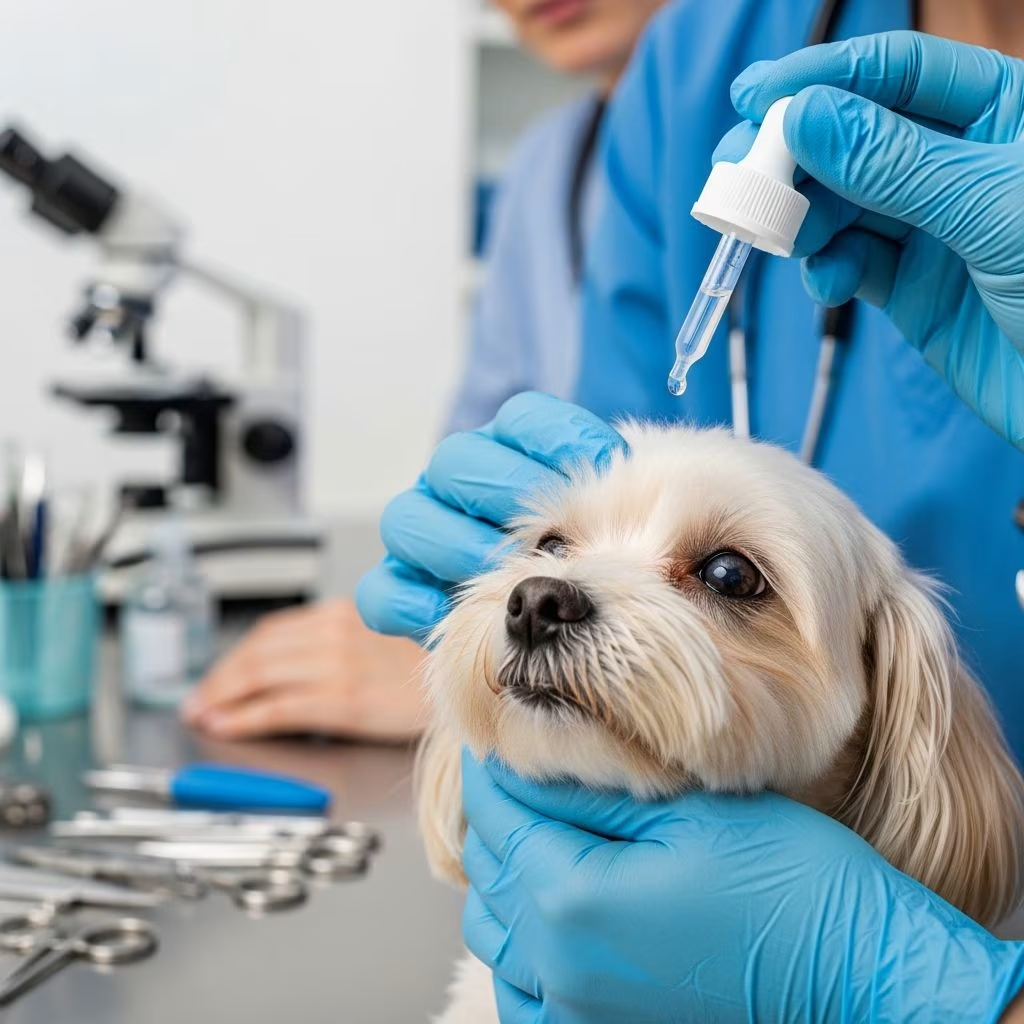
Animals suffering from insufficient tear production face significant ocular discomfort and risk vision loss. Veterinary pharmacotherapy employs tear stimulants and immunosuppressants to restore glandular function and alleviate symptoms of conditions like keratoconjunctivitis sicca (KCS).
Understanding Tear Deficiency in Pets
Tear film comprises aqueous, mucin, and lipid layers essential for ocular health. Deficiency in the aqueous component, often termed quantitative KCS, leads to corneal exposure, ulceration, and pigmentation. Immune-mediated destruction of lacrimal glands is prevalent in dogs, while neurogenic causes affect others.
Symptoms include persistent ocular discharge, blepharospasm, and corneal opacity. Diagnosis relies on Schirmer Tear Test (STT) readings below 15 mm/min, prompting immediate intervention to prevent irreversible damage.
Primary Tear Stimulants: Calcineurin Inhibitors
Immunomodulators targeting T-cell activity dominate KCS management. These agents curb inflammation in lacrimal tissues, fostering tear secretion.
Cyclosporine: The Established Choice
Cyclosporine A (CsA) inhibits interleukin-2 production, halting T-helper and cytotoxic T-cell proliferation in glands. Beyond immunosuppression, it normalizes mucin from goblet cells and directly boosts lacrimation.
Commercial 0.2% ophthalmic ointment (e.g., Optimmune) is standard, applied twice daily. Compounded 1%-2% oil emulsions enhance bioavailability via prolonged corneal contact. Efficacy reaches 80% in dogs with STT ≥2 mm/min, reducing pigmentation and vascularization even without full tear restoration.
Long-term use is safe, with low systemic absorption risks. Frequency may taper to once daily upon STT normalization.
Tacrolimus: Potent Alternative
Regarded as 100 times more potent than CsA, tacrolimus shares a similar mechanism but excels in refractory cases. Topical 0.02%-0.03% solutions or ointments are compounded, applied BID to TID.
It effectively thins corneal pigment, improves comfort, and stimulates tears in immune- and neurogenic KCS. Combination with 0.1% dexamethasone aids severe inflammation, though monitoring for steroid side effects is crucial.
Novel Agents and Cholinergics
Sirolimus (rapamycin) at 0.02% aqueous solution suppresses T- and B-cell functions differently, downregulating immune activation. It shows promise in boosting tears without calcineurin inhibition.
Pilocarpine, a cholinergic, activates parasympathetic fibers for lacrimal secretion. Topical 0.1%-0.2% dilute solutions suit neurogenic KCS every 8 hours; oral administration (1-2 drops of 2% per 10 kg BID on food) avoids irritation.
Episcleral cyclosporine implants deliver sustained release, maintaining efficacy up to 18 months and improving clinical signs.
Supportive Tear Replacement Therapies
Artificial tears lubricate until stimulants activate, often lifelong in non-responders. Options span preservative-free drops, gels, and ointments; viscous forms extend retention.
Limit preservative-containing products to ≤6x daily to prevent epithelial toxicity. Selection considers viscosity, availability, and cost, complementing stimulants for comprehensive care.
| Therapy Type | Examples | Frequency | Key Benefits |
|---|---|---|---|
| Tear Stimulants | Cyclosporine 0.2%-2%, Tacrolimus 0.02%-0.03% | BID-TID | Increases STT, reduces inflammation |
| Cholinergics | Pilocarpine 0.1%-0.2% | Q8H or oral BID | Neurogenic KCS specialist |
| Tear Replacements | Gels, ointments, drops | QID-6x/day | Lubrication, protection |
| Implants | CsA episcleral | Sustained 18 months | Long-term compliance |
Comprehensive Treatment Protocols
Initial therapy combines stimulants, replacements, antibiotics (for secondary infection), and anti-inflammatories. Reassess STT biweekly, adjusting based on response.
- Mild KCS (STT 10-14 mm/min): BID CsA + QID tears.
- Severe KCS (STT <5 mm/min): TID tacrolimus/CsA combo + frequent lubrication + topical antibiotic.
- Non-responders: Switch agents, add pilocarpine if neurogenic, consider surgery like parotid duct transposition after months of optimization.
Patient compliance improves with education on chronicity; most require indefinite topical therapy.
Factors Influencing Tear Production
Certain drugs impair lacrimation: atropine, sulfonamides, etogesic, timolol. Metabolic issues like diabetes, hypothyroidism, or dehydration contribute; address underlying causes.
Anesthesia reduces tears—apply artificial ointment prophylactically, avoiding antibiotics to minimize toxicity.
Surgical Interventions for Refractory Cases
When medical management fails after aggressive trials, parotid duct transposition redirects salivary flow to conjunctiva. Reserved for painful, vision-threatening KCS, it preserves comfort post-stimulant failure.
Monitoring and Prognosis
Serial STT and clinical exams guide adjustments. Success metrics: STT >15 mm/min, resolved discharge, clear corneas. Early intervention yields best outcomes; 81% improve with CsA.
Even non-tear responders gain from reduced scarring via continued immunomodulation.
Frequently Asked Questions (FAQs)
What causes dry eye in dogs?
Primarily immune-mediated lacrimal destruction, also neurogenic, drug-induced, or metabolic.
How long until tear stimulants work?
Weeks to months; patience and monitoring essential.
Are these treatments safe long-term?
Yes, low systemic risks with topicals.
Can cats get KCS?
Less common, but similar principles apply with caution for toxicity.
What if my pet doesn’t respond?
Switch drugs, add combos, or pursue surgery.
References
- Treatment of KCS in Dogs | VETgirl Veterinary Continuing Education — VETgirl. 2023. https://vetgirlontherun.com/treatment-of-kcs-in-dogs-vetgirl-veterinary-continuing-education-blog/
- Tear Stimulants and Immunosuppressants in Animals – Pharmacology — Merck Veterinary Manual. 2026. https://www.merckvetmanual.com/pharmacology/systemic-pharmacotherapeutics-of-the-eye/tear-stimulants-and-immunosuppressants-in-animals
- Signs & Symptoms of Dry Eye in Pets, Treatment Options — UVS Online. 2023. https://www.uvsonline.com/kcs-dry-eye-syndrome/
- Lacrimal disease can make you cry: What to do? (Proceedings) — dvm360. 2023. https://www.dvm360.com/view/lacrimal-disease-can-make-you-cry-what-do-proceedings
- Diagnosis & Treatment of Keratoconjunctivitis Sicca in Dogs — Today’s Veterinary Practice. 2023. https://todaysveterinarypractice.com/ophthalmology/diagnosis-treatment-of-keratoconjunctivitis-sicca-in-dogs/
- Lacrimostimulants and lacrimomimetics — PubMed (Peer-reviewed). 2004-05-01. https://pubmed.ncbi.nlm.nih.gov/15110982/



