

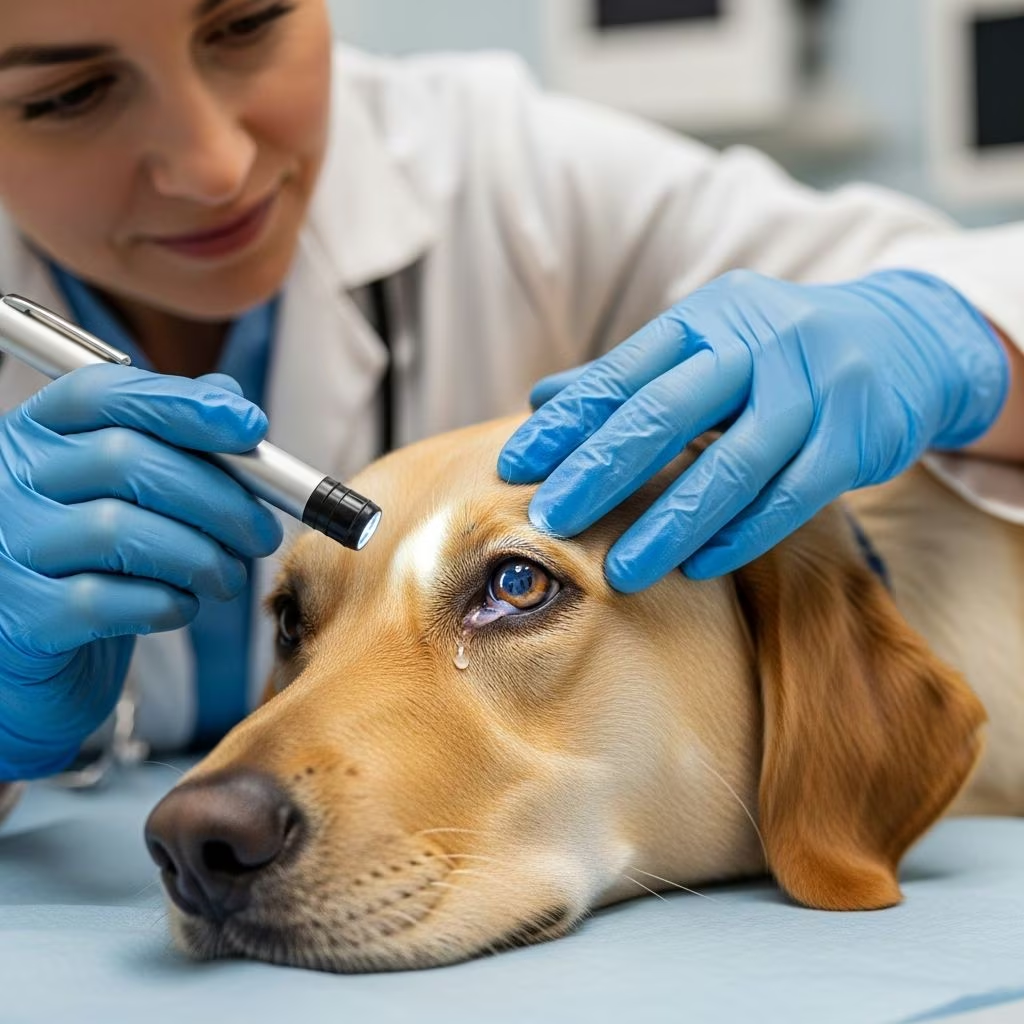
The nasolacrimal and lacrimal systems form a critical network responsible for producing, distributing, and draining tears in animals. These structures ensure the ocular surface remains moist, protected, and clear for vision. Understanding their anatomy and function is essential for diagnosing and treating eye conditions in veterinary patients.
Fundamentals of Tear Production and Composition
Tears are not merely water; they constitute a complex **precorneal tear film** with multiple layers that maintain corneal health. The outermost lipid layer, derived from meibomian glands along the eyelids, prevents evaporation. Beneath it lies the aqueous layer, primarily secreted by lacrimal glands, providing hydration and antimicrobial agents. The innermost mucin layer, produced by conjunctival goblet cells, ensures adhesion to the eye surface.
In dogs, the orbital lacrimal gland contributes about 60% of the aqueous component, while the third eyelid gland supplies the remaining 40%. This division ensures even distribution across the cornea and conjunctiva. Tears serve multiple roles: oxygenation of the avascular cornea, lubrication during blinking, debris removal, and immune defense via proteins like lysozyme.
Anatomical Components of the Lacrimal Secretory System
The lacrimal apparatus begins with secretory glands. The main **orbital lacrimal gland** is a tubuloacinar structure located dorsolaterally in the orbit, often beneath the orbital ligament in dogs. It releases secretions through 3-5 ductules into the superior conjunctival fornix. The **gland of the third eyelid** (nictitans gland), embedded in the third eyelid’s stroma, opens via multiple ducts onto the bulbar surface, directly wetting the cornea.
Accessory glands, including glands of Moll and Zeiss in the eyelids, contribute minor secretions. These work synergistically with the main glands to form a stable tear film. In species like rabbits, variations exist, such as a single large inferior punctum, highlighting anatomical diversity.
- Orbital lacrimal gland: Primary aqueous producer, multiple ductules to fornix.
- Third eyelid gland: Corneal lubrication, ducts amid lymphoid follicles.
- Meibomian glands: Lipid layer for tear stability.
The Drainage Pathway: From Puncta to Nasal Opening
Tears drain via a precise conduit system. **Lacrimal puncta**, small oval openings (about 1mm x 0.3mm in dogs), sit on the palpebral conjunctiva of upper and lower eyelids, 2-5mm from the medial canthus. They lead into **canaliculi** (4-7mm long, 0.5-1mm diameter), which traverse the orbicularis oculi muscle and unite at the **lacrimal sac** in the lacrimal bone’s fossa.
The nasolacrimal duct then courses through the maxilla, bending at narrow points prone to obstruction, and exits into the nasal cavity. In dogs, the opening is ventrolateral near the alar fold; in horses, it’s ventral at the mucocutaneous junction; cattle have a more lateral exit.
| Species | Puncta Location | Nasal Opening |
|---|---|---|
| Dog | Upper/Lower eyelids, near medial canthus | Ventrolateral, alar fold |
| Horse | Similar to dog | Ventral, mucocutaneous |
| Cattle | Upper/Lower | Lateral in nasal cavity |
| Rabbit | Single inferior | Near incisor root, narrow bends |
Drainage relies on gravity, capillary action, blinking-induced pressure changes, and siphon effects from the lacrimal sac.
Species-Specific Variations in Anatomy
While conserved across mammals, the system adapts to anatomy. Dogs have a fully enclosed bony orbit housing the lacrimal gland against the zygomatic bone. Cats mirror this closely. Horses and ruminants show robust ducts suited to larger eyes. Rabbits are unique with one punctum and tortuous ducts through maxillary bone, predisposing to infections.
Morphometric studies in dogs reveal breed differences in gland size, impacting tear volume. For instance, brachycephalic breeds may have altered puncta positioning due to facial conformation.
Physiological Mechanisms of Tear Dynamics
Tear flow starts with secretion into fornices, spreads via blinking and third eyelid movement. Eyelid closure compresses canaliculi, creating negative pressure to draw tears in. The tear film’s homeostasis involves the ocular surface functional unit: glands, cornea, conjunctiva, and lids, bolstered by mucosal immunity against antigens.
Conjunctiva-associated lymphoid tissue (CALT) samples antigens from tears, mounting defenses. Disruptions, like dry eye, impair this balance, leading to ulceration or infection.
Common Disorders and Clinical Implications
Dysfunction manifests as epiphora (overflowing tears), dry eye (keratoconjunctivitis sicca), or dacryocystitis (duct inflammation). In dogs, imperforate puncta or ductal obstructions cause chronic tearing and staining. Rabbits suffer frequent blockages at bony bends.
Diagnostic tools include fluorescein staining, Jones testing (for patency), and imaging. Treatments range from flushing and cannulation to marsupialization or stents for obstructions. Keratoconjunctivitis sicca requires lifelong lubrication and cyclosporine.
- Epiphora causes: Punctal agenesis, foreign bodies, neoplasia.
- Dry eye etiology: Immune-mediated gland atrophy, drugs like sulfasalazine.
- Infections: Bacterial in obstructed ducts, especially rabbits.
Diagnostic Approaches in Practice
Veterinarians assess via Schirmer tear test (normal >15mm/min in dogs), tear breakup time, and endoscopy. Fluorescein tracks drainage; retention indicates blockage. Advanced imaging like CT delineates bony anomalies.
Therapeutic Interventions and Management
Conservative: Topical antibiotics, lacrimal flushing with saline. Surgical: Punctal dilation, duct transposition, or parotid duct transposition for severe cases. Prognosis improves with early intervention.
Preventive Care and Owner Education
Regular eye exams, breed screening (e.g., Pugs for brachycephalic issues), and prompt treatment of facial wounds prevent complications. Owners should monitor for squinting, discharge, or pawing.
Frequently Asked Questions (FAQs)
What causes watery eyes in dogs?
Commonly due to nasolacrimal duct obstruction, allergies, or eyelid abnormalities leading to poor drainage.
How is dry eye diagnosed in cats?
Via Schirmer tear test showing low production, confirmed by clinical signs like corneal dullness.
Can nasolacrimal issues be hereditary?
Yes, imperforate puncta occur congenitally in breeds like Boston Terriers.
What home care helps tear drainage?
Gentle warm compresses and saline rinses, but veterinary consultation is advised.
Do all animals have a third eyelid gland?
Most mammals do, but function varies; it’s crucial in herbivores for corneal protection.
References
- Canine Nasolacrimal and Lacrimal Systems — Veterian Key. Accessed 2026. https://veteriankey.com/canine-nasolacrimal-and-lacrimal-systems/
- Lacrimal System — Veterian Key. Accessed 2026. https://veteriankey.com/lacrimal-system-2/
- Gross anatomy and morphometric evaluation of the canine lacrimal… — PubMed (Peer-reviewed). 2015-06-01. https://pubmed.ncbi.nlm.nih.gov/26076886/
- Ophthalmic anatomy and diagnostics (Proceedings) — DVM360. Accessed 2026. https://www.dvm360.com/view/ophthalmic-anatomy-and-diagnostics-proceedings
- Nasolacrimal and Lacrimal Apparatus in Animals — Merck Veterinary Manual. Accessed 2026. https://www.merckvetmanual.com/eye-diseases-and-disorders/ophthalmology/nasolacrimal-and-lacrimal-apparatus-in-animals



