

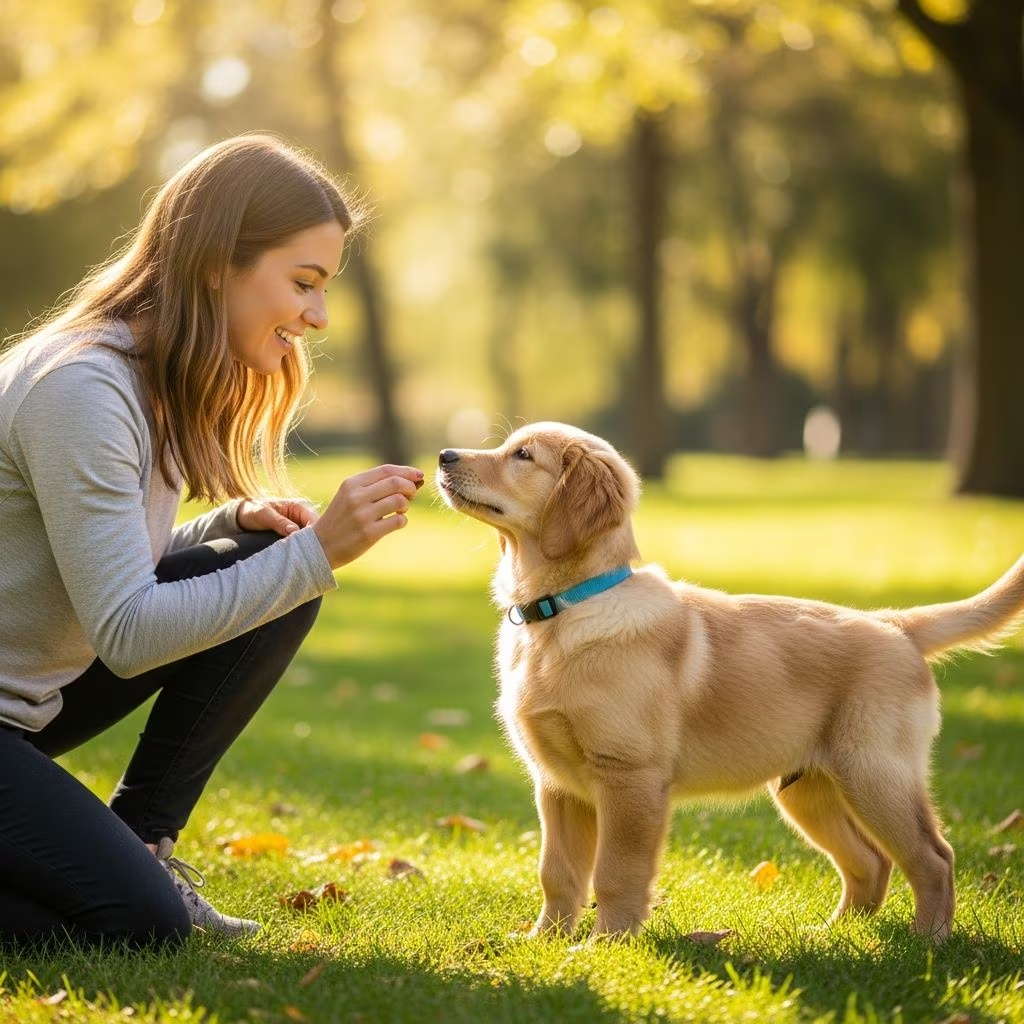
Teaching your dog commands represents one of the most valuable investments you can make in your relationship with your pet. When dogs understand and respond to verbal cues, they become safer, more confident, and better integrated into family life. The foundation of successful command training rests on understanding how dogs learn, utilizing appropriate rewards, and maintaining consistency across training sessions. This comprehensive guide explores the principles and practical methods that transform basic instruction into reliable obedience.
Understanding How Dogs Learn Commands
Dogs do not inherently understand human language. Instead, they learn to associate specific sounds, hand signals, or body positions with particular outcomes. This association-based learning forms the cornerstone of all command training. When a dog hears a sound and experiences a positive consequence shortly afterward, neural pathways strengthen between that acoustic stimulus and the resulting behavior.
The timing of rewards proves critical in this learning process. Research in animal behavior demonstrates that rewards delivered within seconds of the desired behavior create stronger associations than delayed reinforcement. This principle, known as contingency, explains why immediate treats and praise accelerate learning significantly compared to delayed rewards.
Dogs also learn through observation and repetition. Consistent exposure to training scenarios builds neural patterns that eventually require minimal cognitive effort from your dog. What initially demands conscious attention becomes automatic and reflexive—the hallmark of truly learned behavior.
Preparing for Success: Environment and Equipment
The training environment profoundly influences your dog’s ability to focus and learn. Starting in quiet, familiar spaces minimizes competing stimuli that might distract your dog’s attention. A living room free from other pets, loud noises, and visual distractions provides an ideal foundation for introducing new commands.
Selecting appropriate rewards motivates your dog throughout training sessions. High-value treats—small, soft morsels that your dog can consume quickly—prove more effective than large, hard biscuits that require extensive chewing. The immediacy of consumption matters; your dog should swallow the reward within seconds of performing the desired behavior.
Establishing short, focused training windows prevents fatigue and frustration. Sessions lasting ten to fifteen minutes maintain your dog’s enthusiasm and cognitive engagement. Multiple brief sessions throughout the week outperform occasional lengthy training periods in terms of learning retention and behavior consolidation.
The Marker System: Building a Communication Bridge
Before teaching specific commands, establishing a marker system creates a communication bridge between your behavior and your dog’s understanding of what earned the reward. A marker can be a clicker device or a distinct vocal sound like “yes” or “good.”
Building a charged marker involves this simple process: Make the marker sound, then immediately deliver a treat. Repeat this fifty to one hundred times across multiple sessions until your dog anticipates a reward whenever hearing the marker sound. At this point, your dog understands that the marker means “a reward is coming because you did something right.”
The power of the marker lies in its precision. Rather than waiting to hand over a treat while your dog performs multiple behaviors, the marker captures the exact instant of correct behavior. This temporal accuracy dramatically accelerates learning and reduces confusion about which specific action earned the reward.
Core Training Techniques
The Luring Method
Luring represents the most intuitive and beginner-friendly approach to teaching commands. This method involves using a treat to physically guide your dog into the desired position or behavior. By holding a treat in front of your dog’s nose and moving it in specific patterns, you encourage natural body movements that correspond to the desired command.
For example, moving a treat upward and slightly back over your dog’s head typically causes the dog to raise their nose, shift their weight backward, and naturally sit. The beauty of luring lies in its simplicity—most dogs follow treats willingly, and you can generate numerous repetitions quickly.
A key principle when luring: never force your dog into position. Avoid pushing on your dog’s rear end or back while luring, as physical manipulation teaches your dog to respond to pressure rather than the verbal cue. When your dog naturally sits while following the lure, mark the behavior and reward immediately.
The Capture Method
The capture method involves rewarding behaviors your dog offers naturally. Rather than physically guiding your dog into a behavior, you observe and reward when your dog independently performs the desired action. Once this natural behavior occurs frequently, you add the verbal cue.
This approach works particularly well for behaviors dogs perform regularly. If your dog naturally sits before mealtimes or when greeting you, you can capture these instances by marking and rewarding them. Over time, your dog learns that the behavior—now associated with a verbal cue—reliably produces rewards.
The Shaping Method
Shaping involves rewarding successive approximations of the final desired behavior. Rather than waiting for your dog to perform a complex behavior perfectly, you reward intermediate steps that move progressively closer to your goal. This method builds sophisticated behaviors from simpler components.
For example, teaching “fetch” might involve first rewarding your dog for showing interest in a toy, then for touching it with their nose, then for picking it up, and finally for carrying it back to you. Each step rewards progress, maintaining motivation while the behavior develops gradually.
Teaching Essential Commands
The Sit Command
Sit represents the foundational command most trainers teach first. This behavior is natural for dogs, relatively easy to lure, and provides the gateway to teaching more complex commands.
Teaching sit using the luring method: Hold a treat directly in front of your dog’s nose at eye level. Slowly move the treat upward and slightly backward over their head. As your dog’s nose follows the treat, their hindquarters naturally lower toward the ground. The moment your dog’s rear touches the floor, mark the behavior with your marker word and immediately deliver the treat while praising enthusiastically.
Initially, do not use the verbal cue “sit.” Allow your dog to learn the physical movement first. After ten to twenty successful repetitions across multiple sessions, begin saying “sit” just before luring the behavior. Eventually, your dog will sit in response to the verbal cue alone.
The Down Command
Down builds naturally on a dog’s existing sit command. This command increases behavioral control and provides a foundation for advanced training.
Teaching down: Start with your dog in a sit position. Hold a treat near your dog’s nose, then slowly move it toward the floor and slightly forward. This luring motion encourages your dog to lower their front legs and lie down. As soon your dog’s elbows touch the floor, mark and reward immediately. Repeat until your dog reliably performs this behavior before adding the verbal cue.
The Come Command
Teaching “come” requires slightly different methodology than stationary commands because your goal involves movement toward you rather than a held position.
Teaching come: Start at close distance in a low-distraction environment. Use an excited, happy tone while saying your dog’s name followed by “come.” Make exaggerated movements, clap your hands, or squeak a toy to generate enthusiasm. When your dog moves toward you, mark and reward abundantly. Celebrate the behavior with enthusiastic praise and high-value treats. Gradually increase distance only after your dog reliably responds at shorter ranges.
The Stay Command
Stay teaches impulse control and builds on previous commands. This behavior requires your dog to remain in a sit or down position until released.
Teaching stay: Position your dog in sit or down. Say “stay” with a clear, firm tone and an open-palm hand signal. Wait three to five seconds, then mark and reward while your dog remains in position. If your dog breaks position before you release them, simply reset and try again. Gradually extend duration from seconds to minutes across multiple sessions. Only after your dog maintains position reliably should you increase distance by taking steps back.
Essential Training Principles
Consistency Across Contexts
Teaching your dog to sit in your living room differs fundamentally from teaching sit when encountering another dog on a walk. Each new environment, distraction level, and context requires systematic retraining. Dogs do not naturally generalize behaviors across situations; they learn location-specific responses initially. Gradually introduce commands in progressively more distracting environments once your dog demonstrates reliable response in quiet settings.
Reward Variability
During initial learning phases, reward your dog consistently every single time they perform the correct behavior. Once your dog demonstrates reliable understanding, introduce variable reward schedules. This means sometimes rewarding with treats, sometimes with praise, sometimes with play. Variable schedules create more resilient behaviors that persist even without frequent treats.
Session Structure
Organize each training session around a single or maximum two commands. Teach the new command or behavior early in the session when your dog’s attention is freshest. Practice established commands toward the end, ending on a successful, rewarding note. This structure maintains motivation and prevents frustration.
Common Training Challenges and Solutions
| Challenge | Likely Cause | Solution |
|---|---|---|
| Dog only responds with treats present | Over-reliance on visible rewards during training | Gradually hide treats from view while building the association with the cue; transition to variable rewards |
| Dog responds inconsistently | Insufficient repetitions or practicing in environments with distractions too early | Return to quiet settings; practice daily; ensure 20+ successful repetitions before introducing mild distractions |
| Dog seems confused or loses interest | Sessions too long; rewards not sufficiently motivating; training too advanced | Shorten sessions to 5-10 minutes; use higher-value treats; return to simpler prerequisite behaviors |
| Slow progress on new behavior | Lack of clear reinforcement timing; unclear marker signal | Ensure marker and reward delivery within one second of behavior; test if marker is sufficiently charged |
Frequently Asked Questions
At what age should I start teaching commands?
Puppies can begin learning basic commands as early as eight weeks of age. Their young brains are neurologically capable of forming associations between sounds and behaviors. Start with simple commands in distraction-free environments, keeping sessions very brief—five minutes or less—to match their limited attention spans.
How many commands should I teach simultaneously?
Focus on mastering one command thoroughly before introducing another. Teaching multiple commands at once confuses dogs and slows progress. Once your dog consistently performs a command across various environments and distraction levels, you can introduce a new command while maintaining practice of previously learned behaviors.
What if my dog doesn’t respond to food rewards?
Some dogs are less food-motivated than others. Identify your dog’s highest-value reinforcer—this might be play with a favorite toy, access to outdoor time, or physical affection. Use this reinforcer during training sessions. You might also experiment with different treat textures and flavors; soft, smelly treats often motivate dogs more than hard biscuits.
Can I teach commands without treats?
While treats facilitate faster learning through immediate positive reinforcement, they are not mandatory. Some dogs respond well to praise, play, or access to favored activities. However, food rewards typically produce the quickest learning, particularly when teaching new behaviors. After your dog understands a command, transitioning to non-food rewards works effectively.
How long does it take to teach a command?
Learning timelines vary significantly based on individual dog factors, your consistency, and the command’s complexity. Simple commands like sit may take three to seven days of regular practice. More complex behaviors might require weeks or months. Consistent daily practice produces faster results than sporadic training efforts.
Building Long-Term Success
Teaching your dog commands extends beyond the initial training phase. Maintaining learned behaviors requires ongoing practice and reinforcement. Set aside time several times weekly to refresh established commands, even briefly. This continued practice prevents skill decay and reinforces your dog’s understanding.
Remember that training represents an ongoing conversation between you and your dog. Each interaction teaches your dog something about how to live successfully in your household. By employing patient, consistent, reward-based methods, you build not just obedient behaviors but also deepen the communication and trust between you and your canine companion.
References
- Basic Obedience Training For Puppies: Where to Start — American Kennel Club. 2024. https://www.akc.org/expert-advice/training/basic-obedience-training-for-your-dog/
- How to Train Your Dog & Top Training Tips — RSPCA. 2024. https://www.rspca.org.uk/adviceandwelfare/pets/dogs/training
- Dog Training 101: Basic Training Tips for Dogs and Puppies — CareCredit. 2024. https://www.carecredit.com/well-u/pet-care/how-to-train-your-dog/
- THE BASICS OF TRAINING YOUR DOG — University of Wisconsin 4-H Extension. 2021. https://4h.extension.wisc.edu/files/2021/05/The-Basics-of-Training-Your-Dog.pdf
- Dog Training For Dummies Cheat Sheet — Dummies. 2024. https://www.dummies.com/article/home-auto-hobbies/pets/dogs/training/dog-training-for-dummies-cheat-sheet-208990/



