

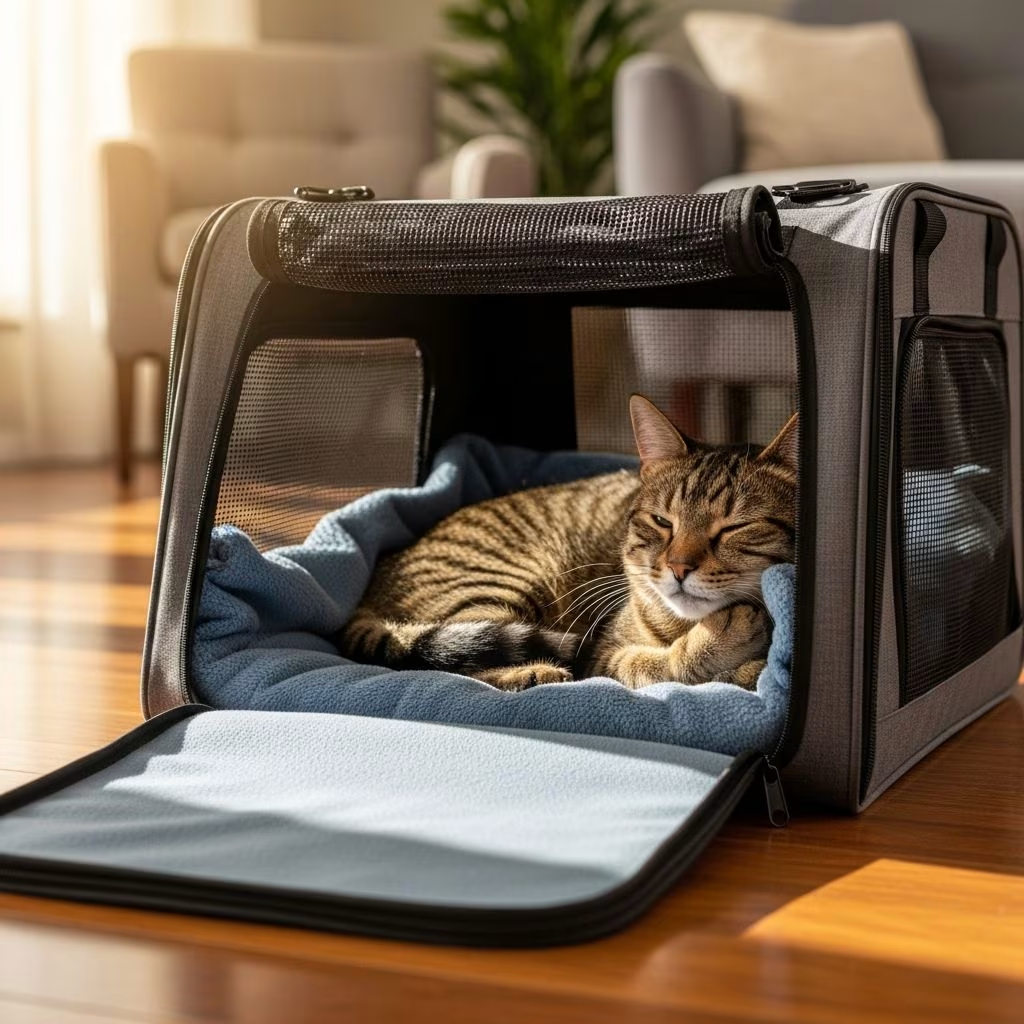
Teaching Your Cat to Be Comfortable in a Carrier
Many cat owners dread the moment they need to transport their feline companions. The sound of the carrier being retrieved often sends cats into hiding, and the stress of getting them inside can be overwhelming for both pet and owner. However, with patience, positive reinforcement, and a strategic approach, you can teach your cat to view their carrier not as a source of anxiety but as a safe, comfortable space. This comprehensive guide explores evidence-based techniques for carrier training that prioritize your cat’s emotional wellbeing.
Why Carrier Training Matters
Carrier training is one of the most valuable skills you can teach your cat. Beyond making vet visits and travel less stressful, a well-trained cat who feels secure in their carrier experiences reduced anxiety and physiological stress. Chronic stress can impact your cat’s immune system, digestive health, and overall quality of life. By investing time in positive carrier training, you’re not just solving a practical problem—you’re contributing to your cat’s long-term wellbeing.
Cats naturally resist confinement and may associate carriers with negative experiences like veterinary procedures or car rides. Through systematic desensitization and positive associations, you can reframe the carrier as a place where good things happen, fundamentally changing your cat’s emotional response to it.
Selecting the Right Carrier
Before beginning training, ensure you have an appropriate carrier. The carrier should be large enough for your cat to stand, turn around, and lie down comfortably. Carriers that are too small increase stress and discomfort. Consider carriers with multiple entry points—top-loading carriers are often easier for lifting cats in and out, while front-loading carriers may feel more secure to some cats. Look for carriers with good ventilation and consider one that disassembles, allowing you to separate the base from the top during early training stages.
Avoid hard-sided carriers that are difficult to clean, as maintaining hygiene is important for your cat’s comfort. Some cats respond better to soft-sided carriers, while others prefer the stability of hard plastic. If your cat has had negative experiences with a particular carrier, consider purchasing a new one of a different design to start fresh with positive associations.
Stage 1: Making the Carrier Part of Your Cat’s Environment
The foundation of successful carrier training is normalization. Leave the carrier out permanently in a common area of your home with the door open. This removes the element of surprise and allows your cat to investigate at their own pace. Never force your cat near the carrier; instead, let curiosity guide their exploration.
Creating a Cozy Space: Place comfortable bedding inside the carrier—a blanket your cat already enjoys or something with familiar scents. Add a small toy or leave it near their favorite resting spot. Some cats will begin entering the carrier voluntarily simply because it smells like home and is positioned conveniently.
Observation Without Pressure: Watch for natural interactions with the carrier. When you notice your cat sniffing, entering, or spending time near it, reward this behavior with treats or gentle praise. This teaches your cat that the carrier itself triggers positive outcomes, independent of the traumatic events it may have been associated with previously.
Stage 2: Building Positive Associations with Food and Rewards
Once your cat is casually approaching or entering the carrier, begin systematically pairing it with highly desirable rewards. This stage conditions your cat’s emotional response to the carrier through classical conditioning.
Strategic Treat Placement: Place special treats (ones your cat only gets during training) just outside the carrier entrance. Once your cat readily eats these, place treats just inside the opening. Gradually move treats deeper into the carrier over multiple sessions. Always let your cat approach and retreat at their own pace; forcing them inside will undo your progress.
Duration and Frequency: Keep training sessions very short—two to three minutes maximum—and conduct them multiple times daily if possible. Short, frequent sessions are more effective than longer, infrequent ones and are less likely to create frustration or saturation with the reward.
Marking Desired Behavior: Establish a marker word (commonly “yes” or “good”) that consistently precedes the delivery of a reward. Say the marker word the moment your cat exhibits the desired behavior, then immediately deliver the reward. This teaches your cat that this word predicts something positive is coming.
Stage 3: Closing the Door Gradually
This stage introduces the concept of containment without stress. It must be approached incrementally to avoid triggering fear responses.
Initial Door Closure: With your cat calm and eating treats inside the carrier, close the door just a fraction of an inch for a second, then immediately open it and reward. This microscopically small step introduces the concept that the door can close without trapping them permanently. Your quick opening reinforces that confinement is brief and reversible.
Gradual Progression: Over multiple sessions, gradually increase the duration the door stays closed—from one second to three seconds to five seconds. Each time, open the door immediately, allow your cat to exit if desired, and provide a reward. If your cat shows anxiety, return to the previous stage and progress more slowly.
Reading Your Cat’s Signals: Watch for signs of stress: excessive panting, vocalization, or attempts to force the door open. If these occur, you’ve progressed too quickly. Return to shorter durations and take smaller steps forward.
Stage 4: The Top of the Carrier
For cats with previous negative carrier experiences, the closure of the top can be particularly anxiety-inducing. This warrants special attention and patience.
Separate Conditioning: Initially, work with the carrier base only, leaving the top completely out of view during training sessions. This allows your cat to develop comfort with being enclosed from the sides before adding the overhead enclosure.
Introduction of the Top: Once your cat is relaxed with the base enclosed and door closed, introduce the top by placing it beside the carrier during sessions without your cat inside. Let your cat smell and investigate it. Reward calm interaction. Do this repeatedly over multiple sessions.
Attachment Process: Only when your cat is completely relaxed with the top nearby should you attach it—and only when your cat is outside the carrier during this process. Gradually move the attached top toward and eventually over the carrier base while your cat is not inside, always ensuring your cat remains calm.
Final Integration: Finally, with the top attached, repeat the earlier stages: having your cat enter for treats with the top on, repeating the treat-placement and door-closing progression. Your cat’s familiarity with all other aspects of the training means they’re typically ready for this step.
Stage 5: Movement and Handling
The final crucial stage prepares your cat for the physical experience of being transported in their carrier.
Floor Movement: With your cat calm inside the fully enclosed carrier, slowly slide it along the floor a short distance while providing treats through the sides or bars. Do this multiple times, gradually increasing the distance moved. This desensitizes your cat to motion while maintaining contact with the ground.
Lifting Practice: Touch the carrier handle and immediately release and reward. Repeat several times. Then apply gentle upward lift as if picking up the carrier, but immediately set it back down and reward. Progress by lifting slightly higher and for slightly longer durations across multiple sessions.
Carrying Technique: When lifting, use both hands underneath the carrier base rather than holding the handle alone. This stabilizes the carrier and prevents the wobbly, unsettling motion that occurs with single-handle carrying. Many carriers are designed with handles that, when used alone, create instability that frightens cats unnecessarily.
Walking with the Carrier: Gradually progress to walking with the carrier for a few steps indoors, then longer distances, eventually moving toward and into different rooms, outside, and finally to the car. Each step should occur over multiple sessions, with your cat showing calm behavior at each stage before progressing.
Practical Tips for Success
- Choose High-Value Rewards: Use treats your cat only receives during carrier training—something special enough to be highly motivating. For some cats, this might be small pieces of cooked chicken; for others, premium commercial treats. Identify what your individual cat finds irresistible.
- Maintain Consistency: Every family member should use the same marker word and follow the same training protocol. Inconsistency confuses cats and slows progress.
- End on a Positive Note: Always conclude training sessions while things are going well, before your cat becomes frustrated or disinterested. This ensures they look forward to the next session.
- Avoid Forcing: Never force your cat into the carrier outside of true emergencies. This creates negative associations that can undo months of training.
- Practice Regularly: Conduct maintenance training sessions regularly, even after your cat is comfortable in their carrier. This reinforces the positive association and keeps skills sharp.
- Leave the Carrier Accessible: Outside of formal training sessions, continue leaving the carrier open and available. Many cats will voluntarily enter it periodically for naps, further normalizing it.
Troubleshooting Common Challenges
Extreme Avoidance: If your cat refuses to approach the carrier even at a distance, begin training with the blanket or mat placed several feet away from the carrier. Over many sessions, gradually move the mat closer. This extended desensitization respects your cat’s anxiety while still progressing toward the goal.
Resistance to Door Closure: If your cat panics when the door closes even slightly, you’ve progressed too quickly. Return to leaving the door completely open while your cat is in the carrier and receiving treats. Spend more sessions on this stage before attempting to close the door again.
Resistance to Lifting: Cats who dislike being lifted may resist the lifting stage. Practice lifting them outside the carrier context to build general comfort with being held. For the carrier specifically, spend more time on floor movement before progressing to lifting.
Past Negative Experiences: Cats with extensive negative carrier history may need a completely new carrier and an extended training timeline. Patience is essential, and progress may be slower than with cats without traumatic associations. Consider that this is retraining, not just training.
Emergency Situations
Despite your best efforts, situations may arise—such as medical emergencies—when you need to get your cat in the carrier quickly. If this occurs:
- Wrap your cat gently but securely in a blanket to prevent scratching and make handling easier
- For top-loading carriers, gently lower the wrapped cat into the carrier
- For front-loading carriers, lift and position the wrapped cat carefully into the carrier
- Work as quickly and calmly as possible; your stress amplifies your cat’s stress
- Resume regular positive carrier training as soon as the emergency is resolved to help your cat recover their confidence
Long-Term Maintenance
Once your cat is comfortable in their carrier, ongoing maintenance ensures they don’t regress. Periodically practice the full training sequence, especially if several months have passed without carrier use. Before veterinary visits, conduct a refresher session with treats and praise. This maintains the positive association and helps your cat approach the carrier with confidence rather than dread.
The Timeline: What to Expect
The total training time varies significantly based on your individual cat’s temperament and previous experiences. Some cats progress through all stages in as little as two to three weeks with consistent daily practice. Others, particularly those with negative histories, may require several months of patient, gradual progression. Expect each stage to require anywhere from a few days to several weeks depending on your cat’s comfort level and your training consistency. The key is to avoid rushing; moving too quickly backward more than any single delay.
Frequently Asked Questions
Q: How long should each training session last?
A: Training sessions should last two to three minutes maximum. Shorter, frequent sessions are more effective than longer ones and prevent frustration or boredom that can set back your progress.
Q: What if my cat has a traumatic history with carriers?
A: Cats with negative carrier experiences may benefit from a new carrier of a different design or color. Extend your training timeline significantly and take even smaller incremental steps. Consider working with a certified cat behavior consultant if progress is very slow.
Q: Can I use punishment or force to speed up training?
A: Absolutely not. Punishment and force create additional negative associations and can cause lasting behavioral problems. Positive reinforcement is scientifically proven to be more effective and humane.
Q: Should I train a kitten differently than an adult cat?
A: Kittens often progress faster through training, but the methodology remains the same. Early carrier training in kittens sets them up for a lifetime of comfort with carriers, preventing the resistance often seen in adult cats.
Q: What if my cat refuses to take treats inside the carrier?
A: Use different rewards—play with a favorite toy, gentle petting, or verbal praise. Some cats are food-motivated while others respond better to other types of reinforcement. Experiment to find what your individual cat values most.
Q: How often should I practice carrier training?
A: Daily practice sessions are ideal during the initial training phase. Once your cat is comfortable, maintenance sessions a few times per week or even monthly help preserve the positive association.
Q: Is it normal for my cat to go backward in training?
A: Minor setbacks are normal, particularly if you progress too quickly or if your cat has a stressful experience. Simply return to the previous stage and progress more gradually. Patience and consistency will eventually lead to success.
Conclusion
Teaching your cat to be comfortable in a carrier is one of the most valuable investments you can make in their wellbeing. Through systematic positive reinforcement, patience, and respect for your individual cat’s pace, you can transform the carrier from an object of dread into a place of safety and security. The process requires time and consistency, but the payoff—a cat who willingly enters their carrier and experiences minimal stress during veterinary visits and travel—is immeasurable. Your cat will thank you with reduced anxiety and improved overall health, while you’ll enjoy the practical benefits of a trained, cooperative companion for all the journeys you’ll share together.
References
- How to Train Your Cat to Use a Cat Carrier — Chaseview Vets. https://www.chaseviewvets.co.uk/documents/cfc-carrier-training.pdf
- Cat Carrier Training Simplified — Insightful Animal Behavior. https://www.insightfulanimals.com/cat-carrier-training-simplified
- Teach Your Cat to Love the Carrier — Wisconsin Humane Society. https://www.wihumane.org/behavior/ask-the-experts/cat-behavior/teach-your-cat-to-love-the-carrier
- Teaching Your Cat to Ride in a Carrier — ASPCApro. https://www.aspcapro.org/sites/default/files/resource/downloads/2020-2020-06/aspca-teaching-cats-to-ride-in-carriers.pdf
- Cat Carrier Training Factsheet — Cat Protection Society of NSW. https://catprotection.org.au/cat-care-factsheets/factsheet-cat-carrier-training/
- Choosing and Using a Cat Carrier — Cats Protection. https://www.cats.org.uk/help-and-advice/getting-a-cat/how-to-choose-and-use-a-cat-carrier



