

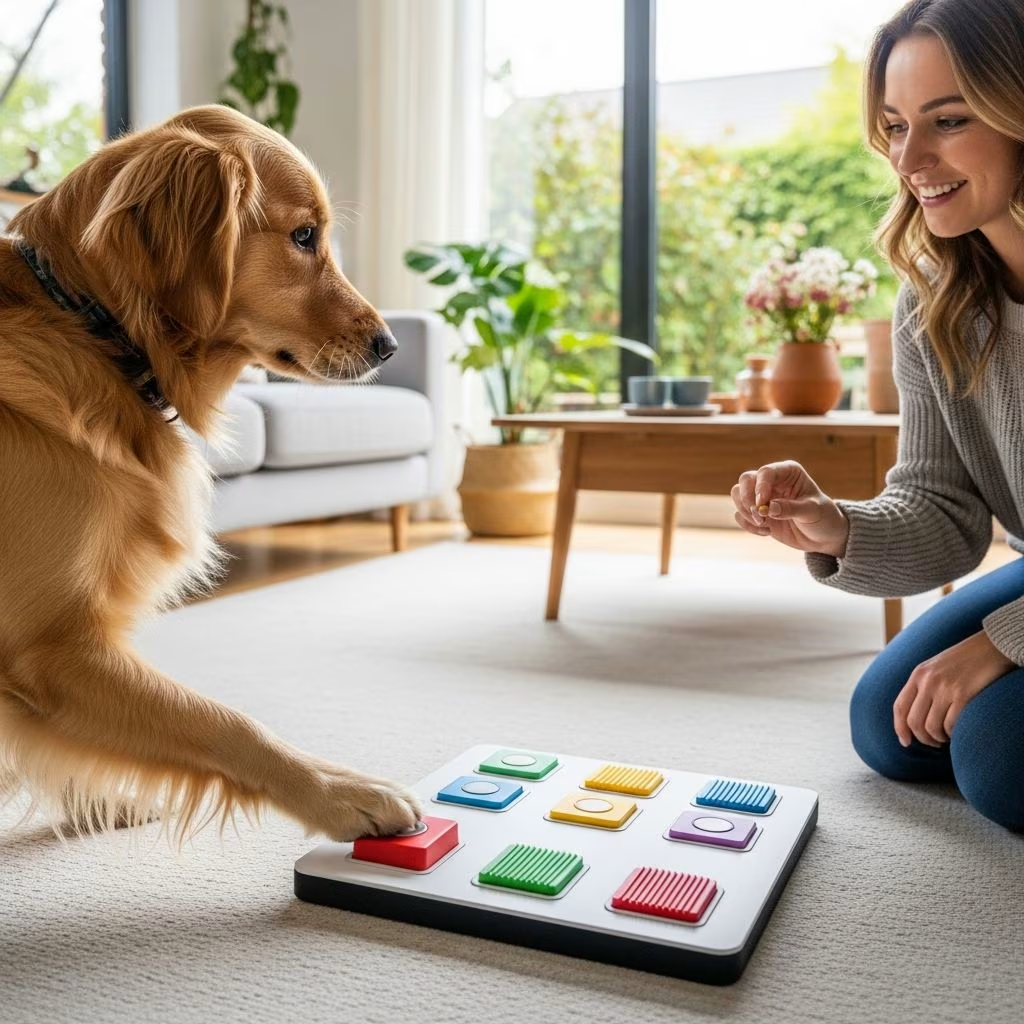
Dog communication buttons are simple, recordable devices that let your dog press a button to play a word or short phrase, such as “outside,” “treat,” or “play.” Over time, many dogs can learn that each button predicts a specific outcome, allowing them to “tell” you what they want or need in a structured way.
Training a dog to use these talking buttons is not magic and not the same as human language, but it is a powerful way to build clearer two-way communication using well-established principles of animal learning like association and reinforcement.
Understanding Dog Communication Buttons
Dog communication buttons are usually small plastic devices that play a recorded sound when pressed. Most consumer versions are large enough for a dog’s paw or nose and can be activated with relatively light pressure.
- Recordable buttons: You record words in your own voice, such as “outside,” “water,” or “play.”
- Pre-recorded buttons: Some systems come with standard words like “food” or “walk” already programmed.
- Mats or tiles: Many sets include a base mat to keep buttons stable and grouped together.
Dogs do not automatically understand the words. They learn through repeated pairing that pressing a particular button makes a predictable consequence happen, similar to how they learn that sitting when cued earns a reward or access to something they want.
Before You Start: Key Training Principles
Button training works best when it is grounded in modern, reward-based training methods. Professional organizations such as the American Veterinary Society of Animal Behavior emphasize positive reinforcement and avoiding punishment-based techniques because they can increase fear and stress in dogs.
- Positive reinforcement: Reward behaviors you want to see again (for example, pressing the correct button) with something your dog values, such as toys, food, or access to an activity.
- Shaping: Break complex skills into small, achievable steps and reinforce approximations to the final behavior.
- Consistency: Use the same word, same button location, and same consequence each time so the association is clear.
- Short, frequent sessions: Several brief sessions each day are more effective than occasional long sessions for most dogs.
Step 1: Teach a Reliable Hand Signal
Many button-based training plans start with a clear, simple behavior such as nose targeting or following a hand signal. If your dog understands a hand signal well, you can later pair that signal with button use so the dog knows what you’re asking for.
A common process for teaching a basic behavior with a hand signal looks like this:
- Get your dog’s attention in a calm, low-distraction area.
- Use a small treat to lure the dog into the behavior (for example, sit or spin).
- Mark and reward as soon as the dog completes the behavior.
- Add a distinct hand signal as you lure the behavior again.
- Gradually fade the food lure so the dog follows only the hand signal.
- Once reliable, pair a verbal cue with the hand signal.
By the end of this process, your dog has practiced following your body language and responding to clear cues, which will help when you introduce button use.
Step 2: Nose Targeting (Touch Training)
Nose targeting means teaching your dog to touch a specific object with their nose on cue. This is a foundational skill for button training because the button itself becomes the target.
Start by teaching your dog to target your hand:
- Hold your open hand a few centimeters from your dog’s nose.
- When they move in to sniff or touch, immediately mark (for example, say “yes”) and reward.
- Repeat until they are consistently investigating your hand.
- Begin rewarding only for clearer nose touches instead of mere sniffs.
- Gradually move your hand slightly farther away so your dog has to move toward it.
- Add a cue such as “touch” right before you present your hand.
Once your dog understands that “touch” means “move to this thing and tap it with your nose,” you can transfer the skill from your hand to any other object, including bells and buttons.
Step 3: Teach Your Dog to Ring a Bell
Bell training is a useful stepping stone between basic nose targeting and talking buttons. It helps your dog practice targeted pressing and shows them that their action can make something very specific happen, such as a door opening.
To teach your dog to ring a bell to go outside:
- Hang or place a bell near the door your dog uses most often.
- Ask your dog for the familiar “touch” cue while pointing to or holding the bell close.
- When they nose-target the bell, immediately open the door and let them out, then praise and optionally treat.
- Repeat and begin rewarding only for clear bell rings rather than accidental brushes.
- Always follow a bell ring by opening the door, so the dog learns the bell predicts going outside.
- Gradually move the bell into its final position by the door and encourage the dog to approach and ring it independently.
This teaches a simple but powerful sequence: “I perform this behavior, and the door opens.” Button training builds on the same idea: “I press this button, and something specific happens.”
Step 4: Introducing Button Training
Once your dog understands nose targeting and maybe even bell ringing, you can introduce communication buttons. At this stage, the goal is for your dog to learn that pressing a particular button predicts the same outcome every time.
Choosing Your First Words
Experts recommend starting with a small set of words that are highly relevant and motivating to your dog.
- Everyday needs: “outside,” “water,” “potty”
- High-value activities: “play,” “walk,” “ball”
- Comfort and social interaction: “pets,” “cuddle”
Starting with one to three buttons helps prevent overwhelm while still giving your dog meaningful choices.
How to Set Up and Start
Use a clear, consistent layout from the beginning, as sudden changes can make it harder for the dog to generalize what each button means.
- Place buttons on a non-slip mat near where your dog naturally spends time.
- Keep related concepts close together (for example, all play-related buttons on one side).
- Ensure buttons are easy for your dog to reach and press with nose or paw.
- Minimize background noise so the recorded words are clear.
Step 5: Step-by-Step Button Training Process
The core of button training is building strong associations between each button, the spoken word, and the resulting outcome.
| Training Step | What You Do | What Your Dog Learns |
|---|---|---|
| 1. Record the word | Record a clear word like “ball” or “outside” on a single button. | This sound is always the same when this button is pressed. |
| 2. Pair button with object/action | Press the button, then immediately show the ball or open the door. | The sound predicts a specific object or event. |
| 3. Add nose targeting | Ask for “touch” to the button and reward when it is pressed. | Pressing the button is just another form of targeting. |
| 4. Deliver the consequence | After the press, follow through: play fetch, go outside, or offer water. | The button press makes that outcome reliably happen. |
| 5. Repeat many times | Practice daily, keeping the button meaning identical each time. | The association becomes strong and predictable. |
Trainers often suggest dozens of repetitions (sometimes 50 or more) for each word before expecting a dog to start using the button more deliberately.
Modeling Language for Your Dog
Modeling means you actively use the buttons yourself in real-life situations so your dog can see how they work and in what context each word is used.
- When you are about to go outside, press the “outside” button and say “outside” before opening the door.
- When it is time to play, press “play” and say “play,” then start the game.
- If your dog brings you a ball, press “ball” and then play fetch.
Consistent modeling gives your dog many chances to observe patterns: button → word → action. Over time, they may begin to press the same button in similar contexts to get the outcome they expect.
Reinforcing Communication (Without Confusing the Meaning)
While rewards are essential, how you reward matters. Many trainers recommend that the reward matches the button’s meaning instead of automatically giving treats for every press.
- If your dog presses “outside”, you open the door and go out with them.
- If they press “play”, you pick up a toy and start a game.
- If they press “treat” or “snack,” you may offer a small edible reward.
If you rely on food for every button, some dogs may learn that pressing any button is just a way to get a treat, rather than a specific tool for communication about different needs.
Using Shaping and Responding to Exploration
At first, your dog will likely experiment with the buttons. This “babbling” stage is normal and can be a valuable part of the learning process.
- Reinforce approximations: If your dog sniffs or paws near the correct button, encourage them and help them press it, then follow through with the action.
- Respond to exploration: When your dog accidentally steps on “play,” you can pick up a toy, ask, “Play?” and start a brief game.
- Use gentle prompts: If you think your dog is trying to communicate (for example, pacing near the door), you can stand by the buttons or point near the relevant one and wait quietly.
Over time, reinforcing these early attempts helps shape more deliberate button presses that better match your dog’s actual intentions.
Expanding Your Dog’s Button Vocabulary
Once your dog consistently uses a few buttons in the expected contexts, you can slowly expand their set of words.
- Add one new button at a time and model it heavily before expecting independent use.
- Choose words that are clearly connected to a specific, repeatable outcome (for example, a particular game, toy, or routine) rather than abstract ideas at first.
- Group related concepts together to keep your soundboard organized and easier for the dog to learn.
- Keep notes or videos of how and when your dog uses newer words to check whether they are forming reliable associations.
Some owners are tempted to add complex concepts quickly, but many trainers suggest building a solid base of simple, concrete words first so the dog’s experience remains clear and frustration is minimized.
Realistic Expectations and Limitations
Current research shows that dogs are very good at learning associations between cues and outcomes, but there is ongoing scientific debate about how far this ability extends to symbolic or language-like communication. Button training should therefore be understood as a way to structure and clarify communication, not as proof that a dog understands grammar or human language in a human-like way.
Keep these expectations in mind:
- Learning is gradual and may take weeks to months for reliable use of even a small vocabulary.
- Individual differences are large: some dogs are enthusiastic button users; others show little interest.
- Fatigue, distraction, pain, or stress can all reduce a dog’s willingness to engage with buttons.
- Buttons should never replace careful observation of body language, routine needs, and regular veterinary care.
Frequently Asked Questions (FAQs)
Q: How old should my dog be before I start button training?
Most dogs can begin simple nose targeting and basic button exposure once they are physically healthy and able to focus for short periods. Very young puppies benefit from short, gentle sessions; adult and senior dogs can also learn, though progress may be slower.
Q: Do I need a specific breed or especially smart dog?
Any breed or mix can try communication buttons. Motivation, patience, and consistency from the human side are usually more important than breed. That said, some individual dogs will naturally take to buttons more quickly than others.
Q: What if my dog just hits buttons randomly?
Random pressing is common early on and can be treated as practice. Respond in line with the button’s meaning when possible, briefly demonstrate correct use, and continue modeling. Over time, many dogs transition from random presses to more context-appropriate use.
Q: Is it okay to ignore certain button presses?
If your dog is pressing the same button repeatedly in a way that is clearly unrelated to the situation, you can shorten your response or redirect to a more appropriate activity. However, completely ignoring legitimate attempts at communication can frustrate the dog, so balance is important.
Q: Can button training replace other forms of training?
No. Button training is an addition to, not a replacement for, basic manners, socialization, and safety skills. Your dog still needs recall, leash skills, and calm behavior around people and other animals.
References
- What Are Dog Communication Buttons? And How to Use Them — Kinship. 2023-05-10. https://www.kinship.com/dog-behavior/teach-dog-to-talk-with-buttons
- The Complete Guide to Teaching Dogs to Talk with Buttons — FluentPet. 2023-03-01. https://fluent.pet/pages/getting-started-with-talking-buttons
- 3 Tips for Teaching Your Dog to Talk — Hunger for Words. 2022-11-15. https://www.hungerforwords.com/resources/
- AVSAB Position Statement on Humane Dog Training — American Veterinary Society of Animal Behavior. 2021-10-01. https://avsab.org/resources/position-statements/
- How Dogs Learn — American Kennel Club. 2020-07-27. https://www.akc.org/expert-advice/training/how-dogs-learn/
- Do dogs learn words like we do? — Current Directions in Psychological Science (Fischer). 2022-03-01. https://doi.org/10.1177/09637214211058477



