

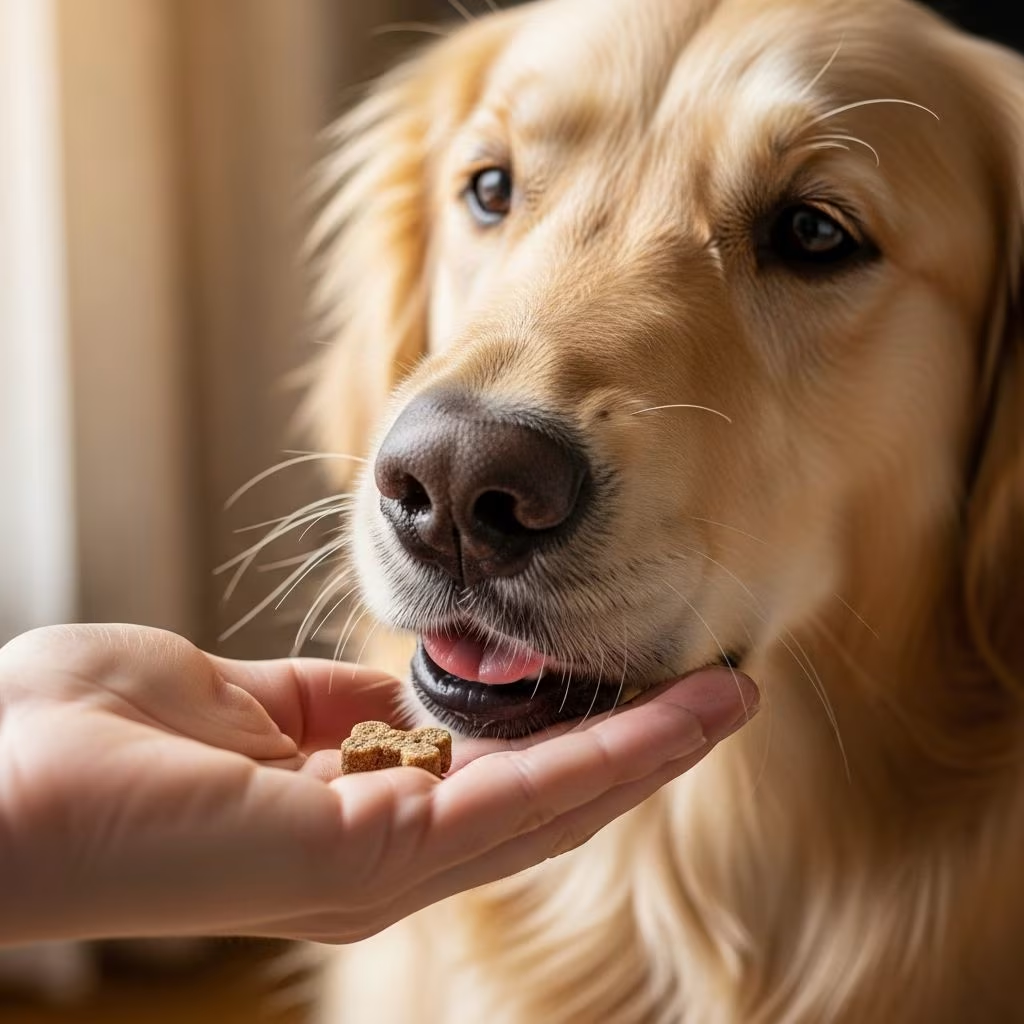
When a dog snaps at treats like a tiny alligator, it can turn a fun training session into a stressful experience. Teaching your dog to take treats gently protects your fingers, keeps training positive, and helps your dog learn better impulse control.
This guide explains why some dogs grab food, how to teach a reliable “gentle” cue, and how to troubleshoot common problems so you can reward your dog safely and effectively.
Why Some Dogs Grab Treats
Dogs that lunge, snap, or chomp at treats are usually not being mean or aggressive. Instead, they are often:
- Overexcited during training, play, or greetings
- Highly motivated by food and eager to get the treat quickly
- Inexperienced with hand-feeding and don’t understand what you want
- Stressed or aroused by the environment, people, or other animals around them
Research on reinforcement-based training shows that dogs learn best when rewards are delivered consistently and calmly, without physical punishment or rough handling. Teaching your dog a clear, positive cue like “gentle” fits perfectly with this approach.
Chompy Treat-Taking as an Arousal Gauge
Some dogs only become grabby when their excitement level is high, such as during intense play or around other dogs. In those cases, the strength of their snapping can act as a rough indicator of arousal: the more alligator-like the behavior, the more revved up they may be.
Using treat-taking as a gauge can help you decide when to:
- Pause training to let your dog settle
- Switch to easier tasks
- Increase distance from distractions
- Use lower-value treats to reduce excitement
The Benefits of Teaching a “Gentle” Cue
Building a solid “gentle” cue is about more than saving your fingers. It also helps your dog:
- Practice self-control around food and hands
- Learn safely through rewards instead of corrections
- Generalize calm behavior to other situations (like taking toys or chews)
- Enjoy training, which is linked to better learning outcomes and fewer problem behaviors
Positive reinforcement methods, such as using treats, are associated with better obedience and fewer behavior issues compared with punishment-based methods. Teaching “gentle” as its own behavior follows these best practices.
Before You Start: Setup and Ground Rules
Success with gentle treat-taking depends on consistency and clear rules. Before you begin, decide on the following:
| Training Element | What to Do | Why It Matters |
|---|---|---|
| Cue word | Use one clear cue, like “gentle”. | Helps your dog associate a specific sound with a specific behavior. |
| Reward rule | No treat unless your dog is truly gentle. | Prevents rewarding biting or grabbing. |
| Location | Train in a calm, low-distraction area. | Makes it easier for your dog to focus and learn. |
| Safety | Use gloves or larger treats if your dog snaps hard. | Protects your hands while you teach new habits. |
Choosing the Right Treats
Studies show that food rewards are highly effective reinforcers for dogs, often outperforming other types of rewards. For teaching “gentle,” pick treats that are:
- Small and soft so your dog can eat them quickly
- Very tasty (high-value), like small bits of cooked meat or soft dog treats
- Easy to hold inside your closed fist
Step-by-Step: How to Teach “Gentle”
Teach “gentle” as its own behavior rather than trying to add it on top of another cue like “sit.” This keeps things clear and prevents confusion.
Step 1: Introduce the Closed-Fist Treat
To help your dog understand what “gentle” means, start by controlling access to the treat with your hand:
- Hold a treat in your hand and close your fist around it.
- Present your closed fist to your dog at their nose level.
- Expect your dog to sniff, paw, or even mouth your hand at first.
- Do not open your hand while they are biting or scratching.
If your dog is very rough, consider wearing a thin glove until their biting intensity decreases to protect your skin while still allowing them to feel when they are being too rough.
Step 2: Wait for Gentle Contact
The key moment is when your dog switches from biting to gentler behavior:
- Wait for any sign of gentler contact, such as licking, softly nibbling without pain, or pulling their mouth back from your hand.
- The instant you feel that gentler behavior, calmly say your cue: “Gentle.”
- Immediately open your hand fully and let your dog take the treat from your palm.
Timing matters. In reward-based training, giving the treat right after the desired behavior makes it more likely to happen again. Aim to open your hand the moment your dog is gentle so they clearly connect “gentle mouth” with “treat appears.”
Step 3: Repeat and Build the Association
Consistency helps your dog learn the meaning of the cue:
- Repeat the process many times: closed fist → wait for gentle → say “gentle” → open hand.
- Use the cue word every time they are gentle just before you open your hand.
- Keep training sessions short and positive, about 3–5 minutes at a time.
Over multiple sessions, your dog should start to understand that “gentle” means to soften their mouth and wait calmly.
Step 4: Add Criteria and Distance
As your dog improves, you can slowly make the exercise a bit more challenging:
- Ask for a second or two of gentle behavior before opening your hand.
- Vary the position of your hand: slightly higher, lower, or to the side.
- Stand up if you initially trained while sitting.
This teaches your dog that “gentle” always means the same thing, no matter where your hand is or what position you’re in.
Maintaining Gentle Treat-Taking
Once your dog understands “gentle,” use it in everyday life:
- Say “gentle” before every treat you offer by hand.
- Ask for “gentle” when you give chews, toys, or food from your hand.
- Pause and remove the treat if they go back to snapping, then try again.
To keep the behavior strong, continue reinforcing gentle treat-taking regularly. As with other learned behaviors, dogs benefit from ongoing reinforcement, though treat frequency can gradually decrease once the behavior becomes reliable.
Practicing in Different Situations
Dogs learn best when they practice a behavior in many contexts. Once your dog is reliable at home:
- Practice “gentle” in the yard or garden.
- Use the cue on walks when you offer treats for loose-leash walking.
- Have trusted friends or family follow the same steps and rules.
This helps your dog generalize gentle treat-taking and prevents them from reverting to chompy habits with new people.
Common Mistakes and How to Fix Them
Even with a good plan, it’s easy to accidentally reward the wrong behavior or confuse your dog. Here are some common pitfalls and how to avoid them.
1. Rewarding Snapping or Grabbing
If you drop the treat when your dog snaps at your hand, your dog may learn that biting harder makes the treat fall faster. Instead:
- Hold on to the treat securely, even if they snap.
- Only open your hand when their mouth is gentle or they back off slightly.
- If they lunge, calmly pull your hand back and try again a moment later.
2. Mixing “Gentle” With Other Cues Too Soon
Combining “gentle” with cues like “sit” or “down” too early can confuse your dog. They may focus on one behavior and ignore the treat-taking piece. Make sure your dog:
- Can reliably respond to “gentle” on its own.
- Stays calm while taking treats in several settings.
- Understands that gentle treat-taking is always required, regardless of the other behavior being trained.
3. Using Treats as Bribes Instead of Rewards
In effective positive reinforcement training, the treat comes after the behavior. If you wave treats in front of your dog to get them to behave, the treat can become a bribe instead of a reward. To avoid this:
- Keep treats out of sight until your dog responds correctly.
- Give the treat immediately after the gentle behavior.
- If your dog only responds when they see food, take a step back and rebuild the behavior in easier environments.
4. Over-Exciting Your Dog
Very high-value treats, highly stimulating environments, or fast, loud delivery can push some dogs into over-arousal, making them more likely to grab. If this happens:
- Use slightly lower-value treats in high-energy situations.
- Slow your movements and speak softly.
- Give your dog breaks or practice calming exercises between repetitions.
Positive Reinforcement, Safety, and Welfare
Gentle treat-taking training aligns with modern, evidence-based dog training principles. Research supports the use of rewards, including food, over punishment-based methods for better welfare and behavior outcomes. When teaching “gentle”:
- Avoid physical corrections like hitting, muzzle grabbing, or yelling.
- Focus on reinforcing the exact behavior you want: a soft mouth and controlled approach.
- Keep sessions short and end on a success whenever possible.
Studies also indicate that dogs often find petting and social interaction rewarding alongside food, so pairing treats with calm praise or gentle touch can further strengthen your bond.
Frequently Asked Questions (FAQs)
Q: Is snapping at treats a sign of aggression?
A: In many cases, no. Most dogs who chomp at treats are excited, untrained, or inexperienced with taking food from hands. True aggression usually involves other warning signs, such as stiff body posture, growling, or guarding behavior. If you are unsure or feel unsafe, consult a qualified veterinary behaviorist or certified trainer.
Q: How long does it take to teach a dog to take treats gently?
A: Many dogs start to improve within a few short sessions when training is consistent and clear. For a reliable “gentle” cue in different places and with different people, expect to practice over several days or weeks, depending on your dog’s age, history, and excitement level.
Q: Can I train a puppy to be gentle with treats?
A: Yes. Puppies are excellent candidates for learning gentle treat-taking because they are still forming habits. Use very small, soft treats, keep sessions short, and be patient. Early positive training and socialization are key for healthy behavior development.
Q: What if my dog has a history of resource guarding?
A: If your dog growls, freezes, or tries to protect food, toys, or chews, do not push them or try to take items by force. Resource guarding can escalate and should be handled with the help of a veterinarian and a qualified behavior professional who uses reward-based methods. They can provide a tailored plan that keeps everyone safe.
Q: Do I always have to use treats once my dog learns “gentle”?
A: Once the behavior is well established, you can gradually reduce how often you use food rewards and mix in other types of positive reinforcement, such as praise, petting, or play. However, giving treats occasionally for excellent behavior helps keep “gentle” strong over time.
References
- AVSAB Position Statement on The Use of Punishment for Behavior Modification in Animals — American Veterinary Society of Animal Behavior. 2007-01-01. https://avsab.org/wp-content/uploads/2019/01/Punishment_Position_Statement-download_-_10-6-14.pdf
- Blackwell EJ, Twells C, Seawright A, Casey RA. The relationship between training methods and the occurrence of behavior problems, as reported by owners, in a population of domestic dogs. — Journal of Veterinary Behavior. 2008-07-01. https://doi.org/10.1016/j.jveb.2007.10.008
- Feuerbacher EN, Wynne CDL. Relative efficacy of human social interaction and food as reinforcers for domestic dogs and hand-reared wolves. — Journal of the Experimental Analysis of Behavior. 2012-09-01. https://doi.org/10.1901/jeab.2012.98-105
- How to Use Dog Treats for Training — AKC (American Kennel Club). 2020-08-24. https://www.akc.org/expert-advice/training/how-to-use-dog-treats-for-training/
- Dog Bite Prevention — Centers for Disease Control and Prevention (CDC). 2020-10-13. https://www.cdc.gov/dog-bites/about/index.html



