

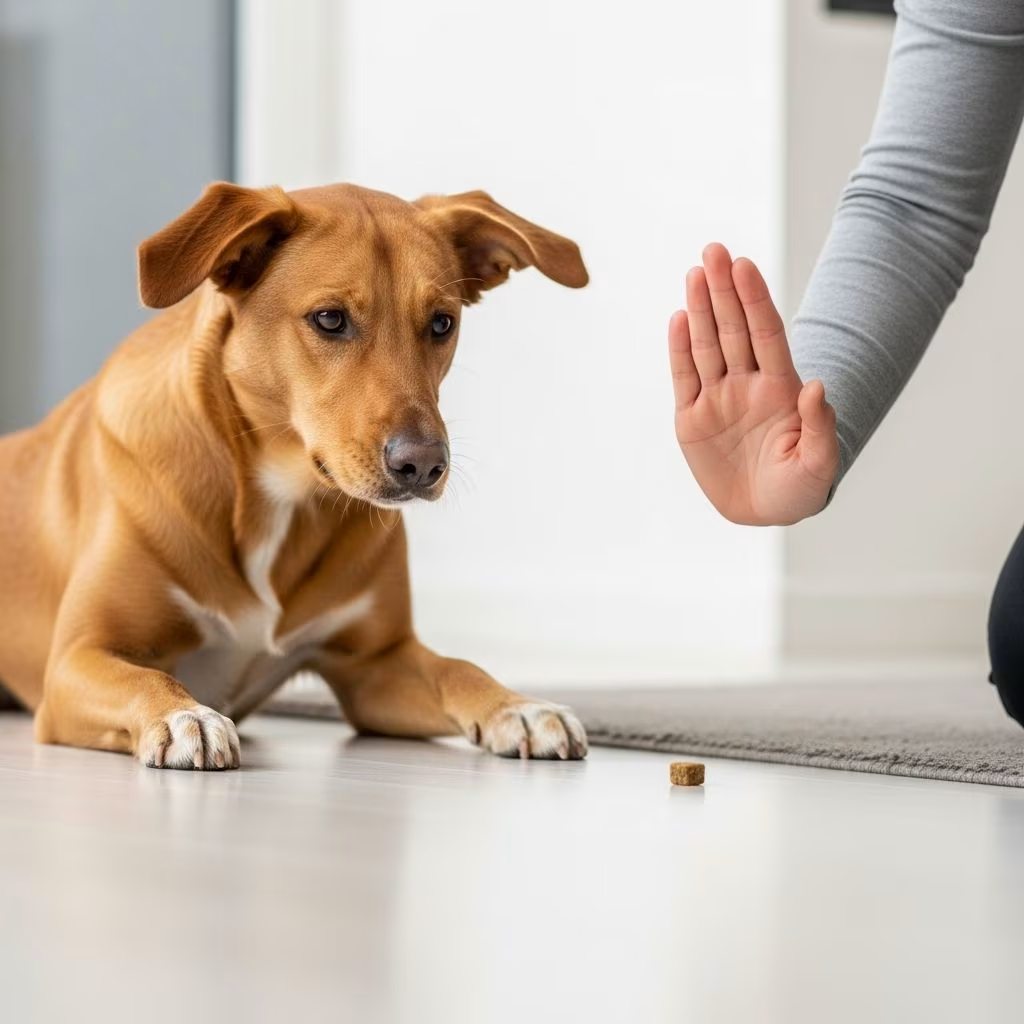
Teach Your Dog to Leave It: A Complete Training Guide
The “leave it” command is one of the most important skills you can teach your dog. This command could literally save your dog’s life by preventing them from eating dangerous items, toxic substances, or foods that could cause harm. Beyond safety, teaching “leave it” helps develop impulse control and strengthens the bond between you and your pet by establishing clear communication about what is safe to consume.
Whether your dog has a tendency to grab food from the ground during walks or snatch treats from your hands, this comprehensive guide will walk you through the proven steps to train this critical life skill.
Why the “Leave It” Command Matters
The “leave it” cue serves as a foundation for impulse control in dogs. When properly trained, your dog learns to turn away from whatever they are focused on and redirect their attention back to you. This skill is essential not only for managing your dog’s behavior at home but also for protecting them in outdoor environments where they might encounter hazardous materials, other animals, or toxic foods.
Dogs naturally have strong instincts to investigate and consume items they find interesting. Without proper training, these instincts can lead to dangerous situations. By teaching “leave it,” you’re essentially teaching your dog that you decide what is safe for eating, not them. This establishes your role as the decision-maker in your dog’s life and creates a safer, more obedient companion.
Stage One: Starting with Food in Your Closed Hand
The first stage of training the “leave it” command begins with a simple exercise using food hidden in your hand. This foundational step teaches your dog that attempting to get something from your closed fist won’t work, and turning away from it will result in a reward.
How to perform this exercise:
- Hold a piece of low-value treat in your lightly closed fist so your dog can smell it but cannot easily access it
- Extend your closed hand toward your dog’s nose and allow them to try to retrieve the treat
- Let your dog sniff, lick, paw, and nose at your hand without opening your fist
- Wait for your dog to hesitate momentarily or move their head away from your hand
- The instant your dog stops trying or turns their head, mark the moment with a clicker, a marker word like “yes,” or verbal praise
- Immediately open your fist and offer the treat to your dog
- Repeat this sequence at least ten times until your dog visibly moves away from your closed fist
During this stage, your dog learns that persistence doesn’t pay, but pulling away does. The key is timing—you must mark and reward the moment your dog shows the desired behavior of disengaging.
Stage Two: Adding the Verbal Cue “Leave It”
Once your dog consistently moves their head away from your closed fist, you’re ready to introduce the verbal cue. This stage creates an association between the words “leave it” and the behavior of disengaging from the treat.
Training steps:
- Say the words “leave it” in a normal, natural tone of voice while your dog is in the act of moving their head away from your hand
- Do not shout or use a harsh tone—a calm, normal voice is most effective
- Repeat this process until your dog stops any forward movement toward your hand
- Once your dog is responding reliably, present your hand and say “leave it” before showing the treat
- Reward your dog for moving back or turning their head away from your closed fist
- Perform at least 40 more repetitions until your dog makes direct eye contact with you when they hear the cue
The goal of this stage is for your dog to learn that hearing “leave it” means they should look at you instead of the treat. This redirection of focus is the essence of the command’s effectiveness.
Stage Three: Food on the Floor with Hand Coverage
In this stage, you’ll transition from food in your hand to food on the ground, which is closer to real-world scenarios where your dog might encounter tempting items during walks or at home.
Progression steps:
- Place a low-value treat on a flat surface like a floor or table
- Cover the treat with your hand
- Allow your dog to approach and sniff your hand covering the treat
- Say “leave it” and wait until your dog stops trying to get at the bait
- The moment your dog looks at you, mark with “yes” and remove the bait from the floor
- Reward your dog with a high-value treat from your other hand
- Repeat this exercise at least 40 times until your dog no longer tries to access the bait but instead looks directly up at you
Using your hand to cover the treat prevents your dog from accessing it while they’re learning. As your dog progresses, they’ll learn to rely on your verbal cue rather than the physical barrier of your hand.
Stage Four: Walking Past Treats on the Ground
This stage introduces movement into the training, teaching your dog to ignore treats while you’re both moving—a critical skill for real-world situations on walks.
How to execute this stage:
- With your dog out of the room, place low-value treats in a row along the ground, spaced several feet apart
- Bring your leashed dog into view of the floor treats
- Say “leave it” and walk past the row of treats
- At each treat, mark and reward your dog with a high-value treat for ignoring the floor treat, then continue to the next treat
- If your dog tries to eat a floor treat, quickly cover it with your foot and use the leash to prevent access
- Do not try to complete the entire row at once; start with one or two treats
- When your dog ignores each treat individually, try walking past the entire row after giving the “leave it” cue
- Reward a successful run with something extra-special, such as a game of tug or a favorite chew bone
This stage teaches your dog that ignoring tempting items leads to better rewards than the items themselves. Demonstrating that compliance results in more amazing outcomes strengthens the behavior.
Stage Five: Introducing the “Take It” Command
An often-overlooked but crucial component of “leave it” training is teaching your dog the opposite command: “take it.” This command teaches your dog when it’s actually okay to eat something, which is especially important for dogs who are naturally grabby or snatch treats from your hand.
Free-choice exercise technique:
- Place a dog treat in your fist and let your dog try to get it out in any way possible
- They may paw, lick, and nose at your hand
- As soon as your dog stops trying to get the treat, mark the moment with your clicker or marker word
- Immediately open your fist, say “take it,” and offer the treat to your dog
- Repeat until your dog understands the distinction
Teaching “take it” helps your dog understand that you control when they can and cannot consume food. This is also useful for hiding food around the house for games like hide-and-seek with dinner kibble, where you want your dog to only eat when you give permission.
Stage Six: Generalizing the Cue to Different Objects and Locations
The final stage involves extending the “leave it” command beyond food to other objects and practicing in various environments to ensure your dog responds reliably everywhere.
Generalization steps:
- Repeat exercises using different objects your dog should ignore, starting with low-value items
- Gradually decrease the distance between your dog and the object on the floor
- Increase the value of objects over time—progress from a small piece of food to their favorite toy to a distracting person or animal
- Practice in different locations: inside your home, outside on the sidewalk, in the yard, and in public spaces
- The more locations you train in, the better your dog will respond regardless of where they are
Consistency across environments is crucial. A dog that responds to “leave it” indoors might not respond outdoors where there are more distractions. Therefore, dedicating time to practice in various settings ensures reliable obedience in real-world situations.
Advanced Training: Adding Distractions and Real-World Scenarios
Once your dog is reliable with the basic “leave it” command regardless of the object, you can incorporate additional distractions like cats, other dogs, or people riding bicycles.
Advanced training tips:
- Keep your dog on a leash during advanced training to prevent them from taking off after distractions
- Be ready with a high-value reward when your dog successfully responds
- Only use the cue if you’re confident your dog will respond—you don’t want them to practice ignoring you
- If your dog isn’t responding and reacts to a distraction, return to earlier training stages and work that specific distraction into your routine gradually
- Build up slowly rather than jumping directly to challenging distractions
Remember that working with distractions requires patience. Your dog’s ability to ignore exciting stimuli is an advanced skill that builds on the foundation of the basic “leave it” command.
Common Training Mistakes to Avoid
Understanding what not to do is just as important as knowing the correct training methods. Here are common mistakes that can hinder your progress:
- Using the command too early: Don’t say “leave it” if you’re uncertain your dog will respond. This teaches them to ignore your command.
- Punishing instead of redirecting: Never discipline your dog for not responding. Instead, go back to earlier training stages and build back up gradually.
- Inconsistent training: If some family members enforce the command while others don’t, your dog will become confused about expectations.
- Using low-value rewards: The reward must be more valuable than what your dog is being asked to ignore, or they’ll choose the ground treat over your reward.
- Skipping stages: While your dog might progress quickly, rushing through stages can result in weak foundation that fails when real distractions appear.
Training Timeline and Expectations
The time required to teach “leave it” varies depending on your dog’s age, temperament, and previous training experience. Most dogs can learn the basic command within 2-4 weeks of consistent daily practice. However, achieving reliable response to the command in all situations may take several months.
Set realistic expectations and celebrate small progress. Some dogs naturally have better impulse control than others, and that’s normal. Consistency and patience are more important than speed.
Frequently Asked Questions
Q: How often should I practice the “leave it” command with my dog?
A: For best results, practice 2-3 times daily for 5-10 minute sessions. Short, frequent sessions are more effective than one long session, as they maintain your dog’s attention and prevent boredom.
Q: Can I teach “leave it” to an older dog?
A: Yes, absolutely. While puppies may learn quickly, older dogs can learn “leave it” at any age. Adult dogs often have better attention spans and impulse control than puppies, making training potentially easier.
Q: What if my dog has already eaten something dangerous?
A: If your dog has consumed something toxic or potentially harmful, contact your veterinarian or pet poison control immediately. Don’t wait to see if symptoms develop. After the emergency passes, focus training more heavily on the “leave it” command.
Q: Should I use a clicker for “leave it” training?
A: A clicker is a helpful tool but not essential. Whether you use a clicker, a verbal marker like “yes,” or simple praise, what matters is consistency and timing. Choose whichever method you’re most comfortable with.
Q: How do I know when my dog has truly learned “leave it”?
A: Your dog has mastered the command when they automatically ignore tempting items without hesitation when you give the cue, and they do this consistently across different locations and situations without requiring physical restraint.
Q: What’s the difference between “leave it” and “drop it”?
A: “Leave it” prevents your dog from picking something up in the first place, while “drop it” commands your dog to release something they’ve already taken. Both commands are valuable and complement each other.
Q: Can I teach multiple dogs “leave it” simultaneously?
A: It’s best to train each dog individually initially. Once both dogs have a solid understanding of the command, you can practice together. This prevents competition and ensures each dog receives proper attention and rewards.
References
- “Leave It” Command: Training Your Dog to Ignore Food & Other Items — American Kennel Club. https://www.akc.org/expert-advice/training/learning-the-leave-it-command/
- Leave It | Positively.com — Victoria Stilwell Academy. https://positively.com/dog-training/article/canine-life-skills-leave-it
- How to Teach a Dog to ‘Leave It’ — Best Friends Animal Society. https://bestfriends.org/pet-care-resources/how-teach-dog-leave-it
- Teach Your Dog the “Leave It” Command — Arizona Animal Welfare League. https://aawl.org/sites/default/files/teaching_your_dog_the_leave_it_command.pdf



