

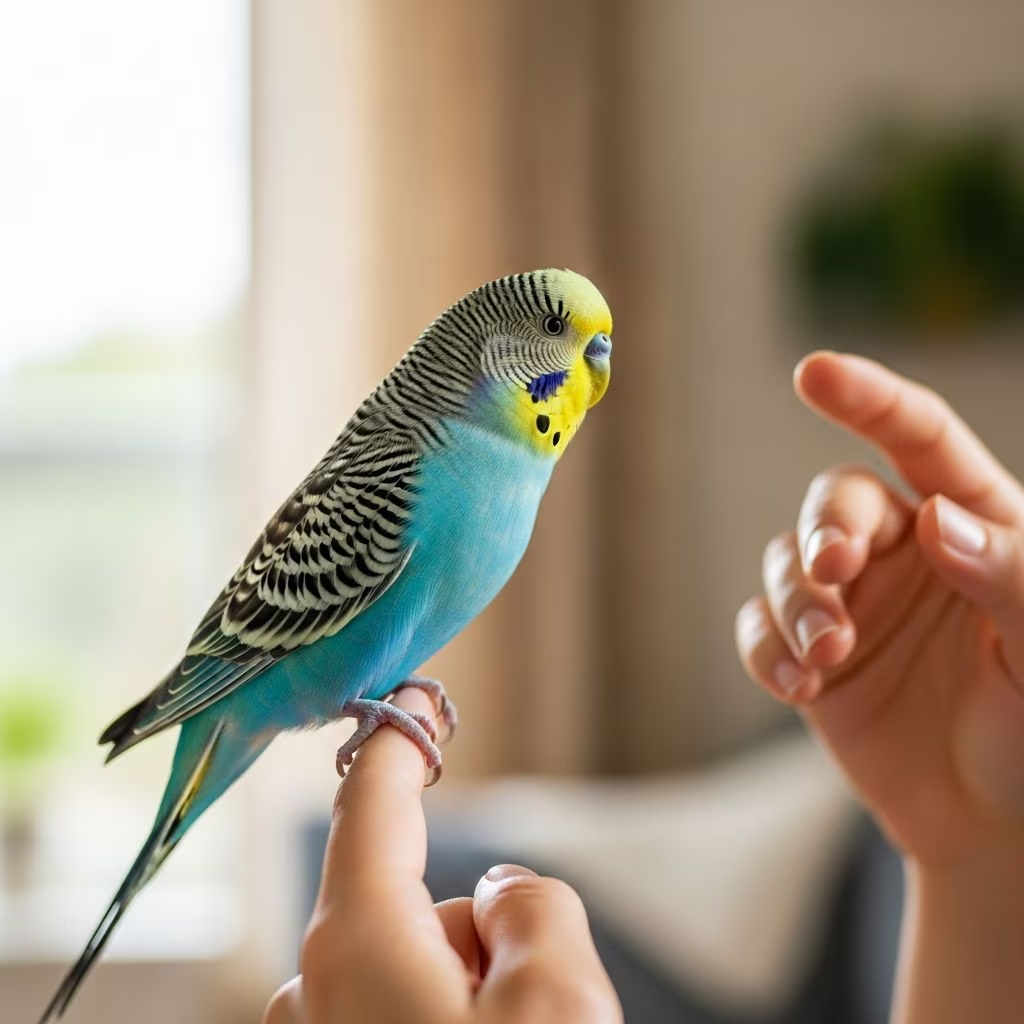
Teach Your Parakeet To Talk: A Comprehensive Guide
Teaching your parakeet or budgie to talk is one of the most rewarding experiences you can have as a bird owner. These intelligent and social creatures possess a remarkable ability to mimic human speech, and with patience, consistency, and the right techniques, you can unlock their vocal potential. Unlike many other parrot species, budgies and parakeets are among the most talented talkers in the avian world, capable of learning an impressive vocabulary of words and phrases.
The journey of teaching your feathered friend to communicate in human language deepens the bond between you and your pet while providing enrichment and mental stimulation. This comprehensive guide covers everything you need to know about teaching your budgie to talk, from understanding when they’re learning to implementing effective training techniques.
Understanding Your Budgie’s Learning Process
When Is Your Budgie Actually Learning?
One of the most common questions bird owners ask is whether their budgie learns words when they’re chattering loudly or when they’re quiet and listening. The answer is both, but they serve different purposes. Budgies learn language most effectively during times when they are silent and listening attentively. While they are vocal and chirping, they are practicing or using the words they have already learned. This is an important distinction to understand, as it helps you recognize progress even when your bird isn’t actively speaking.
Even birds that don’t repeat words you say can understand and respond to your communication. You might ask a non-talking bird, “Want a nut?” or “Would you like a shower,” and the bird will react appropriately. This demonstrates that language comprehension and speech production are two separate skills, and your budgie is learning both throughout your interactions.
The Social Nature of Budgie Communication
Budgies are inherently social birds, and this trait is key to understanding why they learn human speech. In the wild, parrots learn the flock language from other flock members. In your home, your parrot’s flock consists of you, your family members, and any other pets you have. Consequently, budgies learn from their environment, and one of the things they naturally pick up is human speech. By understanding this social drive, you can leverage it to facilitate language learning.
Gender Differences in Parakeet Speech
An interesting observation many budgie owners make is that male parakeets tend to be much more vocal than females. This isn’t coincidental—there’s a real biological difference in talking ability between genders.
Male budgies can learn to talk quite well, often developing impressive vocabularies and clear pronunciation. Female parakeets, however, generally don’t learn to talk, regardless of training effort. This same pattern is also true of cockatiels. However, it’s important to note that in most other parrot species, males and females talk equally well, making budgies and cockatiels somewhat unique in this regard.
If you have both male and female budgies, you may notice that your male makes many sounds—both loud and soft—while your female has a single loud chirp. Your male’s varied vocalizations could indicate that he’s trying to talk and is on his way to learning to speak, even if it’s not yet clear to your ears.
Recognizing When Your Budgie Is Talking
Mumbling and Early Attempts
When a budgie is just learning to talk, it often mimics the intonation of language while mumbling the words. These early attempts shouldn’t be overlooked or dismissed as ordinary chirping. Instead, praise these efforts enthusiastically and try to identify what your budgie might be saying. When your male budgie makes many loud and soft sounds, he could very well be attempting to talk and working toward learning to speak.
High-Pitched Voices and Clarity Issues
Many budgies have a high-pitched, fast voice that is genuinely difficult for human ears to understand. It’s entirely possible that your budgie is already talking, but you haven’t recognized it yet. Listen closely to your bird’s vocalizations, or invite a child over to listen—children’s ears are often more attuned to the higher frequencies budgies use. You might be surprised to discover that your budgie is already speaking!
Effective Talking Techniques for Parakeets
The Foundation: Talk to Your Budgie Naturally
The most effective way to teach your budgie to talk is to simply talk to him. Treat him like you would a child learning words. Name objects in your home, consistently say “Hello” and “Goodbye” when you come and go from the room, thank him when you give him food, and name the people and pets in your household. This natural, conversational approach creates an immersive language environment that encourages learning.
Specific areas to focus on include:
- Greeting your budgie with “Hello” every time you approach
- Using simple one or two-word phrases consistently
- Naming familiar objects and family members repeatedly
- Asking questions like “Want a shower?” before providing activities
- Thanking your budgie for good behavior
Responding to Your Budgie’s Needs
Effective teaching isn’t a one-way street. You should actively respond to what your budgies say and what they ask for through their behavior. If your budgie wants to come out of the cage, seems hungry, needs to use the potty, or is ready to sleep, talk to him about that situation. Show that you understand by behaving appropriately—letting him out, covering his cage, offering a treat, or taking him to a suitable spot. This two-way communication reinforces language learning and strengthens your bond.
Progressive Training Steps
Teaching your budgie to talk follows a progression from simple to complex:
- Step 1: Build Comfort and Trust – Ensure your budgie is comfortable with your presence before attempting speech training. Spend time near the cage while reading or watching television.
- Step 2: Interactive Play – Play with your budgie and teach basic commands like “step up” to strengthen your bond.
- Step 3: Introduction to Language – Begin reading bedtime stories or speaking to your budgie with consistent intonation.
- Step 4: Start with Salutations – Begin with simple greetings like “Hello” or “Goodbye,” sticking to one salutation until your bird responds.
- Step 5: Name Objects – Name things while interacting with them. For example, say “apple” each time you offer an apple until your budgie repeats it back.
- Step 6: Build Phrases – Once single words are mastered, move to short phrases like “Good bird” when your budgie does something well.
- Step 7: Create Rhythm and Jingles – Make phrases rhyme or have a rhythmic quality, which helps your budgie remember and reproduce them.
Advanced Training Considerations
Using Music and Recordings
Many bird owners play CDs of phrases or music for their budgies. While this can be helpful, direct interaction is typically more effective than passive listening. Combining live conversation with occasional recordings creates a well-rounded language environment that keeps your budgie engaged and motivated.
Understanding Body Language
Your budgie communicates through body language as well as vocalizations. If your budgie looks toward the kitchen while making unclear sounds, he might be telling you he’s hungry. By recognizing and responding to these behavioral cues, you validate his attempts at communication and reinforce the connection between words, actions, and outcomes.
Repetition and Revision
Repetition is absolutely essential for successful speech training. Keep your budgie’s vocabulary fresh by consistently using learned words in appropriate situations. This prevents him from forgetting his speech and helps him understand the context in which words are used. Regular revision of vocabulary ensures long-term retention and clarity.
Encouraging Progress and Maintaining Motivation
Recognizing and Rewarding Attempts
When your budgie makes an attempt at speaking, even if it’s unclear or mumbled, pay attention and provide positive reinforcement. Encourage him to speak those words more clearly, and repeat his words back to him to acknowledge that you heard him. This positive feedback instills confidence and motivates your budgie to continue attempting speech.
Celebrating Small Victories
Every step toward clear speech is a victory worth celebrating. Whether your budgie is just starting to mimic intonation or has successfully learned his first word, acknowledge and praise these achievements. Your enthusiasm will inspire your budgie to continue learning and attempting new vocalizations.
Frequently Asked Questions
Q: Are all budgies capable of learning to talk?
A: Budgies are among the most talented talking parrots, but individual ability varies. Male budgies are far more likely to develop speech than females. Additionally, factors like age, early socialization, and individual personality affect talking ability.
Q: How long does it take to teach a budgie to talk?
A: There’s no set timeline. Some budgies may begin repeating words within weeks, while others take months. Consistency in training and interaction is more important than speed.
Q: Can female budgies learn to talk?
A: While some female budgies may learn a limited number of words or phrases, they generally don’t develop speech abilities like males do. However, female budgies can understand human language and respond appropriately to commands and questions.
Q: Is it better to teach one budgie alone or in a pair?
A: Teaching a single budgie or a young male may result in faster speech development, as the bird focuses on bonding with you. However, budgies are social and may be happier with a companion, even if it affects speech development.
Q: What if my budgie doesn’t seem to be learning?
A: Remember that understanding language and producing speech are separate skills. Your budgie may understand more than he expresses. Continue consistent, natural interaction, and be patient. Some budgies simply prefer chirping over talking, which is perfectly normal.
Q: Can CDs or recordings teach my budgie to talk?
A: While recordings can supplement your training, they’re most effective when combined with live interaction. Your budgie is more motivated to learn from direct social interaction with you than from passive recordings.
Building a Stronger Bond Through Speech Training
Teaching your budgie to talk is more than just a training exercise—it’s a pathway to deepening your relationship with your feathered friend. Through consistent interaction, patient listening, and active engagement, you create a rich communication channel that strengthens your bond daily. Observing your budgie’s personality emerge through his attempts at speech, recognizing his preferences and moods, and responding appropriately builds trust and companionship.
Have fun with your budgies! Teaching them to talk and observing their actions are ways in which your relationship will deepen, as will your enjoyment of your pet birds. Remember that every budgie is unique, and the journey to speech is as individual as the bird itself. Celebrate progress, maintain patience, and enjoy the amazing adventure of communicating with your intelligent, charming parakeet.
References
- Teach Your Parakeet To Talk — Chewy Education Team. 2025. https://www.chewy.com/education/bird/parakeet/teach-your-budgie-parakeet-to-talk
- How to Teach a Budgie to Talk? Start with Basics — Alen AxP. 2021. https://www.youtube.com/watch?v=Jz9qrwavMC4
- How I taught My Budgie to Talk — Denny the Budgie. 2020. https://www.youtube.com/watch?v=zxo4MYPG9dQ



