

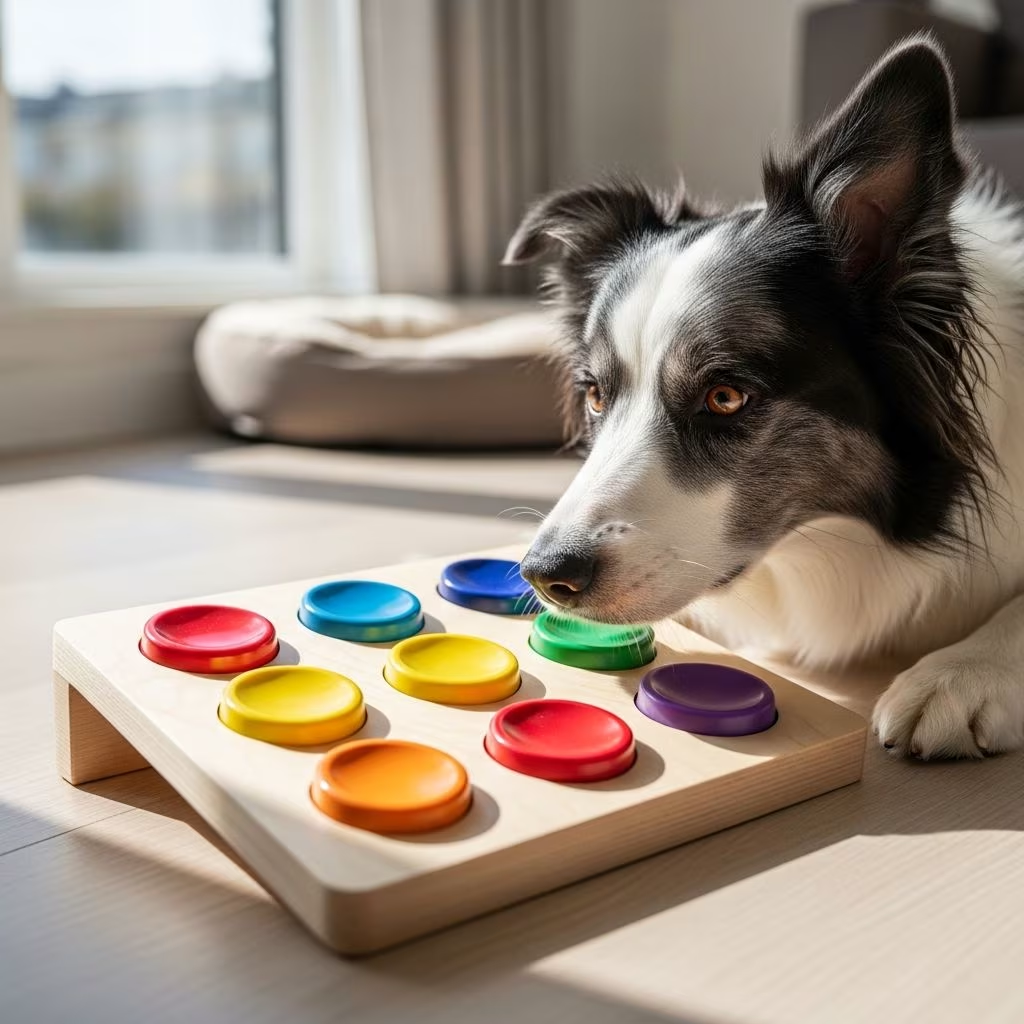
Dogs communicate through body language, barks, and whines, but innovative tools like recordable speech buttons allow them to express needs and desires using human words. This guide explores whether dogs can truly “talk,” provides step-by-step training techniques from basic cues to button mastery, and shares insights from recent research confirming intentional use.
Can Dogs Talk?
Dogs excel at reading human cues and understanding words, laying the foundation for advanced communication tools. “Dogs certainly do use body language and vocalizations to communicate with us,” notes trainer Levy. For instance, barks signal frustration, while lip-licking indicates uncertainty.
Research shows dogs comprehend human speech and can respond via targeting—touching objects with nose or paw. This skill extends to buttons that play recorded words like “outside” or “play,” enabling dogs to request activities deliberately. A recent study confirms dogs use buttons intentionally, forming two-word combinations like “outside now,” ruling out mere imitation.
While dogs won’t converse fluently like humans, buttons bridge the gap, enhancing mutual understanding. Average dogs learn about 89 words, with exceptional ones mastering over 1,000. Patience and consistency unlock this potential.
How to Train a Dog to Talk
Button training builds on foundational skills: verbal cues, hand signals, targeting, and bell-ringing. Progress sequentially for reliable results. Enjoyment is key—keep sessions short (5-10 minutes) and reward generously.
Teaching Verbal Cues
Verbal cues form the bedrock. Follow these steps:
- Get your dog’s attention.
- Lure with a treat to perform the behavior (e.g., sit).
- Reward success.
- Lure again while saying the cue (e.g., “sit”).
- Reward.
- Fade the lure, using only the cue.
- Reward consistency.
Repeat until reliable. Dogs can learn endless cues if training remains fun.
Teaching Hand Signals
Pair visuals with words for versatility:
- Get attention and lure the behavior.
- Reward.
- Display hand signal, then lure.
- Reward.
- Fade lure, use signal only.
- Pair with verbal cue.
- Practice to consistency.
This mirrors natural dog communication via gestures.
Teaching Nose Targeting
Targeting is crucial for buttons:
- Present your hand; reward sniffing.
- Repeat until quick investigation.
- Reward strong touches only.
- Increase distance.
- Add “touch” command.
Transfer to objects: Present near dog, say “touch,” gradually distance. Use for bells next.
Teaching Bell Ringing
For “go outside”:
- Hang bell at door height.
- Say “touch”; reward with door open and treat.
- Require strong touches.
- Always reward independent rings lavishly.
My miniature poodle mastered this quickly, reducing accidents.
Button Training
Once targeting is solid, introduce buttons—recordable devices playing words like “walk” or “treat.” Recent studies affirm dogs use them deliberately, combining words meaningfully. Training is association-based: Repeat ~50 times per word.
Step-by-Step Button Training
- Record the word (e.g., “ball”).
- Press button and present ball immediately.
- Repeat extensively.
- Say “touch”; reward button press with ball.
- Dog presses independently; follow through.
- Expand to objects, actions (e.g., “outside”), behaviors.
Model by pressing during real scenarios: Press “outside” while going out. Use shaping—reward approximations toward the goal.
Advanced Tips from Experts
- Positive Reinforcement: Praise over treats to avoid confusion.
- Modeling: Use buttons in context (press “play” during toy time).
- Respond Always: If dog sniffs “outside,” press and act.
- Start Small: 1-3 buttons with frequent words; expand slowly.
- Clear Goals: Begin with simple actions like “tug” before complexes.
Trainer Elizabeth H. “Kizz” Robinson emphasizes breaking down goals. Videos abound online for troubleshooting.
What Are Dog Communication Buttons?
These electronic pads let dogs “speak” needs via recorded phrases in your voice, from “outside” to “love you.” Mats keep them stable. Pre-recorded or customizable, they foster association between press, word, and outcome.
Inspired by speech pathologist Christina Hunger’s work with her dog, shared via Hunger4Words. Accounts like Bunny the Dog, Parker, and TheyCanTalk.org showcase progress. Some build custom setups or join studies.
Communication Button Use Cases
Buttons reduce frustration by clarifying wants: requests for walks, play, potty. They enrich bonds, revealing cognitive depths—dogs combine words innovatively. Pioneers view this as advancing animal cognition understanding.
| Use Case | Benefits | Example Buttons |
|---|---|---|
| Potty/Outside | Fewer accidents | Outside, potty |
| Play/Activities | Increased engagement | Play, ball, tug |
| Food/Comfort | Clear needs | Treat, love you, mad |
| Advanced | Complex requests | Outside now, play ball |
Frequently Asked Questions (FAQs)
Do dog talking buttons really work?
Yes, with patience. Dogs learn associations, using buttons intentionally per studies.
How many words can dogs learn?
Average: 89; border collies up to 1,000+. Buttons expand vocabulary.
How long does button training take?
Weeks to months per word; ~50 reps initially. Progress varies by dog.
What if my dog loses interest?
Keep sessions fun, short; use high-value rewards. Model frequently.
Are buttons suitable for all dogs?
Most, but start with motivated pups. Puppies learn fastest.
References
- Can You Teach a Dog to Talk? Five Training Techniques — Kinship. 2023. https://www.kinship.com/dog-behavior/teach-dog-talk-buttons
- What Are Dog Communication Buttons? And How to Use Them — Kinship. 2023. https://www.kinship.com/dog-behavior/teach-dog-to-talk-with-buttons
- Dogs Really Do Understand Speech Buttons, New Study Finds — Kinship. 2023. https://www.kinship.com/dog-behavior/dog-speech-buttons-news
- Dogs Are Able to Combine Words Using Speech Buttons, New Study — Kinship. 2023. https://www.kinship.com/dog-behavior/speech-buttons-study-dogs-can-combine-words



