

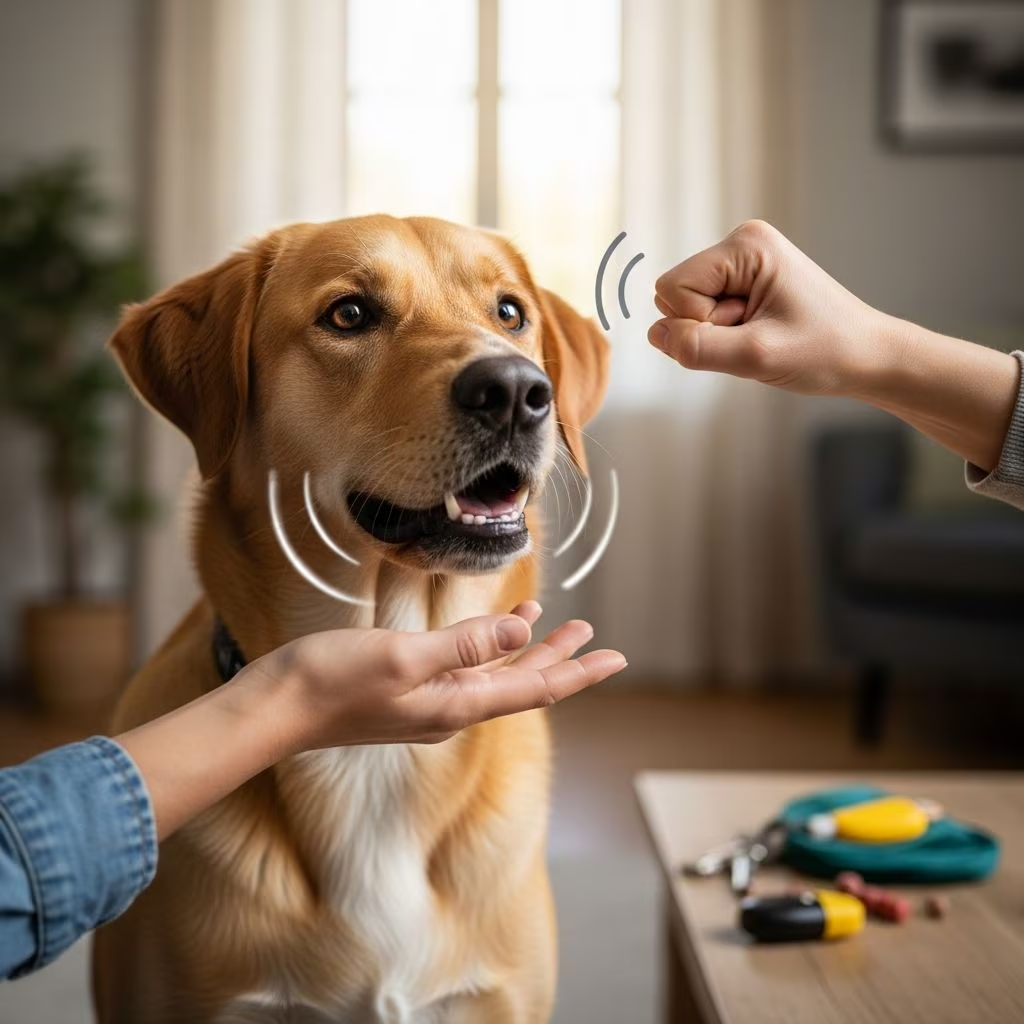
How to Teach Your Dog to Speak and Be Quiet
Teaching your dog to speak on command is one of the most entertaining and useful tricks you can train. Not only does it provide mental stimulation and strengthens your bond with your pet, but it also opens the door to teaching the equally important “quiet” command. Whether you want to show off to friends and family or create a communication system with your dog, mastering these commands requires patience, consistency, and the right approach.
Understanding the Speak Command
Before diving into training, it’s essential to understand what the speak command actually is. The speak command teaches your dog to bark on cue, transforming what is often considered an undesirable behavior into a controlled, rewarded action. This command is particularly valuable because it provides you with a way to manage your dog’s natural barking instinct. Instead of constantly telling your dog to stop barking, you can redirect that energy into controlled moments.
Teaching speak is often the prerequisite to teaching quiet, as many trainers find it much easier to teach a dog to be quiet once they understand barking on command. Dogs that know speak tend to be more responsive to the quiet command because they understand the relationship between barking and not barking as controlled behaviors rather than instinctive reactions.
Preparation and Prerequisites
Essential Training Tools
Before you begin training your dog to speak, gather the necessary materials to set yourself up for success. You’ll need high-value rewards that motivate your dog more than everyday treats. These could be special training treats, small pieces of chicken, cheese, or your dog’s favorite toy. The reward should be something your dog is willing to work for and gets excited about.
Consider whether you’ll use clicker training, which involves marking the exact moment your dog performs the desired behavior with a distinct clicking sound, followed by a reward. Clicker training is highly effective because it creates a clear association between the behavior and the reward. If you choose this method, invest in a quality clicker tool.
You’ll also need a quiet training space with minimal distractions, especially during initial training sessions. As your dog progresses, you can gradually introduce more distracting environments, but starting in a controlled setting increases your chances of success.
Assessing Your Dog’s Natural Tendencies
Different dogs have different natural barking tendencies. Some dogs are naturally vocal and bark frequently, while others are naturally quiet. Understanding your dog’s personality will help you tailor your training approach. Highly vocal dogs may learn the speak command quickly but might have more difficulty with the quiet command. Quieter dogs might require more motivation and excitement to encourage barking initially.
Step-by-Step Training Methods
Method 1: Using Play and Excitement
The most natural way to encourage barking is through play and excitement. Get your dog in a playful mood by running, jumping, or engaging in active play. During these sessions, your dog will naturally become excited and likely bark out of enthusiasm. The moment your dog barks, immediately mark this behavior. If using a clicker, click at the exact moment of the bark. If not using a clicker, use a distinct marker word like “yes!” or “good!” in an enthusiastic tone.
Immediately follow the marker with a reward. The timing is crucial—your dog must understand that the bark is what earned the reward. Repeat this process multiple times during play sessions, and your dog will begin to associate barking with positive outcomes. After several repetitions over multiple training sessions, introduce your cue word or phrase, such as “speak!” just before the dog is likely to bark.
Method 2: Using Toys as Motivation
Many dogs will bark when they’re excited about a toy. Hide a favorite toy behind your back and create anticipation. As your dog gets frustrated or excited about not being able to see the toy, they’ll likely bark. The moment they bark, bring out the toy and engage in play as the reward. This method is particularly effective for toy-motivated dogs and creates a strong positive association with barking.
Once your dog consistently barks in response to the toy being hidden, you can add your verbal cue. Say “speak!” right before you hide the toy or right as you anticipate the bark. With practice, your dog will begin to bark at the verbal cue alone, even without the toy hidden behind your back.
Method 3: Environmental Triggers
Some dogs naturally bark at certain environmental triggers like doorbells, knocking on the door, or other dogs barking. You can capitalize on these natural triggers to teach the speak command. When these triggers occur naturally and your dog barks, mark and reward the behavior. Over time, you can add your verbal cue right before the trigger occurs, eventually transitioning to having your dog bark on command without needing the environmental stimulus.
Adding Verbal and Hand Signals
Introducing Your Verbal Cue
Once your dog is barking consistently during training sessions, introduce your chosen verbal cue. Say your cue word (“speak”, “bark”, or whatever you prefer) right before your dog is about to bark, or at the exact moment of barking. Be consistent with your chosen word and tone. Use the same word every single time to avoid confusion. Repeat this process until your dog begins to anticipate the bark when they hear your cue.
Adding a Hand Signal
Once your dog responds reliably to the verbal cue, you can introduce a hand signal. A common hand signal for speak involves holding your hand open with palm facing the dog, then repeatedly closing your four fingers against your thumb in a speaking motion. Use the hand signal in combination with your verbal cue until your dog recognizes the hand signal alone can prompt the behavior.
Teaching hand signals is valuable because it allows you to communicate with your dog at a distance or in situations where verbal commands might not be practical. Many trainers recommend introducing the hand signal while the verbal cue is already strongly established, then gradually fading out the verbal cue.
The Critical Importance of Timing
One of the most crucial elements of successful training is timing. You must reward your dog within one to two seconds of the desired behavior occurring. Any longer delay, and your dog may not make the connection between the behavior and the reward. This is why clicker training is so effective—the click is a distinct sound that marks the exact behavior you’re rewarding.
Many new trainers struggle with timing, but with practice, you’ll develop the ability to instantly mark and reward behaviors. Some trainers use a verbal marker like “yes!” if they don’t use a clicker. Whatever marking system you choose, consistency and speed are essential.
Teaching the Quiet Command
Once your dog reliably speaks on command, teaching quiet becomes much easier. The quiet command is actually more valuable in many situations than speak, as it gives you a way to manage excessive barking.
Building on Speak Training
Start by having your dog speak on command. After your dog barks once or twice, wait for a natural pause in barking. The moment your dog stops barking, mark the behavior with your marker word and reward. Repeat this process, gradually working toward longer periods of quiet. After several repetitions, introduce your quiet cue word (“quiet”, “shush”, or “enough”) right before or at the moment your dog stops barking.
Reinforcing Duration
Once your dog understands the quiet command, gradually increase the duration of quiet before rewarding. Start by rewarding immediately after the dog stops barking, then work up to rewarding after 2-3 seconds of quiet, then 5 seconds, and so on. This teaches your dog that longer periods of quiet earn better rewards.
Handling Continuous Barking
If your dog continues barking after you’ve given the quiet command, don’t yell or punish. Instead, redirect their attention or remove them from the trigger causing the barking. Once they’ve settled down, reward the quiet behavior. Some trainers use the method of withholding rewards when the dog barks after the quiet command, then rewarding heavily when the dog finally stops barking.
Common Challenges and Solutions
Dog Won’t Bark on Command
If your dog isn’t barking despite your best efforts, increase the excitement level. Run around, jump, play more energetically, or use more enticing toys. Some dogs respond well to other dogs barking, so playing recordings of dogs barking in the distance might help. Be patient—some dogs are naturally less vocal and may take longer to learn this command.
Dog Barks Too Much After Learning Speak
This is a common issue where dogs become more vocal after learning the speak command. The solution is to ensure you’re teaching the quiet command with equal emphasis. Also, only reward single barks or very brief bursts of barking, not extended barking sessions. This helps your dog understand that controlled, quiet barking is rewarded, not excessive vocalization.
Dog Doesn’t Respond Consistently
Consistency in training is essential. Make sure you’re using the exact same cue word, hand signal, and tone every time. Train regularly, but in short sessions (5-10 minutes) to maintain your dog’s focus. If your dog is inconsistent, you may need to go back a step in the training process and rebuild foundation.
Practical Applications for Speak and Quiet Commands
Beyond entertainment, these commands have several practical applications. You can teach your dog to bark to alert you when they need to go outside for bathroom breaks. Some dogs learn to bark at the door when they need to go out, and this can be formalized into a speak command triggered by that need. Similarly, the quiet command helps manage barking when someone approaches your house or during situations where barking is undesirable.
The speak and quiet commands also provide valuable mental stimulation and strengthen your relationship with your dog. Training sessions create positive interactions and communication between you and your pet, building trust and bond.
Training Timeline and Expectations
Most dogs can learn the speak command within 2-4 weeks of consistent training, though this varies based on the dog’s age, temperament, and previous training experience. Puppies often learn faster, though they can also be more easily distracted. Adult dogs may take slightly longer but often have better focus. The quiet command typically takes longer to master than speak, sometimes requiring 4-8 weeks or more, especially if it involves managing existing barking issues.
Don’t rush the process. Consistency is more important than speed. Training a few minutes daily will produce better results than one long training session per week.
Advanced Training and Variations
Once your dog masters basic speak and quiet, you can explore advanced variations. Some trainers teach “whisper,” where the dog barks at a very low volume. This involves rewarding quieter barks and withholding rewards for loud barks. You can also teach your dog to speak and quiet on hand signals alone, without verbal cues.
The AKC Trick Dog program recognizes speak as one of over 20 commands that can earn your dog official titles and certifications. Participating in these programs can provide goals and structure for your training journey.
Frequently Asked Questions
Q: At what age can I start teaching my dog to speak?
A: You can begin teaching speak once your puppy is at least 8 weeks old and has had some basic training foundation. Puppies learn quickly but have limited attention spans, so keep sessions short and fun.
Q: Will teaching speak make my dog bark more?
A: Not if you balance it with proper quiet command training. In fact, teaching speak gives you control over barking and can actually reduce nuisance barking by channeling the behavior into specific, controlled moments.
Q: How often should I practice these commands?
A: Practice 5-10 minute sessions daily for best results. Short, frequent sessions are more effective than longer, infrequent ones for maintaining focus and building habits.
Q: Can older dogs learn to speak and be quiet?
A: Yes, dogs of any age can learn these commands. Senior dogs may take slightly longer and might have physical limitations, but the training methods work for dogs of all ages.
Q: What if my dog is not food motivated?
A: Use whatever motivates your dog—toys, play, praise, or access to favorite activities. Some dogs respond better to play and social interaction than food rewards.
Q: Is clicker training necessary?
A: No, but it’s highly effective. You can use a verbal marker like “yes!” instead. The key is having a distinct, immediate way to mark the desired behavior.
References
- Train Your Dog to Speak — American Kennel Club. 2024. https://www.akc.org/expert-advice/training/train-your-dog-to-speak/
- Teaching Your Dog to Speak on Command — Battersea Dogs & Cats Home. 2024. https://www.battersea.org.uk/pet-advice/dog-advice/teaching-your-dog-speak-command
- Training the Non-Biting Dog to Bark at the Door — Leerburg.com. https://leerburg.com/bark.htm
- Positive Reinforcement in Dog Training — International Association of Canine Professionals. 2023. https://www.iacp.com
- Clicker Training for Dogs: A Foundation Guide — Karen Pryor Academy. 2024. https://www.kpaacademy.org



