

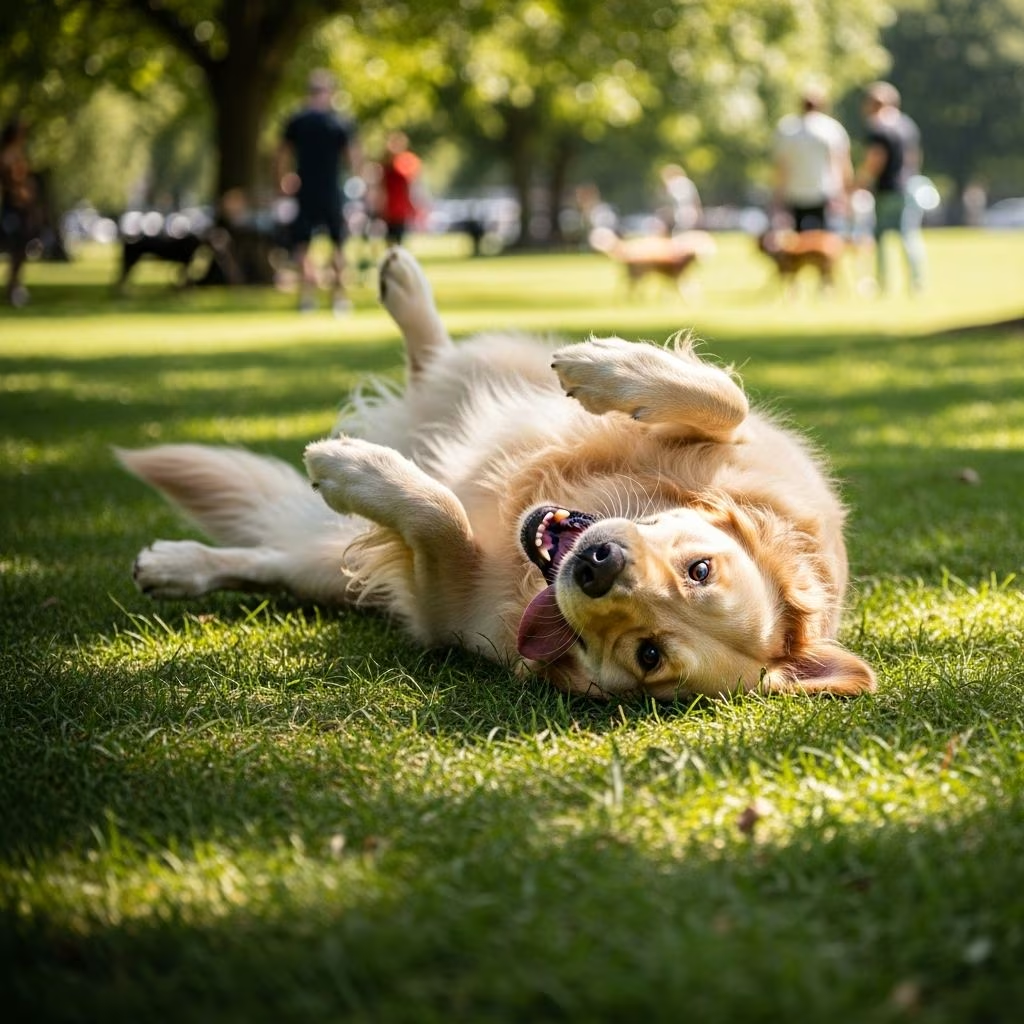
Teaching your dog to roll over is an engaging way to strengthen your bond while providing mental stimulation and physical exercise. This trick builds on foundational obedience skills and uses positive reinforcement to encourage natural movements. With consistent practice, most dogs can master it within a few sessions, leading to impressive performances that delight owners and audiences alike.
Why Train the Roll Over Trick?
The roll over command offers numerous benefits beyond mere entertainment. It enhances your dog’s flexibility, coordination, and responsiveness to cues, which can improve overall obedience. Regular practice boosts confidence, reduces boredom-related behaviors like chewing or digging, and promotes a healthier lifestyle through low-impact activity. Studies from canine behavior experts highlight how such tricks reinforce the human-canine partnership, making training sessions enjoyable for both parties.
- Mental Engagement: Challenges the brain, preventing cognitive decline in older dogs.
- Physical Health: Gently stretches muscles without high strain, ideal for various ages.
- Obedience Foundation: Reinforces commands like ‘down’ and ‘stay’ for advanced training.
- Bonding Tool: Creates shared fun, deepening trust and communication.
Essential Prerequisites for Success
Before attempting the roll over, ensure your dog reliably responds to basic commands. This prevents frustration and sets a solid base for progression.
| Command | Purpose | Training Tip |
|---|---|---|
| Sit | Establishes initial control and focus. | Use treats to lure into position, rewarding promptly. |
| Down | Starting posture for roll over motion. | Practice in short bursts until instant compliance. |
| Stay | Maintains position during luring. | Gradually increase duration before advancing. |
Puppies under six months may need extra patience due to shorter attention spans, while adult dogs with prior training adapt quickly. Assess your dog’s comfort on soft surfaces to avoid joint stress, especially for larger breeds.
Gathering Your Training Supplies
Minimal equipment is required, focusing on high-value motivators to keep sessions productive.
- High-quality, small treats (e.g., soft, smelly varieties for quick consumption).
- Clicker (optional, for precise timing in positive reinforcement).
- Quiet, distraction-free area like a living room or yard.
- Leash (for puppies prone to wandering).
- Timer for 10-15 minute sessions to maintain focus.
Choose treats your dog finds irresistible but low-calorie to prevent weight gain during frequent rewards. A clicker pairs a distinct sound with treats, accelerating learning through association.
Step-by-Step Training Process
Break the trick into manageable phases, progressing only when each is mastered. Sessions should last 10-15 minutes, 2-3 times daily.
Phase 1: Achieve the Down Position
Command ‘down’ and kneel beside your dog. Observe their natural lean—guide toward the easier direction (e.g., away from extended legs). Reward immediately with praise and a treat to reinforce the posture.
Phase 2: Lure to the Side
Hold a treat at nose level, slowly arc it toward the shoulder in the roll direction. Keep it close (1-2 inches) to follow their head turn. As shoulders lift and they tip onto the side, mark with ‘yes’ or clicker and reward. Repeat 5-10 times until consistent.
Phase 3: Complete the Roll
Extend the lure from shoulder across the back to the opposite side. Your dog should tuck and roll fully. If stuck, gently assist with one hand on hips while luring, praising mid-motion if needed. Reward only full rolls to shape the behavior.
Phase 4: Fade the Lure
Repeat with an empty hand mimicking the motion. Reward from a nearby pouch upon completion. Alternate lured and empty-hand reps to build independence.
Phase 5: Add the Verbal Cue
Say ‘roll over’ before the hand signal, pausing 1-2 seconds initially. Gradually increase delay to 5-10 seconds. Reward verbal-only responses once reliable.
Phase 6: Proof and Generalize
Practice in varied locations (indoors, outdoors, with mild distractions). Use different handlers to ensure robustness. Reduce treats to intermittent rewards, relying on praise.
Timeline: Puppies may take 1-2 weeks; adults often 3-7 days with prior skills.
Advanced Techniques for Polish
Once basic proficiency is achieved, refine for speed and flair.
- Hand Signal Only: Phase out verbal by using signals exclusively intermittently.
- Chain Commands: Link with ‘sit-roll over-stay’ for routines.
- Speed Drills: Reward faster rolls, timing improvements.
- Group Sessions: Train with calm dogs nearby for distraction proofing.
Common Challenges and Solutions
Every dog learns differently; anticipate hurdles with tailored fixes.
| Issue | Possible Cause | Solution |
|---|---|---|
| Won’t roll fully | Physical discomfort or confusion | Break into side-roll only; check for health issues with vet. |
| Stands up during lure | Treat too high/fast | Lower hand, slower arc; return to down repeatedly. |
| Forgets cue | Infrequent practice | Refresh with lures weekly; short daily reps. |
| Distracted | Environment or fatigue | Train hungry, in quiet spots; end positively. |
| Resistance in seniors | Joint stiffness | Use softer surfaces, gentler assists; consult vet. |
Stay patient—frustration transfers to your dog. Always end on success with a known command.
Health and Safety Considerations
Not all dogs suit full rolls. Brachycephalic breeds (e.g., Bulldogs) risk breathing issues; deep-chested ones may prefer alternatives. Monitor for limping or reluctance, consulting a vet for arthritis or spinal concerns. Train on padded mats to cushion joints, limiting sessions for puppies under 16 weeks to avoid growth plate stress.
Practice Schedule for Mastery
Consistency trumps intensity. Sample weekly plan:
- Days 1-3: 3×10-min sessions, focus Phases 1-3.
- Days 4-7: Introduce cue, fade lure.
- Week 2+: Vary environments, reduce rewards.
- Ongoing: 2-3x weekly maintenance.
Track progress in a journal, noting reps to success per phase.
Frequently Asked Questions (FAQs)
Can any dog breed learn to roll over?
Yes, with adaptations for size, age, and health. Flexible breeds like Labs excel; rigid ones like Dachshunds need caution.
How long until my dog rolls over on command?
Typically 3-14 days, depending on prior training and consistency.
Should I use a clicker?
Recommended for precise marking, especially with food-motivated dogs.
What if my dog rolls the wrong way?
Encourage natural lean direction; switch sides later for balance.
Is roll over suitable for puppies?
Yes, after vaccinations and basic commands, starting around 8-12 weeks.
Next Tricks to Build On Roll Over
Progress to ‘play dead’ (extends down-stay), ‘crawl’ (low movement), or ‘bang’ (play death with paw up). These chains showcase talents at events.
References
- How to Teach a Dog to Roll Over — American Kennel Club. 2023-10-15. https://www.akc.org/expert-advice/training/how-to-teach-a-dog-to-roll-over/
- How to Teach Your Dog to Roll Over in 7 Simple Steps — Chewy. 2024-05-20. https://www.chewy.com/education/dog/training-and-behavior/training-training-tips-how-to-teach-your-dog-to-roll-over
- Master the Roll Over Command: Easy Training Tips for Your Puppy — BTS K9. 2023-08-12. https://btsk9.com/uncategorized/master-the-roll-over-command-easy-training-tips-for-your-puppy/
- The Easy Way to Train Your Dog to Roll Over — NutriSource Pet Foods. 2024-02-28. https://nutrisourcepetfoods.com/blog/the-easy-way-to-train-your-dog-to-roll-overthe-easy-way-to-train-your-dog-to-roll-over/
- Principles of Animal Learning and Behavior — American Psychological Association (via AKC references). 2022-01-01. https://www.apa.org/pubs/books/4318148



