

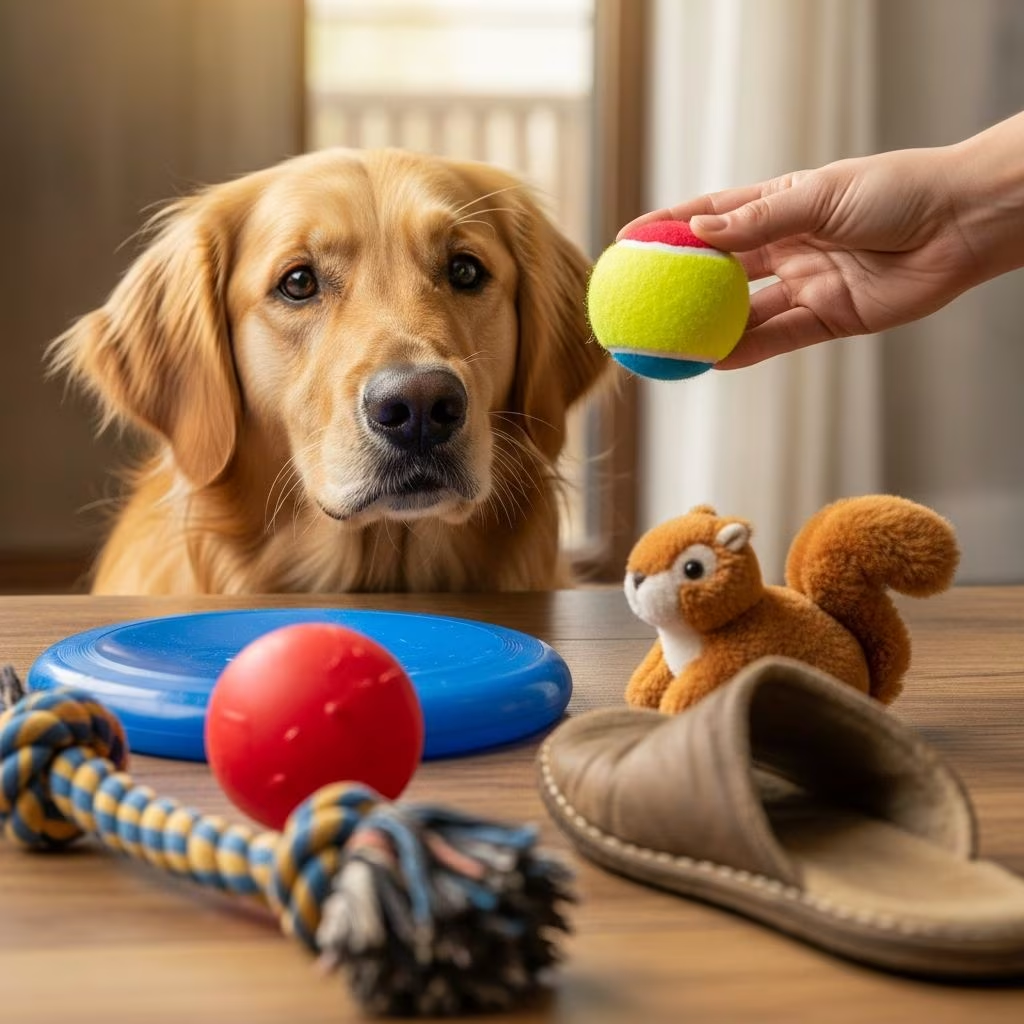
Teaching dogs to recognize and respond to object names enhances their cognitive abilities and deepens the human-canine relationship. This skill, known as object discrimination, allows pets to fetch specific items on command, turning everyday interactions into stimulating mental workouts.
The Science Behind Dogs Learning Names
Dogs possess remarkable cognitive potential, capable of learning hundreds of words under the right conditions. Research demonstrates that breeds like Border Collies can distinguish toy names rapidly, with some mastering over 100 items. This ability stems from their capacity for associative learning, where repeated pairing of sounds with objects builds strong neural connections.
Unlike human language processing, dogs rely on auditory cues and context. Consistent repetition and positive reinforcement solidify these associations, improving memory and problem-solving skills. Studies show that regular vocabulary training correlates with reduced anxiety and increased confidence in dogs.
Essential Preparation for Successful Training
Before starting, select 3-5 distinct objects that suit your dog’s interests and safety. Opt for toys if your dog is motivated by play, or neutral household items like a mug or remote for calmer sessions. Ensure items vary in size, texture, and appeal to facilitate discrimination.
- Choose durable, non-toxic objects your dog can’t easily destroy.
- Avoid overly exciting items initially to maintain focus.
- Prepare high-value treats and a clicker for precise marking.
- Set up in a quiet, distraction-free space.
Gather a training journal to track progress, noting which objects are mastered and session durations. Consistency across family members prevents confusion from varying commands.
Building the Foundation: Nose Targeting Basics
Begin with nose targeting to teach intentional interaction with objects. Place one item on the floor within sniffing distance. As your dog investigates, mark the behavior with a click or “yes!” and reward immediately from your hand, not the object.
Repeat until the dog reliably touches the item with their nose on cue. This step builds curiosity without overwhelming the learner. Sessions should last 5-10 minutes, 3-5 times daily, fading treats gradually to maintain engagement.
| Step | Action | Tips for Success |
|---|---|---|
| 1 | Place object; wait for sniff | Mark slightest interest |
| 2 | Repeat 10-20 times | Keep dog stationary |
| 3 | Add verbal cue like “touch” | Reward promptly |
Assigning Names to Single Objects
Once targeting is solid, introduce the object’s name. Say the name (e.g., “ball”) just before the nose touch, then mark and treat. Perform 15-20 repetitions per session, emphasizing the word’s rhythm and tone.
Use simple, one-syllable names for beginners: ball, rope, bone. Consistency is crucial—never change names mid-training. Gradually increase distance, asking the dog to move toward the named item.
For non-toy items, like “keys” or “slippers,” follow the same protocol. This expands utility, enabling practical tasks like fetching leashes or medications.
Introducing Discrimination: Multiple Objects
With one named object mastered, add a second unnamed item nearby. Ignore interactions with the new object. Cue the known name (e.g., “touch ball”), pausing for the dog to select correctly. Reward generously for right choices; reset calmly for errors.
Position the named item favorably at first—closer or more accessible. Slowly equalize positions as accuracy improves to 80-90%.
- Start with named toy vs. neutral object (e.g., book).
- Progress to two toys, prioritizing less exciting distractors.
- Increase to 3+ items, randomizing positions.
If errors persist, revert to single-object sessions. Patience prevents frustration; celebrate small victories.
Expanding the Vocabulary: Adding More Items
Master a second object using the single-item naming process before combining. Aim for 5-10 objects initially, reviewing known ones daily. Line up items and cue sequentially: “Get ball, then rope.”
Advanced learners can handle 20+ items. Incorporate movement: hide objects or scatter them, cueing retrieval by name. This mimics real-life scenarios, enhancing adaptability.
Table of Progression Milestones:
| Week | Objects Learned | Discrimination Level |
|---|---|---|
| 1 | 1-2 | Single vs. none |
| 2-3 | 3-5 | Among 2-3 distractors |
| 4+ | 6-10 | Line-up of 5+ items |
Overcoming Common Training Hurdles
Dogs may confuse similar-sounding names or grab wrong items due to excitement. Solutions include distinct names (e.g., “blue ball” vs. “squeaky”), shorter sessions, and higher-value rewards for correct picks.
Toy-motivated dogs excel faster; food-driven ones benefit from object-to-treat exchanges. For low-interest dogs, pair with play or walks. Track error patterns in your journal to refine methods.
- Issue: Grabbing distractors – Make target easiest access.
- Issue: Loss of interest – Vary objects, end on high note.
- Issue: Family inconsistency – Hold group training sessions.
Cognitive and Behavioral Benefits
Object name training stimulates brain regions tied to memory and executive function, akin to puzzle-solving for humans. Participants show improved focus, reduced destructiveness, and faster obedience.
Breed isn’t a barrier—mixed breeds learn comparably with motivation. Puppies absorb quickest, but seniors benefit from mental sharpness preservation.
Real-World Applications and Fun Games
Apply skills practically: fetch phone during calls, slippers for guests, or meds for owners. Games like “name relay” (retrieve chain of items) build endurance.
Host “vocabulary challenges” with friends, competing on item counts. Video progress for social media inspiration, fostering community.
Advanced Techniques for Expert Learners
For prodigies, teach categories (e.g., “toy” vs. “tool”) or stacked commands (“ball then water”). Use platforms or leashes for distance work. Integrate with agility or service dog tasks.
Record sessions for self-review, adjusting based on body language cues like hesitation signaling confusion.
Frequently Asked Questions
How long until my dog learns object names?
Basic discrimination takes 1-4 weeks with daily practice; advanced vocabularies months. Individual aptitude varies.
Can any dog breed do this?
Yes, all breeds and mixes can learn with tailored motivation.
What if my dog loses interest?
Shorten sessions, use favorites, or alternate with play.
Should I use a clicker?
Recommended for precision, but verbal markers work.
What’s the maximum vocabulary?
Some dogs reach 200+ words with dedication.
References
- How to Teach Your Dog Object Names — Whole Dog Journal. 2023. https://www.whole-dog-journal.com/training/cognitive-skills/how-to-teach-your-dog-object-names/
- How to teach your dog the name of objects — Animal Wellness Magazine. 2022. https://animalwellnessmagazine.com/trick-identify-objects/
- How to Teach Your Dog to Identify Toys by Name — American Kennel Club (AKC). 2023-10-15. https://www.akc.org/expert-advice/training/dog-trick-identify-toys-by-name/
- Train Your Dog to Retrieve Items By Name — YouTube (Peach on a Leash). 2023. https://www.youtube.com/watch?v=z2OXnRy7MwY
- Teach Your Dog to Name Their Toys — YouTube (Peach on a Leash). 2022. https://www.youtube.com/watch?v=2KFbbmwr5o0
- Super Smart Dogs Learn the Names of Toys Quickly — Companion Animal Psychology. 2021-10-20. https://www.companionanimalpsychology.com/2021/10/super-smart-dogs-learn-names-of-toys.html



