

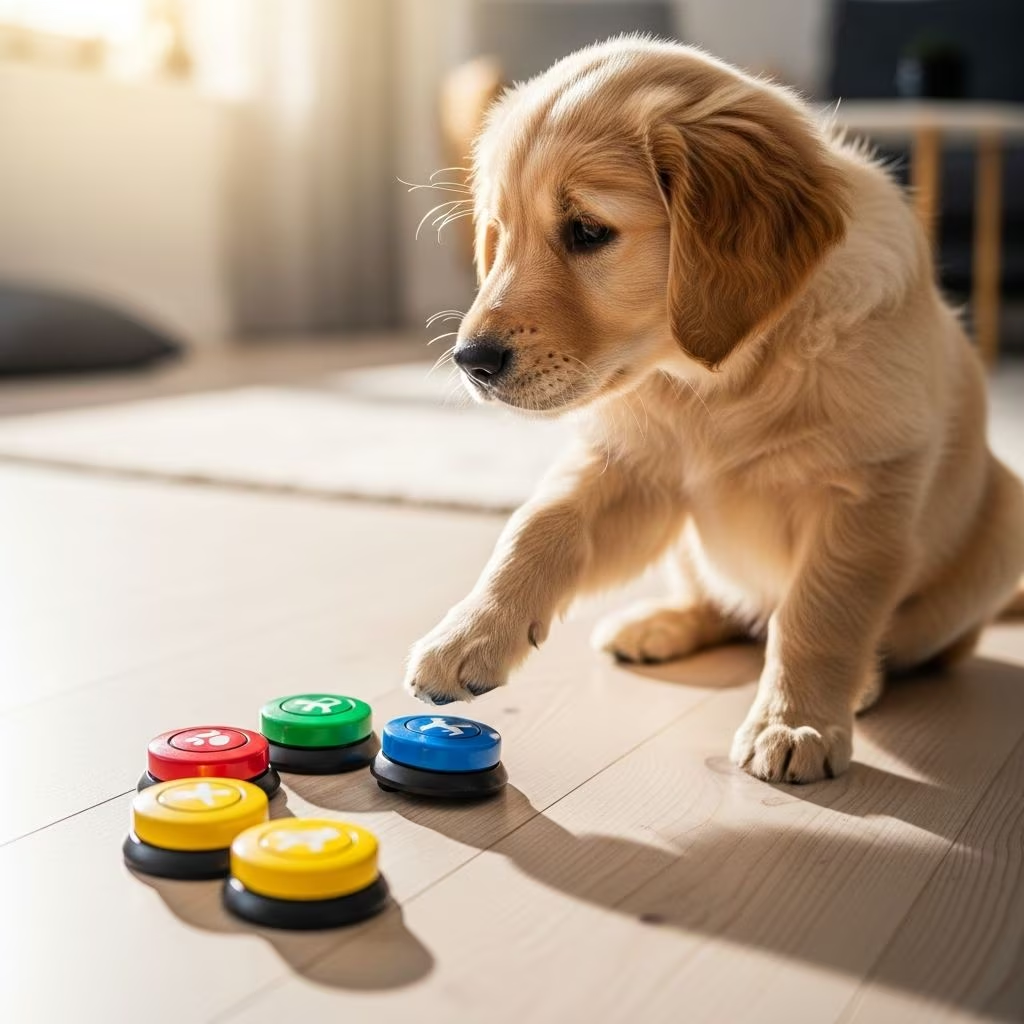
Teach Your Pup to ‘Talk’ with Dog Buttons—Here’s How
Dog buttons (also referred to as talking pet buttons or speech buttons) are interactive communication buttons that, when pressed by the pet, play pre-recorded words or phrases. This innovative technology has revolutionized how pet owners understand their dogs, transforming simple body language into clear verbal communication. Unlike traditional dog training methods, speech buttons give your canine companion an actual voice to express their thoughts, feelings, and needs.
What Are Dog Buttons and How Do They Work?
Dog buttons are recordable sound devices that utilize augmentative and alternative communication (AAC) technology adapted from human speech assistance tools. The buttons themselves are durable, colorful devices designed to withstand the wear and tear of dog paws. When your dog presses a button with their paw or nose, it plays a pre-recorded word or phrase that you’ve programmed into it.
Words and phrases programmed onto these buttons can include anything and everything, from practical commands like “food” and “outside” to more expressive phrases like “love you!” The beauty of dog buttons lies in their flexibility—pets can even combine words together to create phrases and short sentences, allowing for more complex communication than simple yes-or-no responses.
Dogs can communicate their wants, needs, thoughts, feelings, questions and observations about their environment using speech buttons. This gives dogs a genuine voice in the household, transforming moments where communication might be missed. For example, if a dog stands by the door because they need to potty and nobody sees it, communication is lost. But if the dog pushes a button that says “Potty!” humans—even if they’re somewhere else in the house—will hear it and ensure their dog’s needs are met.
The Science Behind Dog Button Communication
Recent scientific research has validated that dog buttons are more than just a novelty—they’re a legitimate communication tool. A groundbreaking study published by researchers from the University of California San Diego revealed that dogs trained with soundboard buttons can indeed comprehend specific words, producing contextually appropriate responses. This empirical research emerged from the world’s largest longitudinal project on button-trained pets, providing concrete evidence that dogs understand the meaning behind the words they’re pressing.
The study tested 30 pet dogs that had already been trained by their owners to use soundboards, including a variety of mixed-breed and purebred dogs. Scientists examined whether the dogs made contextually appropriate responses to words like “outside,” “play,” and “food” when these words were spoken by humans or activated by pressing the soundboard button. The findings demonstrated that dogs weren’t simply randomly pressing buttons—they were making deliberate, meaning-based selections.
Getting Started: Step-by-Step Button Training
Step 1: Start with a Couple of Simple Words Your Dog Already Knows
Success with dog buttons begins with proper introduction and strategic word selection. Start with one or two buttons featuring words your dog is already familiar with, such as “potty,” “play,” “walk,” or “eat.” As long as the words are about patterns or routines that already exist in your dog’s life, you’re setting yourself up for success. This familiarity makes the connection between pressing the button and the resulting action much easier for your dog to understand.
Step 2: Record Your Voice Clearly and Consistently
When recording words onto the buttons, speak clearly and use a consistent tone. Remember to record just one word per button—this clarity is crucial for your dog to make the association. Use your natural speaking voice rather than a high-pitched “dog voice,” as this helps your dog understand that you’re recording actual communicative words.
Step 3: Place Buttons in Accessible Locations
Position your buttons in easily accessible locations where your dog naturally gravitates toward these items or activities. If you’re teaching a “food” button, place it near the kitchen or feeding area. For an “outside” button, place it by the door. This strategic placement helps your dog naturally discover the buttons and understand their purpose through proximity and context.
Step 4: Model the Behavior Consistently
Dogs learn through observation and modeling. Consistently demonstrate how to use the buttons by pressing them yourself before the associated activity occurs. For instance, press the “outside” button before you take your dog out for a bathroom break. Over time, your dog will begin to understand the cause-and-effect relationship between pressing the button and the resulting action.
Step 5: Reinforce Correct Usage Immediately
When your dog presses a button, immediately follow through with the associated action. If they press “play” and you play with them, this positive reinforcement strengthens the association between button pressing and desired outcomes. Consistency and immediate rewards are essential for effective training.
Building Your Dog’s Button Vocabulary
Choosing Your First Buttons
Begin with 2-3 high-motivation words such as “outside,” “play,” or “food.” These basic needs are easier for dogs to associate with outcomes, making initial training more successful. These foundational buttons establish the principle of button communication before you expand into more abstract concepts.
Gradually Introducing New Words
As your dog masters basic buttons, you can expand their vocabulary and communication abilities. Gradually introduce new buttons for different activities, objects, or feelings. Many dogs successfully learn dozens of words through careful, progressive training. Keep new additions meaningful and relevant to your dog’s daily life. Adding a “water” button or “nap” button extends their ability to communicate their current state and immediate needs.
Creating Button Combinations
Advanced users can teach their dogs to combine buttons to form simple sentences. For example, “play ball” or “water outside.” This progression should occur naturally as your dog’s understanding grows. Some dogs have demonstrated the ability to combine buttons in innovative ways, creating more nuanced communication that reveals deeper thoughts and desires.
Tips for Successful Button Training
Training your dog to use speech buttons requires patience, consistency, and positive reinforcement. Here are essential strategies to maximize your success:
- Start with high-frequency words tied to your dog’s daily routines and immediate needs
- Use consistent voice recordings so your dog recognizes the same speaker each time
- Practice short, frequent training sessions rather than lengthy, infrequent ones
- Celebrate every successful button press with enthusiasm and immediate rewards
- Keep buttons clean and in good working condition for reliable responses
- Document your dog’s progress to identify patterns in their communication
- Be patient—some dogs learn faster than others, and individual variation is normal
- Avoid punishing wrong button presses; instead, redirect and reinforce correct ones
Benefits of Dog Button Communication
Enhanced Bonding
Deepen your relationship with your pup through more transparent communication. Understanding what your dog wants and needs creates a stronger emotional connection and demonstrates that you genuinely listen to them.
Mental Stimulation
Keep your dog’s mind active and engaged with communicating routines and activities. Button training provides cognitive enrichment that helps prevent boredom and destructive behaviors associated with understimulation.
Behavior Management
Understand your pet’s needs more precisely, potentially reducing unwanted behaviors. When dogs can communicate their needs clearly, they’re less likely to resort to problem behaviors like excessive barking or destructive chewing born from frustration.
Providing a Clear Voice
Historically speaking, non-human animals, including dogs, have used their body language to communicate. But dog buttons can now essentially give them a “voice.” This is particularly valuable in multi-dog households or busy families where subtle body language signals might be missed.
Choosing the Right Buttons for Your Dog
When selecting buttons for your training journey, consider the following factors:
- Durability: Buttons must withstand repeated paw presses without breaking or malfunctioning
- Size: Ensure buttons are appropriately sized for your dog’s paw—too small and they’ll struggle to activate them
- Sound Quality: Clear, easily distinguishable recordings prevent confusion
- Battery Life: Reliable power sources keep buttons functional during training sessions
- Design: Colorful buttons with tactile feedback help dogs understand they’re interactive devices
Brands like FluentPet and Hunger For Words are popular options among pet parents, offering durable, dog-friendly buttons specifically designed for this purpose.
Common Questions About Dog Buttons
How do dog talking buttons work to help dogs communicate their needs?
Dog talking buttons are programmable devices that play recorded words when pressed. Dogs learn to associate pressing specific buttons with desired outcomes, allowing them to communicate basic needs and wants to their owners. The buttons serve as a bridge between your dog’s intentions and your ability to understand and respond to them.
What are the best steps to train my dog to use talking buttons effectively?
Start with 2-3 high-frequency words, consistently model button use, and immediately reinforce correct usage. Begin with simple concepts like “outside” or “food,” and gradually expand as your dog shows understanding. Patience and consistency are the cornerstones of successful button training.
Can dogs really understand words through buttons, or is it just learned behavior?
Research suggests dogs can develop genuine associations between buttons and their meanings, beyond simple learned responses. While the extent of their comprehension varies, many dogs show evidence of understanding the communicative purpose of buttons. The UC San Diego study specifically demonstrated that dogs make contextually appropriate responses, indicating true comprehension rather than random pressing.
What types of words or phrases should I start with when teaching my dog to use buttons?
Begin with highly motivating words related to daily activities or needs, such as “outside,” “play,” “food,” or “water.” These concrete concepts are easier for dogs to learn and remember. Starting with routines your dog already experiences makes the button-to-action connection more intuitive.
How long does it typically take for a dog to learn button communication?
The timeline varies depending on your dog’s age, breed, temperament, and prior training experience. Some dogs grasp basic button concepts within days, while others may take several weeks. Consistency in practice and immediate reinforcement significantly accelerate the learning process.
Can any dog learn to use buttons, or are some breeds better suited?
Dogs of all breeds and mixes can learn to use buttons. Intelligence levels vary, but motivation and consistent training matter more than breed. Even senior dogs can learn button communication, making it accessible to virtually any dog in any life stage.
Advanced Communication Possibilities
Once your dog masters basic buttons, the possibilities for communication expand dramatically. Some dogs have learned to combine buttons to create short sentences, relay information about their emotional state, and even indicate specific observations about their environment. Researchers are actively studying how dogs themselves use buttons, examining whether they actively select buttons to request things from humans and whether they intentionally select the right button based on their needs and wants.
The remarkable case of Bunny, a dog featured in the UC San Diego research, demonstrated this advanced capability when she pressed buttons to communicate that she had a paw injury, showing that dogs can use this technology to communicate needs that go beyond their regular routine.
Integrating Buttons Into Daily Life
For buttons to become truly effective, they need to be part of your dog’s daily environment. Place them strategically throughout your home where they’ll naturally encounter them during regular activities. Refer to the buttons yourself during daily routines—this modeling helps your dog understand their purpose. Over time, button communication will become second nature, creating a bridge between your dog’s internal world and your external understanding of their needs.
References
- Dogs Understand Words from Soundboard Buttons, Study Reveals — University of California San Diego. 2024-03-11. https://today.ucsd.edu/story/dogs-understand-words-from-soundboard-buttons-study-reveals
- Talking Dogs: The Paradoxes Inherent in the Cultural Phenomenon of Button-Trained Dogs — PMC/National Center for Biotechnology Information. 2024. https://pmc.ncbi.nlm.nih.gov/articles/PMC11591343/
- Can Dogs Talk With Buttons? Using Soundboards to Communicate — American Kennel Club. 2024. https://www.akc.org/expert-advice/training/soundboard-trained-dogs/
- Intro to Button Teaching — FluentPet Learning Center. 2024. https://fluent.pet/blogs/learning-center/intro-to-button-teaching
- How to Use Dog Communication Buttons — Sit Means Sit Athens. 2024. https://sitmeanssit.com/dog-training-mu/athens-dog-training/how-to-use-dog-communication-buttons/
- A Complete Guide to Dog Buttons: Teaching Your Pet to Communicate — PetsCare.com. 2024. https://www.petscare.com/news/post/guide-to-dog-buttons



