Teach Your Dog Bell Ringing for Potty Signals
Master the step-by-step process to train your dog to ring a bell, improving house training and communication effortlessly.
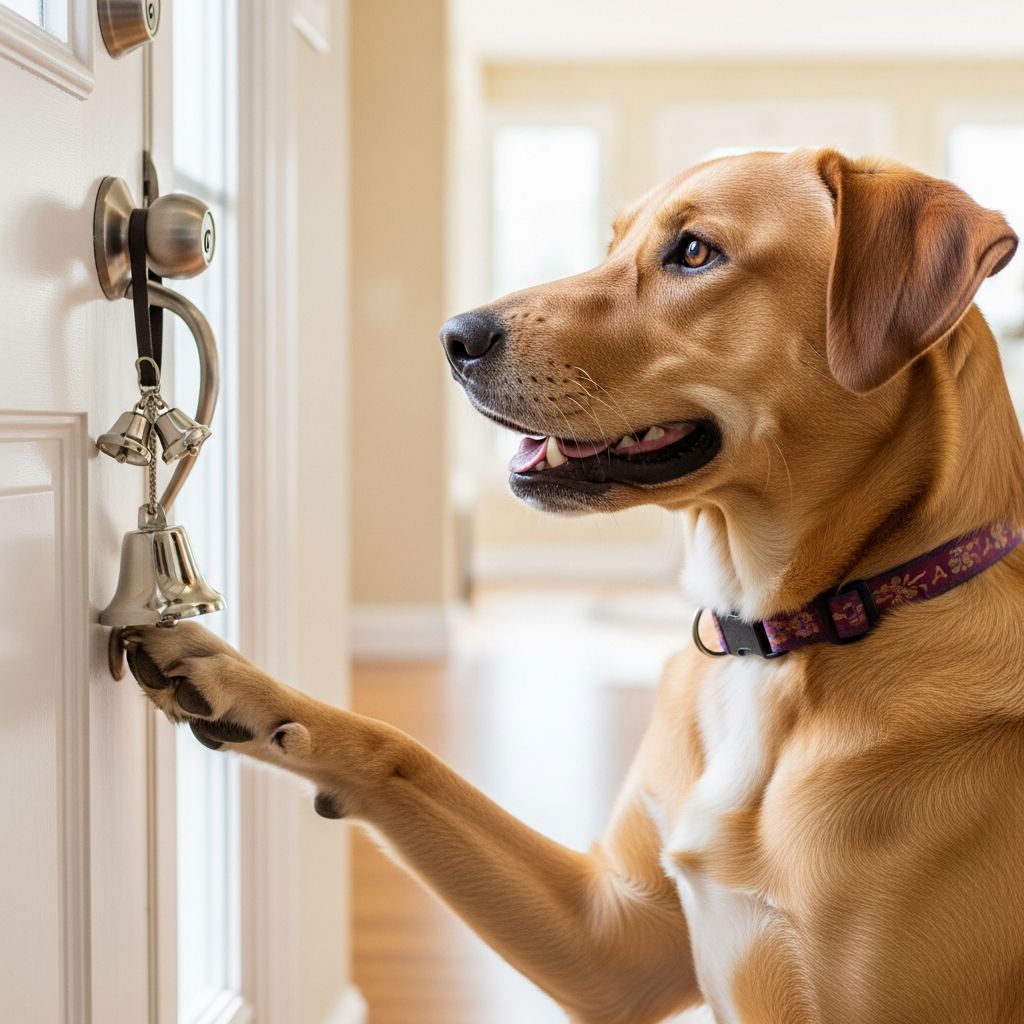
Training your dog to ring a bell to indicate the need for a potty break revolutionizes house training. This method empowers dogs to communicate clearly, minimizing accidents and strengthening the bond between pet and owner. By associating the bell ring with outdoor relief, dogs learn a reliable signal that benefits both parties.
Why Bell Training Transforms Housebreaking
Bell training addresses common housebreaking challenges, especially for puppies or adopted dogs adjusting to new routines. Traditional methods rely on owners interpreting subtle cues like whining or circling, which can lead to missed opportunities and indoor messes. A bell provides a distinct, audible signal that eliminates guesswork.
Positive reinforcement forms the foundation of this approach, encouraging dogs to repeat desired behaviors through rewards rather than punishment. This builds confidence and reduces anxiety associated with elimination needs. Studies from animal behavior experts highlight how such communication tools enhance welfare by allowing dogs to express needs proactively.
Selecting the Perfect Bell Setup
Choose durable, dog-safe bells designed for training. Options include sets of small jingle bells on a strap, attachable to doorknobs, or freestanding units with adjustable volume. Ensure the bells produce a clear, consistent sound without being overly loud to avoid startling sensitive dogs.
- Material considerations: Opt for non-toxic metals or coated plastics to prevent chewing damage.
- Placement strategy: Mount near the exit door at nose or paw height for easy access.
- Customization: Select bells with adjustable straps for different dog sizes, from tiny Chihuahuas to large Labs.
Test the setup by gently ringing it yourself; the sound should be pleasant and distinct from household noises. Position it consistently to build spatial memory in your dog.
Step-by-Step Guide to Initial Bell Introduction
Begin with short, engaging sessions of 5-10 minutes, 3-4 times daily. Consistency accelerates learning.
- Present and observe: Hold the bell at your dog’s level. Most will investigate out of curiosity, nosing or pawing it.
- Mark the action: The instant contact occurs—whether nose touch or ring—say “Yes!” or use a clicker, followed by a high-value treat like chicken bits.
- Repeat and fade: Withdraw the bell after each success, then re-present. Aim for 10-20 repetitions per session until the dog anticipates touching it.
This shaping technique leverages natural exploration, turning accidental rings into intentional behaviors without force.
Building the Potty Association
Transition from simple touching to purposeful ringing by linking it to actual needs. Time sessions around predictable potty times: post-meals, naps, or play.
| Timing | Action | Reward |
|---|---|---|
| After eating | Present bell, cue “outside?” | Treat + door open |
| Post-nap | Guide to bell, assist ring if needed | Praise + immediate outing |
| During play breaks | Verbal prompt + bell presentation | High-value treat |
Guide gently at first: If no ring, touch their nose to the bell while saying the cue, then rush outside. Praise lavishly upon elimination. Gradually reduce assistance as fluency develops.
Adding Verbal Cues and Commands
Introduce a specific word like “bell” or “potty bell” once touching is reliable. Pair it with presentation: “Bell!” then hold it forward. Mark and reward only correct responses.
Practice in varied contexts—different rooms or handlers—to promote generalization. Ignore unrelated pawing; reward only bell interactions. This refines discrimination, ensuring the bell signals potty exclusively.
Addressing Common Training Hurdles
Challenges arise, but solutions exist:
- Excessive ringing: Limit access; only present during likely need times. Return inside without reward if no potty occurs after 5 minutes.
- No interest: Use a food lure under the bell initially, fading it out. Enhance value with play-toys as secondary rewards.
- Paw damage risk: Train nose targeting first with hand touches, transferring to bell. Discourage paws verbally.
- Forgetting the cue: Revert to basics; short daily refreshers maintain proficiency.
Patience prevents frustration. Track progress in a journal to monitor improvements.
Pros and Cons of Bell Training
| Advantages | Disadvantages |
|---|---|
| Potential for play-time misuse | |
| Initial time investment (2-4 weeks) | |
| Possible door wear from paws | |
| Requires consistent enforcement |
Weigh these factors against your lifestyle. For busy households, the long-term convenience outweighs setup effort.
Advanced Techniques for Reliability
Once basic proficiency is achieved, elevate training:
- Grading responses: Reward loud rings with treats, quiet ones with praise, no ring with neutral ignore.
- Multi-dog homes: Use distinct bells or positions per dog to avoid confusion.
- Nighttime use: Hang bells low for quiet access; respond promptly to maintain trust.
Incorporate into daily routines seamlessly. Over time, dogs self-initiate rings accurately.
Tools and Products for Success
Recommended items include strap bells from reputable pet brands, clickers for precise marking, and treat pouches for quick access. Avoid cheap imports prone to tangling or muting.
Video resources demonstrate real-time demos, ideal for visual learners. Apps track training milestones, gamifying the process for families.
Frequently Asked Questions (FAQs)
Can any dog learn bell ringing?
Yes, puppies as young as 8 weeks and senior dogs adapt well, provided sessions are short and positive.
How long until my dog rings independently?
Typically 1-4 weeks with daily practice; varies by breed, age, and prior training.
What if my dog rings for attention only?
Ignore non-potty rings, escort outside briefly, and return if no elimination. Consistency corrects misuse.
Is clicker training necessary?
No, but it sharpens timing. Verbal markers like “Yes!” work effectively too.
Does this help with separation anxiety?
Indirectly, by improving communication, reducing frustration from unmet needs.
Long-Term Maintenance Strategies
Sustain success with occasional refreshers and prompt responses. Rotate bell positions slightly to keep dogs engaged. Monitor for health issues mimicking false alarms, like UTIs.
Integrate with crate training or schedules for comprehensive housebreaking. Celebrate milestones to reinforce the habit positively.
References
- Train a Dog to Ring a Bell — Whole Dog Journal. 2023-05-15. https://www.whole-dog-journal.com/training/train-a-dog-to-ring-a-bell/
- Train Your Dog to Ring a Bell To Go Outside — Rogue Dog Training. 2022-11-10. https://www.roguedogtraining.com/TrainerTips/Train-Your-Dog-To-Ring-A-Bell-To-Go-Outside
- Ring and Reward Bell Training with Blue-9 — Blue-9 Pet Products (YouTube). 2023-08-20. https://www.youtube.com/watch?v=C4WTJ-v0Dbk
- Bell Training Your Dog Really Works — The Dog Stop. 2024-02-14. https://thedogstop.com/blog/bell-training-your-dog-really-works-heres-how-to-do-it/
- Teach Your Dog How to Ring a Bell — Sit Stay Learn (YouTube). 2023-03-05. https://www.youtube.com/watch?v=cWaB1e5BQyU
- How to Train Your Puppy to Ring a Bell to Potty — Clicker Training. 2022-09-30. https://clickertraining.com/how-to-train-your-puppy-to-ring-a-bell-to-potty/
Similar Articles








Read full bio of medha deb