

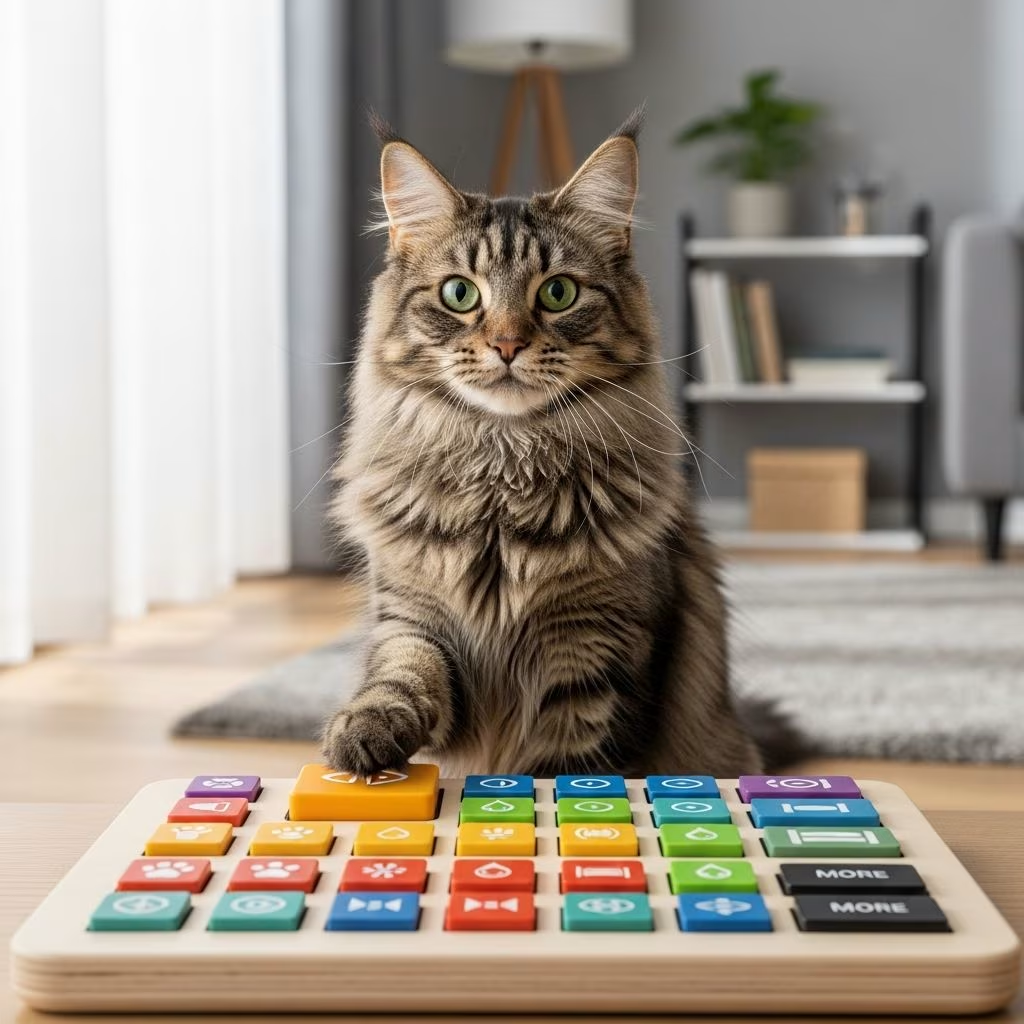
How to Teach Your Cat to ‘Talk’ with Buttons
Imagine having a real, two-way conversation with your cat where they can express their feelings, desires, and thoughts through actual words. While it may sound like science fiction, teaching your cat to use talking buttons is an achievable goal that can transform your relationship with your feline companion. Teaching your cat to talk with buttons boasts plenty of benefits: it strengthens your bond, provides another opportunity for communication, and stimulates their brains, which can, in turn, improve their behavior and mood. The good news is that teaching cats to use speech buttons can be done in just a few simple steps.
What Are Cat Buttons and How Do They Work?
Cat buttons, also referred to as talking pet buttons or communication buttons, are interactive devices that allow pets to communicate with their owners in a structured way. These are recordable buttons that, when pressed by the pet, audibly repeat a word or phrase that’s been pre-recorded by the pet parent.
Words and phrases programmed onto these recordable buttons can include anything and everything, from “food” and “play” to “love you!” and “outside.” Pets can even combine words together to create phrases and express more complex thoughts. For example, Justin Bieber the Cat uses the “food” and “birds” buttons together, indicating that he’d like to hunt the birds he sees outside the window.
Through consistent use and modeling of the buttons, cats can learn to communicate their wants, needs, thoughts, feelings, questions and observations about their environment with the press of a button. This creates a bridge between human and feline communication that was previously impossible.
What Are the Benefits of Cat Buttons?
Cat talking buttons offer numerous advantages for both you and your feline friend. Understanding these benefits can motivate you to start training your cat right away.
Allow Your Cat to Express Wishes and Desires
With talking buttons, your cat can communicate directly what they want or need. Rather than relying on meowing, body language, or other indirect signals, your cat can be straightforward and ask for food, playtime, attention, or anything else they desire. “[Justin Bieber the Cat] uses [the buttons] to get my attention all the time,” according to his owner. “It’s a more straightforward way for him to ask for what he wants. He can be really direct and ask for food or to play.”
Strengthen Your Bond
Using talking buttons creates a deeper connection between you and your cat. This enhanced form of communication allows for clearer, more reciprocal interactions that strengthen the human-cat relationship. Cats can express emotions and needs, and you can respond more accurately to what they’re communicating, creating a more fulfilling relationship for both parties.
Stimulate Their Brain and Improve Behavior
Teaching your cat to use speech buttons exercises their brain and can help reduce the boredom and stress they feel. Mental stimulation through button training provides enrichment that many indoor cats desperately need. “I’ve noticed a change in his mood,” according to owners who’ve implemented button training. “I feel like he’s happier. He’s less likely to misbehave or act out when he wants attention. He just lets me know what he wants.” This mental stimulation can lead to improved behavior, reduced destructive tendencies, and an overall better mood.
Reduce Destructive Behavior
Expressive outlets like buttons can reduce frustration-driven behaviors by giving cats a way to signal their needs. When cats can clearly communicate what they want, they’re less likely to engage in destructive behaviors born from frustration or boredom.
How Do I Teach My Cat to Use Talking Pet Buttons?
Teaching your cat to use buttons requires patience, consistency, and the right approach. Follow these step-by-step instructions to introduce your cat to this exciting new form of communication.
Step 1: Find the Right Buttons for You and Your Cat
The first step in button training is selecting appropriate buttons. “Any buttons will work as long as you can record words,” according to experts. “It comes down to preference.” However, the most important consideration is the size and pressure sensitivity of the buttons. Look for smaller buttons that don’t require excessive force to activate, as regular cats may struggle with buttons designed for larger dogs.
Popular options include FluentPet, which offers recordable, compact talk buttons for both cats and dogs, along with a customizable hex-tile system for organizing buttons. The compact size of FluentPet’s buttons and pressure sensitivity make them suitable for most cats. Other brands like Hunger for Words also offer viable options for cat button training.
When purchasing talk buttons for cats, find out if any other cat parents have left reviews and note their comments on the size of the buttons, pressure sensitivity, and clarity. You can also look for buttons that have symbols, stickers, and decals to help your cat recognize the buttons more easily.
Step 2: Start with One to Three Buttons Only
Begin by getting just 1 to 3 recordable or pre-recorded talk buttons for your cat. Starting small prevents overwhelming both you and your feline friend. It’s recommended to start with highly motivating words such as:
- Food
- Treats
- Play
These are words your cat will be highly motivated to use because they directly relate to activities and items your cat loves. Put a symbol on each button using stickers or drawings to help your cat visually distinguish between them.
Step 3: Model the Words for Your Cat
Modeling words means using the buttons in the right contexts throughout the day. Cats learn by observing, so the best way to teach your cat to talk with buttons is by using the buttons yourself. Each time you’re about to do a related action, press the corresponding button.
Here are some examples of effective modeling:
- Press the button for “Food” → give them their scheduled meal
- Press the button for “Play” → engage in interactive play with your cat with a wand toy for three to five seconds, then stop playing and hit the button again
- Press the button for “Treats” → immediately give them a treat
With consistency and repetition, your cat will begin to form the association and remember what each button is for. This modeling should happen multiple times throughout the day during natural, relevant moments.
Step 4: Respond When Buttons Are Explored or Pressed
In the beginning of the teaching journey, respond anytime your cat explores a button or uses a word (as much as possible). It’s your response to the words that teaches your cat what they mean. If they accidentally press a button, immediately respond with the action and lots of praise. This helps to positively reinforce the behavior and encourages them to press buttons again.
For example, if your cat accidentally steps on the “play” button, immediately engage them in play and provide enthusiastic praise. This teaches them that pressing the button leads to fun interactions with you.
Step 5: Expand Their Vocabulary Over Time
Once your cat has mastered the initial buttons, you can gradually add more buttons to expand their vocabulary. Consider adding buttons for:
- Subjects: Your name, other family members’ names, other pets
- Emotions: Happy, scared, sick, mad, love you, ouch
- Locations: Couch, bed, kitchen, bathroom, catio, litterbox, outside
- Actions: Water, nap, cuddle, help
As your cat’s vocabulary expands, it’s helpful to place related buttons near each other. This taps into your cat’s spatial memory—their ability to recall where things are and how they’re arranged. Thus, grouping buttons together helps make it easier for them to learn and remember.
What Are the Best Talk Buttons for Cats?
Selecting quality buttons is crucial for successful training. Talk buttons for cats are available both online and in some pet stores. Here’s a comparison of popular options:
| Brand | Features | Best For | Considerations |
|---|---|---|---|
| FluentPet | Recordable, compact buttons; customizable hex-tile system; smaller size; pressure sensitive | Most cats, customizable setups | Popular choice among cat owners; good organization system |
| Hunger for Words | Designed by speech-language pathologist; recordable | Cats and dogs | Professional design background; reliable quality |
| Generic Recordable Buttons | Basic recording functionality; varying sizes | Budget-conscious owners | Quality varies; may require more pressure to activate |
The biggest roadblock people encounter when button training is that the buttons are difficult for their cats to press. Most buttons require more force to press than the average cat can exert. When purchasing, look for buttons that are:
- Appropriately sized for cat paws
- Sensitive to light pressure
- Clear in sound quality
- Durable and well-made
Can Talking Buttons Help with Behavior Problems?
Yes, using talking buttons can help with some behavior problems in cats. The buttons help make things more clear between you and your cat. For example, when a cat can use speech buttons to show what it needs or feels, it might not meow excessively or engage in destructive behaviors.
Buttons provide an outlet for frustration and anxiety, allowing cats to communicate their needs rather than act them out through unwanted behaviors. It’s good to watch the cat’s body language along with the talking buttons to know what it really wants, as body language often provides additional context to their button presses.
By reducing confusion and miscommunication, buttons help create calmer routines and more stable household dynamics. Owners report fewer misunderstandings and more harmonious relationships with their cats.
Advanced Training: Combining Words
Once your cat can communicate several words with the talking buttons, you can show them how to combine buttons to accomplish different tasks and express more complex thoughts. This advanced stage allows your cat to create phrases and more sophisticated communications.
For instance, your cat might press “food” followed by “bird” to indicate they want to hunt birds, or “play” followed by “outside” to request outdoor playtime. This combination ability demonstrates the depth of communication possible with button training and shows how intelligent and communicative cats truly are.
Frequently Asked Questions
Q: How long does it take to teach a cat to use talking buttons?
A: The timeline varies by cat, but with consistent daily modeling and practice, many cats begin responding to buttons within weeks to a few months. Some cats may learn faster than others depending on their personality, motivation level, and your consistency in training.
Q: Are all cats capable of learning to use talking buttons?
A: Most cats can learn to use talking buttons with proper training and patience. However, individual cats have different personalities and learning speeds. Cats that are food-motivated and enjoy interactive play typically learn faster.
Q: What if my cat accidentally presses multiple buttons?
A: This is actually a positive sign! It means your cat is exploring and interacting with the buttons. Simply respond to what seems most relevant or respond to all of them with enthusiastic praise to reinforce button interaction.
Q: Can indoor and outdoor cats learn to use talking buttons?
A: Yes, both indoor and outdoor cats can learn to use talking buttons. The training process is the same regardless of lifestyle, though you may want to add location-specific buttons like “outside” or “catio.”
Q: Do I need special training certification to teach my cat to use buttons?
A: No, you don’t need special certification. Following the basic steps of modeling, positive reinforcement, and consistency is sufficient for most cat owners to successfully train their cats to use talking buttons.
Q: What should I do if my cat shows no interest in the buttons?
A: Try making the buttons more attractive by placing them near areas your cat frequents, using higher-value treats as rewards, or waiting for a more motivated period in your cat’s day. Some cats may need more time to become interested in this form of interaction.
References
- How to Teach Your Cat to ‘Talk’ with Buttons — Chewy Education. 2024. https://www.chewy.com/education/cat/general/cat-talking-buttons
- How to Teach Your Cat to Talk [with Talk Buttons] — Sploov Vets. 2024. https://www.splootvets.com/post/how-to-teach-your-cat-to-talk-with-talk-buttons
- Talking with Cats: Is it Possible with Talking Buttons? — Cat School. 2024. https://www.catschool.co/cat-training-articles/talking-with-cats-is-it-possible-with-talking-buttons
- ‘Talking’ Pets: Can buttons help your cat or dog talk to you? — WHYY. 2024. https://whyy.org/segments/talking-pets-the-citizen-science-project-that-could-reshape-what-we-know-about-animals-and-language/
- How Pet Communication Buttons Help You Talk With Your Dog or Cat — A-Z Animals. 2024. https://a-z-animals.com/articles/how-pet-communication-buttons-help-you-talk-with-your-dog-or-cat/
- Talk to Your Cat: A Guide to Pet Communication Buttons — Pawfusion Hub. 2024. https://www.pawfusionhub.com/post/6f20896e-2616-405b-950a-21ac640eaa08
- Cat Talking With Buttons and Combining Words — Cattitude Adjustment. 2024. https://www.cattitude-adjustment.com/blog/cat-talking-buttons-teaching-combine-words



