

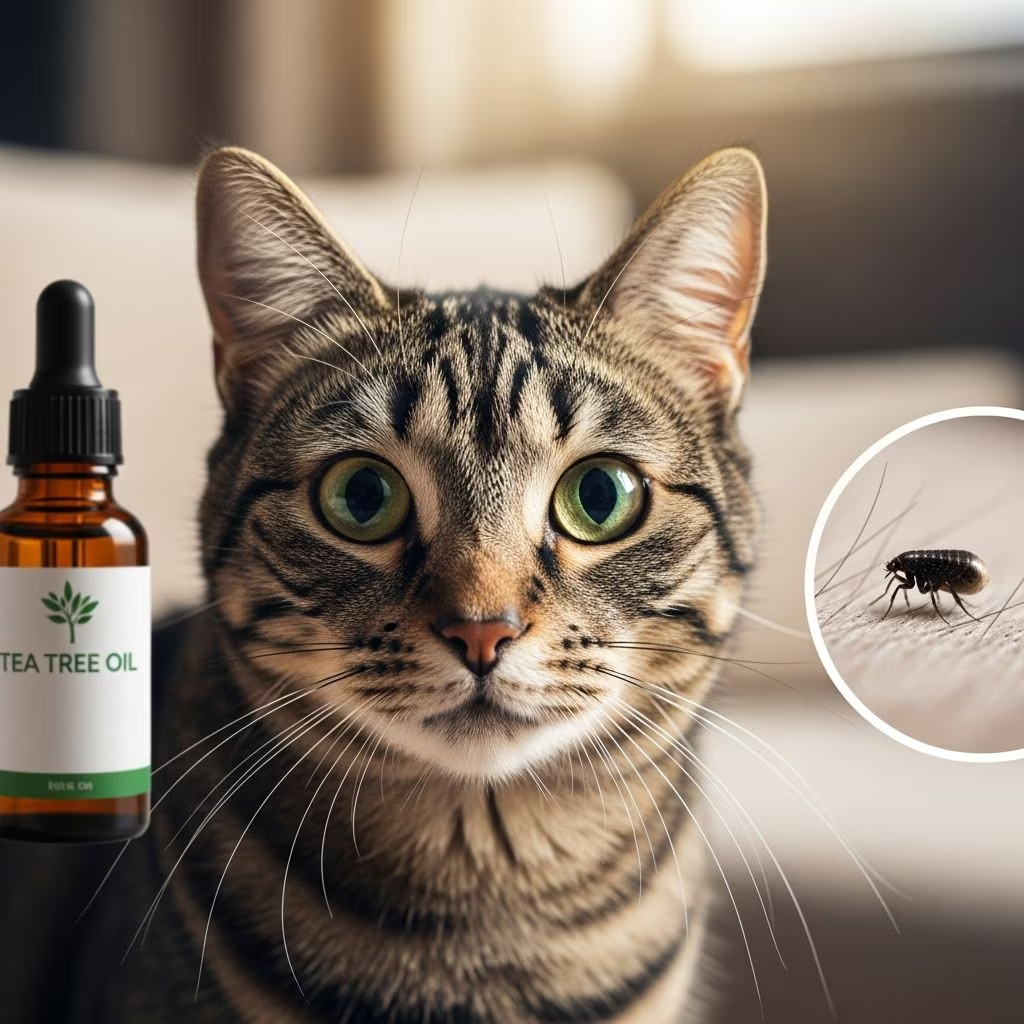
Many cat owners facing flea infestations turn to natural remedies like tea tree oil, drawn by its reputation for antimicrobial properties. However, this essential oil from the Melaleuca alternifolia plant is highly toxic to cats and fails to provide reliable flea control. Cats lack the liver enzyme glucuronyl transferase needed to metabolize compounds like terpenes in tea tree oil, leading to dangerous toxin buildup even in small amounts.
The Flea Life Cycle Challenge
Fleas (Ctenocephalides felis) progress through egg, larva, pupa, and adult stages, with up to 95% of the population off the host in the environment. Effective control must target all phases. Tea tree oil shows mild repellent effects on adult fleas at high concentrations but does little to eggs, larvae, or pupae, allowing infestations to persist.
- Eggs: Deposited in fur, fall into surroundings; unaffected by repellents.
- Larvae: Feed on organic debris; require insecticides for elimination.
- Pupae: Cocoon-protected, emerge as adults; highly resistant.
- Adults: Only stage potentially repelled, but not killed reliably.
Why Tea Tree Oil Fails as a Flea Killer
Scientific studies confirm tea tree oil’s limitations. A review in the journal Insects notes plant-derived oils like tea tree offer weak control compared to synthetic options. Concentrations needed for lethality (over 1%) exceed safe levels for cats, diluted to 0.1% or less, rendering it ineffective. Anecdotal successes ignore reinfestation from untreated environmental stages.
| Aspect | Tea Tree Oil | Vet-Approved Treatments |
|---|---|---|
| Lifecycle Coverage | Adults only (repel) | All stages (kill/prevent) |
| Safety for Cats | Toxic risk high | Species-specific, tested |
| Efficacy Evidence | Anecdotal, limited | Clinical trials, proven |
| Duration | Short-term | Monthly or longer |
Toxicity Mechanisms in Felines
Cats’ unique metabolism makes them vulnerable. Terpenes and phenols accumulate, causing central nervous system depression. The Merck Veterinary Manual classifies tea tree oil as hazardous, with risks amplified by grooming-induced ingestion. Peer-reviewed research documents topical applications leading to weakness and ataxia in cats and dogs.
Routes of Exposure
- Topical: Skin absorption, especially if not diluted properly.
- Oral: Licking during grooming; symptoms in 2-12 hours.
- Inhalation: Diffusers or sprays in homes endanger via vapors.
Recognizing Tea Tree Oil Poisoning
Symptoms appear rapidly, demanding immediate veterinary intervention. Early signs include drooling and vomiting; severe cases involve tremors, seizures, hypothermia, and coma.
- Mild: Ataxia, lethargy, hypersalivation.
- Moderate: Vomiting, diarrhea, low body temperature.
- Severe: Tremors, seizures, respiratory distress, potential death.
Treatment involves decontamination, IV fluids, and supportive care. Prognosis improves with prompt action, but delays can be fatal.
Safe Household Application Pitfalls
Even environmental use poses risks. Sprays or diffusers allow inhalation or contact, with cats’ efficient grooming spreading residues. Commercial shampoos contain trace amounts (under 0.1%), evenly distributed, but homemade dilutions often err on the toxic side.
Veterinarian-Recommended Flea Strategies
Integrated pest management combines host treatment, environmental cleaning, and prevention. Vacuum daily, wash bedding in hot water (>140°F), and use diatomaceous earth cautiously.
Topical and Oral Preventives
Vet-prescribed spot-ons (e.g., fipronil, imidacloprid) or orals (e.g., nitenpyram, lufenuron) target all stages safely. The ASPCA and PetMD endorse these over oils.
- Apply monthly; water-resistant.
- Monitor for rare side effects like irritation.
Environmental Controls
- Vacuum carpets, furniture daily.
- Steam-clean fabrics.
- Apply EPA-registered sprays to yards.
Comparing Natural vs. Synthetic Options
| Product Type | Pros | Cons | Cat Safety |
|---|---|---|---|
| Essential Oils | Natural scent | Toxic, incomplete control | Unsafe |
| Synthetic Topicals | Full lifecycle kill | Prescription needed | Safe when directed |
| Diatomaceous Earth | Non-chemical | Messy, inhalation risk | Generally safe |
Preventing Future Infestations
Year-round prevention is key in warm climates. Comb cats weekly with flea combs, inspect for early signs like black specks (flea dirt). Multi-pet homes require simultaneous treatment.
FAQs on Flea Control and Tea Tree Oil
Can tea tree oil ever be safe for cats?
No, due to metabolic deficiencies, even diluted forms risk toxicity. Consult vets for alternatives.
Does it kill flea eggs?
No, it lacks ovicidal properties, ignoring 50% of the lifecycle.
What if my cat shows poisoning signs?
Rush to an emergency vet; do not induce vomiting without guidance.
Are other essential oils better?
No essential oils are reliably safe or effective for cat fleas; many share toxicity profiles.
How long until a flea problem clears?
With proper treatment and cleaning, 8-12 weeks; consistency is crucial.
Holistic Vet Perspectives
Some holistic practitioners use ultra-dilute formulations under supervision, but mainstream veterinary bodies like the AVMA warn against DIY essential oil use. Prioritize evidence-based care.
Flea control demands vigilance. Skip unproven remedies like tea tree oil to safeguard your cat’s health with proven, safe methods.
References
- Does Tea Tree Oil Kill Fleas on Cats? Myths vs. Facts — FurLife. 2023. https://getfurlife.com/blogs/news/does-tea-tree-oil-kill-fleas-on-cats
- Does Tea Tree Oil Kill Fleas on Cats? Effectiveness & Safety — Catster. 2023. https://www.catster.com/cat-health-care/does-tea-tree-oil-kill-fleas-on-cats/
- Is It Safe to use Tea Tree Oil as treatment against Fleas? — PetBucket. 2023. https://www.petbucket.com/blog/65687/is-it-safe-to-use-tea-tree-oil-as-treatment-against-fleas.html?tblang=turkish
- Recent Advancements in the Control of Cat Fleas — National Center for Biotechnology Information (PMC). 2020-10-13. https://pmc.ncbi.nlm.nih.gov/articles/PMC7600267/
- Can You Use Essential Oils for Fleas? — Chewy. 2023. https://www.chewy.com/education/dog/flea-and-tick/can-you-use-essential-oils-for-fleas
- Can You Use Essential Oils on Cats for Fleas and Ticks? — PetMD. 2023. https://www.petmd.com/cat/can-you-use-essential-oils-cats-fleas-and-ticks
- Flea Control — Eagle Fern Veterinary Hospital. 2023. https://www.eaglefernvet.com/flea-control.pml



