

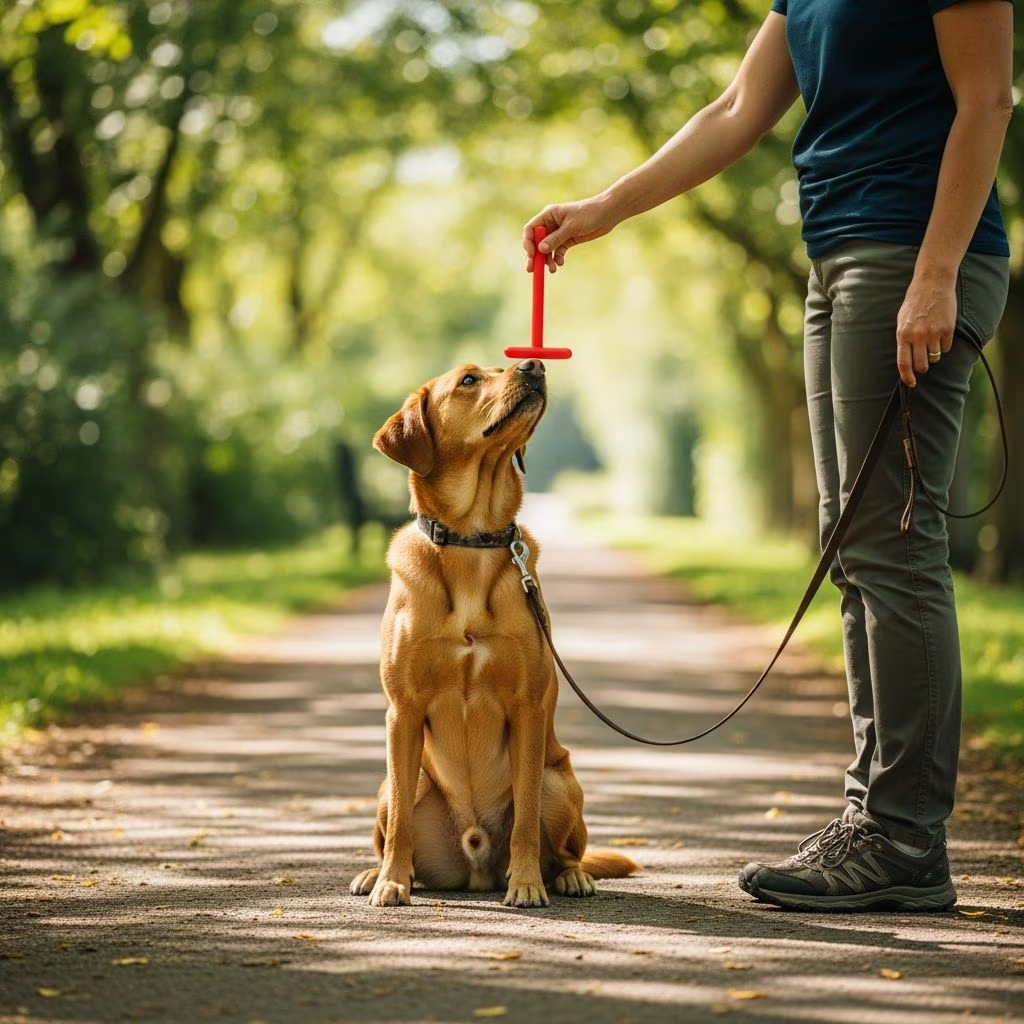
Leash walking challenges are common for dog owners, but target training offers a precise, reward-based solution to create calm, enjoyable outings. This method uses visual or touch targets to guide dogs into ideal positions beside you, fostering automatic loose-leash behavior through positive reinforcement.
Why Target Training Excels for Loose Leash Skills
Traditional leash training often relies on corrections, which can confuse or stress dogs. Target training shifts focus to rewarding desired actions, like positioning near your leg without tension. According to the American Kennel Club, using a properly fitted harness and a standard 6-foot leash prevents neck strain and supports control during training. This approach builds confidence, as dogs learn that staying close leads to rewards, not punishment.
Key benefits include improved attention spans and reduced pulling. Dogs quickly associate targets—such as a stick, your hand, or a lure—with movement cues, making walks predictable and fun. The RSPCA emphasizes rewarding loose leads to teach dogs that non-pulling gets them where they want faster.
Essential Equipment for Effective Sessions
Start with reliable gear to ensure safety and success:
- Harness: Front-clip styles redirect pulling naturally without choking.
- Leash: 4-6 foot non-retractable for clear communication.
- Targets: A wooden dowel, tennis ball on a string, or treat stick for touching.
- Treats: High-value, pea-sized pieces delivered at your side.
- Clicker or Marker: For precise timing of rewards.
Avoid retractable leashes, as they encourage pulling by allowing constant tension. Proper fit is crucial; the harness should allow free movement but prevent escapes.
Building the Foundation: Indoor Target Introduction
Begin training indoors to minimize distractions. Hold the target near your dog’s nose and reward touches with a click and treat. Repeat until the dog targets reliably on cue, like “touch.”
Next, introduce position training. Stand still, hold treats at your leg, and mark when your dog moves into heel position. Gradually add steps: move slightly, reward for following to your side. This mirrors Blue Ridge Humane Society’s method of marking correct positioning from the start. Sessions should last 5-10 minutes, multiple times daily for consistency.
| Step | Action | Goal |
|---|---|---|
| 1 | Present target, reward touch | Understand “touch” cue |
| 2 | Hold target at leg, reward position | Heel beside handler |
| 3 | Take 2-3 steps, reward | Follow movement |
Progressing to Motion and Direction Changes
Once stationary targeting is solid, add walking. Say your cue (e.g., “with me”), present the target at your side, and take steps while rewarding contact. Use upbeat tones to keep energy high.
For turns, say the dog’s name, introduce “left” or “right,” and lure with the target during pivots. Reward orientation toward you. AKC recommends this for smooth direction shifts. Practice in a quiet yard before streets.
Incorporate the “gather” technique: shorten the leash smoothly as a cue for attention. Pair with marking and rewarding looks. This pre-teaches dogs to check in automatically.
Overcoming Common Pulling Triggers
Pulling often stems from excitement or distractions. Employ the Red Light/Green Light game: Place treats ahead, advance only on a loose leash. Stop if tension builds, resume when slack. San Diego Humane Society notes this teaches that pulling halts progress.
For end-of-leash drifts, say the dog’s name when they reach it, mark the look-back, and reward return. Repetition makes check-ins habitual. Combine with attention exercises: Reward voluntary eye contact, using sounds if needed.
Advanced Techniques for Real-World Walks
Transition outdoors gradually. Start in low-distraction areas, using high-value rewards. Teach trotting on cue by reinforcing side glances during movement.
For stops, gather the leash near corners, cueing sit or wait. Kiki Yablon’s insights highlight pre-teaching these as attention prompts. In dynamic environments, alternate cues like “dip” (lowering hands to slacken leash) with rewards for re-orienting.
Animal Humane Society suggests holding treats on your preferred side to encourage positioning. Practice short, frequent sessions to build endurance.
Troubleshooting Setbacks and Plateaus
If progress stalls, revert to basics indoors. Analyze issues: Is the target clear? Rewards motivating? Sessions too long? Increase value or shorten duration.
For stubborn pullers, use two-leash setups temporarily: one harness clip for guidance, one collar for backups (monitor comfort). Consistency across family members prevents confusion.
Age matters—puppies learn fastest, but adults respond well with patience. Track improvements in a journal for motivation.
Integrating Fun and Games for Lasting Habits
Make training playful. Use silly voices and games like treat piles at journey’s end. RSPCA advises short, regular practices with praise for loose leads.
Advanced fun: Random check-in rewards during walks reinforce voluntary focus. Over time, fade targets, relying on verbal cues and your movement.
Frequently Asked Questions
How long until my dog walks loosely?
Most see improvement in 1-2 weeks with daily 10-minute sessions, though full mastery takes 4-6 weeks depending on age and history.
Can this work for reactive dogs?
Yes, but start at greater distances from triggers, using counter-conditioning alongside targeting.
What if my dog ignores the target outdoors?
Up rewards, shorten sessions, and build tolerance gradually.
Is a clicker necessary?
No, a verbal marker like “yes” works; it’s about precise timing.
Best treats for motivation?
Soft, smelly options like cheese or hot dogs, broken small to avoid overfeeding.
Long-Term Maintenance for Lifelong Success
Once proficient, maintain with variable rewards and real-life integration. Walks become bonding time, reducing behavioral issues. Positive methods like these yield happier, healthier dogs.
References
- How To Teach a Puppy To Walk on a Leash — American Kennel Club. 2023-06-15. https://www.akc.org/expert-advice/training/teach-puppy-walk-leash/
- Ask Crystal: Leash Walking Training Tips — Blue Ridge Humane Society. 2024-02-10. https://www.blueridgehumane.org/leash-walking-training-tips/
- Training Tips: Loose Leash Walking — San Diego Humane Society. 2023-11-20. https://sdhumane.org/resources/training-tips-loose-leash-walking/
- To Teach Loose Leash Walking, Loosen the Leash — Kiki Yablon Dog Training. 2019-12-17. https://kikiyablondogtraining.com/kiki-blog/2019/12/17/loose-leash-walking-lessons
- How to train your dog to walk nicely on the lead — RSPCA. 2024-01-05. https://www.rspca.org.uk/adviceandwelfare/pets/dogs/training/walknicely
- Teach your dog to walk on a loose leash — Animal Humane Society. 2023-09-12. https://www.animalhumanesociety.org/resource/teach-your-dog-walk-loose-leash



