

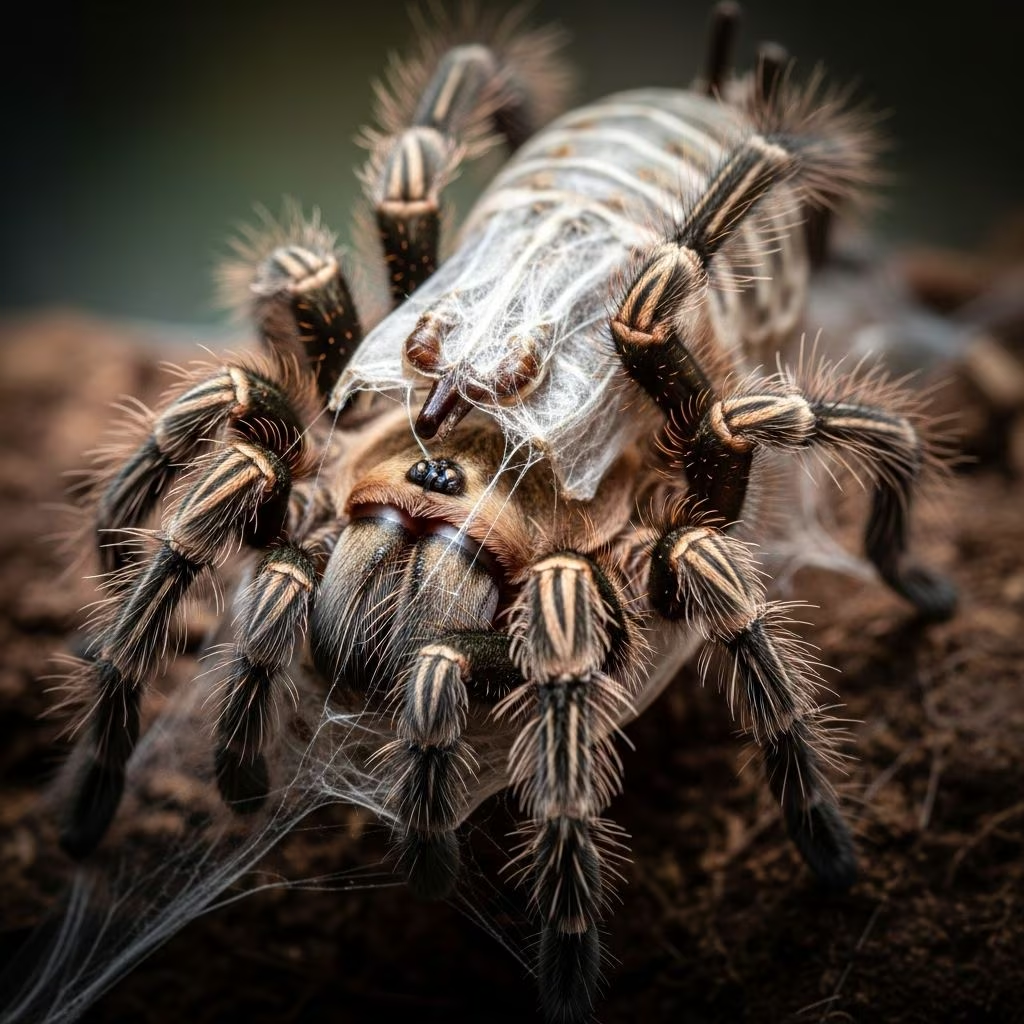
Tarantulas undergo molting, or ecdysis, to shed their rigid exoskeleton and grow, a process divided into distinct phases that owners must monitor closely for pet health.
The Biological Necessity of Molting in Tarantulas
Unlike vertebrates with flexible skeletons, tarantulas possess a hard chitinous exoskeleton that cannot expand, necessitating periodic shedding for growth and development. This process allows them to increase in size dramatically between instars, the developmental stages between molts. Mature females may continue molting even after reaching adulthood, while males typically stop post-maturity. Environmental factors like temperature, humidity, and feeding frequency influence molting rates, with optimal conditions accelerating growth.
Recognizing Pre-Molting Indicators
Pet owners can identify impending molts through behavioral and physical cues. Tarantulas often display reduced appetite, heightened activity, or web-building changes as they prepare. A noticeably tight abdomen, dulled coloration, or increased hiding signal the approach of proecdysis, the preparatory phase. Spiderlings may show these signs monthly, while adults exhibit them less frequently. Monitoring enclosure conditions is crucial, as low humidity can hinder softening of the old cuticle.
- Appetite loss persisting over a week
- Restlessness or burrowing deeply
- Abdomen appearing wrinkled or distended
- Legs seeming shorter relative to body size
Phases of the Molting Cycle
The molting process comprises four main stages: intermolt, proecdysis, ecdysis, and postecdysis, blending seamlessly without sharp boundaries. During intermolt, the tarantula maintains steady growth; proecdysis involves hormone-triggered preparation; ecdysis is the active shedding; and postecdysis focuses on recovery.
Intermolt: The Growth Maintenance Period
This extended phase occupies most of the annual cycle for adults, involving nutrient accumulation and new cuticle formation beneath the old one. Spiderlings pass through it rapidly, molting frequently under ideal captive conditions.
Proecdysis: Preparation and Softening
Hormones initiate apolysis, where exuvial fluid digests the endocuticle, loosening the old shell. Tarantulas may spin a molting web or select a secure spot, often inverting position. This stage can last days, with the spider appearing lethargic.
Ecdysis: The Active Shedding Phase
The tarantula flips onto its back, splitting the old exoskeleton at weakened seams along the cephalothorax and abdomen. It wriggles free over 15 minutes to 24 hours, longer for larger specimens. Emerging pale and soft, it remains inverted briefly.
Postecdysis: Hardening and Recovery
The new exoskeleton, initially wrinkled, expands via hemolymph pressure and hardens over days, darkening in color. During this vulnerable time, the tarantula avoids eating and movement. Full regeneration of lost limbs, like spinnerets, may require 2-3 molts.
How Frequently Do Tarantulas Molt?
| Life Stage | Molting Frequency | Duration of Process |
|---|---|---|
| Spiderlings | Every 2-4 weeks | 15-60 minutes |
| Juveniles | Every 1-3 months | 1-4 hours |
| Adult Males | Once at maturity, then stops | Up to 12 hours |
| Adult Females | Every 6-36 months | Up to 24 hours |
Frequencies vary by species, age, and husbandry; warmer temperatures and abundant prey speed up cycles. Females of long-lived species like Brachypelma may molt biennially even in old age.
Optimal Enclosure Setup for Successful Molts
Maintain 70-80% humidity and 75-85°F temperatures to facilitate softening and prevent incomplete sheds. Provide deep substrate for burrowing, secure hides, and avoid handling. High humidity mimics natural habitats, reducing stuck shed risks.
- Substrate depth: 4-6 inches for adults
- Humidity gradient: drier land area, moist retreat
- Water dish: Always fresh, shallow
Care Protocols Before, During, and After Molting
Pre-Molt Actions
Remove prey items and increase misting frequency upon signs. Refrain from substrate changes to minimize stress.
During the Molt
Do not disturb or assist; intervention can cause fatal injuries. Observe quietly from afar. If the tarantula struggles over 24 hours, check humidity but avoid direct contact.
Post-Molt Recovery
Leave the exuvium in the enclosure initially for nutrient reabsorption. Offer water after 48 hours, food after 7-10 days. Monitor for stuck shed, gently removing with forceps if on eyes or joints after hardening begins. Exuviae aid in sexing via spermathecae inspection.
Potential Molting Complications and Fixes
Incomplete molts, or dysecdysis, arise from low humidity or nutritional deficits, leaving patches of old cuticle that restrict movement. Premolt starvation weakens the spider. Remedies include temporary high-humidity chambers and supportive feeding post-recovery. Regenerated limbs appear smaller initially, fully forming over cycles.
- Stuck shed on legs: Isolate in humid deli cup 3-5 days
- Lethargy post-molt: Normal for 1-2 weeks
- Failed ecdysis: Vet consult if no progress
Species-Specific Molting Variations
Arboreal species like Avicularia molt suspended vertically, while terrestrials burrow. Fast growers like Poecilotheria shed more often than slow arboreals like Brachypelma. Time-lapse observations confirm durations, with one 4-hour example documented.
Frequently Asked Questions (FAQs)
Is my tarantula dead if it’s on its back?
No, inversion is standard for molting; abdomen pumping indicates active ecdysis.
Should I help my tarantula molt?
Never; it risks tearing new cuticle. Boost humidity instead.
How do I know if the molt was successful?
New exoskeleton smooth, spider rights itself within hours, colors normalize in days.
Can molting frequency be controlled?
Yes, via temperature and diet; cooler, sparse feeding slows maturation.
What if my tarantula ate before molting?
Digested prey aids, but full guts can complicate emergence.
Advanced Insights: Molting and Longevity
Molting correlates with lifespan; females molting every 1-3 years live 10-40 years, regenerating structures like chelicerae in one cycle. Captive optimization extends life by preventing stressors. Owners use exuviae for genetic or health analysis.
References
- Molting process — Tarantulas.su. Accessed 2026. https://tarantulas.su/en/molting_process
- The Fascinating Process of Tarantula Molting — Show Me Reptile Show. Accessed 2026. https://showmereptileshow.com/resources/the-fascinating-process-of-tarantula-molting-how-and-why-it-happens
- Is Your Tarantula Molting? — Dragon’s Diet. Accessed 2026. https://dragonsdiet.com/blogs/tarantula-care/is-your-tarantula-molting-why-tarantulas-molt-and-signs-to-watch-for
- An Up-Close Look at the Tarantula Molting Process! — YouTube (Video). Accessed 2026. https://www.youtube.com/watch?v=K-VkGU47bZ0
- Nine image curly haired tarantula molt sequence — Things Biological (WordPress). 2012-03-02. https://thingsbiological.wordpress.com/2012/03/02/nine-image-curly-haired-tarantula-brachypelma-albopilosum-molt-sequence/
- Tarantula Molting — Laurel Pets. Accessed 2026. https://laurelpets.com/blog/tarantula-molting/
- Tarantula Growth and Development for Educators — Commission for Environmental Cooperation (CEC). Accessed 2026. https://www.cec.org/cites/wp-content/themes/foodwaste-theme/documents/tarantula-growth-and-development-for-educators-en.pdf
- Tarantula Molting in Time Lapse! — Tom’s Big Spiders. 2014-08-08. https://tomsbigspiders.com/2014/08/08/tarantula-molting-timelapse/



