
Tapeworm Infections in Animal Nervous Systems
Understanding cestode parasites and their neurological impact on animal hosts
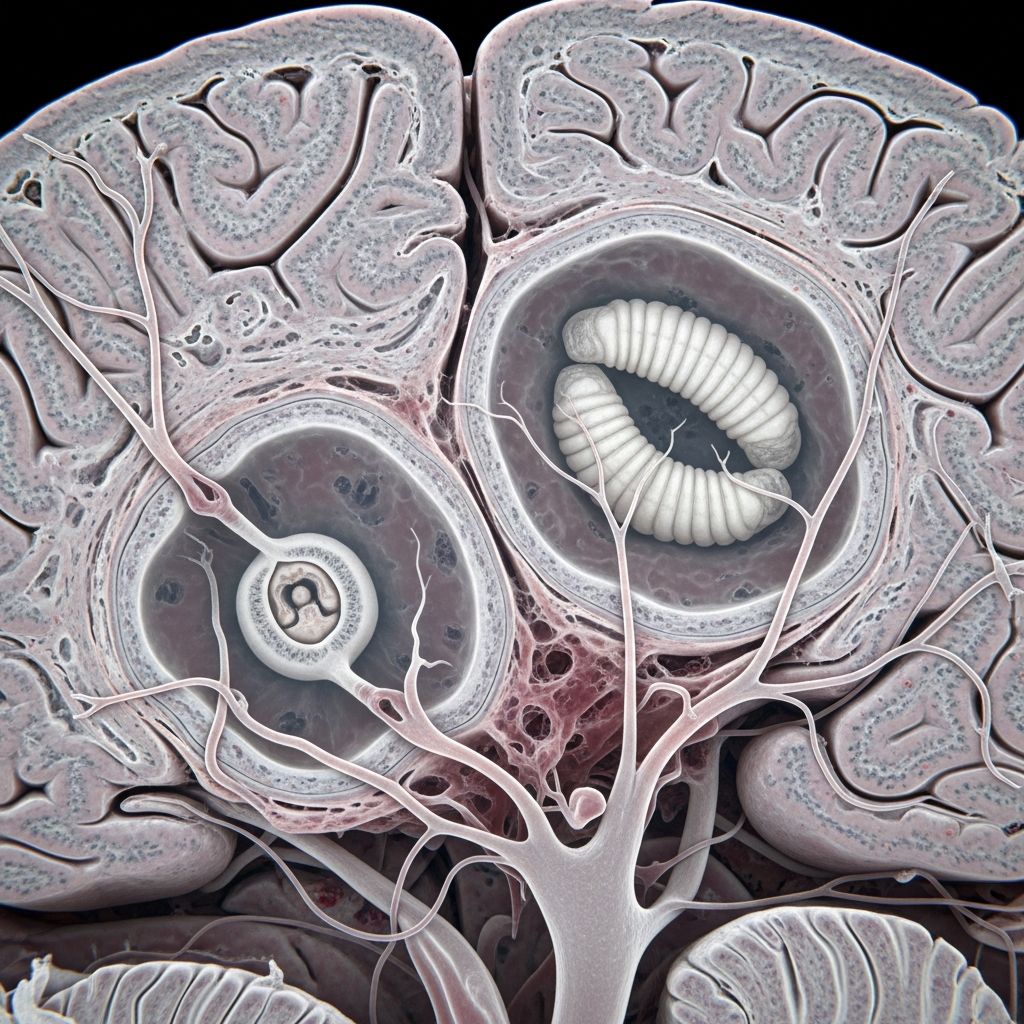
Tapeworms, scientifically classified as cestodes, represent a significant class of parasitic organisms capable of causing serious neurological disease in both domestic and wild animals. While most tapeworm infections primarily affect the gastrointestinal system, certain species and their developmental stages can migrate to and establish infections within the central nervous system (CNS), resulting in severe clinical manifestations. Understanding these parasitic infections, their transmission pathways, and therapeutic interventions is essential for veterinary practitioners managing animals with unexplained neurological symptoms.
The Nature of Cestode Parasites and Their Neurotropic Behavior
Cestodes are flatworms characterized by a segmented body structure and the absence of a digestive system, requiring them to absorb nutrients directly through their body wall. These parasites typically employ a complex life cycle involving one or more intermediate hosts before establishing infection in the definitive host. However, when larvae or immature stages of certain tapeworm species gain access to the CNS, they can initiate pathological processes that diverge significantly from typical gastrointestinal infections.
The ability of cestode larvae to penetrate and survive within nervous tissue represents a specialized adaptation. Unlike parasites that remain confined to the intestinal lumen or migrate through peripheral tissues, neurotropic tapeworms possess biological mechanisms that allow them to traverse the blood-brain barrier or migrate through spinal cord tissue. This neurotropic affinity—the parasites’ inherent attraction to nervous tissue—represents a critical factor in disease pathogenesis.
Mechanisms of Central Nervous System Invasion
Cestode larvae reach the CNS through several distinct pathways, each determined by the species’ particular life cycle characteristics and host biology. Understanding these invasion mechanisms provides insight into prevention and treatment strategies:
- Hematogenous migration: Following intestinal invasion, larvae may enter the bloodstream and circulate throughout the body, eventually lodging within cerebral or spinal vasculature before penetrating neural tissue.
- Direct tissue migration: Some larval stages migrate through body tissues, eventually reaching the spinal column or brain through direct tissue planes and anatomical pathways.
- Opportunistic establishment: In certain instances, larvae may establish infection at ectopic sites within the CNS after failing to reach their preferred anatomical destination in the definitive host.
- Incidental host involvement: When parasites infect atypical or incidental hosts—animals not part of their normal transmission cycle—larval migration patterns may differ substantially, potentially resulting in CNS involvement that would not occur in natural definitive hosts.
Behavioral Manipulation and Predation Enhancement
A particularly fascinating aspect of certain tapeworm infections involves their capacity to induce behavioral changes in intermediate hosts. When larval tapeworms establish infections within the intermediate host’s CNS, they frequently produce neurological signs including ataxia, loss of coordination, behavioral abnormalities, and reduced predator avoidance responses. These alterations appear evolutionarily advantageous for the parasite, as they increase the probability that an infected intermediate host will be consumed by the definitive carnivorous host.
This predator-prey manipulation strategy enhances transmission efficiency considerably. An infected, uncoordinated intermediate animal becomes an easier target for predation, facilitating the parasite’s progression to its definitive host where sexual reproduction and egg production can occur. The economic and ecological consequences of such behavioral manipulation can be substantial, particularly in pastoral and wildlife management contexts.
Clinical Presentation and Neurological Manifestations
Animals infected with neurotropic tapeworms present with a diverse array of neurological signs that vary depending on the anatomical location of parasites within the CNS, infection intensity, and host immune response. Common clinical presentations include:
| Neurological Sign | Associated Location | Pathophysiological Basis |
|---|---|---|
| Ataxia and incoordination | Cerebellum, spinal cord | Disruption of motor coordination pathways and balance centers |
| Seizures or convulsions | Cerebral cortex | Inflammatory response and abnormal neural discharge |
| Behavioral changes | Forebrain structures | Altered neurochemistry and cortical inflammation |
| Spinal dysfunction | Spinal cord parenchyma | Direct tissue damage and functional disruption |
| Cranial nerve deficits | Brain stem regions | Compression or inflammation of nerve nuclei |
The progression of clinical signs typically occurs gradually, though severe infections or mass lesions created by larval clusters may produce acute presentations. In many cases, affected animals display progressive neurological decline over weeks to months before diagnosis is established.
Diagnostic Considerations and Differential Diagnosis
Diagnosing tapeworm infections of the CNS presents considerable clinical challenges. Standard diagnostic approaches for parasitism, such as fecal examination, may not detect larval stages present in neural tissue. Advanced imaging techniques including magnetic resonance imaging (MRI) and computed tomography (CT) can reveal space-occupying lesions or inflammatory changes consistent with parasitic infection, but definitive identification typically requires specialized diagnostic procedures.
A comprehensive diagnostic approach must account for numerous differential diagnoses including infectious diseases, metabolic disorders, neoplasia, and trauma. Critically, rabies should always be included in the differential diagnosis list, particularly given the profound neurological signs that both rabies and certain parasitic infections can produce. The animal’s vaccination status, exposure history, age, and geographic location provide essential context for diagnosis. Cerebrospinal fluid analysis, when feasible, may reveal elevated protein levels and cellular responses consistent with parasitic infection.
Host Susceptibility and Species-Specific Infections
Not all animals exposed to tapeworm infections develop CNS disease. Host susceptibility depends on multiple factors including species, age, immune status, and nutritional condition. Some tapeworm species show strict host specificity, infecting only their natural definitive hosts with minimal disease, while closely related species can cause severe disease when they aberrantly infect non-natural or incidental hosts.
The distinction between natural definitive hosts, intermediate hosts, and incidental hosts becomes critical in understanding disease severity. A parasite species that produces minimal pathology in its evolutionary-adapted definitive host may cause devastating neurological disease when establishing infection in an incidental or atypical host. Geographic distribution of particular tapeworm species also influences disease prevalence and veterinary encounter rates.
Pathophysiological Responses to Parasitic Infection
The animal’s immunological response to tapeworm larvae within the CNS significantly contributes to neurological disease. The host immune system recognizes larval antigens and mounts inflammatory responses that, while intended to contain and eliminate the parasite, simultaneously damage surrounding neural tissue through release of cytokines, cellular infiltration, and edema formation. In some instances, the inflammatory damage exceeds the direct mechanical damage caused by parasites themselves.
Additionally, dead or degenerating larvae release antigenic material that can intensify immune responses. This consideration has important therapeutic implications, as parasiticide administration can theoretically exacerbate neurological signs through increased antigen release and inflammatory cascades.
Treatment Challenges and Therapeutic Approaches
Managing tapeworm infections of the CNS requires careful clinical judgment and thorough consideration of multiple factors. Antiparasitic medications, including ivermectin and organophosphate compounds, can effectively kill larval stages; however, in situ killing of parasites within the CNS may provoke additional tissue damage through inflammatory mechanisms.
Treatment decisions should weigh the potential benefits of parasite elimination against the risk of worsening neurological signs through inflammatory response. In some clinical situations, supportive care and management of symptoms may be prioritized over aggressive antiparasitic therapy. The timing of treatment administration, concurrent use of anti-inflammatory medications, and monitoring for deterioration after drug administration all represent important considerations.
When antiparasitic treatment is initiated, corticosteroids or other anti-inflammatory agents are frequently administered concurrently to mitigate the inflammatory consequences of parasite death. Close monitoring during the treatment period is essential, as some animals may experience transient neurological deterioration before improvement occurs.
Prevention and Control Strategies
Preventing tapeworm infections of the CNS requires interrupting the parasites’ transmission cycles. This involves several integrated approaches tailored to specific parasite species and local epidemiological conditions:
- Preventing intermediate host infections through environmental sanitation and control measures
- Restricting access of definitive hosts to infected intermediate host tissues
- Regular antiparasitic administration to minimize parasite burden in at-risk populations
- Appropriate disposal of infected animal carcasses to prevent scavenging and exposure
- Education regarding hunting practices and consumption of potentially infected wildlife
- Quarantine and treatment protocols for introduced animals in new geographic areas
Control programs must be species-specific and adapted to local transmission dynamics. What effectively controls one tapeworm species may prove ineffective against another with different intermediate hosts or environmental requirements.
Geographic Distribution and Epidemiological Patterns
The prevalence of tapeworm infections affecting the nervous system varies considerably by geographic region and local ecological conditions. Certain species predominate in pastoral regions where livestock and wild intermediate hosts coexist, while others are more common in wildlife populations. Understanding regional epidemiology helps veterinarians develop appropriate diagnostic and preventive strategies.
Changing livestock husbandry practices, wildlife management strategies, and expanding geographic ranges of vector species have influenced the epidemiological landscape of parasitic diseases globally. These shifts necessitate ongoing surveillance and adaptation of control programs.
Zoonotic Considerations
While most cestode infections causing CNS disease in animals do not directly affect humans, some tapeworm species can potentially establish infections in humans through consumption of improperly prepared infected animal tissues. Understanding zoonotic potential informs public health recommendations and client education regarding food safety and hunting practices.
Conclusion
Tapeworm infections affecting the central nervous system represent a complex and often challenging diagnostic and therapeutic problem in veterinary medicine. The neurotropic behavior of certain cestode species, combined with their capacity to manipulate host behavior and induce severe neurological disease, underscores the importance of including parasitic diseases in differential diagnoses of animals with unexplained neurological signs. Successful management requires integration of careful diagnostic evaluation, consideration of host-parasite biology, and thoughtful therapeutic decision-making that accounts for the paradoxical risk that antiparasitic treatment itself may worsen clinical signs. Continued advancement in diagnostic imaging, molecular diagnostics, and immunological understanding will enhance future clinical outcomes for affected animals.
References
- Overview of Central Nervous System Diseases in Animals Caused by Helminths and Arthropods — Merck Veterinary Manual, Merck & Co., Inc. https://www.merckvetmanual.com/nervous-system/central-nervous-system-diseases-caused-by-helminths-and-arthropods/overview-of-central-nervous-system-diseases-in-animals-caused-by-helminths-and-arthropods
- Veterinary Parasitology — Wiley Online Library. 2023. https://onlinelibrary.wiley.com/doi/book/10.1002/9781119073680
- Introduction to the Arthropods — VeterianKey. https://veteriankey.com/introduction-to-the-arthropods/
Similar Articles








Read full bio of medha deb


