

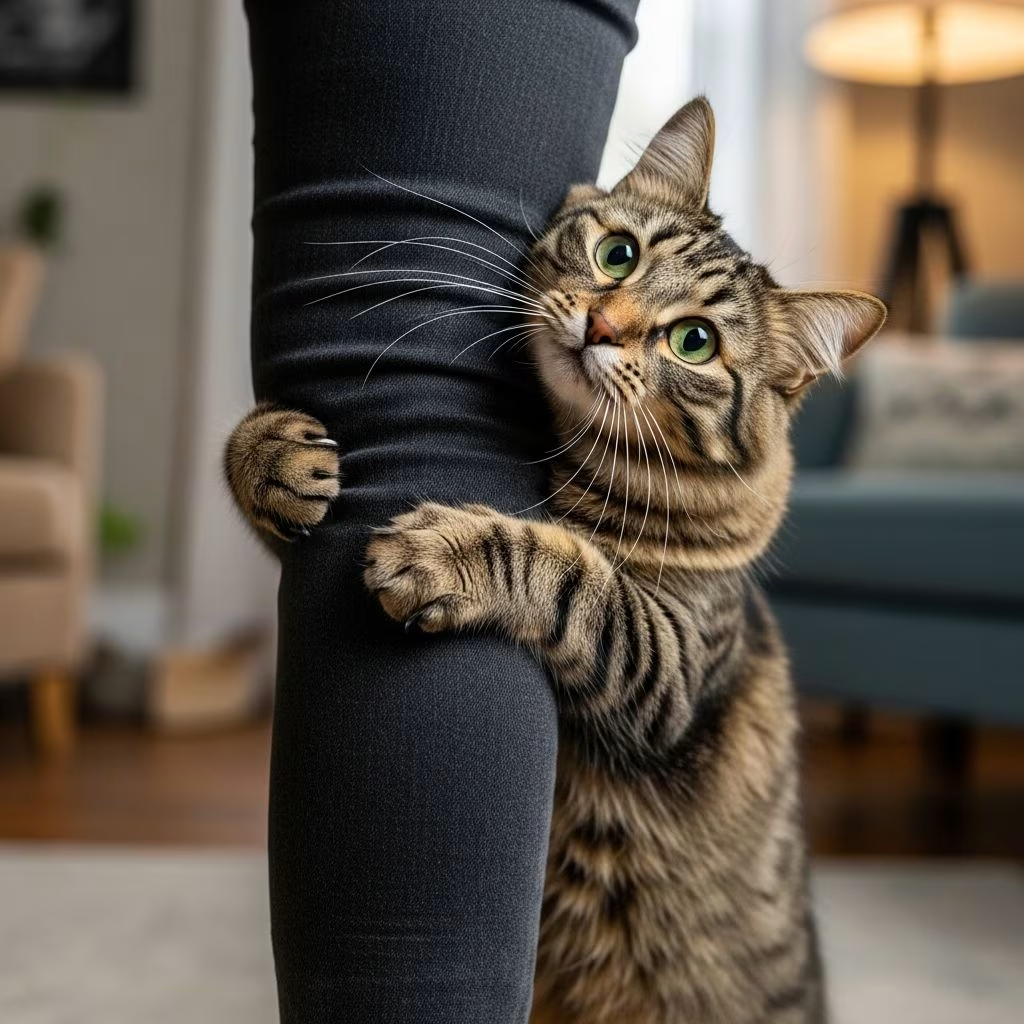
Cats that shadow your every move, meow incessantly for attention, or refuse to leave your side can turn daily life into a challenge. These “Velcro cats” exhibit clingy behavior driven by factors like boredom, early life experiences, or unmet needs. Understanding the roots allows owners to implement targeted strategies that encourage self-reliance while preserving the bond.
Understanding the Roots of Feline Clinginess
Clingy tendencies often stem from a cat’s environment, history, or personality. Boredom tops the list, as indoor cats with limited stimulation seek interaction to fill idle time. Premature weaning or sudden separations during kittenhood can imprint lasting insecurity, prompting constant reassurance-seeking. Certain breeds, like Siamese or Bengals, are genetically predisposed to vocal, people-oriented traits, amplifying attachment.
Health issues may masquerade as neediness; pain, hyperthyroidism, or cognitive decline in seniors can heighten demands for comfort. A veterinary check rules out medical causes before behavioral tweaks.
Key Causes Behind Overly Attached Felines
- Boredom and Understimulation: Cats evolved as hunters needing mental challenges; without them, owners become the default entertainment.
- Early Trauma: Kittens separated too young miss maternal lessons in self-soothing, leading to adult dependency.
- Routine Disruptions: Irregular schedules spike anxiety, making cats crave stability through proximity.
- Lack of Confidence: Timid cats cling for security, unlike bold ones demanding attention.
Building a Predictable Daily Rhythm
Consistency anchors a cat’s world. Feed, play, and rest at fixed times to minimize stress. Morning interactive sessions post-feeding tire them out, curbing midday shadowing. Evening wind-downs with gentle petting signal bedtime, reducing night wakings.
| Time of Day | Activity | Benefits |
|---|---|---|
| Morning (7-8 AM) | Meal + 10-min play | Boosts energy use, sets positive tone |
| Afternoon (2 PM) | Puzzle feeder | Mental workout combats boredom |
| Evening (7 PM) | Interactive chase + grooming | Mimics hunt, promotes bonding on your terms |
| Bedtime | Quiet perch time | Encourages solo relaxation |
This structure, drawn from expert routines, fosters security without constant contact.
Enriching Your Cat’s World for Independence
Environmental upgrades transform needy cats into content explorers. Vertical spaces like multi-level trees offer vantage points, satisfying territorial instincts. Puzzle feeders dispense kibble through problem-solving, extending meals into engaging hunts.
Rotate toys weekly—wands, balls, catnip-infused mice—to maintain novelty. Window perches with bird views or cat TV videos provide passive stimulation during absences. Hide treats in boxes or scatter them for foraging adventures, channeling energy productively.
- Cat trees with hammocks for lounging and climbing.
- Automated lasers or feather spinners for solo play.
- Cardboard scratchers and tunnels for hide-and-seek.
- Scented fabrics or herbal sprays to mark safe zones.
These additions reduce reliance on humans by fulfilling innate needs.
Positive Reinforcement: Rewarding Calm Behavior
Ignore demands—meowing, door-scratching, lap-jumping—without eye contact or speech, as any response reinforces them. Expect an initial escalation (extinction burst) as habits die hard; persistence pays off.
Capture quiet moments with treats, praise, or pets to build desired habits. Clicker training marks exact good behaviors, like settling alone, accelerating learning. Redirect leg ambushes or hand pounces to toys, praising disengagement.
Enforce boundaries: Close doors firmly, relocate gently from keyboards, and resume only when calm. Patience is key; consistency reshapes associations over weeks.
Distinguishing Needy from Demanding Cats
Needy cats rub anxiously or follow timidly, signaling insecurity; address with gentle enrichment and routine. Demanding ones yowl boldly or paw insistently—meet with stricter ignoring, rewarding silence. Both respond to the ignore-reward cycle, but needy cases need extra reassurance via play.
| Type | Signs | Approach |
|---|---|---|
| Needy | Excessive rubbing, hiding then clinging | Enrich environment, short calm rewards |
| Demanding | Loud meows, aggressive lap demands | Full ignore, praise independence |
Addressing Play and Energy Needs
Under-exercised cats amplify clinginess. Daily 15-minute wand-toy chases mimic predation, exhausting them physically. Tire them pre-departure to prevent door drama. Introduce catnip for euphoric solo sessions.
For high-energy breeds, multiple sessions or companion cats (if compatible) help, but solo enrichment suffices for most.
When to Seek Professional Guidance
If ignoring fails after 2-4 weeks, or aggression emerges, consult a vet or behaviorist. Medication aids severe anxiety, paired with training. Track behaviors in a journal for accurate diagnosis.
Frequently Asked Questions
Why did my independent cat suddenly become clingy?
Changes like moves, new pets, or illness trigger this; restore routine and enrich.
Is punishment ever okay for clingy behavior?
No— it escalates fear or aggression; stick to positive methods.
How long until I see improvement?
Weeks with consistency; track progress weekly.
Can another pet help?
Possibly, if introductions succeed; solo fixes work first.
What if my senior cat clings more?
Check for arthritis or thyroid issues; comfy ramps aid.
Long-Term Strategies for Lasting Balance
Sustained success blends all tactics: Predictable days, rich habitats, and reward-focused training create confident cats. Owners enjoy companionship without overwhelm, as felines thrive autonomously. Monitor for regressions during life shifts, adjusting promptly.
Word count: 1678 (excluding metadata and references).
References
- I Have a Clingy Cat. What Now? — Zoetis Petcare. 2023. https://www.zoetispetcare.com/blog/article/clingy-cat
- Clingy Cats: What To Do About a Velcro Cat — Hill’s Pet Nutrition. 2023. https://www.hillspet.com/cat-care/behavior-appearance/managing-clingy-cats
- How To Get Your Cat To Stop Liking You So Much — WhyCatWhy. 2023. https://www.whycatwhy.com/how-to-deal-with-needy-cats/
- Behavior Challenges: Overexcited and Energetic Cats — San Diego Humane Society. 2024-02-17. https://sdhumane.org/resources/behavior-challenges-overexcited-and-energetic-cats/
- Dealing With Needy Behaviors In Your Adult Cat — Chewy. 2023. https://www.chewy.com/education/cat/training-and-behavior/dealing-with-needy-behaviors-in-your-adult-cat
- Why Does My Cat Follow Me Everywhere? — Purina. 2023. https://www.purina.com/articles/cat/behavior/understanding-cats/why-does-my-cat-follow-me-everywhere
- Why Is My Cat So Cuddly and Affectionate? — PetMD. 2023. https://www.petmd.com/cat/behavior/why-is-my-cat-so-cuddly



