

Reactive dogs often lunge, bark, or growl at everyday stimuli like other dogs, strangers, or passing vehicles, creating stressful situations for owners. These overreactions stem primarily from fear, frustration, or inadequate socialization rather than true aggression, and can be effectively managed through targeted training and environmental adjustments.
Decoding the Roots of Reactivity in Canines
Understanding why dogs display reactive behaviors is essential for effective intervention. Reactivity typically arises from emotional overload, where a dog perceives a stimulus as threatening, leading to an explosive response.
- Fear-based responses: Many reactive dogs are fearful, reacting to perceived dangers due to past negative encounters or insufficient exposure during critical developmental periods.
- Frustration on restraints: Leash reactivity is common because dogs cannot approach or flee from triggers, building tension that manifests as barking or pulling.
- Genetic and environmental factors: Certain breeds may have predispositions to high arousal, exacerbated by stimulating environments or lack of early socialization.
- Trauma history: Rescue dogs with abusive backgrounds often generalize fear to similar situations, amplifying reactions.
Unlike aggression, which involves intent to harm, reactivity signals discomfort or overstimulation, often accompanied by signs like stiff posture, dilated pupils, or avoidance attempts.
Spotting the Warning Signs Early
Recognizing precursors to full-blown reactivity allows for proactive management. Key indicators include hypervigilance, where the dog scans the environment tensely; restlessness such as pacing or whining; and physiological changes like panting or drooling.
| Early Sign | Description | Common Triggers |
|---|---|---|
| Stiffening or freezing | Sudden halt with tense muscles | Approaching strangers |
| Vocalizations | Barking, growling, or whining | Other dogs on leashes |
| Body language shifts | Ears back, tail tucked, whale eye | Loud noises or vehicles |
| Displacement actions | Yawning, lip licking, spinning | Overstimulation in crowds |
Tracking these in a journal helps pinpoint patterns, such as specific times or locations where reactions peak, informing customized training plans.
Essential First Steps: Trigger Identification and Prevention
The foundation of reactivity management is controlling exposure to known triggers. Begin by listing all stimuli that provoke reactions, being precise about distance, context, and intensity.
- Compile a trigger inventory: Note items like specific dog breeds, bicycles, or joggers, including the threshold distance for reaction.
- Modify the environment: Use barriers like fences or curtains to block sightlines; walk during off-peak hours; or employ baby gates indoors to restrict access to windows.
- Tool-assisted control: Opt for front-clip harnesses or head collars to reduce pulling without discomfort, ensuring proper fit to avoid escalation.
Prevention prevents rehearsal of unwanted behaviors, preserving your dog’s emotional threshold for training sessions. This management phase buys time to build positive associations without overwhelming the dog.
Building Positive Emotional Links Through Counter-Conditioning
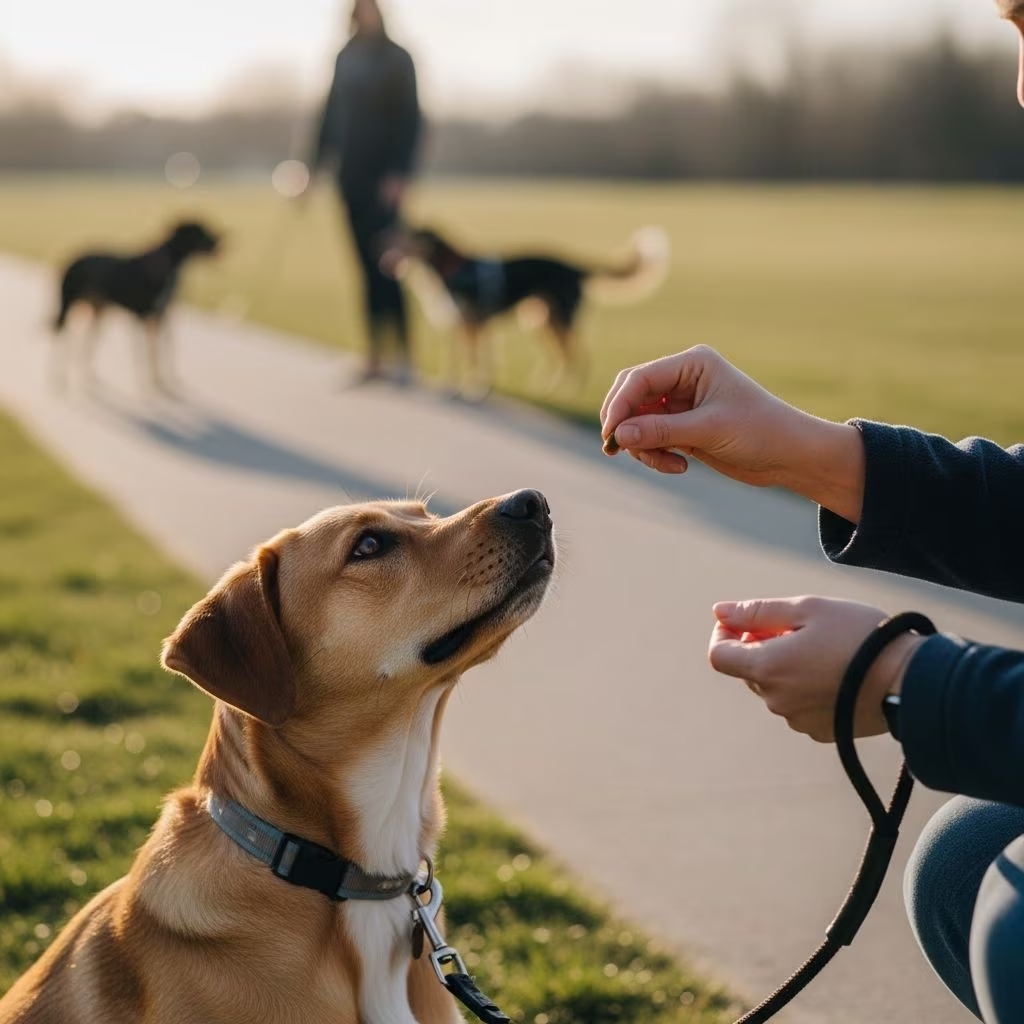
Counter-conditioning (CC) transforms a trigger from scary to rewarding by pairing it with high-value reinforcers. This classical conditioning process rewires the dog’s automatic emotional response.
Start at a sub-threshold distance where the dog notices the trigger but remains calm. Immediately offer treats or play, repeating until the sight alone elicits anticipation (e.g., “treats coming!” ear perk).
- High-value rewards: Use soft, smelly treats like chicken or hot dogs, delivered rapidly—up to 10 per minute initially.
- Gradual proximity: Decrease distance incrementally over sessions, only advancing when the dog shows relaxed body language.
- Session brevity: Keep exposures short (1-5 minutes) to avoid fatigue or sensitization.
Combine with desensitization, which involves repeated low-intensity exposure to build tolerance. Consistency across family members ensures uniform progress.
Layering in Operant Conditioning for Active Control
Once counter-conditioning establishes positivity, introduce operant techniques to teach alternative behaviors. Reward choices like checking in with you instead of fixating on triggers.
Teach engagement cues such as “look at me” or “heel,” practicing in low-distraction settings before real-world application.
- Focus exercises: Reward eye contact on cue, fading treats to intermittent reinforcement.
- Impulse control: Practice “sit-stay” or “leave it” near mild triggers, building duration and distraction tolerance.
- Real-life integration: During walks, preempt reactions by cueing a behavior just before the threshold.
This dual approach—classical for emotions, operant for actions—creates comprehensive change, turning potential meltdowns into moments of calm compliance.
Optimizing Daily Routines for Reactivity Reduction
Beyond targeted training, lifestyle tweaks significantly lower reactivity baselines. Ensure ample outlets for physical and mental energy to prevent frustration-fueled outbursts.
- Exercise protocols: Incorporate scent games, flirt poles, or structured play over unstructured park romps initially.
- Mental enrichment: Puzzle toys, nose work, or training games deplete arousal reserves.
- Rest schedules: Enforce quiet downtime in crates or safe spaces to combat overtiredness-induced reactivity.
Leash etiquette matters: Maintain slack to avoid frustration signals, and practice loose-leash walking in quiet areas first.
Advanced Techniques and Professional Guidance
For persistent cases, escalate to structured protocols like BAT (Behavior Adjustment Training) or engage certified professionals. Look for trainers with CPDT-KA or IAABC credentials specializing in reactivity.
Group classes may overwhelm, so opt for private sessions or controlled playdates with compatible dogs. Medication can support training in severe anxiety cases, prescribed by veterinarians after behavioral assessment.
Common Hurdles and How to Overcome Them
Progress isn’t linear; plateaus or regressions occur due to stress, illness, or inconsistent handling. Troubleshoot by reverting to easier levels, analyzing session videos for subtle stress cues, and maintaining prevention.
| Challenge | Solution |
|---|---|
| Sudden worsening | Check health; reduce trigger intensity |
| Owner anxiety transfer | Practice mindfulness; simulate calm energy |
| Multi-trigger overload | Isolate one at a time |
| Treat dependency | Intermittent schedule; add life rewards |
Patience yields results—many dogs achieve 80-90% improvement within months.
FAQs on Managing Reactive Dogs
Q: Can all reactive dogs be fully cured?
A: While complete elimination varies by individual, most show substantial improvement with consistent, positive methods, allowing normal outings.
Q: Is punishment ever helpful?
A: No—punishment heightens fear and reactivity; focus on rewards for calm alternatives.
Q: How long until I see changes?
A: Initial management effects are immediate; emotional shifts take weeks to months with daily practice.
Q: What’s best for leash-reactive dogs?
A: Counter-condition at distance, use no-pull gear, and train engagement cues during walks.
Q: Should I muzzle my reactive dog?
A: For safety in public, yes—pair with positive associations to reduce stress.
References
- Managing Reactive Behavior — Cornell University College of Veterinary Medicine. 2023. https://www.vet.cornell.edu/departments-centers-and-institutes/riney-canine-health-center/canine-health-information/managing-reactive-behavior
- Reactive Dogs: Why Your Dog Overreacts & How to Help — Bond Vet. 2024. https://bondvet.com/blog/reactive-dogs-why-your-dog-overreacts
- Top 10 Tips to Manage Reactive Dogs — Casper’s Camp Hope. 2023. https://casperscamphope.com/behavioral-focused-top-10-tips-for-managing-reactive-dogs
- Causes of Reactive Dog Behavior and How to Train Accordingly — Whole Dog Journal. 2024. https://www.whole-dog-journal.com/behavior/causes-of-reactive-dog-behavior-and-how-to-train-accordingly/
- Managing a Leash-Reactive Dog — Animal Humane Society. 2023. https://www.animalhumanesociety.org/resource/managing-leash-reactive-dog



