

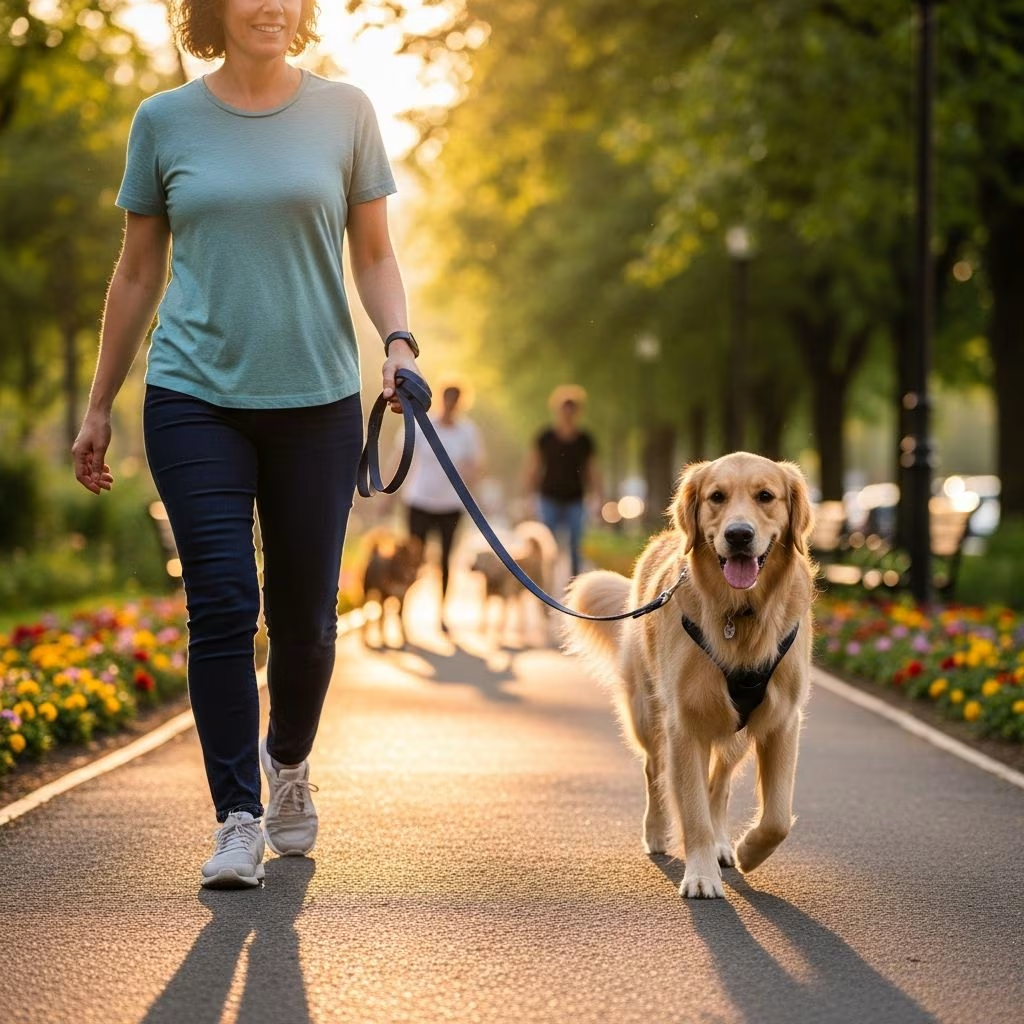
Leash reactivity, often perceived as aggression, occurs when dogs display intense behaviors like barking, lunging, or growling while restrained by a leash. This common issue stems from emotional responses amplified by the leash’s restriction, turning routine walks into challenges for many owners.
Understanding the Roots of Leash Reactivity
Dogs exhibit leash reactivity due to underlying emotions such as fear, frustration, or territorial drives. When leashed, a dog cannot flee from perceived threats or greet others freely, heightening stress and prompting defensive displays. Fearful dogs use growling or snapping to create distance, while frustrated ones bounce and bark to close it, both intensified by the leash’s barrier effect.
Poor socialization in puppyhood exacerbates this, as dogs miss opportunities to build positive associations with stimuli like other dogs or strangers. Pent-up energy from insufficient exercise can also contribute, leaving dogs overstimulated on walks.
- Fear-based reactivity: Dog snarls to ward off threats it can’t escape.
- Frustration-based reactivity: Energetic greetings blocked by the leash lead to vocal outbursts.
- Territorial instincts: Leashed dogs feel compelled to protect their owner or space.
Spotting Early Warning Signs
Recognizing reactivity early allows for timely intervention. Watch for stiff body posture, ears pinned back, dilated pupils, or whale-eye (whites showing). These precede barking or lunging, signaling discomfort. Off-leash, the same dog might ignore triggers, highlighting the leash’s role in escalation.
| Body Language Cue | Indicates | Fearful Dog | Frustrated Dog |
|---|---|---|---|
| Stiff tail | Tension | High and rigid | Wagging rapidly |
| Ears position | Alertness | Flat against head | Forward |
| Mouth | Stress | Closed, lips curled | Open, playful pant |
| Body lean | Intent | Away from trigger | Toward trigger |
Prevention Strategies for Puppies and New Dogs
Proactive steps during puppyhood build confidence and reduce future reactivity. Early socialization exposes young dogs to diverse environments, people, and animals under controlled conditions, fostering positive experiences. Enroll in puppy classes to practice calm leash manners amid distractions.
Choose appropriate equipment from the start: front-clip harnesses improve control without neck pressure, unlike choke collars that can worsen fear. Regular exercise burns energy, making walks less overwhelming.
- Introduce leash gradually indoors with treats.
- Practice short, positive walks in low-traffic areas.
- Pair new stimuli with high-value rewards.
Equipment Essentials for Safer Walks
The right gear enhances management and comfort. Head halters like Gentle Leader redirect pulling gently, while no-pull harnesses distribute pressure evenly. Avoid aversive tools like prong or shock collars, as they heighten anxiety and aggression.
Keep leashes loose to prevent tension transmission; a taut leash signals danger to your dog. Carry treats in a pouch and walk during hungrier times for better focus.
Core Training Techniques: Desensitization and Counterconditioning
Desensitization involves gradual exposure to triggers at sub-threshold distances where the dog remains calm, slowly decreasing space over sessions. Counterconditioning pairs these triggers with rewards, shifting emotional responses from negative to positive.
Start in quiet areas: Spot a trigger far off, feed treats continuously until it passes, then end the session. Progress to closer encounters as tolerance builds. Positive reinforcement—treating calm behaviors—reinforces relaxation.
Sample Training Protocol
- Assess threshold: Note distance where reaction starts (e.g., 50 feet).
- Set up sessions: Use parallel paths or parks with visibility control.
- Reward protocol: High-value treats (chicken, cheese) for looking at trigger calmly.
- Progress markers: Reduce distance by 5-10 feet per successful week.
- Track progress: Journal reactions to measure improvement.
Day-to-Day Management Tactics
While training, manage environments to avoid setbacks. Scout routes for triggers, use U-turns or speed walks to create distance. Engage your dog with games like “look at me” cues before triggers appear.
Build situational awareness: Predict encounters and have escape plans. Muzzle training ensures safety if bites are a risk, introducing it positively with treats.
- Exercise off-leash in safe areas to release energy first.
- Maintain loose leash with a 6-foot standard.
- Use barriers like parked cars for visual blocks.
When to Call in Professional Reinforcements
Severe cases demand experts like certified trainers (CPDT-KA) or veterinary behaviorists. They diagnose nuances, craft custom plans, and teach handling skills like emergency turns. Group classes for reactive dogs provide controlled socialization.
Professionals accelerate progress, minimize injury risks, and address comorbidities like generalized anxiety. Expect assessments via observation and history intake.
Common Mistakes to Sidestep
Avoid tightening the leash, yelling, or punishing—these amplify fear. Don’t force interactions or flood with triggers, risking sensitization. Patience is key; progress varies by dog.
| Mistake | Why It Fails | Better Alternative |
|---|---|---|
| Punitive collars | Increases pain-frustration cycle | Front-clip harness |
| Yelling at dog | Heightens arousal | Calm redirections |
| Over-exposure | Worsens reactivity | Gradual desensitization |
Long-Term Success and Maintenance
Consistency yields lasting change, often in weeks to months. Maintain training with variable rewards and new challenges. Monitor for regressions from life changes like moves.
Integrate off-leash reliability and mental games for holistic calm. Celebrate small wins to stay motivated.
Frequently Asked Questions (FAQs)
Can all dogs overcome leash reactivity?
Yes, with consistent effort and professional guidance, most improve significantly, though some need lifelong management.
How long does training take?
Typically 4-12 weeks for noticeable change, depending on severity and compliance.
Is leash reactivity the same as true aggression?
No, reactivity is emotional overflow; aggression involves intent to harm. Both benefit from similar interventions.
Should I avoid walks altogether?
No, structured walks are essential; modify routes and methods for safety.
What if my dog bites on leash?
Consult a vet behaviorist immediately for muzzle training and assessment.
References
- How to Deal with Leash Aggression in Dogs — Miller Clark Animal Hospital. 2024-03-15. https://www.millerclarkanimalhospital.com/site/blog/2024/03/15/leash-aggression
- How to Deal With Leash Aggression in Dogs — Gluckstadt Animal Hospital. 2024-07-15. https://www.gluckstadtanimalhospital.com/site/blog/2024/07/15/deal-with-leash-aggression-dogs
- Leash Aggression in Dogs: What to Know — American Kennel Club. Recent access 2026. https://www.akc.org/expert-advice/training/leash-aggression/
- Dealing with Leash Reactivity — Best Friends Animal Society. Recent access 2026. https://bestfriends.org/network/resources-tools/dealing-leash-reactivity
- Dog-Dog Aggression On Leash (Reactivity) — San Francisco SPCA. Recent access 2026. https://www.sfspca.org/resource/dog-dog-aggression-on-leash-reactivity/
- Managing Reactive Behavior — Cornell University College of Veterinary Medicine. Recent access 2026. https://www.vet.cornell.edu/departments-centers-and-institutes/riney-canine-health-center/canine-health-information/managing-reactive-behavior



