

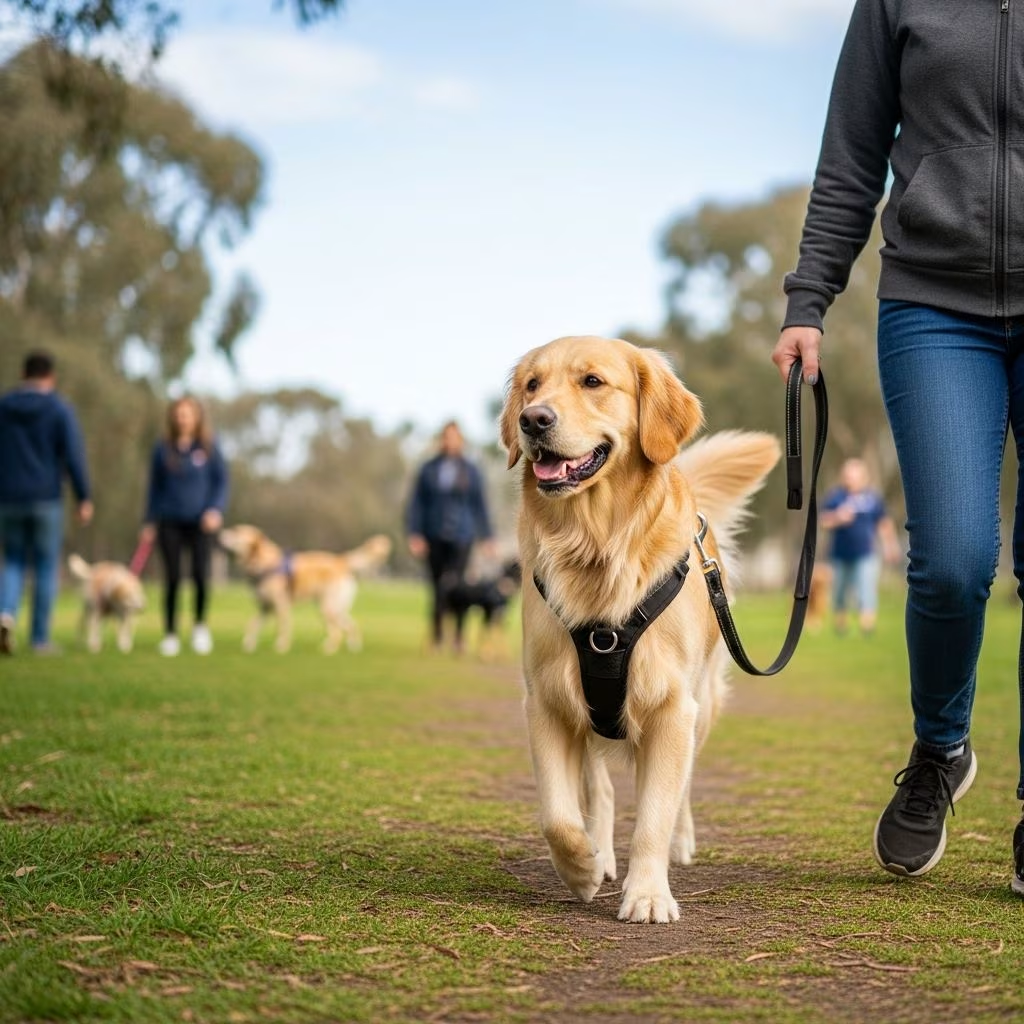
Leash reactivity occurs when dogs display intense behaviors like barking, lunging, or growling while restrained on a leash, often toward other dogs, people, or stimuli, despite being perfectly sociable off-leash.This common issue stems primarily from fear or frustration amplified by the leash’s restriction, turning routine walks into stressful ordeals for owners and pets alike.
Understanding this behavior is key to resolution. Many dogs who lunge and vocalize on leash greet others amicably in free-play settings, revealing that the leash itself alters their natural responses. With consistent, positive training, owners can help their dogs regain composure, fostering safer and more enjoyable outings.
Decoding the Roots of Leash Reactivity
At its core, leash reactivity arises from two primary emotional drivers: fear and frustration. Fearful dogs perceive approaching stimuli as threats and, unable to flee due to the leash, resort to “fight” responses like snarling or lunging to create distance. Frustrated dogs, excited to interact, become thwarted by restraint, channeling enthusiasm into explosive outbursts.
Additional contributors include inadequate socialization, past traumas such as attacks or harsh corrections, and environmental pressures. Dogs punished with tools like prong collars or shocks during reactive episodes often associate pain with triggers, worsening the cycle rather than resolving it. Poor early exposure leaves pups ill-equipped for real-world encounters, heightening anxiety when confined.
| Trigger Type | Fear-Based Response | Frustration-Based Response |
|---|---|---|
| Other Dogs | Growling, stiff posture, avoidance | Bouncy lunging, playful barking |
| People | Snarling, hiding behind owner | Whining, pulling toward greeter |
| Moving Objects (bikes, cars) | Intense staring, dilated pupils | Chasing pulls, excited yips |
This table illustrates how similar actions can signal different emotions, underscoring the need for careful observation.
Spotting the Signs Early
Recognizing leash reactivity promptly prevents escalation. Common indicators include:
- Barking, growling, or snarling directed at passersby or dogs
- Lunging forward with a taut leash
- Whining, crying, or hyper-focusing on triggers
- Body cues like raised hackles, stiff muscles, or whale-eye (whites showing)
- Escape attempts, such as cowering or retreating behind the owner
These reactions often intensify as triggers enter the dog’s “threshold”—the proximity where calm control evaporates. “Trigger stacking” compounds this, where multiple mild stressors (noise, fatigue, prior sightings) accumulate, pushing the dog over the edge. Journaling walks helps map patterns, noting distance, time, and context for targeted intervention.
Why the Leash Changes Everything
Off-leash, dogs navigate greetings via curved approaches, sniffing, and brief eye aversion—natural protocols avoiding confrontation. On-leash, direct pulls force unnatural head-on stares, spiking tension. The restraint blocks flight for fearful dogs, shifting to aggression, while frustrating social butterflies.
Owner tension transmits via a tight leash, amplifying canine stress. Deep breaths and loose holds counteract this, signaling safety. Retractable leashes exacerbate issues by enabling sudden jerks, so standard 4-6 foot leads with front-clip harnesses are recommended for control without pain.
Step-by-Step Training Blueprint
Counter-conditioning and desensitization form the gold standard, gradually associating triggers with positivity. Start below threshold, rewarding calm with high-value treats like cheese or hot dogs from a pouch.
- Preparation: Equip a treat pouch, 4-6 ft leash, no-pull harness, and waist attachment for stability. Practice in low-distraction areas.
- Trigger Distance Mapping: Walk until reaction nears, then retreat to sub-threshold range. Reward eye contact or relaxed sits profusely.
- Desensitization Drills: Expose at safe distance; feed treats continuously as trigger appears, stops at peak, fades. Increase proximity slowly over sessions.
- Add Movement: Parallel walks at widening gaps, feeding for focus on you. Use U-turns to disengage without tension.
- Generalization: Vary locations, times, triggers. Incorporate games like “look at that” cues, praising trigger acknowledgment sans reaction.
Consistency is vital—short, frequent sessions trump marathon walks. Progress may take weeks; regression signals over-facing, so dial back.
Tools and Gear for Success
- Front-Clip Harness: Discourages pulling humanely.
- Treat Pouch/Squeeze Tube: Swift delivery keeps flow uninterrupted.
- Long Line (20-30 ft): For off-leash practice in safe zones, rebuilding confidence.
- Muzzle (if needed): For safety during training, paired with positive associations.
Avoid aversives; they heighten fear, suppressing warnings and risking bites.
Real-World Walk Strategies
Beyond drills, tactical maneuvers shine:
- Choose quiet routes, off-peak times.
- Position between dog and triggers, using your body as a buffer.
- Emergency U-turns: Cheerful about-face before reaction brews.
- Blend training with fun—tug toys redirect energy post-encounter.
For multi-dog homes, solo walks prevent competition. Daycare or playgroups off-leash maintain socialization sans leash stress.
Navigating Setbacks and When to Seek Help
Plateaus happen; track via video for subtle stress (lip-licking, yawning). If aggression escalates or bites occur, consult certified trainers (CPDT-KA) or veterinary behaviorists. Medication may aid severe anxiety cases alongside behavior mod.
Reactive dogs aren’t “bad”—they’re communicating discomfort. Patience yields wagging-tail walks.
Frequently Asked Questions
Is leash reactivity the same as aggression?
No. Reactivity signals emotional overflow; untreated, it risks aggression, but most cases resolve with training.
Can puppies develop this?
Yes, especially undersocialized ones. Early, positive exposures prevent it.
How long until improvement?
Weeks to months with daily practice. Consistency accelerates gains.
What if my dog reacts to everything?
Start indoors with mild triggers (recordings), building tolerance gradually.
Are certain breeds prone?
No breed monopoly; socialization trumps genetics.
References
- Leash Reactivity (Confinement) in Dogs — PetMD. 2023-05-10. https://www.petmd.com/dog/behavior/leash-reactivity-in-dogs
- On-Leash Reactivity — Nebraska Humane Society. N/A. https://nehumanesociety.org/services/pet-tips-behavior-help-and-resources/on-leash-reactivity/
- Dealing with Leash Reactivity — Best Friends Animal Society. N/A. https://bestfriends.org/network/resources-tools/dealing-leash-reactivity
- Dog Leash Reactivity — SPCA of Wake County. N/A. https://spcawake.org/services/pet-behavior/dog-leash-reactivity/
- Understanding the Causes of Leash Reactivity | Tyler Muto — YouTube (Wisconsin Humane Society channel implied). N/A. https://www.youtube.com/watch?v=6J54KiVnlhk
- Leash Reactivity — Wisconsin Humane Society. N/A. https://www.wihumane.org/behavior/ask-the-experts/dogs/leash-reactivity



