

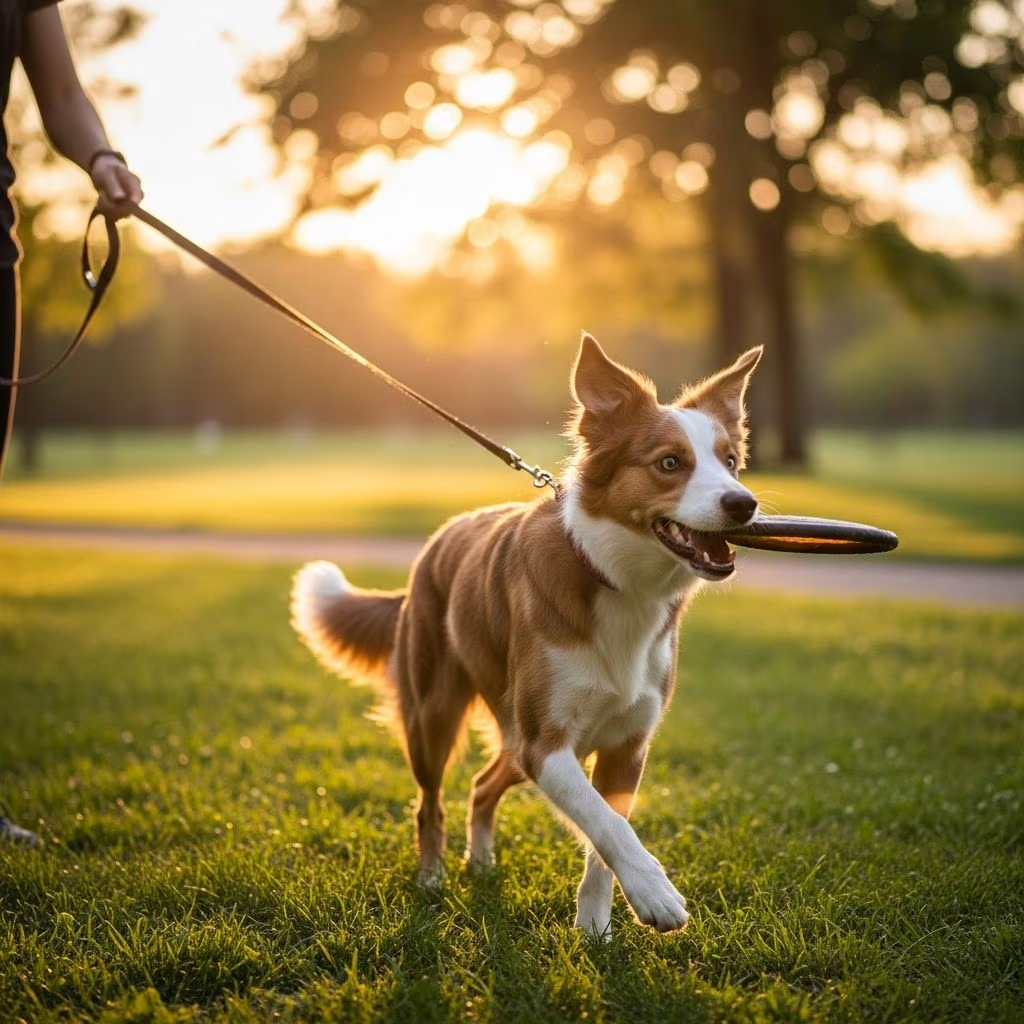
High-energy dogs bring joy and vitality to any home, but their relentless enthusiasm can quickly become overwhelming. Breeds like Border Collies, Australian Shepherds, and Labrador Retrievers often possess boundless stamina that demands thoughtful management. Without proper guidance, this energy manifests as jumping, barking, or destructive chewing. The good news is that with a combination of physical outlets, mental challenges, and behavioral training, you can teach your dog to relax on cue and integrate seamlessly into family life.
Understanding the Roots of Canine Hyperactivity
Hyperactivity in dogs isn’t just random excitement; it’s often a mix of genetics, lack of outlets, and reinforced behaviors. High-drive breeds were developed for demanding tasks like herding or hunting, so their energy reflects unmet instincts. Modern lifestyles rarely match these needs, leading to frustration expressed as hyperactivity.
Exercise alone doesn’t solve the issue. Intense play like fetch spikes adrenaline and cortisol, creating a ‘sixty-to-zero’ problem where dogs go from peak arousal to crash without learning self-regulation. True calm comes from teaching dogs to down-regulate themselves through structured routines and impulse control exercises.
Building a Foundation with Impulse Control Training
Impulse control is the cornerstone of calming high-energy dogs. Start small to build success. Teach your dog to wait for permission before accessing desired items, fostering patience.
- Doggy Zen Exercise: Place a treat on the floor. Instruct your dog to leave it until you give the cue, rewarding eye contact or backing away.
- Wait at Doors: Before walks or meals, have your dog sit and wait for a release word like ‘Okay.’
- Off-Switch Cue: During play, say ‘All done’ and reward settling. Practice consistently to signal activity’s end.
These exercises rewire your dog’s brain to prioritize handler cues over impulses, reducing frantic behaviors over time.
Daily Routines for Balanced Energy Management
A structured 3-2-1 routine prevents hyperactivity by sequencing activities from high to low intensity, ensuring proper cool-downs. This approach tires dogs mentally and physically without over-stimulation.
The 3-2-1 Chill-Out Framework
| Phase | Activity Type | Duration | Purpose |
|---|---|---|---|
| 3: Exercise/Exploration | Hike, fetch with long line, sniffing walks | 20-30 min | Burn physical energy with dog-appropriate outlets |
| 2: Brain Games | Hide-and-seek, obedience drills, puzzle toys | 15 min | Focus mind, transition from arousal |
| 1: Solo Settle | Chew toys, mat training, quiet crate time | Indefinite | Promote independent relaxation |
Adapt based on your schedule: short on time? Opt for sniff walks or flirt pole play for enrichment. Consistency builds habits, reducing ‘cranky’ post-exercise behaviors.
Physical Exercise: Quality Over Quantity
A tired dog is a good dog, but only with purpose. Aim for 60-90 minutes daily, split into sessions. Combine cardio with strength-building for comprehensive fatigue.
- Sniffing Walks: Let your dog investigate scents; it’s mentally exhausting.
- Flirt Pole or Tug: Builds muscle and releases energy in small spaces.
- Biking or Cart Pulling: For advanced dogs, adds resistance training.
- Treadmill Sessions: Pre-excursion warm-up to curb over-enthusiasm.
Avoid dog parks if arousal spikes; opt for controlled play to prevent reinforcement of hyperactivity.
Mental Stimulation to Exhaust the Mind
Mental work trumps physical for long-term calm. High-energy dogs thrive on problem-solving, which releases dopamine without adrenaline surges.
- Training Box: Confine sessions to 5-minute bursts with high rewards for tiny steps, like shaping a ‘down-stay’.
- Hide-and-Seek: Hide treats or yourself to engage nose and focus.
- Patience Games: Practice ‘patience pole’ during outings—dog sits tethered while you ignore pestering.
Incorporate weekly field trips: hikes, beach runs, or store visits with pre-exercise treadmill time.
Environmental Management and Tools
Prevent bad habits with management. Use crates, pens, or leashes to block reinforcement of jumping or nipping.
- Crate for unsupervised time.
- Exercise pens for safe play.
- Long lines for controlled freedom outdoors.
Teach mat settling: Lure to a bed, reward relaxed postures, add ‘Settle’ cue for on-demand calm.
Common Pitfalls and How to Avoid Them
Don’t rely solely on exhaustion; it backfires by wiring dogs for constant highs. Skip forced settles—they build resentment. Instead, shape voluntary relaxation.
Over-stimulation from endless fetch creates addicts. Limit to short bursts followed by off-switch cues.
Advanced Techniques for Stubborn Cases
For extreme cases, desensitize triggers. Pair scary stimuli (e.g., vacuums) with calm play at a distance, gradually closing gaps. Consult professionals for tailored plans.
FAQs
What if exercise makes my dog more hyper?
Implement cool-downs: Follow physical activity with brain games and rest to teach transitions.
How long until I see results?
Expect changes in 2 weeks with daily consistency; full habits take 4-6 weeks.
Best for puppies?
Yes—early routines prevent issues. Use shorter sessions and high-value rewards.
Any breed exceptions?
All high-drive breeds benefit, but adjust intensity for age and health.
Tools needed?
Long line, puzzle toys, crate, treats. Start basic.
Sample Weekly Schedule
| Day | Morning | Afternoon | Evening |
|---|---|---|---|
| Mon | Sniff walk (3) | Training game (2) | Chew settle (1) |
| Tue | Treadmill + patience | Hide-seek | Mat training |
| Wed | Hike (3) | Obedience (2) | Crate rest |
| Thu | Flirt pole | Puzzle toys | Zen exercise |
| Fri | Bike ride | Patience pole | Quiet time |
| Sat | Field trip (beach) | Brain games | Family settle |
| Sun | Rest day focus | Light walk | Extended relax |
This plan balances energy while building calm. Track progress and adjust.
References
- Dealing With Hyperactive Dogs — Kenneth to Couch. 2021-05. https://kenneltocouch.org/wp-content/uploads/2021/05/Dealing-With-Hyperactive-Dogs.pdf
- Tips on Living with High Energy Dogs — Leerburg. N/A. https://leerburg.com/high-energy-dogs.php
- A Simple Daily Routine to Help Calm Hyper Dogs — 3 Lost Dogs. N/A. https://www.3lostdogs.com/a-simple-daily-routine-to-help-calm-hyper-dogs-and-solve-behavior-problems/
- Training an Over-Aroused Dog — Whole Dog Journal. N/A. https://www.whole-dog-journal.com/behavior/training-an-over-aroused-dog/
- A Few Simple Tips to Exercise Dogs — Dog Gone Problems. N/A. https://doggoneproblems.com/alphie-tips-to-exercise-dogs/
- How To Train A Hyperactive Dog — K9 Mania Dog Training. N/A. https://k9maniadogtraining.com/how-to-train-a-hyperactive-dog/



