

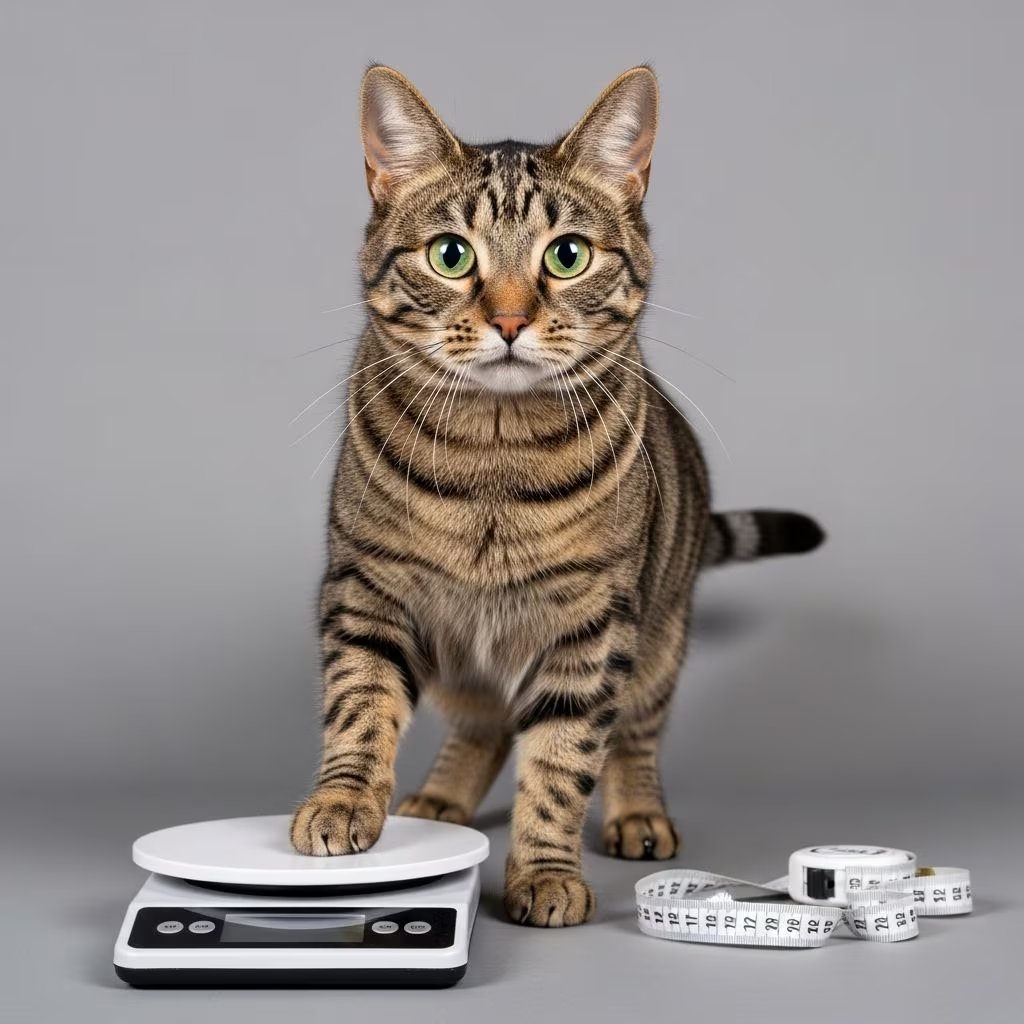
Tabby cats, known for their distinctive striped or spotted coats, exhibit a wide range of sizes depending on their underlying breed. These patterns appear across domestic shorthairs, Maine Coons, and more, with adult weights typically spanning 6 to 20 pounds. Understanding these variations helps owners support proper development and detect health issues early.
Decoding Tabby Patterns and Size Variations
The term “tabby” describes a coat coloration featuring bold stripes, swirls, or spots, not a singular breed. This means tabby cats can belong to petite breeds like the Cornish Rex or giants like the Maine Coon, directly influencing their mature size. Males generally outweigh females by 20-30%, and spaying or neutering can moderate growth.
Genetic heritage from parents sets the foundation for potential stature, while early life conditions refine it. Owners of mixed-breed tabbies, common in shelters, should observe littermate sizes for clues on expected adulthood.
Growth Trajectories by Breed Categories
Kittens experience rapid expansion in their first year, doubling or tripling birth weight by two months. Growth slows after six months, stabilizing around 10-12 months. Charts below outline averages for small, medium, and large tabby examples, aiding in benchmarking.
Small-Breed Tabbies (e.g., Cornish Rex or Singapura)
These lithe cats reach compact frames quickly, ideal for apartment living.
| Age | Average Weight |
|---|---|
| Newborn to 1 Month | 12-16 ounces |
| 2 Months | 1.5-1.7 pounds |
| 3 Months | 3-3.5 pounds |
| 4-6 Months | 4-6.5 pounds |
| Adult (1 Year+) | 6-10 pounds |
Females often top at 6-8 pounds, males slightly heavier.
Medium-Breed Tabbies (e.g., American Shorthair or Domestic Shorthair)
The most prevalent tabby type, balancing playfulness and sturdiness.
| Age | Average Weight |
|---|---|
| Newborn to 1 Month | 1-1.5 pounds |
| 2 Months | 1.5-2 pounds |
| 3 Months | 2-4 pounds |
| 4-6 Months | 4-6.5 pounds |
| Adult (1 Year+) | 7-15 pounds |
Averages hover at 10 pounds, with robust muscle adding variance.
Large-Breed Tabbies (e.g., Maine Coon or Norwegian Forest Cat)
These majestic felines continue growing up to 3-4 years.
| Age | Average Weight |
|---|---|
| Newborn to 1 Month | 1.2-1.8 pounds |
| 2 Months | 2.2-3.5 pounds |
| 3 Months | 3-6 pounds |
| 4-6 Months | 5-13 pounds |
| Adult (1 Year+) | 10-20 pounds |
Males can exceed 18 pounds healthily.
Factors Shaping Tabby Cat Dimensions
Breed provides a blueprint, but multiple elements fine-tune growth.
- Genetics: Parental sizes predict offspring; pedigreed lines show consistency.
- Sex: Males develop broader frames and heavier bones.
- Nutrition: Kitten formulas rich in proteins, fats, and DHA support bone and brain growth. Deficiencies cause stunting.
- Exercise: Daily play builds muscle tone and prevents obesity.
- Health: Parasites or illnesses during key phases hinder progress; regular vet checks mitigate risks.
Environmental stressors like poor housing or isolation can suppress appetite and activity, impacting size.
Assessing Healthy Weight in Adult Tabbies
Beyond scales, the Body Condition Score (BCS) evaluates fitness on a 1-9 scale. Ideal is 4-5/9: ribs palpable under a thin fat layer, visible waist from above, and abdominal tuck from side view.
| BCS Score | Description | Action |
|---|---|---|
| 1-3 | Emaciated; bones prominent | Urgent vet visit, increase calories |
| 4-5 | Ideal; contours visible | Maintain diet and activity |
| 6-9 | Overweight to obese; no waist | Portion control, more play |
Vets tailor ideals to frame size; a 12-pound Maine Coon tabby may be lean, while the same suits an overweight shorthair.
Practical Monitoring Techniques for Owners
Consistent tracking reveals trends, prompting timely interventions.
- Gather Tools: Digital pet scale (accurate to 0.1 oz), notebook or app for logs.
- Weigh Routinely: Daily for newborns to 6 months, weekly thereafter. Morning fasted weigh-ins minimize variables.
- Plot Data: Graph against breed charts; deviations over 10% warrant attention.
- Combine Methods: Pair with BCS monthly and photos for visual records.
- Consult Pros: Share charts at vet visits for breed-specific advice.
Helpful tip: Weigh with a helper to steady wriggly kittens.
Nutrition Strategies for Optimal Growth
Kittens need 2-3x adult calories initially, shifting to maintenance post-growth. Choose AAFCO-labeled foods meeting life-stage needs.
- Weanlings (4-8 weeks): High-protein wet food, 4-6 meals/day.
- Growing kittens (2-12 months): Growth formulas with omega-3s for coat health.
- Adults: Measured kibble or wet portions; avoid free-feeding.
Obesity risks rise post-neuter; transition gradually and incorporate puzzle feeders.
Exercise and Lifestyle for Balanced Development
Active tabbies maintain sleek figures. Aim for 15-30 minutes daily interaction.
- Interactive Toys: Wand teasers mimic hunting, building agility.
- Vertical Space: Cat trees encourage climbing, strengthening limbs.
- Social Play: Multi-cat homes boost natural chasing.
Sedentary lifestyles correlate with joint issues in larger breeds.
Common Growth Concerns and Solutions
Owners often note plateaus or surges. Normal fluctuations occur during spurts, but persistent under/overgrowth signals issues like thyroid problems or diabetes precursors.
- Sudden loss: Check for illness, dental pain.
- Failure to thrive: Test for worms, allergies.
- Rapid gain: Review treats, spay status.
Annual bloodwork ensures hormonal balance.
Frequently Asked Questions
Do all tabby cats grow to the same size?
No, size ties to breed; tabbies range from 6-20 pounds.
When does a tabby kitten reach full size?
Most by 1 year, large breeds up to 4 years.
How can I tell if my tabby is overweight?
Use BCS: Feel ribs easily, see waist tuck.
Does neutering affect tabby growth?
It prevents hormone-driven bulk but doesn’t stunt height.
What diet supports tabby kitten growth?
Kitten-specific, calorie-dense food with balanced nutrients.
Long-Term Health Implications of Proper Sizing
Balanced growth reduces risks of diabetes, arthritis, and heart strain in adulthood. Proactive owners extend lifespans, with tabbies often reaching 12-18 years.
By charting progress and adjusting care, you empower your tabby for vitality.
References
- How Big Do Tabby Cats Get? Vet-Verified Average Size & Growth — Catster. 2023. https://www.catster.com/lifestyle/how-big-do-tabby-cats-get-size-weight-growth-chart/
- Average Weight for Cats — PetMD. 2024-05-15. https://www.petmd.com/cat/general-health/average-weight-cats
- Cat Weight Chart by Age and Breed — Pawlicy Advisor. 2023. https://www.pawlicy.com/blog/cat-weight-chart/
- Cat Weight Calculator — Cats.com. 2024. https://cats.com/weight-calculator
- Average Healthy Cat Weight Chart — Meowant. 2023. https://meowant.com/blogs/cat-facts/whats-the-average-healthy-cat-weight



