

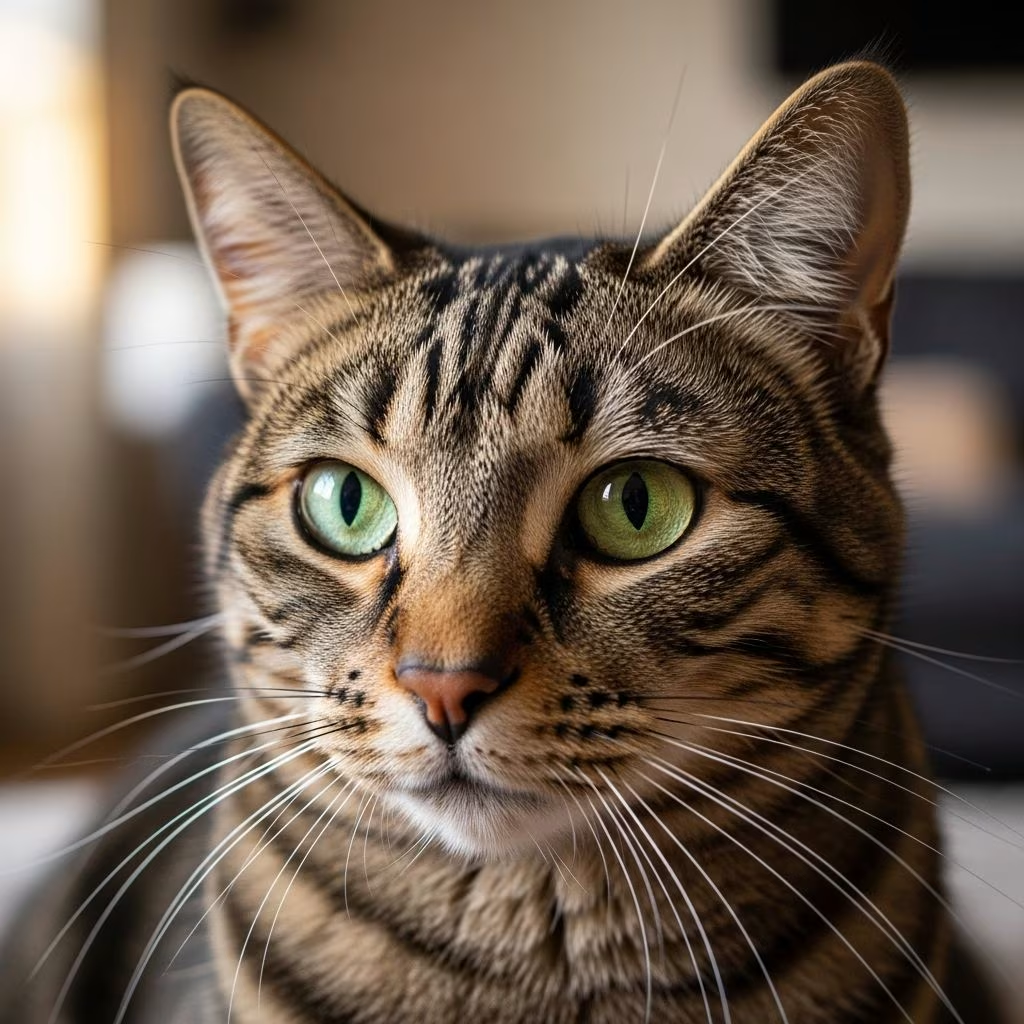
Tabby cats are among the most recognizable and beloved felines worldwide, distinguished by their striking coat patterns featuring an iconic “M” on the forehead, stripes along the eyes, cheeks, back, legs, and tail. These patterns include mackerel, classic (blotched), ticked, and spotted varieties, making tabbies a coat type rather than a specific breed found across many domestic cats.
What Is a Tabby Cat?
A tabby cat refers to any domestic cat (*Felis catus*) exhibiting a specific coat pattern characterized by bold stripes, swirls, spots, or ticked hairs, always marked by the signature “M” shape on the forehead. This pattern arises from genetic factors at the agouti and tabby loci, influencing pigment distribution. Unlike solid-colored cats, tabbies display banded hairs that create visual contrast, with colors ranging from brown, orange, gray, to black bases. Up to 80% of modern cats carry tabby markings, reflecting their prevalence as the wild-type pattern in felines.
Tabby is not a breed but a coloration seen in mixed breeds and purebreds like American Shorthair, Maine Coon, Abyssinian, and British Shorthair. Orange tabbies, often male due to X-linked genetics, show muted stripes, while black tabbies feature olive and ochre accents.
Tabby Cat Patterns
There are five primary tabby patterns, each governed by specific alleles at the tabby gene locus. The mackerel pattern (*T^m*) is dominant over classic (*T^b*), with modifiers creating spotted or ticked variations.
- Mackerel Tabby (Tiger Cat): Features narrow, parallel stripes running vertically along the sides, rings around legs and tail, and unbroken lines down the spine. This is the most common pattern, resembling a tiger’s stripes.
- Classic (Blotched) Tabby: Displays thick, swirling whorls and bands forming bullseye shapes on the flanks, a butterfly on the shoulders, and bold stripes on legs, tail, and cheeks. Recessive and prevalent in 80% of cats via the *T^b* allele.
- Spotted Tabby: A variation where mackerel or classic stripes break into spots across the body, back, and flanks, adding a leopard-like flair.
- Ticked Tabby: Lacks obvious stripes or spots; instead, agouti hairs with alternating light and dark bands create a uniform, salt-and-pepper or sandy appearance. Common in Abyssinians due to Dkk4 mutations.
- Patched Tabby: Emerges in female tortoiseshell cats with one black and one orange X chromosome, blending tabby patterns in patches via sex-linked inheritance.
Genetics Behind Tabby Patterns
Tabby patterns stem from two key gene loci: the agouti locus (controlling banded hairs) and the tabby locus (with *T^m* for mackerel, *T^b* for classic). A spotted modifier and Dkk4 gene, which maps thick/thin skin in embryos, dictate stripe width and placement—thicker Dkk4 areas yield darker fur. A 2021 *Nature Communications* study revealed Dkk4’s role in fetal skin patterning, explaining stripes in domestic cats and big cats like tigers.
Orange tabby coloring is X-linked; males (XY) need one orange allele, females (XX) two, making ~80% of orange tabbies male. Even solid red cats show underlying tabby stripes under bright light or on tails.
History and Origins of Tabby Cats
The tabby pattern traces to the Middle Ages during the Ottoman Empire, named after “attabiy,” striped silk from Baghdad’s Attabiy district—evolving from 14th-century French “atabis” to English “tabby.” Not widespread until the 18th century, it became common as cats controlled vermin on ships and in homes.
Earliest records note 17th-century imports of “Cyprus cats” (tabby-like) to England. DNA studies confirm the pattern’s emergence in medieval times, with the classic blotched form persisting from a simple gene flip in Ottoman markets. By the 1700s, tabbies populated European streets, valued for pest control and companionship amid expanding coat colors.
Tabby Cat Personality and Temperament
Tabby cats exhibit diverse temperaments influenced by genetics, upbringing, and breed—ranging from independent and social to curious, cautious, protective, smart, outgoing, shy, adventurous, active, laid-back, or vocal. No universal personality ties directly to the pattern, but many display innate hunting instincts, making them excellent at pest control.
Studies show coat color may correlate with behavior; gray-and-white or black/brown/gray tabby females can be more aggressive at vets than males. Overall, tabbies are adaptable, social companions thriving in homes.
Tabby Cat Care and Health
Caring for tabby cats mirrors general feline needs: balanced diet, regular grooming, exercise, and vet checkups. Their short to medium coats require weekly brushing to manage shedding, especially in ticked varieties.
| Aspect | Recommendations |
|---|---|
| Diet | High-protein kibble/wet food; portion control to prevent obesity. |
| Grooming | Brush 1-2x/week; check ears, teeth monthly. |
| Exercise | Daily play; scratching posts, toys for hunting instinct. |
| Health | Vaccines, spay/neuter; watch for dental issues, common in domestics. |
Tabby patterns don’t confer specific health risks, but associated breeds like Maine Coons may have hypertrophic cardiomyopathy. Early socialization enhances their sociable side.
Facts, Myths, and Folklore About Tabby Cats
- 80% of cats have tabby genes; it’s the default wild-type pattern.
- Orange tabbies are mostly male (75-80%); females are rare.
- Sailors prized ginger tabbies as lucky mousers.
- The “M” on forehead links to Islamic folklore: Prophet Muhammad stroked a tabby, leaving the mark.
- Tabby weaves inspired the name from ancient Baghdad textiles.
Tabby Cats in Popular Culture
Tabby cats feature prominently: Garfield (orange mackerel), Morris (9Lives mascot, classic orange), and Tigger (Winnie-the-Pooh). Their relatable patterns make them icons in media.
Frequently Asked Questions (FAQs)
What is a tabby cat?
A tabby cat has a coat with distinct patterns like stripes, swirls, or spots, marked by an “M” on the forehead—not a breed but a pattern.
Are all tabby cats the same breed?
No, tabby is a coat pattern appearing in many breeds and mixes.
Why do tabby cats have an “M” on their forehead?
It’s a genetic trait of the tabby pattern, visible across colors.
Are orange tabby cats always male?
Mostly—about 80% due to X-linked orange gene; females need two copies.
Do tabby cats make good pets?
Yes, they’re adaptable, social, and great hunters with proper care.
References
- Tabby Cat: Facts, Origin & History (With Info & Pictures) — Catster. 2023. https://www.catster.com/lifestyle/tabby-cat-personality/
- Tabby cat — Wikipedia. 2024-01-10. https://en.wikipedia.org/wiki/Tabby_cat
- The Origins and History of the Tabby Cat — We Are All About Cats. 2021-07-13. https://weareallaboutcats.com/2021/07/13/the-origins-and-history-of-the-tabby-cat/
- Tabby Cats: Facts, Details, and Breed Guide — Litter-Robot. 2023. https://www.litter-robot.com/blog/tabby-cat-folklore-facts/
- Orange Tabby Cat Guide: History, Genetics, Care, and Fun Facts — WoPet. 2023. https://wopet.com/cats/orange-tabby-cat-guide/



