

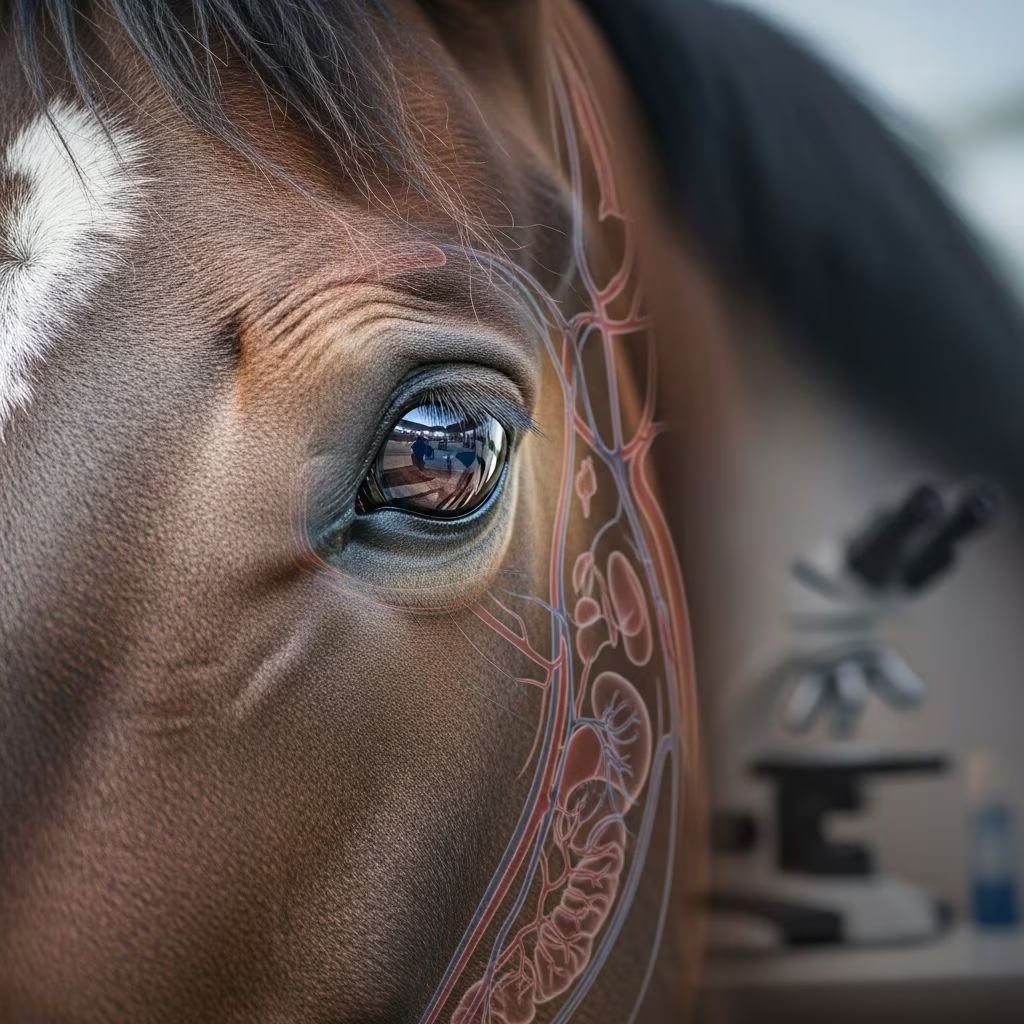
Horses affected by widespread health conditions often develop significant eye problems that can lead to discomfort, impaired vision, or even permanent blindness if not addressed promptly. These ocular manifestations arise when internal infections, immune responses, or metabolic imbalances extend to the sensitive structures of the eye, such as the uvea, cornea, and retina. Understanding these links empowers owners and veterinarians to intervene early, preserving the horse’s quality of life and performance ability.
Key Mechanisms Linking Body-Wide Illnesses to Eye Damage
Generalized diseases impact equine eyes through direct pathogen invasion, inflammatory cascades, or secondary complications like blood vessel changes and tissue scarring. For instance, bacterial or viral infections circulating in the bloodstream can seed inflammation within the eye’s vascular layers, while immune dysregulation amplifies damage during recurrent episodes. These processes frequently culminate in conditions like uveitis, which stands out as the predominant cause of equine blindness globally.
The eye’s unique environment—avascular in parts yet richly supplied with blood vessels—makes it vulnerable. Inflammatory cells, proteins, and fluids leak into ocular chambers, causing pain, cloudiness, and structural adhesions that hinder normal function. Over time, unchecked inflammation fosters cataracts, glaucoma, and retinal degeneration, underscoring the need for vigilant monitoring in horses with known systemic issues.
Major Systemic Culprits Behind Equine Ocular Inflammation
Several body-wide conditions routinely produce eye symptoms in horses. Infections top the list, with pathogens like Leptospira bacteria triggering acute uveitis by penetrating ocular tissues. Equine herpesvirus similarly provokes intraocular inflammation, often alongside respiratory or neurological signs. Sepsis from bacteria such as Rhodococcus equi in young foals can extend to the eyes, causing endophthalmitis—a severe internal infection.
- Bacterial invasions: Leptospirosis frequently initiates uveitis episodes, with bacteria surviving in the eye’s privileged immune site.
- Viral threats: Herpesviruses contribute to sporadic flares, compounded by trauma or stress.
- Sepsis-related spread: Systemic bloodstream infections lead to pus-filled chambers and vision-threatening pus accumulation.
Beyond infections, immune-mediated disorders dominate, particularly equine recurrent uveitis (ERU), dubbed “moon blindness” historically due to perceived lunar cycles in flares—though now understood as immune-driven. Genetic predispositions in breeds like Appaloosas heighten risk, with environmental triggers like flies exacerbating cycles.
Recognizing Symptoms of Systemic Disease in Horse Eyes
Early detection hinges on spotting subtle to overt signs. Horses in pain squint excessively, tear profusely, and show corneal haze or color shifts in the iris. During flares, the pupil constricts (miosis), and owners may notice blood or yellowish fluid in the front eye chamber.
| Symptom | Associated Systemic Cause | Urgency Level |
|---|---|---|
| Epiphora (excess tearing) | Infection or immune flare | Moderate |
| Corneal edema (swelling) | Uveitis or glaucoma onset | High |
| Photophobia (light sensitivity) | Anterior uveitis | High |
| Hypopyon (pus in chamber) | Sepsis/endophthalmitis | Critical |
| Iris adhesions | Recurrent ERU | High |
Subtle chronic forms, like insidious uveitis, evade notice until cataracts form or vision fades bilaterally. Owners should routinely check eyes during grooming, noting any asymmetry or behavioral changes like bumping into objects.
Diagnostic Approaches for Equine Eye-Systemic Links
Veterinarians employ a multi-step process: thorough history, fluorescein staining for ulcers, tonometry for pressure (glaucoma risk), and ultrasound for internal views. Bloodwork identifies infections (e.g., Leptospira titers), while aqueous humor taps confirm intraocular pathogens—though rarely due to risks.
Histopathology from enucleated eyes in severe cases reveals patterns: ERU shows lens-iris adhesions and retinal atrophy, while septic cases exhibit inflammatory infiltrates. Advanced imaging like OCT (optical coherence tomography) aids in pinpointing subtle damage.
Treatment Strategies Targeting Root Causes
Management blends systemic and local therapies. For infectious triggers, antibiotics like those for leptospirosis pair with anti-inflammatories. ERU demands aggressive regimens: topical NSAIDs or steroids, mydriatics to prevent adhesions, and oral flunixin meglumine.
- Acute phase: Frequent topical drops (every 2-4 hours) reduce inflammation rapidly.
- Recurrent prevention: Cyclosporine implants or subconjunctival injections extend relief, curbing flare frequency.
- Complication control: Glaucoma meds lower intraocular pressure; cataracts may require surgery in select cases.
Prognosis varies: acute cases often resolve with prompt care, but ERU carries a guarded outlook, with up to 56% blindness risk from cumulative scarring. Supportive care like fly masks and stall rest aids recovery.
Preventive Measures for At-Risk Horses
Proactive steps mitigate systemic-to-ocular progression. Vaccinate against herpesvirus, control leptospirosis via clean water sources, and minimize fly exposure with masks and repellents. Regular vet eye exams—biannual for susceptible breeds—catch subclinical issues.
Nutritional support bolsters immunity: omega-3 supplements may dampen inflammation. Stress reduction through consistent routines prevents flare triggers in ERU-prone horses.
Long-Term Complications and Vision Preservation
Untreated systemic eye issues spawn glaucoma (elevated pressure), cataracts (lens opacity), and phthisis bulbi (shrunken globe). ERU frequently precedes these, with adhesions locking pupils and fostering secondary infections.
Monitoring vision via menace response, maze tests, or obstacle courses guides intervention. In blind horses, adapt environments with consistent fencing and companion animals to maintain welfare.
FAQs on Systemic Eye Disorders in Horses
What is the leading cause of blindness from systemic diseases in horses?
Equine recurrent uveitis (ERU) tops the list, stemming from immune responses often tied to prior infections, affecting up to 25% of horses worldwide.
Can vaccines prevent eye problems from generalized illnesses?
Yes, herpesvirus vaccines reduce uveitis risk, though they don’t eliminate immune-mediated recurrences like ERU.
How quickly should I call a vet for eye symptoms?
Immediately for squinting, cloudiness, or discharge, as delays exacerbate damage in inflammation-driven cases.
Are certain breeds more prone to these eye-systemic links?
Appaloosas and drafts face higher ERU rates due to genetics, but all breeds risk infection-related uveitis.
Is surgery ever needed for these conditions?
Lens extraction for cataracts or cyclosporine implants for ERU offer vision-saving options in advanced scenarios.
Emerging Research and Future Outlook
Ongoing studies probe ERU genetics and novel immunomodulators, promising better control. Heterochromic iridocyclitis, a newer uveitis variant with keratitis, highlights evolving understandings of immune pathologies. Owners benefit from staying informed via equine veterinary networks.
References
- 7 Common Equine Eye Conditions — Veterinary Vision Center. 2023. https://veterinaryvisioncenter.com/7-common-equine-eye-conditions/
- Assessment of vision and common eye problems in horses — Cornell University College of Veterinary Medicine. 2023-05-15. https://www.vet.cornell.edu/about-us/news/20230515/assessment-vision-and-common-eye-problems-horses
- A retrospective histologic study of 140 cases of clinically significant equine ocular lesions — PMC (NCBI). 2020-07-22. https://pmc.ncbi.nlm.nih.gov/articles/PMC7377627/
- Recognizing Common Equine Eye Conditions — Carolina Equine Hospital. 2023. https://www.carolinaequinehospital.com/blog/266086-recognizing-common-equine-eye-conditions/
- Meeting in the Middle: Two Forms of Equine Uveitis — UC Davis Center for Equine Health. 2023. https://cehhorsereport.vetmed.ucdavis.edu/news/meeting-middle-two-forms-equine-uveitis
- Common Equine Eye Conditions — American Association of Equine Practitioners (AAEP). 2023. https://aaep.org/post/common-equine-eye-conditions/



