

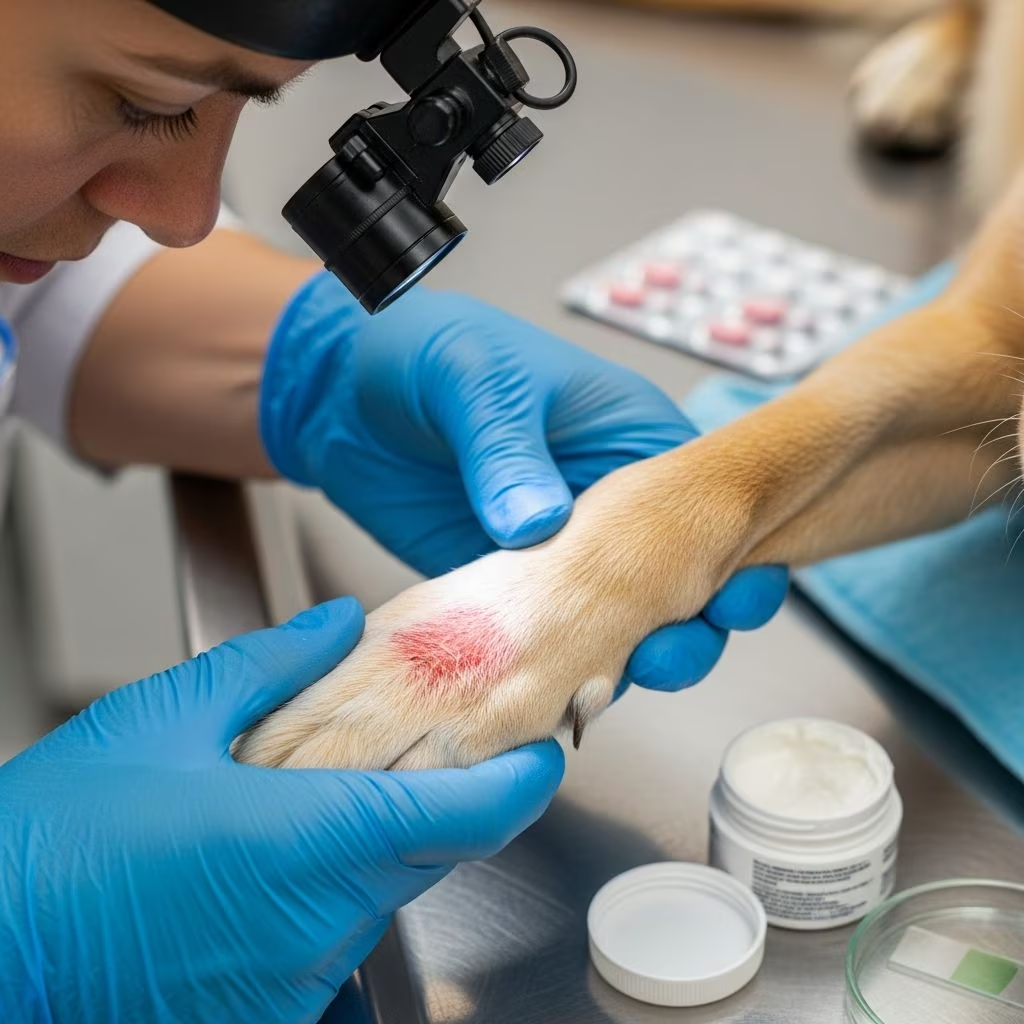
Fungal infections affecting the integumentary system represent a significant clinical challenge in veterinary practice. While topical treatments address localized conditions, systemic antifungal medications become necessary for disseminated infections, severe dermatological disease, or conditions resistant to surface-level interventions. Understanding the pharmacological properties, clinical applications, and dosing regimens of these medications is essential for veterinary practitioners managing animals with fungal skin diseases.
Pharmacological Classification of Antifungal Agents
The antifungal agents used in veterinary medicine fall into five distinct pharmacological classes, each operating through different mechanisms to eliminate fungal organisms. The polyene class includes amphotericin B, which disrupts fungal cell membranes by binding to ergosterol. Azole medications represent the most commonly prescribed systemic antifungals in veterinary dermatology and function by inhibiting fungal cytochrome P450 enzymes. The allylamine class, represented by terbinafine, interferes with ergosterol synthesis through a different enzymatic pathway. Nucleoside analogs and echinocandins represent newer therapeutic options, though they remain less frequently utilized in veterinary practice due to cost and limited availability.
Among these classes, polyenes and azoles dominate clinical veterinary practice. This prevalence reflects their broad spectrum of activity, established safety profiles in animal species, and generally affordable cost relative to newer agents. However, veterinarians should recognize that most systemic antifungals prescribed in veterinary medicine are administered off-label, as the Food and Drug Administration has approved only a limited number of products specifically for veterinary use.
Azole Antifungals: First and Second Generation Agents
Azole antifungals were first discovered during the early 1970s, with ketoconazole emerging as the pioneering orally active azole medication. This drug class exhibits broad-spectrum antifungal activity, though important pharmacological differences exist between agents. The development of successive generations of azoles has been driven by the emergence of fungal resistance, paralleling antimicrobial resistance patterns observed in bacterial organisms.
Ketoconazole: The First-Generation Foundation
Ketoconazole represents the original oral azole antifungal and remains in regular use throughout veterinary medicine, though newer agents are increasingly replacing it. This medication demonstrates efficacy against ringworm, fungal ear infections, and various dermatological fungal conditions. Additionally, ketoconazole treats systemic mycoses including cryptococcosis, coccidioidomycosis, and blastomycosis. For coccidioidomycosis specifically, ketoconazole frequently demonstrates superior efficacy compared to amphotericin B, with minimum treatment periods of 12 months recommended for animals with disseminated disease.
Itraconazole: Enhanced First-Generation Profile
Itraconazole represents an advancement in first-generation azole therapy, offering increased activity against fungal organisms and producing fewer adverse effects compared to ketoconazole. This medication treats all fungal infections susceptible to ketoconazole, making it a preferred alternative in most clinical scenarios. Aspergillus species demonstrates greater sensitivity to itraconazole than to ketoconazole, though resistance does occur clinically. One notable limitation involves reduced activity against Leishmania species compared to other azole medications.
The antifungal activity of itraconazole depends on the area-under-the-curve parameter when blood concentrations are plotted against minimum inhibitory concentrations (AUC/MIC). This pharmacokinetic principle means that total daily dose (mg/kg/day) determines therapeutic efficacy more than dosing frequency, allowing administration once or twice daily to dogs and cats. Standard dosing involves 10 mg/kg/day for three days, followed by maintenance at 5 mg/kg/day in dogs, while cats typically receive 10 mg/kg/day via capsule or 5 mg/kg/day via solution formulation.
Fluconazole: Accessible First-Generation Alternative
Fluconazole stands among the most frequently prescribed antifungal medications in veterinary dermatology. Like itraconazole, fluconazole exhibits activity dependent on area-under-the-curve relationships, permitting once or twice daily administration to companion animals. Both dogs and cats receive fluconazole at 20 mg/kg/day via oral tablet or solution formulation. The widespread adoption of fluconazole in veterinary practice reflects its effectiveness, favorable safety profile, and availability of cost-effective generic formulations.
Second-Generation Azoles: Advanced Therapeutic Options
The emergence of second-generation azole medications—posaconazole, voriconazole, and isavuconazole—addresses limitations of earlier agents and expands therapeutic capabilities against resistant organisms and invasive mold infections. However, veterinary data regarding these newer medications remains limited compared to first-generation agents.
Voriconazole: Mold-Spectrum Advancement
Voriconazole represents the next-generation successor to fluconazole, offering expanded activity against mold organisms and FDA approval in humans for invasive mold and candidiasis prevention or treatment. In companion animals, voriconazole has been employed to treat invasive mold infections, including aspergillosis, though clinical outcomes have been variable. Maximum blood concentration (Cmax) determines voriconazole’s antifungal activity, distinct from the area-under-the-curve relationship governing first-generation azoles. Dogs receive voriconazole at 5 mg/kg twice daily via oral tablet or solution, while cats typically receive 12.5 mg total dose every 72 hours via solution formulation.
Voriconazole and posaconazole remain reserved for invasive mold infections or as salvage therapy when itraconazole or fluconazole treatment has failed. This reserved status reflects both cost considerations and the need to preserve these agents’ utility against resistant organisms. With FDA-approved generic formulations now available, these medications have become more financially accessible to veterinary practices.
Posaconazole: Extended-Release Convenience
Posaconazole functions as the next-generation successor to itraconazole, demonstrating expanded activity against mold organisms. Like voriconazole, posaconazole has FDA approval in humans for invasive mold and candidiasis management. Veterinary experience with posaconazole in dogs and cats shows mixed results for invasive mold infections, including aspergillosis.
Posaconazole exhibits activity against Histoplasma, Blastomyces, Coccidioides, and Cryptococcus species, positioning it as an effective salvage therapy option when earlier azole therapy fails. The medication is available in two formulations: solution (40 mg/ml) and extended-release tablet (100 mg). The solution formulation suits small dogs and cats, while the extended-release tablet accommodates larger dogs (15 kg and above) with every-other-day dosing. Dogs receive either 5 mg/kg every other day via extended-release tablet or 5 mg/kg twice daily via solution, while cats typically receive 15 mg/kg initially, then 7.5 mg/kg/day via solution formulation.
Isavuconazole: Limited Veterinary Experience
Isavuconazole represents the third second-generation triazole, though no veterinary data currently exists regarding its use in animal species. This absence of documented experience makes isavuconazole an investigational option rather than an established therapeutic choice for veterinary dermatological or systemic fungal infections.
Polyene Antifungals: Amphotericin B Administration
Amphotericin B remains essential for treating life-threatening invasive fungal infections when azole therapy is insufficient or inappropriate. This polyene antifungal disrupts fungal cell membranes by binding ergosterol, but also damages mammalian cell membranes, resulting in significant toxicity potential. Lipid-based and liposomal formulations reduce nephrotoxicity compared to conventional preparations.
Amphotericin B dosing depends on Cmax (maximum blood concentration), necessitating intravenous administration every other day or three times weekly on Monday, Wednesday, and Friday schedules. Dogs tolerate cumulative doses up to 24 mg/kg, while cats typically receive up to 12 mg/kg total, though lower cumulative doses may provide clinical benefit. Prior to each amphotericin B administration, animals must be well-hydrated, and kidney values along with blood electrolytes (sodium, potassium, chloride) require monitoring before each dose.
Once reconstituted, liposomal formulations remain viable for at least one week if refrigerated and removed from the vial aseptically. Importantly, contradictory data exists regarding potential antagonism between amphotericin B and concurrent azole administration. Due to this uncertainty and lack of evidence supporting concurrent use benefits, sequential therapy—amphotericin B followed by azole step-down treatment—is recommended rather than simultaneous administration.
Allylamine Class: Terbinafine
Terbinafine represents the allylamine class antifungal, operating through unique enzymatic inhibition of ergosterol synthesis. This medication is used primarily for localized fungal infections, including ringworms and other dermatological infections affecting skin and nails. Dogs and cats receive terbinafine at 10–30 mg/kg orally every 24 hours.
Adjunctive Agents: Flucytosine and Griseofulvin
Flucytosine demonstrates efficacy against Cryptococcus neoformans, Candida species, and various yeasts, but exhibits minimal activity against other fungi. Due to frequent resistance development, flucytosine is administered exclusively in combination with amphotericin B. The medication finds primary application in cryptococcosis treatment. Standard dosing for dogs and cats involves 25–50 mg/kg orally every 6–8 hours for 42 days.
Griseofulvin remains the only antifungal approved by the Food and Drug Administration for systemic administration in veterinary species. This medication is administered at 25–60 mg/kg orally every 12 hours in microsize formulation. Chronic cases may utilize maintenance dosing of 2.5–5 mg/kg.
Clinical Application Guidelines and Treatment Strategies
Selecting appropriate antifungal therapy requires matching medication characteristics to disease severity and organism sensitivity. For mild to moderate fungal infections, first-generation azoles—particularly fluconazole and itraconazole—serve as first-line choices due to their efficacy, safety, and cost-effectiveness. Life-threatening invasive fungal infections necessitate amphotericin B administration, potentially followed by azole step-down therapy.
Blastomycosis and histoplasmosis management exemplifies this tiered approach: mild-to-moderate disease responds to itraconazole or fluconazole, life-threatening cases require amphotericin B, and treatment failures warrant posaconazole or voriconazole as salvage options. Combination therapy with ketoconazole and amphotericin B for blastomycosis, histoplasmosis, or cryptococcosis may reduce nephrotoxic side effects, although it demonstrates no superior efficacy compared to amphotericin B monotherapy.
Pharmacokinetic Considerations and Dosing Principles
Understanding antifungal pharmacokinetics enables optimal dosing and improved clinical outcomes. For azole medications where area-under-the-curve relationships govern activity, total daily dose importance supersedes dosing frequency. This principle permits convenient once or twice daily administration of fluconazole and itraconazole to companion animals.
Conversely, amphotericin B and voriconazole demonstrate Cmax-dependent activity, requiring less frequent but higher-dose administration. This distinction has practical implications for treatment scheduling and cost considerations in clinical practice.
Safety Monitoring and Adverse Effect Management
Amphotericin B administration demands vigilant monitoring due to nephrotoxicity and electrolyte disturbances. Pre-treatment hydration and regular assessment of renal function and electrolyte panels protect animals from serious complications.
Azole medications generally demonstrate favorable safety profiles when used at recommended dosages. However, animals receiving extended azole therapy require periodic monitoring for hepatotoxicity and other systemic effects, particularly during long-term treatment of disseminated fungal infections.
Emerging Trends and Cost Considerations
The introduction of generic formulations for second-generation azoles has dramatically improved accessibility and affordability. Veterinarians can now consider posaconazole and voriconazole for appropriate cases without prohibitive cost barriers. This development has expanded treatment options for animals with resistant infections or invasive mold disease previously limited by financial constraints.
Ongoing resistance development in fungal organisms necessitates continued research into newer antifungal classes and strategies. However, the echinocandins and other advanced agents remain cost-prohibitive for most veterinary applications, limiting their practical use despite human FDA approval.
References
- Anti-Fungal Therapy with Amphotericin B and Azoles — Miravista Veterinary Specialists. https://miravistavets.com/fungal-diseases/general-fungal/anti-fungal-therapy/
- Antifungal treatment of small animal veterinary patients — PubMed/National Center for Biotechnology Information. 2010. https://pubmed.ncbi.nlm.nih.gov/20933143/
- A review of selected systemic antifungal drugs for use in dogs and cats — DVM 360. https://www.dvm360.com/view/review-selected-systemic-antifungal-drugs-use-dogs-and-cats
- Overview of Antifungal Agents for Use in Animals — MSD Veterinary Manual. https://www.msdvetmanual.com/pharmacology/antifungal-agents/overview-of-antifungal-agents-for-use-in-animals
- Ketoconazole for Veterinary Use — Wedgewood Pharmacy. https://www.wedgewood.com/professional-monographs/ketoconazole-for-veterinary-use/
- Which antifungal should I use for my veterinary patients? — VETgirl Veterinary Continuing Education. https://vetgirlontherun.com/which-antifungal-should-i-use-for-my-veterinary-patients-vetgirl-veterinary-continuing-education-blog/
- Antifungals for Integumentary Disease in Animals — Pharmacology — Merck Veterinary Manual. https://www.merckvetmanual.com/pharmacology/systemic-pharmacotherapeutics-of-the-integumentary-system/antifungals-for-integumentary-disease-in-animals



