Syringomyelia and Chiari-Like Malformation in Dogs
Understanding Chiari-Like Malformation and Syringomyelia: Causes, symptoms, and treatment options for affected dogs.
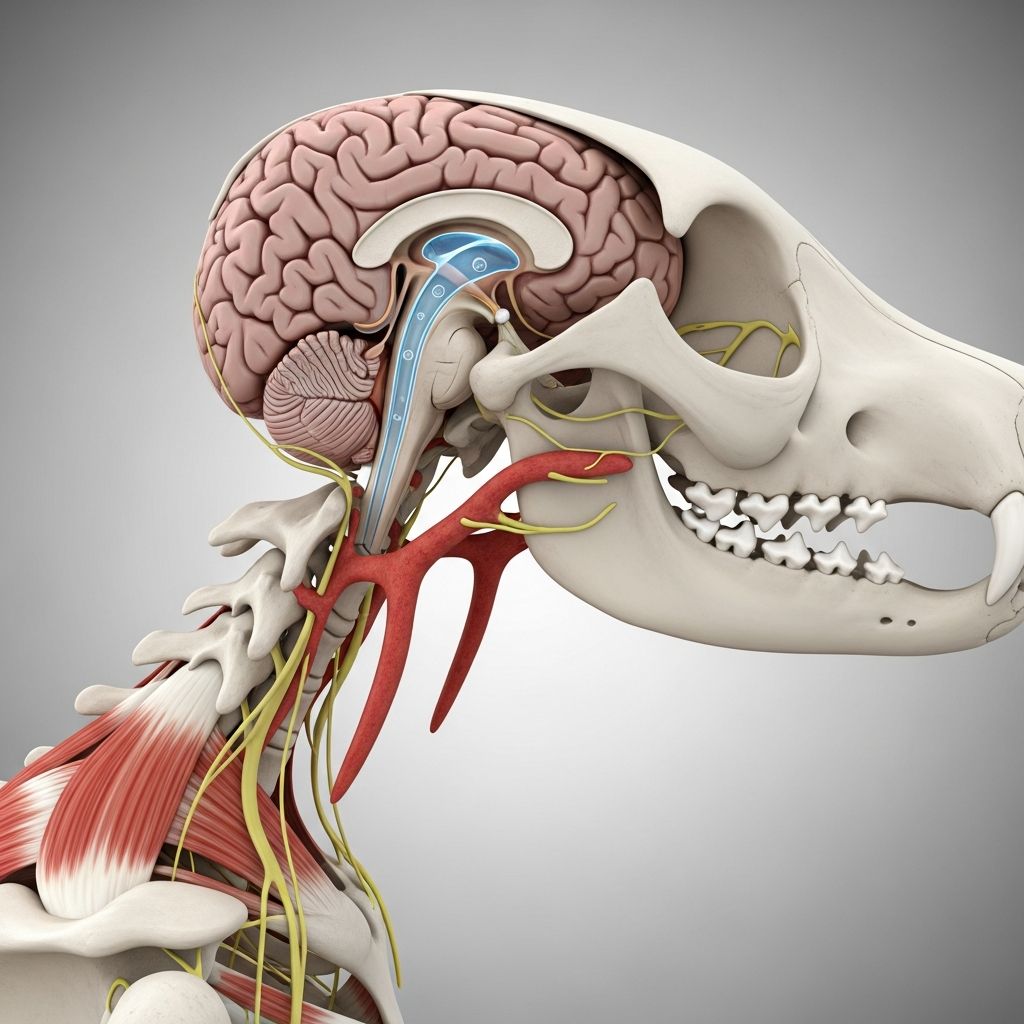
Syringomyelia (SM) and Chiari-like malformation (CM) are serious neurological conditions that affect many dogs, particularly certain small and toy breeds. These interconnected conditions can cause significant pain and affect a dog’s quality of life. Understanding these conditions is essential for dog owners to recognize symptoms early and seek appropriate veterinary care. This comprehensive guide explores what these conditions are, which breeds are at risk, how they are diagnosed, and what treatment options are available.
What is Chiari-Like Malformation?
Chiari-like malformation is a structural abnormality characterized by a mismatch between the size of the brain and the skull. Specifically, the brain is too large while the skull is too small, creating crowding in the cranial cavity. This anatomical mismatch can have serious consequences for the flow of cerebrospinal fluid (CSF), the protective fluid that bathes the brain and spinal cord.
In a normal dog, cerebrospinal fluid flows freely between the brain and spinal cord, cushioning and protecting these vital structures. However, when Chiari-like malformation is present, the oversized brain may partially herniate through the foramen magnum, the opening at the base of the skull where the brain connects to the spinal cord. This herniation can obstruct the normal flow of cerebrospinal fluid, disrupting the delicate balance of pressure and fluid dynamics around the spinal cord.
What is Syringomyelia?
Syringomyelia refers to the development of fluid-filled cavities or pockets, called syrinxes, within the spinal cord itself. These cavities form as a direct consequence of disrupted cerebrospinal fluid flow. When CSF cannot circulate normally around the spinal cord due to obstruction from Chiari-like malformation or other causes, the fluid is forced into the spinal cord tissue, creating these abnormal cavities.
The presence of syrinxes can damage nerve fibers within the spinal cord, potentially affecting the transmission of signals between the brain and body. The severity of syringomyelia often correlates with the width and symmetry of the syrinx. Dogs with wider or asymmetrical syrinxes are more likely to experience pain and clinical signs, while those with narrow, symmetrical syrinxes may remain asymptomatic.
The Connection Between CM and SM
While Chiari-like malformation is the most common cause of syringomyelia in dogs, it is important to understand that SM can develop from other causes as well, including spinal cord trauma, tumors, or arachnoid diverticula. However, the majority of cases involving both conditions together create a complex syndrome often referred to as CM/SM. Approximately 50 to 70 percent of dogs with Chiari-like malformation develop syringomyelia, though not all affected dogs become symptomatic.
Breeds Most Commonly Affected
Certain dog breeds show a genetic predisposition to Chiari-like malformation and syringomyelia. The Cavalier King Charles Spaniel is by far the most significantly affected breed, with the condition estimated to affect up to 95 percent of the population. Chiari-like malformation has been shown to be inherited in the Cavalier King Charles Spaniel and the Griffon Bruxellois, and is suspected to be inherited in the King Charles Spaniel.
Other breeds commonly reported with the condition include:
– Affenpinschers- Boston Terriers- Chihuahuas- Havanese- Maltese- Papillons- Pomeranians- Staffordshire Bull Terriers- Yorkshire Terriers- French Bulldogs- Pugs
Most of these affected breeds are brachycephalic (short-faced) toy or small breed dogs. The condition can also occur in crossbreeds and mixed-breed dogs.
Clinical Signs and Symptoms
The symptoms of Chiari-like malformation and syringomyelia can vary significantly from dog to dog. Some dogs may appear completely normal and show no signs of disease, while others experience intense pain and suffering. The clinical presentation depends on factors such as the severity of the malformation, the size and location of any syrinxes, and individual variation in pain perception.
Common signs and symptoms include:
– Reluctance or inability to exercise- Excessive head scratching, often described as “air scratching” without making contact with the skin- Increased sensitivity to touch, particularly around the head, neck, shoulders, and breast bone- Repetitive face rubbing- Excessive paw licking- Withdrawn behavior or reluctance to play- Pain-related behavioral changes- Scoliosis (curvature of the spine) in severe cases
The scratching behavior associated with syringomyelia is distinctive and may occur primarily on one side of the body. Dogs may scratch while walking and often do not make actual contact with their skin, which is why this behavior is sometimes called “phantom scratching” or “air guitar” scratching.
In some cases, dogs may exhibit neurological deficits such as weakness, poor coordination, or difficulty correcting abnormal limb positions. Though less commonly reported, seizures, balance problems, facial nerve paralysis, and deafness have been documented in some affected dogs.
Age of Onset
Most dogs with Chiari-like malformation and syringomyelia begin showing clinical signs as young adults, typically between 3 and 6 years of age. However, the age range for symptom onset is broad, and dogs can develop signs anytime from before 6 months of age to after 12 years old. There is no sex predilection, meaning both male and female dogs are equally likely to be affected.
Diagnosis of CM and SM
Diagnosis of Chiari-like malformation and syringomyelia requires advanced imaging studies. Magnetic Resonance Imaging (MRI) is the gold standard diagnostic tool for confirming these conditions. MRI provides detailed images of the brain, spinal cord, and cerebrospinal fluid, allowing veterinarians to visualize the anatomical abnormalities characteristic of Chiari-like malformation and identify any syrinxes present.
During an MRI examination, a veterinarian can assess:
– The degree of brain herniation through the foramen magnum- The size and shape of the skull- The presence, size, width, and symmetry of syrinxes- The location of syrinxes within the spinal cord- The degree of spinal cord expansion
The results from MRI scans should be graded by expert scrutineers or veterinary neurologists to provide an accurate assessment of disease severity and inform treatment decisions.
Treatment Options
Treatment for Chiari-like malformation and syringomyelia is primarily medical, focused on managing pain and slowing disease progression. There is no cure for these conditions, but various therapeutic approaches can help improve quality of life.
Medical Management
Medication is the cornerstone of treatment for CM/SM. Pain management is typically the primary goal, as pain is the most common clinical sign. Veterinarians may prescribe:
– Nonsteroidal anti-inflammatory drugs (NSAIDs) to reduce inflammation and manage pain- Gabapentin, a neuropathic pain medication- Corticosteroids in some cases to reduce inflammation and intracranial pressure- Other pain management medications as needed
Most dogs with symptomatic disease require lifelong medication. Importantly, about three-quarters of cases are progressive, meaning that over time, dogs may require increasing doses of medication to maintain adequate pain control.
Surgical Intervention
In some cases, surgical intervention may be considered, particularly in dogs with severe, progressive symptoms that do not respond adequately to medical management. Surgical options may include decompression procedures aimed at improving cerebrospinal fluid flow, though the efficacy and long-term outcomes of surgery in dogs remain subjects of ongoing research.
Lifestyle Modifications
Managing the environment and activity level of affected dogs can help reduce pain and maintain quality of life:
– Provide comfortable, cushioned bedding- Maintain moderate, consistent exercise appropriate for the individual dog’s tolerance- Avoid activities that may exacerbate symptoms- Ensure gentle handling, particularly around the head and neck- Maintain a calm home environment- Consider using a harness rather than a collar to reduce pressure on the neck
Prognosis and Long-Term Outlook
The long-term prognosis for dogs with Chiari-like malformation and syringomyelia varies depending on the severity of the condition and individual response to treatment. The good news is that these conditions are rarely fatal. However, they can significantly impact quality of life, and a small minority of dogs are eventually euthanized due to uncontrolled pain.
The majority of dogs with CM/SM can enjoy a good quality of life with appropriate medical management, despite requiring lifelong medication and potentially increasing medication doses over time. Most dogs retain the ability to walk and engage in normal activities, though some may develop varying degrees of weakness in severe cases.
Factors that influence prognosis include:
– Severity of the malformation- Size and progression of syrinxes- Age at symptom onset- Individual pain perception and tolerance- Response to medical management- Owner commitment to ongoing care and monitoring
Breeding Considerations
Because Chiari-like malformation is inherited in certain breeds, breeding decisions should take this condition into account. The BVA Chiari Malformation/Syringomyelia Scheme uses MRI screening to help identify affected dogs and inform responsible breeding practices. Dogs diagnosed with CM/SM should not be bred, and breeding programs should prioritize animals that are free of these conditions to reduce the incidence of the disease in future generations.
Frequently Asked Questions
Q: Can Chiari-like malformation and syringomyelia be prevented?
A: While these conditions cannot be prevented in individual dogs, responsible breeding practices using MRI screening in predisposed breeds can help reduce the incidence of the disease in future generations.
Q: Is Chiari-like malformation the same in dogs as in humans?
A: While both conditions involve cerebellar herniation, canine Chiari-like malformation is more comparable to complex craniosynostosis syndromes in humans rather than classical Chiari malformation. The anatomical and pathophysiological features differ significantly between species.
Q: My dog has been diagnosed with CM/SM but shows no symptoms. Should treatment be started?
A: Many asymptomatic dogs with CM/SM never develop clinical signs. Treatment is typically reserved for symptomatic dogs. Regular monitoring with your veterinarian is recommended to detect any symptom development early.
Q: How often should my dog be monitored if diagnosed with CM/SM?
A: Symptomatic dogs should be monitored regularly by your veterinarian, typically every 6-12 months or more frequently if symptoms change. This allows for medication adjustments as needed and early detection of disease progression.
Q: Can diet affect Chiari-like malformation and syringomyelia?
A: While diet alone cannot treat these conditions, maintaining optimal body weight and overall health through proper nutrition supports general wellness and may help dogs tolerate medication more effectively.
Q: Is there a cure for CM/SM?
A: Currently, there is no cure for Chiari-like malformation and syringomyelia. Treatment is focused on managing pain, slowing disease progression, and maintaining quality of life through medication and lifestyle modifications.
When to Contact Your Veterinarian
If your dog shows any signs consistent with Chiari-like malformation or syringomyelia, particularly excessive scratching, reluctance to exercise, pain-related behavioral changes, or increased sensitivity to touch, contact your veterinarian promptly. Early diagnosis and treatment can help prevent disease progression and improve quality of life. Additionally, if your dog has been diagnosed with CM/SM and you notice any changes in symptoms, medication effectiveness, or new behavioral or neurological signs, inform your veterinarian so that treatment can be adjusted accordingly.
Conclusion
Syringomyelia and Chiari-like malformation are serious neurological conditions that require careful management and ongoing veterinary care. While these conditions cannot be cured, modern treatment approaches allow many affected dogs to live comfortable, happy lives with their families. Understanding the signs and symptoms of these conditions, recognizing breeds at higher risk, and working closely with your veterinarian can help ensure the best possible outcomes for your dog. If you suspect your dog may be affected, seek veterinary consultation and MRI imaging to confirm diagnosis and develop an appropriate treatment plan tailored to your individual pet’s needs.
References
- Chiari Malformation/Syringomyelia Scheme — British Veterinary Association (BVA). 2024. https://www.bva.co.uk/canine-health-schemes/cmsm-scheme/
- Chiari-like Malformation and Syringomyelia — Fitzpatrick Referrals. 2024. https://www.fitzpatrickreferrals.co.uk/neurology/chiari-like-malformation-and-syringomyelia/
- Chiari-like Malformation: An Overview — Today’s Veterinary Practice. 2024. https://todaysveterinarypractice.com/neurology/chiari-like-malformation-an-overview/
- Understanding and Treating Chiari-like Malformation and Syringomyelia — PubMed/National Center for Biotechnology Information. 2018. https://pubmed.ncbi.nlm.nih.gov/29793722/
- Clinical Application of Diagnostic Imaging of Chiari-Like Malformation and Syringomyelia — Frontiers in Veterinary Science. 2018. https://www.frontiersin.org/journals/veterinary-science/articles/10.3389/fvets.2018.00280/full
- Syringomyelia (SM) and Chiari Malformation (CM) in Dogs — PetMD. 2024. https://www.petmd.com/dog/conditions/neurological/syringomyelia-sm-and-chiari-malformation-cm-dogs
Similar Articles








Read full bio of Sneha Tete