
Swine Vesicular Disease: Viral Infection in Pigs
Understanding SVD: A contagious viral disease affecting swine herds worldwide
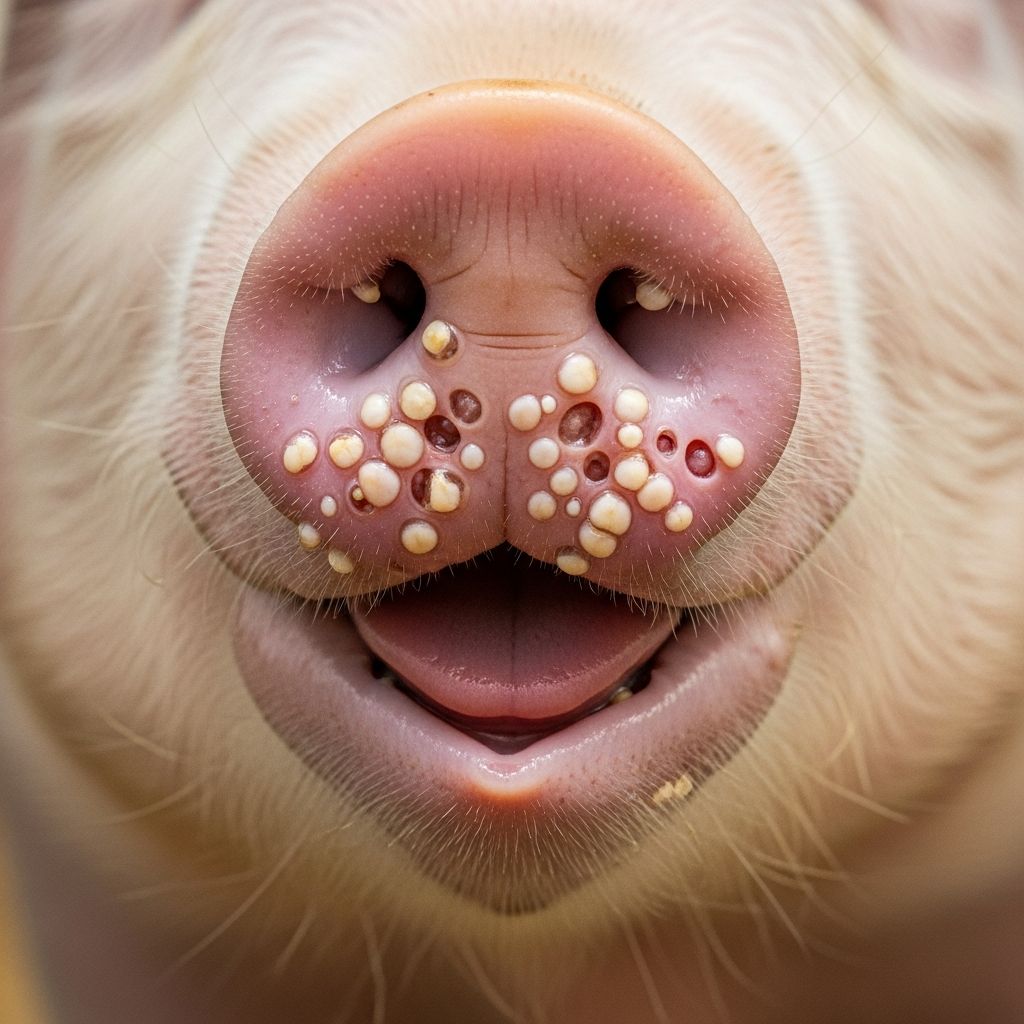
Understanding Swine Vesicular Disease and Its Significance
Swine vesicular disease (SVD) represents a significant concern within the global swine industry, despite its typically mild clinical presentation. This contagious viral condition affects pigs of various ages and has profound economic implications due to its similarity to foot-and-mouth disease (FMD) and the regulatory requirements surrounding its detection and management. The disease manifests through characteristic fluid-filled blisters and erosions that appear on vulnerable areas of the animal’s body, particularly the feet and oral tissues.
The importance of understanding SVD extends beyond individual farm management. International trade restrictions, export embargoes, and mandatory eradication protocols can be imposed on regions where SVD is detected, making early identification and proper diagnostic confirmation essential for maintaining market access and economic viability of swine operations.
Viral Origin and Transmission Mechanisms
SVD is caused by an enterovirus belonging to the family Picornaviridae, specifically classified within the human enterovirus B species. The virus is believed to have originated from human coxsackievirus B5, with which it shares significant antigenic and genetic similarities. This evolutionary relationship highlights the complex nature of viral adaptation and cross-species interactions in disease transmission.
The viral agent demonstrates remarkable environmental stability. The SVD virus can persist for extended periods in various environments and within meat products, making indirect transmission a genuine concern even after direct animal contact has ceased. This persistence characteristic distinguishes SVD from many other viral swine diseases and complicates control efforts.
Routes of Infection and Spread
SVD transmission occurs through multiple pathways within swine populations:
- Direct contact between infected and susceptible animals
- Indirect contact through contaminated environments and fomites
- Ingestion of infected pork or processed pork products
- Oral route exposure
- Percutaneous infection through skin abrasions or lesions
Once the virus enters the animal’s system through any of these routes, it establishes infection with rapid virological consequences. Viremia can develop within a single day of exposure, with clinical manifestations potentially appearing within two days. This swift disease progression necessitates vigilant monitoring and prompt response protocols when SVD is suspected.
Clinical Presentation and Observable Symptoms
Primary Signs and Lesion Development
The hallmark feature of SVD is the development of vesicular lesions—fluid-filled blisters that rupture and leave erosive wounds. These lesions most commonly appear on the coronary band of the feet, which represents the junction between the hoof and skin. The feet, particularly around the hooves, represent the primary site of vesicle formation, though lesions can also develop on the snout, mouth, lips, teats, and tongue.
The initial fever accompanying infection typically reaches temperatures up to 41°C and may cause affected animals to display reduced appetite. Lameness frequently develops suddenly within a group of closely housed animals, often representing one of the earliest observable clinical indicators.
Disease Course and Lesion Progression
The timeline of lesion development follows a characteristic pattern. Vesicles initially appear but may be subtle or difficult to observe, particularly in pigs housed on soft bedding materials. Within less than two days, these blisters rupture, exposing the underlying eroded skin. The resulting erosive lesions gradually heal over approximately one week following initial infection. Throughout this process, affected animals may display reluctance to move on hard surfaces, maintain uncomfortable postures, or show signs of systemic illness including shivering or uncoordinated gait disturbances.
An important distinguishing feature of SVD compared to more severe vesicular diseases is that affected pigs typically maintain their body condition and do not exhibit significant weight loss. The lesions heal relatively rapidly, and most animals recover completely within two to three weeks. However, a persistent dark horizontal line may become visible on the hooves where growth was temporarily interrupted during the acute infection phase.
Severity Variation and Subclinical Infection
The severity of SVD varies considerably depending on multiple factors. Different viral strains demonstrate varying virulence levels, with the disease spectrum ranging from severe manifestations to mild presentations or complete subclinical infection. Subclinical infections present a particular challenge because affected animals show no observable clinical signs yet remain infectious to herd mates, potentially perpetuating silent transmission cycles within populations.
Age of affected animals influences disease severity, with younger pigs potentially experiencing more pronounced clinical signs. Suckling piglets exposed to SVD may develop myocarditis (heart muscle inflammation), which can result in sudden death, particularly when associated with unthriftiness or failure to thrive.
Diagnostic Identification and Laboratory Testing
Clinical Examination Limitations
While clinical signs of SVD can suggest the diagnosis, visual examination alone is insufficient for definitive identification. The vesicular lesions appearing in SVD are visually indistinguishable from those caused by foot-and-mouth disease, vesicular exanthema, Seneca Valley virus, and vesicular stomatitis. This diagnostic challenge necessitates laboratory confirmation to differentiate SVD from more economically catastrophic diseases like FMD.
Specimen Collection and Testing Methods
For clinical cases displaying visible lesions, the preferred diagnostic specimens consist of lesion material collected in phosphate-buffered saline. This material should be submitted promptly to qualified veterinary diagnostic laboratories. For detection of subclinical infections within pig populations, pen-floor fecal samples can be tested using reverse-transcriptase PCR assays or virus isolation techniques.
Laboratory testing can differentiate SVD from FMD through molecular and serological methods. Serum samples from positive animals typically react with the VP1 protein in immunological assays. Interestingly, singleton reactors—individual animals showing serological positivity—may display diverse antibody patterns, though multiple reactors within a herd remain rare.
Lesion Characteristics and Pathological Findings
Gross and Microscopic Observations
At the macroscopic level, the vesicles on the feet and mouth represent the primary observable lesions in SVD-affected animals. Some vesicles may develop on the dorsal surface of the tongue or within the oral cavity. In young pigs, myocarditis occasionally serves as the primary pathological finding associated with sudden unexpected deaths.
Microscopically, degeneration of the epithelial tissue (the outermost layer of skin and mucous membranes) represents the most common lesion type observed. Early in infection, edema (fluid accumulation) within the dermal layer becomes evident, though these microscopic changes rapidly progress to the more visible vesicle formation.
Management, Treatment, and Control Strategies
Treatment Approaches
Unfortunately, no specific antiviral therapy exists for treating SVD in affected animals. Management focuses on supportive care aimed at maintaining animal comfort and preventing secondary complications. For Senecavirus and SVD cases, veterinary recommendations include maintaining environmental cleanliness to prevent wound infections, ensuring adequate bedding quality, and providing accessible feed and water despite oral lesions or foot pain.
Disinfection and Environmental Control
Environmental disinfection plays a crucial role in SVD control due to the virus’s remarkable environmental persistence. The most effective disinfectants include strong alkaline compounds. Sodium hydroxide-based disinfectants provide superior efficacy against SVD virus. Hypochlorite solutions or acid-containing iodophors can be used when organic material is absent from contaminated surfaces. Certain combinations—such as sodium hydroxide paired with iodine—have demonstrated enhanced effectiveness in research settings. Tincture of iodine has also shown utility in personal disinfection protocols when combined with appropriate detergent preparations.
Regulatory and Quarantine Protocols
SVD’s regulatory status varies by region. While SVD is no longer listed as a disease by the World Organization for Animal Health due to its mild clinical signs and straightforward differentiation from FMD through laboratory testing, it remains a notifiable disease in several countries. In FMD cases, state veterinarians implement mandatory quarantine and eradication protocols; however, SVD management allows for less stringent but still significant restrictions depending on regional regulations and export certification requirements.
Comparison with Visually Similar Diseases
| Disease | Primary Lesion Location | Clinical Severity | Differential Features |
|---|---|---|---|
| Swine Vesicular Disease | Feet, snout, mouth | Mild to moderate | Rapid healing, maintained body condition |
| Foot-and-Mouth Disease | Feet, snout, mouth | Moderate to severe | Severe systemic signs, higher mortality in young animals |
| Vesicular Exanthema | Feet primarily | Mild to moderate | More localized lesion distribution |
| Seneca Valley Virus | Feet, snout, mouth | Mild to moderate | Recent emergence, similar clinical presentation |
Frequently Asked Questions About Swine Vesicular Disease
What should a veterinarian do upon suspecting SVD?
Upon observing vesicles on a pig’s snout or feet, veterinarians should immediately contact their state veterinarian to report the suspected disease. Simultaneously, vesicle fluid samples should be collected and submitted to accredited diagnostic laboratories for confirmation. This dual approach ensures proper regulatory notification while obtaining definitive diagnostic results.
How long does SVD persist in the environment?
SVD virus can survive for months within environmental conditions and in meat products, making comprehensive disinfection and biosecurity measures essential components of disease control.
Can SVD be vaccinated against?
Currently, vaccine development for SVD remains limited compared to FMD vaccine availability. In areas where FMD remains endemic, vaccines are commonly employed; however, SVD-specific vaccines are not widely utilized in most regions.
What is the prognosis for SVD-affected pigs?
Most weaned pigs survive SVD infection and recover completely within two to three weeks. Suckling piglets face higher mortality risk due to potential myocarditis development. The prognosis is generally favorable for non-neonatal animals.
References
- Vesicular Diseases in Swine — University of Minnesota Open Textbook. https://open.lib.umn.edu/swinedisease/chapter/vesicular-diseases-in-swine/
- Swine Vesicular Disease — Merck Veterinary Manual. https://www.merckvetmanual.com/generalized-conditions/swine-vesicular-disease/swine-vesicular-disease
- Swine Vesicular Disease Fact Sheet — Center for Food Security and Public Health, Iowa State University. https://www.cfsph.iastate.edu/Factsheets/pdfs/swine_vesicular_disease.pdf
- Swine Vesicular Disease Fact Sheet — Canadian Food Inspection Agency. http://inspection.canada.ca/en/animal-health/terrestrial-animals/diseases/reportable/swine-vesicular-disease/fact-sheet
- Swine Vesicular Disease: Studies on Pathogenesis, Diagnosis, and Prevention — PubMed Central. 2001. https://pubmed.ncbi.nlm.nih.gov/11087127/
- Swine Vesicular Disease Disease Card — World Organization for Animal Health (WOAH). https://www.woah.org/fileadmin/Home/eng/Animal_Health_in_the_World/docs/pdf/Disease_cards/SWINE_VESICULAR_DISEASE.pdf
- Swine Vesicular Disease: How to Spot and Report It — UK Government. https://www.gov.uk/guidance/swine-vesicular-disease
Similar Articles








Read full bio of Sneha Tete


