

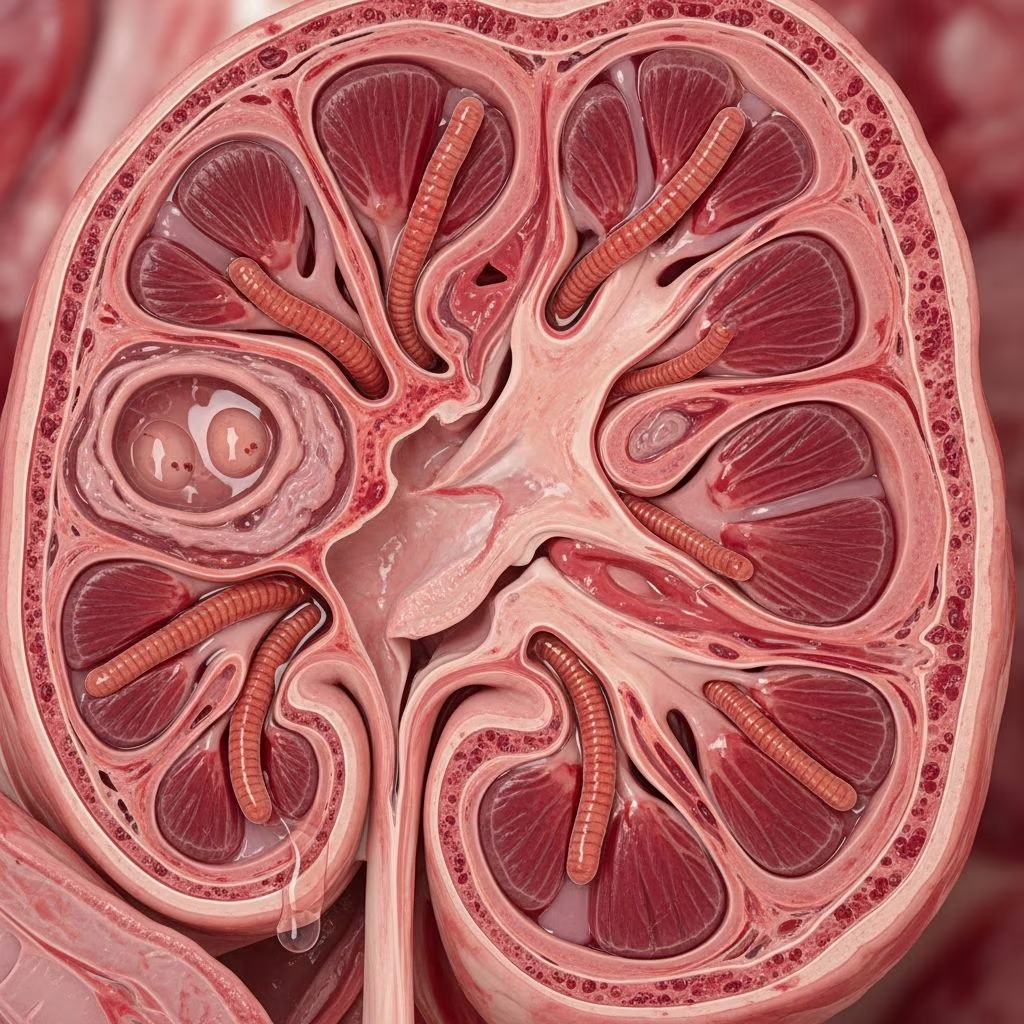
The swine kidney worm, scientifically known as Stephanurus dentatus, poses a significant challenge to pig farming, particularly in outdoor or feral populations. This nematode parasite targets the urinary system, leading to organ damage and economic repercussions through carcass condemnation. Understanding its biology and implementing targeted control measures are crucial for maintaining herd productivity.
Biology and Lifecycle of the Swine Kidney Worm
Stephanurus dentatus exhibits a complex lifecycle that involves environmental stages and direct transmission among pigs. Eggs passed in the urine of infected hosts embryonate in warm, moist soil, hatching into larvae within days. These first-stage larvae (L1) develop through two molts into infective third-stage larvae (L3) over 1-2 weeks under optimal conditions of warmth and humidity.
Infective larvae penetrate the skin of pigs or are ingested via contaminated feed or water. Once inside, they migrate through tissues, reaching the kidneys, liver, pancreas, and lungs. This migration causes extensive damage, with adults maturing in the kidney pelvis after a prepatent period of 6-12 months. Female worms measure up to 35-50 mm, males 20-30 mm, and they produce thousands of eggs daily, perpetuating the cycle.
- Key lifecycle stages: Egg → L1 → L2 → L3 (infective) → Migration → Adult in kidney.
- Environmental survival: Larvae persist in soil for months in tropical climates.
- Host specificity: Primarily pigs, including wild boars; rare in other species.
Warm climates favor prevalence, with infections rare in confined, indoor systems due to disrupted transmission.
Geographic Distribution and Risk Factors
Swine kidney worm infections thrive in regions with outdoor pig rearing, such as parts of the southern United States, tropical Americas, Africa, and Asia. Feral hog populations serve as reservoirs, spreading the parasite to domestic herds via shared pastures or soil contamination.
Risk factors include:
- Outdoor housing on pasture or dirt lots.
- Poor sanitation allowing urine-contaminated soil accumulation.
- Introduction of carrier animals from endemic areas.
- Long-term use of older breeding stock harboring subclinical infections.
In modern intensive farming, prevalence has declined, but sporadic outbreaks occur in backyard or free-range operations.
Clinical Manifestations in Infected Pigs
Infections are often subclinical, with heavy burdens causing poor growth and weight loss. Migrating larvae incite inflammation in the liver, leading to fibrosis, portal vein thrombosis, and necrosis. Kidneys develop cysts and scarring, while lungs may show petechiae and edema.
| Organ Affected | Common Lesions | Economic Impact |
|---|---|---|
| Liver | Cirrhosis, scars, necrosis | High condemnation rate |
| Kidney | Cysts, fibrosis | Reduced carcass value |
| Lungs/Pancreas | Edema, nodules | Secondary infections |
Grower pigs suffer most from growth retardation, converting feed inefficiently. Breeding stock may show reduced fertility indirectly through chronic debilitation. Urine may contain blood or worms in advanced cases, though rare.
Diagnostic Approaches for Confirmation
Ante-mortem diagnosis relies on finding characteristic barrel-shaped eggs (60-80 μm, thick-shelled) in urine sediment via flotation or microscopy. Fecal exams are unreliable due to sporadic shedding.
Definitive confirmation occurs post-mortem: adult worms in kidney pelvis, larval tracks in viscera. Serology or PCR assays are emerging but not routine.
- Urine microscopy: Gold standard for live infections.
- Necropsy: Reveals worm burdens and lesions.
- History: Outdoor exposure in endemic areas.
Effective Treatment Protocols
Anthelmintics target adults and larvae effectively. Ivermectin (0.5 mg/kg SC) expels worms via urine within days, as shown in trials where treated sows cleared infections completely by necropsy. Doramectin (300 mcg/kg IM) is FDA-approved for swine, offering broad-spectrum control.
Fenbendazole (9 mg/kg/day in feed for 3-12 days) suits group treatment. Levamisole targets adults only, now withdrawn in some markets.
| Drug | Dosage | Route | Approval Notes |
|---|---|---|---|
| Ivermectin | 0.5 mg/kg | SC | Extralabel; effective |
| Doramectin | 300 mcg/kg | IM | FDA-approved OTC |
| Fenbendazole | 9 mg/kg/day x 3-12d | Feed | VFD medicated feed |
Treat at 4-6 month intervals, integrating with deworming for other parasites.
Prevention and Control Strategies
Eradication hinges on management: raise pigs on concrete or slatted floors to break the soil-larvae cycle. Implement “gilts-only” breeding: source young gilts/boars from clean herds, cull after weaning to eliminate carriers within 2 years.
Sanitation includes draining lots, rotating pastures, and quarantining new stock. Regular deworming prevents environmental contamination.
- Housing: Confine to prevent soil contact.
- Breeding: Annual replacement with negatives.
- Monitoring: Urine checks in high-risk herds.
Economic Implications for Pork Producers
Losses stem from condemned livers (up to 100% in heavy infections), reduced gains (10-20% drop), and treatment costs. In endemic areas, control programs yield high ROI through improved feed efficiency and carcass quality.
Research Advances and Future Directions
Ongoing studies explore resistance risks and novel vaccines. Integrated pest management combining drugs, biosecurity, and genetics (worm-resistant breeds) promises sustainable control.
Frequently Asked Questions (FAQs)
What causes swine kidney worm infection?
Infection occurs via ingestion or skin penetration of L3 larvae from contaminated soil or feed.
Is treatment always necessary?
Not for light burdens, but heavy infections warrant intervention to avert losses.
Can humans get swine kidney worm?
No, it is host-specific to pigs.
How long until eggs appear in urine?
Prepatent period is 6-12 months.
What is the best prevention method?
Indoor confinement and gilt-replacement programs.
References
- Efficacy of ivermectin against the swine kidney worm, Stephanurus dentatus — PubMed/NCBI. 1981-04-01. https://pubmed.ncbi.nlm.nih.gov/6457543/
- Swine Kidney Worm Infection — Merck Veterinary Manual. 2023 (accessed). https://www.merckvetmanual.com/urinary-system/infectious-diseases-of-the-urinary-system-in-large-animals/swine-kidney-worm-infection
- Common Internal Parasites of Swine — University of Missouri Extension (.edu). 2020. https://extension.missouri.edu/publications/g2430



