

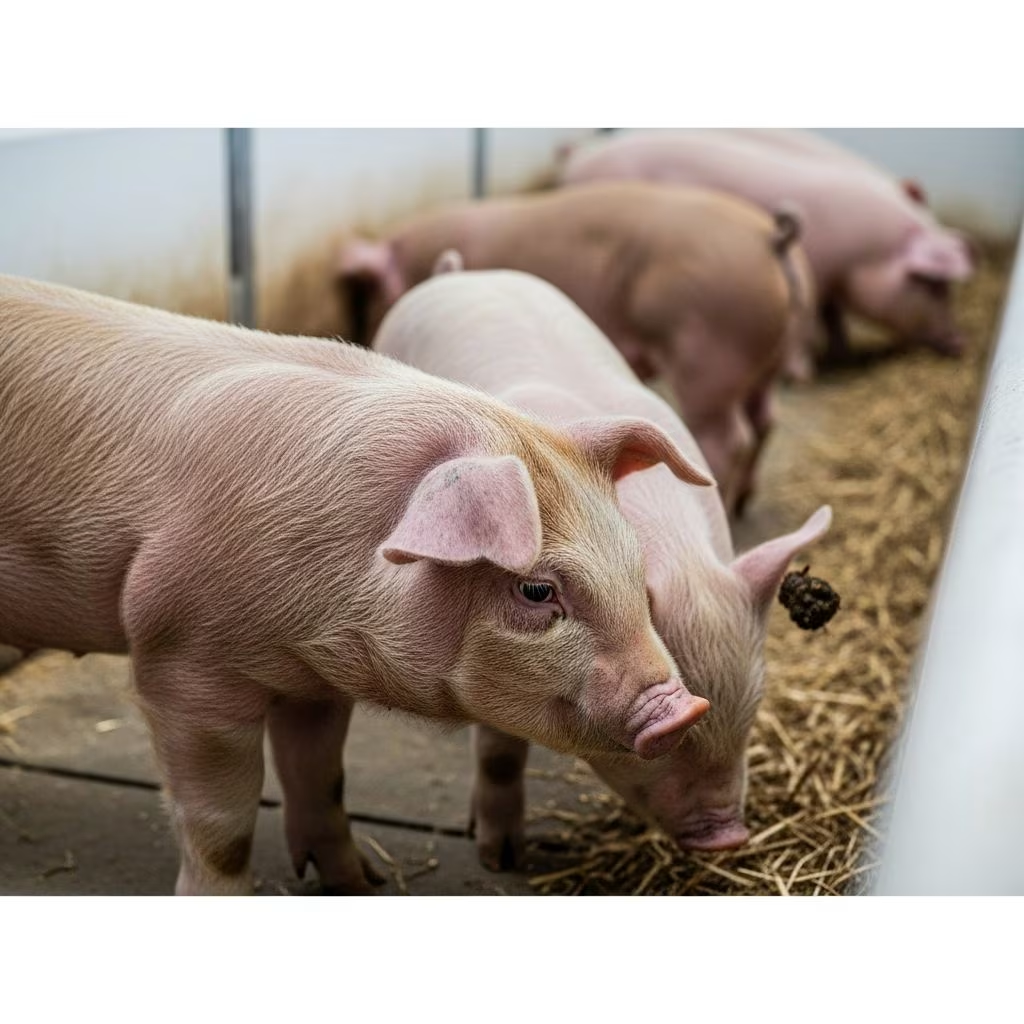
Swine dysentery represents one of the most economically damaging gastrointestinal disorders in the swine industry, primarily triggered by the bacterium Brachyspira hyodysenteriae. This condition leads to severe inflammation in the large intestine, resulting in mucohemorrhagic diarrhea that can devastate herds if not addressed promptly.
Understanding the Pathogen Behind the Disease
The primary culprit, Brachyspira hyodysenteriae, is a strongly beta-hemolytic spirochete that thrives in the porcine colon. Previously known under names like Serpulina or Treponema, it targets the superficial mucosa, causing degeneration, excessive mucus production, and multifocal bleeding without penetrating deeper tissues. Related strains such as B. hampsonii can produce similar effects, complicating identification.
These bacteria are anaerobic and fastidious, surviving best in the warm, moist environment of the pig gut. Their virulence stems from toxins and adhesins that disrupt epithelial integrity, leading to the characteristic pathology observed in affected animals.
Recognizing Clinical Manifestations
Swine dysentery impacts pigs of all ages but is most evident in weaners, growers, and finishers, rarely showing before three weeks of age. Initial signs include fever up to 41°C, dullness, anorexia, and soft, grayish-yellow mucoid feces that stain the perineal area.
As progression occurs, diarrhea worsens to watery, gel-like consistency with mucus, occasional blood flecks, and a foul odor. Blood volume increases, turning feces dark, tarry, and profuse, often with gut lining fragments in severe cases. Affected pigs exhibit sunken flanks, dehydration, rapid weight loss, gaunt appearance, and sunken eyes. Morbidity can exceed 50%, with mortality rising without intervention.
- Early indicators: Fever, depression, partial appetite loss, perineal staining.
- Advanced symptoms: Mucohemorrhagic diarrhea, dehydration, emaciation, potential sudden death.
Transmission Dynamics and Risk Factors
Transmission occurs mainly through ingestion of feces from carrier pigs, including sows that shed the bacterium long-term. Direct pen contact facilitates spread, but indirect routes via contaminated equipment, boots, or rodents amplify risks. The pathogen persists in the environment, especially in moist conditions, and mechanical vectors like mice play a critical role.
Husbandry factors heighten susceptibility: high stocking densities, poor hygiene, pelleted feeds (due to processing effects), and stressors like weaning or mixing groups. Dietary influences, such as high-energy pellets, correlate with outbreaks even when reground. Gut microbiota interactions may modulate severity, with dysbiosis favoring bacterial proliferation.
| Risk Factor | Impact on Transmission |
|---|---|
| Carrier sows | Long-term fecal shedding to offspring |
| Rodent infestation | Mechanical spread between pens/farms |
| Pelleted diets | Increased colitis incidence |
| Poor biosecurity | Indirect farm-to-farm movement |
Differential Diagnosis Challenges
Distinguishing swine dysentery from mimics is crucial. Conditions like Escherichia coli infections, coccidiosis, Clostridium perfringens type A, heavy whipworm loads, Salmonella, or Brachyspira pilosicoli (porcine intestinal spirochetosis) present with colitis and diarrhea. Secondary Balantidium coli invasion or dietary indigestion in growers adds complexity.
Veterinary confirmation via necropsy, fecal PCR, culture, or histopathology is essential, revealing ciliated epithelial cells with spirochetes and pseudomembranous colitis. Minimum inhibitory concentration (MIC) testing guides therapy amid rising resistance.
Therapeutic Interventions and Protocols
Early antimicrobial use is key to curbing outbreaks. Preferred agents include pleuromutilins (tiamulin, valnemulin), lincomycin, tylosin, and carbadox, administered via water, injection, or feed under veterinary prescription. Water medication suits initial outbreaks, with injections for severe cases where appetite wanes.
Treatment duration is typically 7 days; feed medication prevents clinical escalation but lessens therapeutic impact. Resistance to macrolides like tylosin is documented, necessitating sensitivity testing. Supportive care with electrolytes combats dehydration.
- Water-soluble options: Tiamulin, lincomycin, tylosin.
- Injectables: Lincomycin, tiamulin for critical pigs.
- In-feed: Valnemulin, tylvalocin for prevention.
Prevention and Control Strategies
Biosecurity forms the cornerstone: strict hygiene, rodent/mice control, all-in-all-out systems, and sourcing from dysentery-free herds. Depopulation-repopulation with monitored gilts offers eradication, though costly and not foolproof. Medication-free eradication via hygiene excels in smaller units.
Vaccines remain elusive, but probiotics and dietary fiber may bolster gut health. Farm management—avoiding pellets, ensuring dry bedding—mitigates risks. Ongoing surveillance via monitoring prevents reintroduction.
Economic Implications for Producers
Outbreaks slash growth rates, elevate mortality (up to 30% untreated), and hike treatment costs, with global losses in millions annually. Subclinical carriers undermine performance, emphasizing eradication’s value. Proactive monitoring yields high ROI through sustained productivity.
Emerging Research and Future Directions
Recent studies highlight B. hyodysenteriae‘s genomic diversity, virulence factors, and inter-farm transmission potential, urging advanced diagnostics like whole-genome sequencing. Antibiotic stewardship combats resistance, while microbiome modulation emerges as promising.
Frequently Asked Questions (FAQs)
What causes swine dysentery?
It is primarily caused by the spirochete Brachyspira hyodysenteriae, leading to severe large intestine inflammation.
How do I spot it in my herd?
Look for bloody, mucousy diarrhea, fever, dehydration, and weight loss, especially in growing pigs.
Can it be treated effectively?
Yes, with early antibiotics like tiamulin or lincomycin via water or injection, but test for resistance.
How can I prevent outbreaks?
Implement rodent control, biosecurity, hygiene, and source negative stock.
Is it contagious between farms?
Yes, via carriers, fomites, or vectors like rodents.
This detailed overview equips swine producers with actionable knowledge to safeguard herds against swine dysentery’s ravages.
References
- Swine dysentery (SD) – Brachyspira hyodysenteriae — The Pig Site. Accessed 2026. https://www.thepigsite.com/disease-guide/swine-dysentery-sd-brachyspira-hyodysenteriae
- Swine dysentery (Brachyspira hyodysenteriae) — Pig333.com. Accessed 2026. https://www.pig333.com/pig-diseases/swine-dysentery_116
- Swine Dysentery — NADIS. Accessed 2026. https://www.nadis.org.uk/disease-a-z/pigs/swine-dysentery/
- Swine Dysentery – Digestive System — Merck Veterinary Manual. Accessed 2026. https://www.merckvetmanual.com/digestive-system/intestinal-diseases-in-pigs/swine-dysentery
- Swine Dysentery — PipeVet.com. Accessed 2026. https://pipevet.com/swine-dysentery
- Swine Dysentery: Aetiology, Pathogenicity, Determinants of Transmission — PMC (NCBI). 2013-07-01. https://pmc.ncbi.nlm.nih.gov/articles/PMC3709357/



