

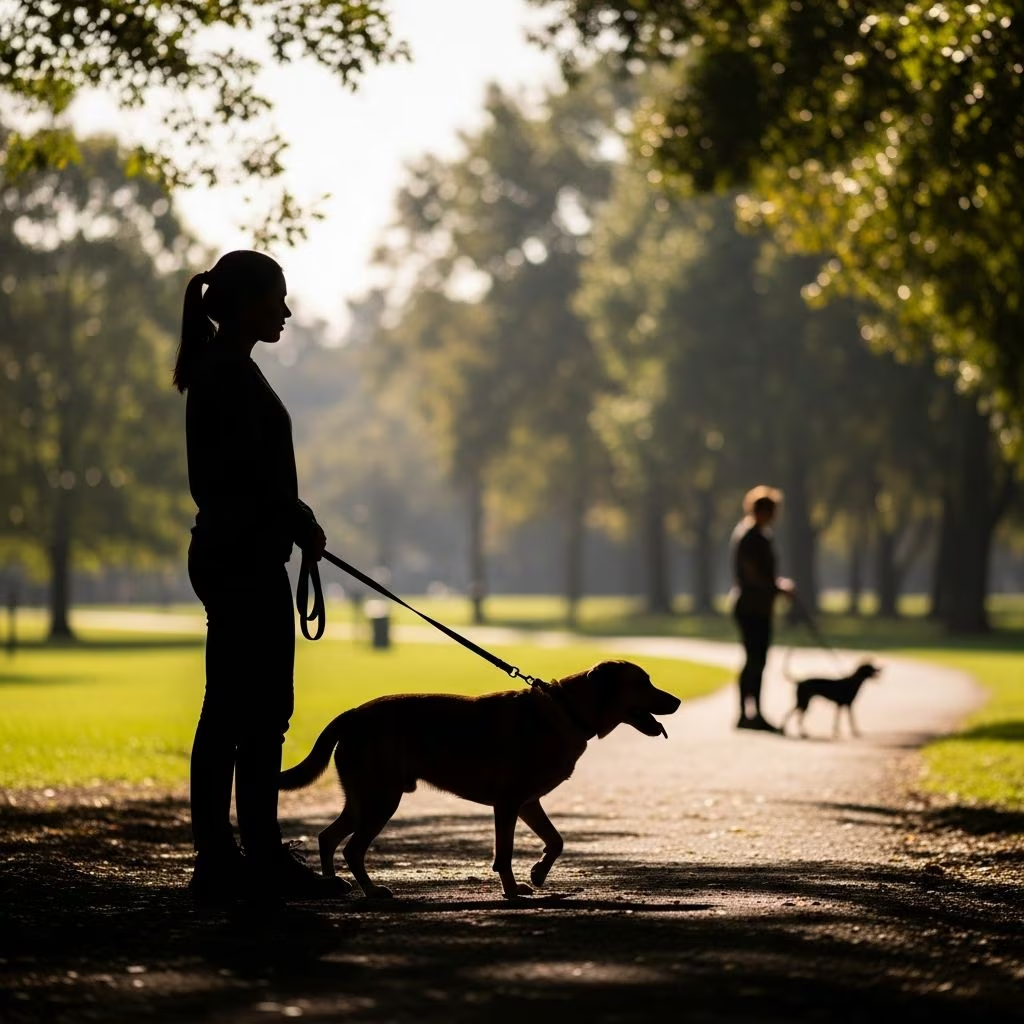
Dog attacks pose a significant risk to public safety, with millions of incidents reported annually in the United States, affecting people of all ages but particularly children and service workers. Understanding how to prevent these encounters and respond effectively can save lives and reduce injuries. This guide draws from authoritative public health and veterinary resources to equip you with practical knowledge.
Recognizing Early Warning Signs of Aggression
The first line of defense against a dog attack is awareness of canine body language. Dogs communicate discomfort or threat through specific postures and expressions long before they lunge. Key indicators include a wrinkled muzzle with bared teeth, raised hackles along the back, a stiff frozen stance, intense direct staring, and a rigidly held tail.
Being observant in your environment helps spot these signals early. For instance, while walking or jogging, scan for loose dogs and note their demeanor. Heightened awareness prevents many close calls.
Daily Habits to Minimize Risks
Adopting simple routines significantly lowers the chance of confrontations. Always stay vigilant: look around, listen for growls or paws on pavement, and maintain spatial awareness. When approaching homes, especially for deliveries, step back from doors to avoid surprise releases of pets.
- Maintain a relaxed posture: Soften your gaze, slightly open your mouth, angle your body sideways, and breathe steadily to appear non-threatening.
- Never leave children unsupervised near dogs, as kids are frequent victims due to unpredictable movements.
- Avoid high-energy interactions like rough play, which can trigger bites even from familiar animals.
Service professionals and joggers should carry visibility aids like vests signaling caution, and use leashes for personal pets to control situations.
Proactive Tools for Outdoor Safety
Preparation enhances your ability to deter threats without physical confrontation. Everyday items can serve as deterrents.
| Tool | Purpose | How to Use |
|---|---|---|
| Whistle | Startles with high-pitched sound | Blow sharply to interrupt advance; alerts bystanders |
| Treats | Distracts focus | Toss far away to redirect attention calmly |
| Spray Bottle (Water) | Non-harmful aversion | Spray directly if approaching; keep accessible |
| Backpack or Jacket | Creates barrier | Hold in front as shield without waving |
These tools emphasize deterrence over harm, aligning with humane safety protocols. Loud, firm voice commands like “No,” “Back,” or “Leave it” delivered confidently can de-escalate without fear in your tone.
Immediate Actions When Approached
If a dog approaches with aggressive intent, your response must neutralize perceived threats. Do not run, scream, or make sudden gestures, as these provoke chase instincts. Instead, follow these steps:
- Avoid direct eye contact; lower your head and look away.
- Turn sideways slowly, crossing arms over your chest, and stand still.
- Remain silent; let the dog assess you as non-threatening.
- If safe, back away gradually toward barriers like trees, vehicles, or fences.
Environmental features become allies—climb onto car hoods, rocks, or low branches for elevated safety, making bites harder. Toss distractions like treats or items aside slowly to shift focus.
Defending During an Active Assault
When a bite occurs, prioritize vital protection over retaliation. Fighting back often intensifies the attack, as the dog reacts instinctively. Optimal defense:
- Protect Core Areas: Curl into a fetal position on the ground, knees to chest, hands shielding neck and head.
- Stay Motionless: Go limp to signal you’re no longer a threat; dogs typically disengage once resistance ceases.
- Use Barriers: Jam a sturdy object like a purse or stick into the dog’s mouth to block jaw closure if possible.
- Target Vulnerabilities (Last Resort): If escape is viable, lift the dog’s collar high behind the ears and hold to control.
Do not rise until the dog retreats at least 20 feet. Seek elevation post-disengagement for added security.
Post-Incident Care and Reporting
After any contact, act swiftly. Rinse wounds thoroughly with soap and water, then obtain medical evaluation immediately, as bites risk infection. Document details: dog’s description, location, owner info if known. Report to animal control to prevent repeats and track patterns.
National initiatives like Dog Bite Prevention Week highlight ongoing education efforts, urging communities to share knowledge via campaigns.
Training Your Own Dog to Prevent Issues
Owners play a crucial role in prevention. Use positive reinforcement to teach boundaries, muzzle train for stressful scenarios, and crate as a safe retreat. Post signs for household protocols and barriers like gates to manage interactions. Avoid excitable games that heighten arousal.
Understanding breed-neutral risks—any dog can bite based on history and triggers—promotes responsible ownership.
Common Myths Debunked
Misconceptions endanger people. Running doesn’t outpace dogs; it invites pursuit. Punches or kicks rarely deter and may escalate. Certain breeds aren’t inherently vicious; individual behavior matters.
Frequently Asked Questions
What should I do if a dog attacks my child?
Prioritize separation: Use barriers or distractions, then curl the child protectively while yelling for help. Seek immediate medical care.
Is pepper spray effective against dogs?
While available, non-lethal options like water sprays or whistles are recommended first for humane deterrence; consult local laws.
How can I safely walk in dog-heavy areas?
Go during low-activity times, carry deterrents, learn body language, and stick to populated paths.
What if the attacking dog is leashed to its owner?
Do not intervene between dog and owner; back away and alert authorities.
Can all dogs be rehabilitated after attacking?
Depends on professional assessment; focus on prevention and reporting rather than assumptions.
References
- Tips to Avoid a Dog Bite – City of Houston — City of Houston. Accessed 2026. https://www.houstontx.gov/barc/avoiding_dog_bites.html
- 6 Tips to Avoid Dog Bites While Walking — OVRS. Accessed 2026. https://www.ovrs.com/blog/6-tips-to-avoid-dog-bites-while-walking/
- What to Do When a Dog Attacks — Positively.com. Accessed 2026. https://positively.com/dog-training/article/aggression-reactivity-what-to-do-when-a-dog-attacks
- How to STOP a DOG ATTACK in 3 Seconds – GUARANTEED! — YouTube (Transcript). Accessed 2026. https://www.youtube.com/watch?v=iE8IjSRouuU
- Dog Bite Prevention: Managing Behavior Issues — Best Friends Animal Society. Accessed 2026. https://bestfriends.org/pet-care-resources/dog-bite-prevention-managing-behavior-issues
- Dog bite prevention — American Veterinary Medical Association. Accessed 2026. https://www.avma.org/resources-tools/pet-owners/dog-bite-prevention



