

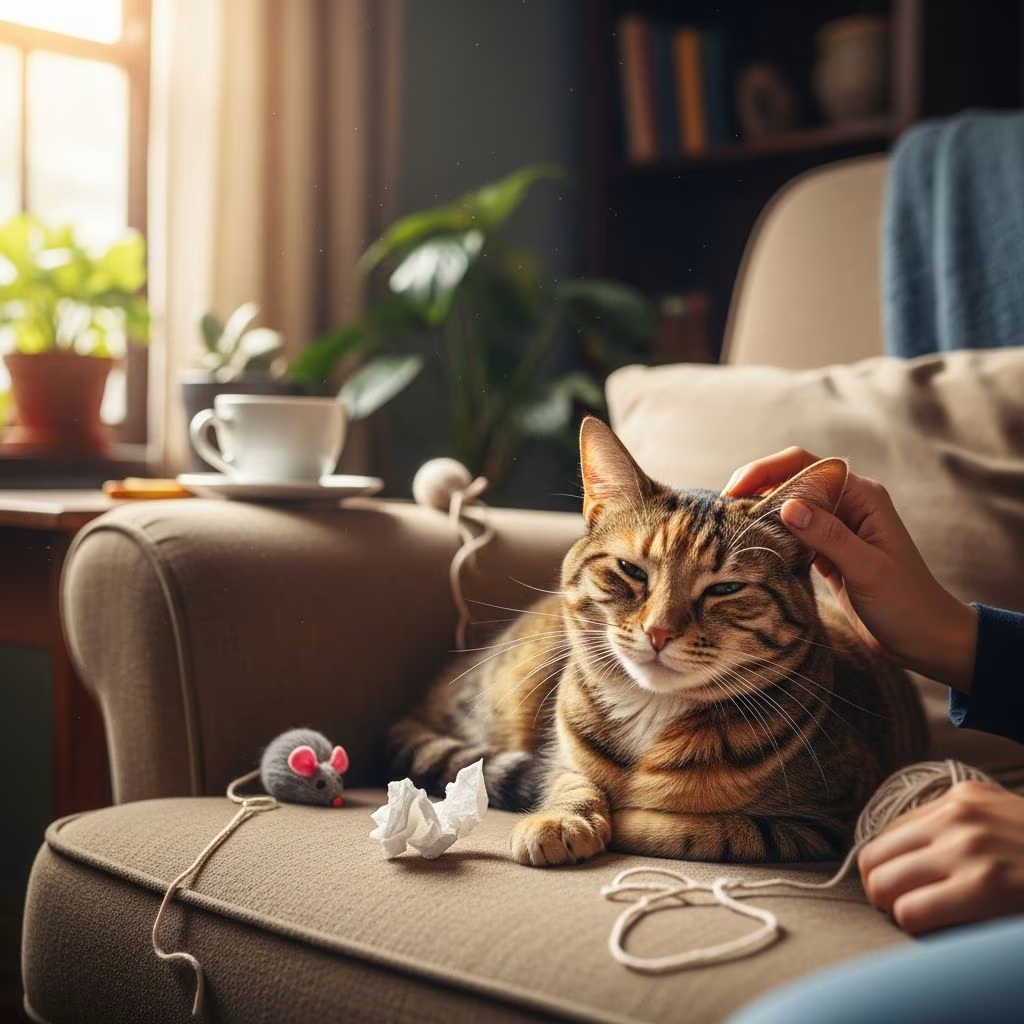
First-Time Cat Owner? Understanding What to Expect
Becoming a new cat owner is an exciting journey filled with joy and companionship. However, if you’re a first-time cat owner, you may encounter some surprising and unexpected behaviors that can catch you off guard. Cats display a wide range of behaviors that might seem unusual or “weird” to those unfamiliar with feline nature. These behaviors—from leaping onto counters to racing through your home at midnight—are completely normal and part of what makes cats such fascinating companions.
According to veterinary behaviorist Stephanie Borns-Weil from the Cummings School of Veterinary Medicine at Tufts University, “When you think about getting a cat, you’re kind of living with a wild animal. The cat will be happiest if you can provide an environment with your cat where it gets to do what cats do.” This perspective is essential for new cat owners to understand. Rather than viewing these behaviors as problems, recognizing them as natural expressions of feline instinct allows you to create an environment where your cat thrives. Understanding these eight surprising behaviors will help you prepare for cat ownership and develop strategies to manage them effectively.
1. Lots of Playtime and Interactive Engagement
Many first-time cat owners mistakenly believe that cats are low-maintenance, independent pets that don’t require much interaction. This couldn’t be further from the truth. Cats, particularly kittens, have significant needs for play, interaction, and mental stimulation that new owners must be prepared to provide.
According to veterinary behaviorists, kittens are extremely playful animals with high requirements for interactive engagement and predatory play. “They’re at this stage in life where play is really important to them or their development. You want to provide tons of opportunity for that predatory play,” explains Borns-Weil. This means you should invest in puzzle toys, interactive wands, and other enrichment items that engage your cat’s natural hunting instincts.
Best practices for playtime include:
– Providing puzzle toys that challenge your cat mentally- Using wand toys and feather toys for interactive play sessions- Dedicating at least 15-30 minutes daily to active play with your cat- Rotating toys to maintain novelty and interest- Avoiding hand play, as it can encourage inappropriate biting behaviors
It’s crucial to discourage inappropriate play early on. If your cat leaps at you while you’re walking by, avoid engaging with them as this reinforces the behavior. Instead, redirect their hunting energy toward appropriate toys and activities.
2. Nighttime Activity and the “Zoomies”
One of the most surprising behaviors new cat owners encounter is their cat’s sudden burst of energy during nighttime hours. Cats will seemingly come alive in the middle of the night, racing around your house at high speeds with no apparent reason. Jenn Corsun, manager of Cat World at Best Friends Animal Society, calls these nighttime antics the “zoomies.”
This behavior is completely natural and stems from cats’ crepuscular nature—they are naturally most active during dawn and dusk. The “zoomies” typically occur when cats are releasing pent-up energy and engaging in their natural hunting behaviors. Rather than trying to eliminate this behavior, wise cat owners create an environment that allows their cats to express this energy safely.
Solutions for managing nighttime activity:
– Install cat condos or trees where your cat can climb and observe their environment- Create elevated spaces on top of fridges or shelves using secure mats- Ensure bookshelves are properly secured to the wall to prevent accidents- Play with your cat during late afternoon or early evening to tire them out- Provide adequate exercise during daylight hours
3. Unexpected Interest in Your Sink and Bathroom
A peculiar behavior many new cat owners encounter is their feline friend’s fascination with sinks and bathrooms. Cats are drawn to running water and may attempt to sneak into your shower or sit in your sink for extended periods. The irony is that while cats love the sound and sight of running water, they typically don’t enjoy actually being in the water.
According to cat behaviorists, “They love running water [but] don’t necessarily like to be in the water. They’ll sit in the sink for no reason.” Understanding this distinction helps you manage the behavior appropriately. If you find this behavior cute and respond positively, you’re essentially training your cat to repeat it. Conversely, if you want to discourage it, simply avoid making the sink or shower accessible to your cat by closing bathroom doors.
It’s important to recognize that certain behaviors stem from biological or genetic needs. Rather than trying to eliminate these natural tendencies, provide appropriate alternatives. For example, if your cat loves sitting in sinks, offer them boxes or bags to hide in instead. These can be rotated easily and provide your cat with the enclosed spaces they naturally crave without the bathroom inconvenience.
4. Surprise Attacks and Unpredictable Hunting Behavior
New cat owners often notice that their feline companions suddenly attack their ankles, pounce on their hands, or chase them around the house. These surprise attacks are manifestations of cats’ natural hunting and predatory instincts. Cats are born hunters, and these behaviors represent their way of practicing the skills they would use in the wild.
Interestingly, cats often display surprising preferences when it comes to toys. “No matter how many expensive toys that you buy them, [cats] would rather play with your shoe laces, the box that the toy came in,” says Corsun. This is because cats are drawn to items that mimic natural prey or provide the sensory experiences they find stimulating. The rustling of a box, the movement of shoelaces, and the unpredictability of a bug all trigger their hunting instincts more effectively than commercially manufactured toys.
Recommended toys for channeling hunting behavior:
– Laser pointers for chasing and stalking practice- Feather toys that simulate bird movement- Fishing rod toys for interactive hunting games- Small toys that resemble mice or other prey- Toys that make rustling or crinkling sounds
5. Sudden Biting and Nipping During Petting
Many new cat owners are surprised when their cat suddenly bites or nips them during what seems like a pleasant petting session. This behavior, often called “love bites” or “play nipping,” occurs when cats become overstimulated or when their arousal levels spike. Some cats tolerate petting only for a limited time before their sensitivity increases, particularly around the base of the tail.
These gentle (and sometimes not-so-gentle) bites are often a cat’s way of expressing excitement related to hunting, playing, or mating instincts. Understanding this behavior helps you recognize when to stop petting your cat before they become uncomfortable. Pay attention to your cat’s body language and watch for signs of irritation, such as tail twitching or skin rippling.
6. Excessive Vocalization and Chatty Behavior
Some cats are naturally more vocal than others, and new owners may be surprised by their cat’s tendency to meow frequently, especially when seeking attention. Needy cats sometimes resort to vocalizing excessively to get their owner’s attention and interaction.
The key to managing excessive meowing is recognizing when you might be inadvertently reinforcing the behavior. When you respond to your cat’s meows with attention, petting, or treats, you’re teaching them that meowing is an effective way to get what they want. Instead, redirect this behavior by lightly stomping your foot when your cat meows for attention, and only reward them with petting or treats when they remain quiet. This teaches your cat that silence, not vocalization, gets them the attention they desire.
7. Head Bunting and Affectionate Marking
One of the delightful behaviors new cat owners encounter is head bunting, where their cat rubs their head against their legs, arms, or objects around the home. This behavior, also called bunting, is actually a sign of affection and territorial marking. When your cat bunts you, they’re transferring their scent glands and claiming you as part of their family.
This is a wonderful behavior that indicates your cat feels comfortable and secure in your home. Rather than discouraging it, embrace it as a sign of bonding with your feline companion. Understanding that this behavior is a compliment rather than something unusual helps you appreciate the unique ways cats show affection.
8. Hiding and Timidity in New Environments
When first bringing your cat home, don’t be alarmed if they hide under the bed or refuse to explore their new environment. Changes in their surroundings can cause cats to act shy and timid as they adjust to unfamiliar spaces. This behavior is a natural response to a new and potentially stressful situation.
Rather than forcing your cat to interact, give them time and space to acclimate at their own pace. Spend time sitting near their hiding spots and talk to them in a soothing voice. Offer high-value treats to gently entice them out, and use wand-type toys that allow interaction at a distance. “Once your cat starts feeling more secure, they’ll come over to you,” according to cat behavior experts. Remember that some cats are naturally less extroverted than others, so patience is essential during this adjustment period.
Preparing Your Home for a New Cat
Understanding cat behavior is only half the battle. Creating a cat-proof environment is equally important for a harmonious living situation. Get down to your cat’s level to see the world from their perspective and identify potential hazards. Keep breakables, cords, and wires safely stored away, and clear your floors of anything your cat could chew or swallow.
Provide your cat with appropriate spaces to hide and explore. Secure bookshelves to walls, offer climbing structures, and ensure your cat has access to high vantage points where they can observe their environment. When introducing a new cat to your home, confine them to a single room for the first few days to prevent them from becoming overwhelmed.
Frequently Asked Questions
Q: How much playtime does my new cat need daily?
A: Kittens and young cats should have at least 15-30 minutes of interactive play daily. Adult cats also benefit from regular play sessions to maintain mental stimulation and physical fitness. Provide puzzle toys and rotate them to keep your cat engaged.
Q: Why does my cat attack my ankles and hands?
A: These surprise attacks are natural hunting behaviors. Your cat is practicing predatory skills and expressing their wild instincts. Redirect this energy toward appropriate toys rather than using your hands or feet as play objects.
Q: Is it normal for my cat to be active at night?
A: Yes, cats are crepuscular animals naturally most active during dawn and dusk. Nighttime “zoomies” are normal behavior. Provide climbing structures, engage them in play during late afternoon, and create an environment that allows safe expression of this energy.
Q: How long does it take for a new cat to adjust to my home?
A: Adjustment periods vary by cat. Some adapt within days, while others may take weeks. Start by confining your cat to one room and gradually expand their access. Be patient and avoid forcing interaction during this period.
Q: Why does my cat bite me during petting sessions?
A: Cats have stimulation thresholds and may become overstimulated during extended petting, particularly around the base of the tail. Watch for signs of irritation like tail twitching and stop petting before they become uncomfortable.
Q: How can I discourage my cat from excessive meowing?
A: Avoid rewarding meowing with attention. Instead, only respond to your cat when they’re quiet, and reward them with petting or treats at those times. This teaches them that silence gets positive reinforcement.
References
- 8 Surprising Things New Cat Owners Should Expect — Chewy Education. 2024. https://www.chewy.com/education/cat/pet-parenting/behavior-pet-facts-8-surprising-things-new-cat-owners-should-expect
- Cat Adoption Checklist: Everything New Cat Owners Need to Know — Chewy Education. 2024. https://www.chewy.com/education/cat/general/cat-adoption-checklist
- Dealing With Needy Behaviors In Your Adult Cat — Chewy Education. 2024. https://www.chewy.com/education/cat/training-and-behavior/dealing-with-needy-behaviors-in-your-adult-cat
- 15 Weird Cat Behaviors (And What They Mean) — Chewy Education. 2024. https://www.chewy.com/education/cat/training-and-behavior/11-strange-cat-behaviors-and-what-they-mean



