

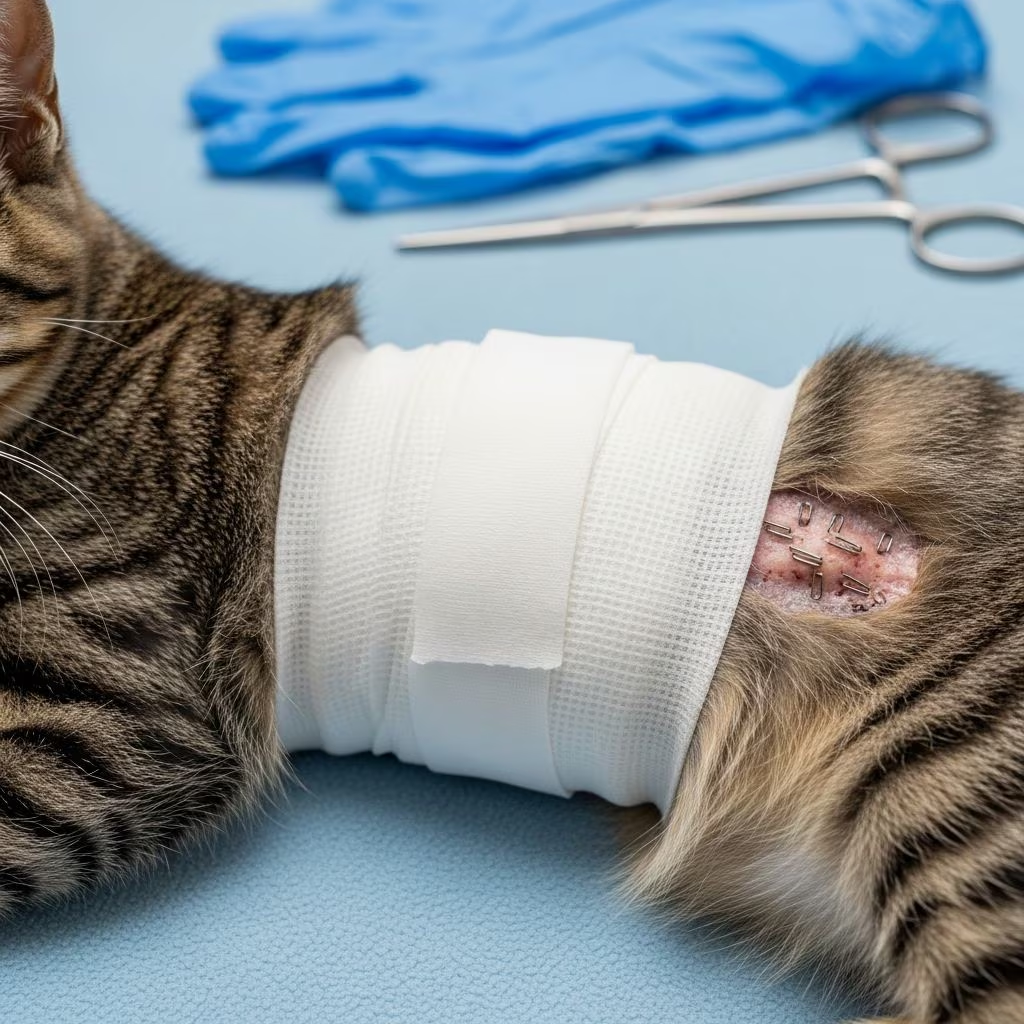
Effective wound management in small animals like dogs and cats requires precise surgical interventions to promote healing, prevent infection, and restore function. This article delves into key procedures, from initial assessment to advanced closure techniques, drawing on established veterinary practices.
Understanding Wound Types and Healing Stages
Wounds in pets vary from clean lacerations to heavily contaminated injuries. Recognizing the type guides treatment: clean wounds may allow immediate closure, while contaminated ones demand thorough cleaning first. Healing progresses through inflammation, proliferation, and remodeling phases, influencing surgical timing.
- Clean wounds: Low contamination risk, suitable for primary closure.
- Contaminated wounds: Require lavage and debridement before any suturing.
- Infected wounds: Need culture-guided antibiotics and open management initially.
Patient stabilization precedes wound care, ensuring vital signs are stable before surgery.
Initial Wound Preparation: Clipping and Cleaning
Begin by clipping hair widely around the injury—up to 3 cm beyond edges—to visualize fully and prevent contamination. Use dilute chlorhexidine for periwound cleaning, followed by saline lavage to flush debris. High-volume, low-pressure irrigation reduces bacterial load without tissue trauma.
Drying the area with sterile gauze preps for dressings. For cultures, sample post-lavage to avoid false negatives.
| Step | Purpose | Tools |
|---|---|---|
| Clipping | Expose edges | Clippers |
| Cleaning | Remove debris | Chlorhexidine, saline |
| Drying | Prevent maceration | Gauze |
Debridement Techniques for Healthy Tissue
Removing devitalized tissue is crucial. Use sharp debridement with Metzenbaum scissors or #10 blades for precision, excising necrotic edges until bleeding, viable tissue appears. Pulsed lavage aids mechanical cleaning, using 20-50 psi pressure for efficacy.
Avoid aggressive scrubbing to preserve granulation. In severe cases, consider autolytic methods with moist dressings to gently dissolve debris over time.
Advanced Irrigation Methods
Lavage dilutes bacteria and reveals hidden damage. Sterile saline is ideal; add antiseptics like dilute betadine for contaminated sites. Large volumes—liters for big wounds—ensure thoroughness. Pneumatic cuffs control bleeding pre-lavage, minimizing tourniquet risks.
- Pressure levels: Low for delicate tissues, high for gross contamination.
- Volume guide: 50-100 mL/kg for thorough flushing.
Primary Closure Strategies
For suitable wounds, close promptly after prep. Layered closure minimizes dead space: subcutaneous, dermal, then skin. Simple interrupted sutures work for low-tension areas; mattress patterns for high-tension.
Alternatives include staples or tissue adhesives for speed. Tension relief via undermining or flaps prevents dehiscence. Clean, debrided lacerations heal reliably this way.
Open Wound Therapy Approaches
Not all injuries suit closure. Extensive trauma or infection warrants second-intention healing via repeated debridements and bandaging. Wet-to-dry gauze initially aids mechanical cleaning, transitioning to moist environments for proliferation.
Moist healing fosters autolysis, keeping cells active. Options: alginates for exudative wounds, foams for absorption.
Bandaging Essentials for Protection
Bandages maintain moisture, absorb exudate, and shield from trauma. Primary layer: non-adherent like Telfa. Secondary: cast padding for cushioning, conformed by gauze, secured with elastic tape.
Monitor for strikes or slippage; change every 2-3 days initially.
Modified Robert Jones Bandage
This bulky wrap suits limbs. Layers: primary dressing, padding (3-4 rolls), conforming gauze (2 layers), tape. Provides compression and stability.
Tie-Over Bandage for Tricky Sites
Ideal for trunk or head. Place stay sutures 2-3 cm from edges, fill with lap sponges (antimicrobial primary layer first), tie umbilical tape in crisscross. Prevents dislodgement.
| Bandage Type | Best For | Key Layers |
|---|---|---|
| Robert Jones | Limbs | Padding, gauze, tape |
| Tie-Over | Body | Sponges, stay sutures, tape |
Topical Agents and Dressings
Honey draws exudate osmotically, antimicrobial. Triple antibiotic ointments prevent infection. Alginates gel with moisture, ideal for moderate exudate. Avoid over-wetting to prevent maceration.
- Honey + nonadherent pad for infected sites.
- Silver-impregnated for biofilm control.
Undermining and Flap Creation
For closure gaps, undermine edges 1-2 cm to mobilize skin. Advance flaps: single pedicle for small defects. Ensure blood supply preservation. Pedicle grafts for larger losses post-granulation.
Pressure sores need debridement then flaps after granulation bed forms.
Drains and Infection Control
Dead space risks seromas; use Penrose drains exiting separately. Culture all dirty wounds; start broad-spectrum cephalosporins pending results. Analgesia supports mobility, aiding healing.
Reconstructive Options for Complex Cases
Axial pattern flaps rotate vascularized tissue. Skin grafts (mesh or sheet) cover after granulation. Advanced therapies like HBOT or stem cells accelerate tough heals.
Monitoring and Follow-Up Care
Assess daily: exudate color, odor, size reduction. Red flags: pus, fever, dehiscence—prompt re-evaluation. Nutrition boosts: high-protein diets enhance collagen.
FAQs on Pet Wound Surgery
Q: When to close a wound primarily?
A: If clean, debrided, low-tension, within 6 hours.
Q: Best bandage for a leg wound?
A: Modified Robert Jones for support.
Q: How often change dressings?
A: Every 24-72 hours, based on exudate.
Q: Can honey treat pet wounds?
A: Yes, medical-grade for antimicrobial effects.
Q: Signs of poor healing?
A: Increased swelling, discharge, or foul smell.
Preventing Wound Complications
Early intervention halves infection rates. Proper bandaging cuts trauma recurrence. Educate owners on home care: e-collars, restricted activity.
References
- Wound Bandaging Techniques for Small Animals — Today’s Veterinary Nurse. 2023. https://todaysveterinarynurse.com/wound-management/wound-bandaging-techniques-for-small-animals/
- Initial Wound Management in Small Animals — Merck Veterinary Manual. 2023. https://www.merckvetmanual.com/emergency-medicine-and-critical-care/wound-management-in-small-animals/initial-wound-management-in-small-animals
- Techniques in Small Animal Wound Management — Nicole J. Buote, Wiley. 2024-02-01. https://onlinelibrary.wiley.com/doi/book/10.1002/9781119933861
- Management of Specific Wounds in Small Animals — MSD Veterinary Manual. 2023. https://www.msdvetmanual.com/emergency-medicine-and-critical-care/wound-management-in-small-animals/management-of-specific-wounds-in-small-animals
- Helpful Tips For Managing Wounds In Veterinary Patients — Today’s Veterinary Practice. 2023. https://todaysveterinarypractice.com/wound-management/helpful-tips-for-managing-wounds-in-veterinary-patients/



