

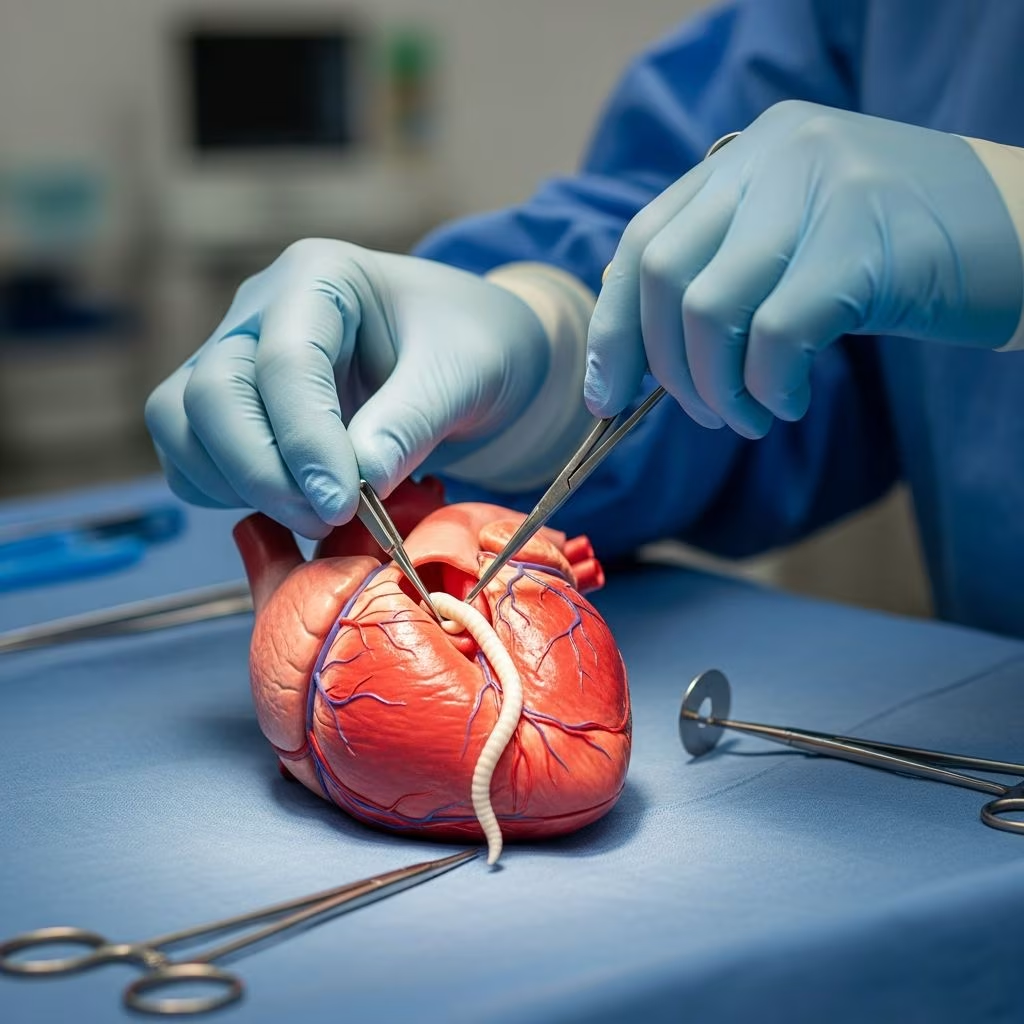
Heartworm disease, caused by the parasite Dirofilaria immitis, poses a severe threat to canine health, particularly in advanced stages where worms obstruct critical blood vessels. When medications alone cannot suffice, surgical extraction emerges as a vital intervention, especially for dogs exhibiting caval syndrome—a life-threatening condition marked by worms crowding the right heart chambers.
Understanding Heartworm Progression and Surgical Need
Heartworms mature in the pulmonary arteries and can migrate to the right ventricle and atrium, leading to inflammation, clotting, and organ strain. In mild cases, adulticides like melarsomine effectively kill worms over multiple injections, achieving up to 98% success rates when combined with strict activity restriction. However, severe infestations overwhelm this approach, triggering pulmonary thromboembolism from dying worms or arsenic toxicity risks.
Caval syndrome demands urgent action, as worms impede blood flow, causing rapid deterioration. Untreated, most affected dogs succumb within days. Surgery targets immediate worm removal from accessible heart regions, followed by adulticide protocols to address residual parasites in pulmonary arteries.
Types of Surgical Interventions
Veterinarians employ two primary strategies: open thoracotomy and minimally invasive percutaneous methods. Each balances efficacy, risk, and recovery time.
Open Thoracotomy for Comprehensive Removal
This traditional method involves a thoracotomy incision to access the heart directly. Surgeons ligate the jugular vein, perform venotomy, and extract worms using forceps from the right atrium, ventricle, and proximal pulmonary arteries. Post-extraction, the vein is often ligated or meticulously closed to preserve flow.
Though effective for right-heart worms, it misses deeper pulmonary artery infestations, necessitating follow-up adulticides. Risks include bleeding, infection, and prolonged anesthesia, but it remains essential for massive blockages.
Minimally Invasive Percutaneous Techniques
Advancements favor catheter-based approaches via jugular venipuncture, guided by fluoroscopy. A guidewire advances to the pulmonary artery, followed by an introducer sheath and retrieval tools like alligator forceps, basket devices, or loop snares.
Recent innovations reduce venotomy needs, minimizing bleeding and eliminating surgical closure. In one study, this method successfully extracted 22 worms from four severely infested dogs, with no complications on follow-up. Procedure times average 30 minutes, with removal rates exceeding 91%.
| Method | Access Point | Tools | Advantages | Limitations |
|---|---|---|---|---|
| Open Thoracotomy | Chest incision & jugular | Forceps via venotomy | Removes right-heart worms effectively | Invasive; misses pulmonary worms |
| Percutaneous | Jugular venipuncture | Forceps, baskets, fluoroscopy | Less invasive; shorter anesthesia | Requires expertise; follow-up meds needed |
Pre-Surgical Evaluation and Preparation
Diagnosis begins with antigen tests, echocardiography, and radiographs to quantify worm burden and assess heart function. Stabilize patients with oxygen, fluids, and pain management if in heart failure.
- Echocardiography: Visualizes worm location and counts.
- Bloodwork: Checks for anemia, clotting issues.
- Fluoroscopy Setup: Essential for real-time guidance in percutaneous cases.
Owners must consent understanding the guarded prognosis, emphasizing speed to counter progression.
Step-by-Step Percutaneous Procedure
Under general anesthesia, an 18-gauge needle punctures the right jugular vein. A guidewire threads to the pulmonary artery under fluoroscopy, exchanged for an introducer sheath.
- Advance retrieval forceps past thoracic inlet to snag worms.
- Extract sequentially from pulmonary artery, ventricle, then atrium.
- Withdraw sheath, tie vein if needed.
- Confirm via echo; administer supportive care.
Case examples highlight success: One dog yielded 15 female and 7 male worms, followed by standard therapy with excellent recovery. Another had two large (24cm, 22cm) worms removed minimally invasively.
Post-Operative Management and Recovery
Monitor in ICU for arrhythmias, thromboembolism, or bleeding. Doxycycline precedes melarsomine (three injections over months) per American Heartworm Society guidelines. Restrict activity 4-6 weeks to prevent emboli.
Follow-ups include antigen retests at 6-9 months. Success hinges on owner compliance; pulmonary risks persist without rest.
Outcomes, Success Rates, and Prognosis
Percutaneous methods show high worm retrieval (91.4%) with minimal complications when skilled. Overall treatment efficacy reaches 98% with full protocols, though caval cases carry higher mortality. Factors improving odds:
- Early intervention before multi-organ failure.
- Expert fluoroscopy use.
- Combined surgery + adulticides.
Drawbacks include anesthesia needs, skill requirements, and residual worm treatment.
Risks and Complications
Potential issues span bleeding from catheterization, endothelial damage, worm fragments embolizing lungs, or anesthesia reactions. Venotomy avoidance in new methods cuts hemorrhage. Post-op, thromboembolism from fragments or dying worms demands vigilant monitoring.
Preventing Heartworm Recurrence
Post-treatment, year-round macrolide preventives are mandatory. Annual antigen testing ensures clearance. Southern U.S. prevalence underscores mosquito control.
FAQs
When is surgery necessary for heartworms?
Surgery is reserved for caval syndrome or when adulticides risk severe reactions, typically with heavy right-heart burdens.
How long does recovery take?
Hospitalization spans days; full activity restriction lasts 2-3 months, with rechecks up to 9 months.
Is percutaneous safer than open surgery?
Yes, it reduces invasiveness and recovery time but requires fluoroscopy expertise.
What follows worm extraction?
Doxycycline, rest, then melarsomine injections to kill remaining worms.
Can all dogs undergo this procedure?
No; stabilize heart failure first and assess per case severity.
Advancements in Veterinary Cardiology
Ongoing research refines tools, boosting accessibility to pulmonary arteries and fragment retrieval. Fluoroscopy standardization enhances safety, positioning these interventions as viable alternatives to solely pharmacological management.
References
- Percutaneous heartworm removal from dogs with severe heartworm disease and caval syndrome — Kitagawa H et al. PMC. 2010-03-15. https://pmc.ncbi.nlm.nih.gov/articles/PMC2839098/
- The Behr Facts: Surgical Treatment of Heartworms in Dogs — BBVSH. 2016-01-01. https://bbvsh.com/blog/the-behr-facts-surgical-treatment-heartworms-dogs/
- Heartworm Disease — Cornell University College of Veterinary Medicine. 2023-01-01. https://www.vet.cornell.edu/departments-centers-and-institutes/riney-canine-health-center/canine-health-information/heartworm-disease
- Canine Caval Syndrome Series, Part 3: Management — Today’s Veterinary Practice. 2022-06-01. https://todaysveterinarypractice.com/parasitology/canine-caval-syndrome-management/
- Heartworm Test for Dogs — Dartmouth Veterinary Hospital. 2024-01-01. https://www.dartmouthvet.ca/pet-care/dog-services/heartworm-testing-for-dogs



