

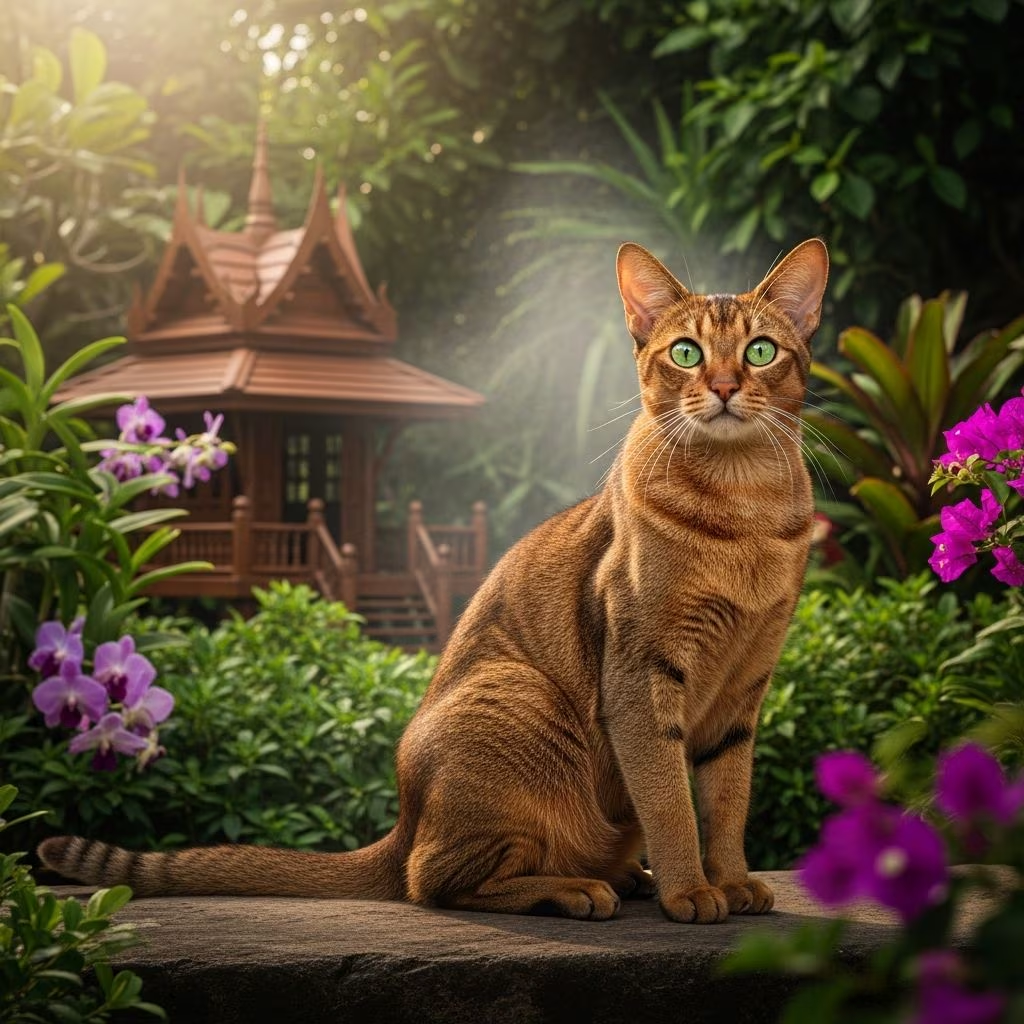
Understanding the Suphalak: A Living Connection to Thai History
The Suphalak represents one of the world’s most exceptional and enigmatic feline breeds, originating from the rich cultural landscape of Thailand. Also known by the alternative name Thong Daeng, which translates to ‘copper,’ this cat variety stands as a tangible link to ancient Southeast Asian civilization and continues to captivate cat enthusiasts globally. The breed’s significance extends far beyond its striking appearance; it embodies cultural pride, historical continuity, and ongoing preservation efforts within Thailand and internationally.
What distinguishes the Suphalak from countless other cat breeds is its documented presence in historical manuscripts dating back centuries. Rather than being developed through modern selective breeding programs, the Suphalak represents a naturally occurring cat variety that maintained consistent characteristics throughout Thai history. This authenticity gives the breed a unique position within the feline world, where most contemporary breeds are products of intentional human intervention.
Ancient Origins and Historical Documentation
The earliest known references to the Suphalak appear in a collection of historical Thai manuscripts collectively known as the Treatise on Cats or Tamra Maew. These texts originated during the Ayutthaya Kingdom, representing some of Southeast Asia’s most significant cultural and literary achievements. The manuscripts provide both written descriptions and visual depictions of the Suphalak, offering centuries-old documentation of this distinctive breed’s existence and characteristics.
Ancient Thai poets and scholars who documented the Suphalak employed evocative language to capture the breed’s essence. Descriptions comparing the cat’s coat to ‘ripe copper’ and ‘heated copper’ reflect the effort to convey the distinctive reddish-brown hue that defines the breed. The eye color was similarly immortalized in poetic terms, with references to eyes resembling ‘thuptim’—a Thai word for ruby or pomegranate—that ‘sparks’ and ‘shines’ like rays of sunlight. These vivid descriptions underscore the cultural significance and aesthetic appreciation the Suphalak commanded in ancient Thailand.
Physical Characteristics and Appearance Standards
The Suphalak’s most immediately recognizable feature is its solid copper-colored coat, which should display an even, rich warm brown shade throughout the entire body. The ideal coloration leans distinctly toward red-brown rather than black-brown, creating a distinctive appearance that distinguishes it from other brown-colored cat breeds. Contemporary Thai breeders often compare the coat color to tamarind fruit pulp, a comparison that captures both the warmth and depth of the breed’s characteristic hue.
Beyond coloration, breed standards require specific structural attributes that reflect the Suphalak’s native Thai origins. The breed displays a medium-sized, muscular body with a semi-foreign body type—neither as extreme as Oriental breeds nor as robust as stockier varieties. The head features a modified wedge shape with medium width and moderate length, maintaining balance and proportion consistent with native Thai domestic cats.
Detailed Physical Specifications
- Coat Type: Short-haired with a glossy, shimmering appearance
- Coat Color: Solid reddish-brown or copper, no tabby markings permitted
- Eye Color: Bright yellow or gold, described as brilliant and luminous
- Nose Leather: Rosy-brown coloration
- Paw Pads: Light brown with pink tones
- Whiskers: Brown, complementing the overall coat color
- Body Type: Medium-sized and muscular
- Head Shape: Modified wedge with moderate proportions
One critical breed standard requirement mandates that the Suphalak must display copper coloration across the entire body without white patches or lockets. This extends to the skin tone itself, which should carry reddish undertones even on the paw pads and nose leather. This comprehensive coloration requirement has significantly complicated modern breeding efforts, as achieving and maintaining such consistent pigmentation proves exceptionally challenging.
Temperament and Behavioral Characteristics
The Suphalak exhibits behavioral traits that distinguish it within the broader landscape of cat breeds, particularly through its pronounced people-oriented nature. Unlike many cat varieties that maintain more independent dispositions, Suphalaks demonstrate a marked affinity for human interaction and companionship. This characteristic quality aligns with behavioral patterns observed in other Thai cat breeds and contributes significantly to the Suphalak’s appeal among contemporary cat enthusiasts.
Individuals of this breed are notably intelligent and responsive to their environments and human family members. They exhibit playfulness that often manifests in dog-like behaviors, including following owners throughout the home and engaging enthusiastically in interactive play sessions. This personality profile makes them suitable for active households where they receive consistent attention and engagement.
Key Behavioral Traits
- Highly affectionate and bonded to human family members
- Active and playful with dog-like personality characteristics
- Communicative and vocal in expressing needs and emotions
- Intelligent and responsive to training and commands
- Require substantial social interaction and engagement
- Dislike isolation or being left alone for extended periods
Potential owners should understand that Suphalaks do not thrive as solitary cats left alone for lengthy periods. Their people-oriented nature makes them potentially prone to stress or behavioral issues when deprived of regular human interaction. This characteristic necessitates that prospective owners commit to providing consistent companionship and engagement opportunities.
Health Considerations and Genetic Profile
The Suphalak’s status as a naturally occurring, recently formalized breed means comprehensive health data remains limited compared to established breeds with decades of documented genetic history. Currently, no breed-specific health conditions have been identified as particularly prevalent within the Suphalak population. However, the breed remains susceptible to the same common genetic diseases affecting all domestic cats, regardless of breed classification.
From a genetic perspective, the Suphalak represents a chocolate self color expression, determined by specific allele combinations. The breed expresses two recessive brown color alleles (‘b’) combined with the dominant full color allele (‘C’), producing the characteristic solid brown copper coloration. Understanding this genetic mechanism has proven crucial for contemporary breeding programs attempting to preserve and propagate the breed accurately.
Modern Breeding Efforts and Contemporary Development
The revival and formalization of the Suphalak breed represents a fascinating modern conservation effort that began in earnest during the early 2000s. Experienced Thai breeder Kamnan Preecha Pukkabu took on the challenge of resurrecting the breed after recognizing widespread confusion and misrepresentation. Many Western breeders mistakenly equated Suphalaks with sable-colored Burmese cats, fundamentally misunderstanding the breed’s defining characteristic of whole-body copper coloration.
Kamnan Preecha’s efforts faced substantial obstacles, primarily the extraordinary rarity of authentic Suphalaks and the genetic complexity of reproducing the breed’s specific characteristics. Despite working with one proper Suphalak male, initial breeding attempts yielded limited success. The breakthrough came with the identification of Thonga, a female declared suitable for breeding in May 2013 after rigorous evaluation. Thonga was exhibited at international cat shows in Thailand, gaining recognition from judges worldwide and establishing her credentials as a proper representative of the breed.
In 2015, Thonga produced a female offspring born on September 15 that satisfied all breed standards: she displayed solid copper coloring throughout her body with no white patches and possessed the characteristic bright yellow eyes. This kitten became the first Suphalak born outside Thailand, marking a significant milestone in the breed’s international preservation effort. Thonga was subsequently exported to the United States, where she entered a breeding program at Thai Dee Maew Cattery designed to produce additional Suphalaks while also supporting breeding of related Thai breeds including Tibetans and Traditional Orientals.
Distinguishing the Suphalak from Related Breeds
The Suphalak frequently encounters confusion with other cat breeds, particularly the Burmese and Havana Brown. This confusion often stems from superficial color similarities and shared geographical or ancestral connections. However, significant distinctions differentiate the Suphalak from these other breeds.
The primary distinction between Suphalaks and sable Burmese cats involves the extent and distribution of coloration. While Burmese cats display color pointing—darker coloration concentrated on the face, ears, paws, and tail with a lighter body—Suphalaks must maintain uniform copper coloration across their entire body. The Suphalak’s coloration represents a warm reddish-brown, distinct from the cooler, darker sable tones characteristic of Burmese cats.
The Havana Brown, another potential source of confusion, differs in its specifically bred origin and breeding standards that permit deliberate outcrosses with other non-Thai cat breeds. The Suphalak, by contrast, represents a natural Thai breed with strict standards explicitly prohibiting outcrosses with non-Thai cats. This distinction reflects the Suphalak’s position as a conservation effort focused on preserving an authentic Thai heritage breed rather than creating a new breed through selective breeding.
Cultural Significance and Symbolic Meaning
Within Thai cultural context, the Suphalak carries profound symbolic significance extending beyond simple aesthetic appreciation. The breed’s copper coloration connects to traditional Thai associations between brown tones and concepts of fertility, wealth, stability, and good fortune. These cultural associations enhance the Suphalak’s appeal within Thailand and among culturally aware international enthusiasts seeking breeds with historical and symbolic depth.
Recognition of the Suphalak’s cultural importance reached an international level when the World Cat Federation officially recognized the Suphalak as a pure Thai breed, acknowledging its authenticity and heritage significance. This recognition represents validation of preservation efforts and affirms the breed’s legitimate status within the global feline community.
Frequently Asked Questions About Suphalak Cats
What makes the Suphalak different from a Burmese cat?
While Burmese cats often share Southeast Asian heritage, the key difference lies in coloration distribution. Burmese cats display darker color pointing on extremities, while Suphalaks maintain uniform copper coloring throughout their entire body, including paw pads and nose leather. The Suphalak also represents a naturally occurring Thai breed rather than a selectively developed modern breed.
How rare is the Suphalak breed?
The Suphalak remains extraordinarily rare, with very few authentic examples existing outside Thailand. The breed’s scarcity stems from its near-extinction and the recent nature of formalized revival efforts. Fewer than a handful of properly documented Suphalaks exist in breeding programs globally, making the breed inaccessible to most cat enthusiasts.
What is the typical lifespan of a Suphalak?
While specific lifespan data for Suphalaks remains limited due to the breed’s rarity and recent formalization, they likely follow patterns typical of healthy domestic cats, generally ranging from 12-18 years with proper care.
Can Suphalak cats be left alone?
No; Suphalaks are highly people-oriented and thrive on regular human interaction. They do not adapt well to extended periods of solitude and may develop stress-related behavioral issues if left alone frequently.
The Future of Suphalak Preservation
The Suphalak’s future depends significantly on continued dedication from breeding programs in Thailand and internationally. Organizations such as the International Maew Boran Association (TIMBA) play crucial roles in promoting the breed, establishing breeding standards, and pursuing formal recognition from major cat registries. These efforts ensure that this authentic Thai heritage breed survives and develops sustainable breeding populations capable of supporting long-term viability.
The Suphalak exemplifies how ancient cultural heritage can intersect with modern conservation biology, creating opportunities for meaningful preservation of both cultural and genetic diversity. For cat enthusiasts seeking breeds with historical depth, authentic origins, and distinctive characteristics, the Suphalak represents an exceptional choice—assuming they can provide the substantial human attention and engagement these remarkable cats require.
References
- Suphalak — Wikipedia. Accessed January 2026. https://en.wikipedia.org/wiki/Suphalak
- All about Suphalak breed — Animalia. Accessed January 2026. https://animalia.bio/pets/suphalak
- Suphalak Cats 101: Fun Facts & Myths — YouTube/Animal Verse. Accessed January 2026. https://www.youtube.com/watch?v=vZaTDg2fxgQ
- Five Thai cats shape national identity: heritage, luck and cultural pride — Nation Thailand. Accessed January 2026. https://www.nationthailand.com/life/art-culture/40061555
- Suphalak: Thailand’s “Good Luck” Solid Brown Cat That Captivates Hearts and Brings Ancient Fortune Home — Plato Pet Treats. Accessed January 2026. https://platopettreats.com/blogs/blog/suphalak-thailands-good-luck-solid-brown-cat-that-captivates-hearts-and-brings-ancient-fortune-home



