Sugar Gliders Feeding: Complete Nutritional Guide
Learn the essential feeding requirements and dietary guidelines for healthy sugar gliders.
Sugar Gliders Feeding: Complete Nutritional Guide for Pet Owners
Sugar gliders are small, energetic marsupials that require a carefully balanced diet to thrive in captivity. These exotic pets have unique nutritional needs that differ significantly from traditional household pets. Providing proper nutrition is one of the most critical aspects of sugar glider care, as dietary deficiencies can lead to serious health complications. Understanding what to feed your sugar gliders, how much to feed them, and which foods to avoid is essential for maintaining their health and longevity.
Understanding Sugar Glider Dietary Requirements
Sugar gliders should consume approximately 15-20% of their body weight daily through a carefully balanced diet. This may seem like a substantial amount, but it reflects their naturally high metabolism and active lifestyle. The key to proper sugar glider nutrition lies in understanding the proper ratio of different food components rather than simply feeding random foods.
The ideal daily diet should be divided into three equal parts: one-third from nutritionally balanced pelleted kibble, one-third from a nectar or sap-based mixture, and one-third consisting of a variety of fresh vegetables, fruits, and insects (offered every other day). This balanced approach ensures that your sugar gliders receive all necessary nutrients, vitamins, and minerals for optimal health.
Core Dietary Components
Pelleted Kibble: The Foundation of Nutrition
Extruded kibble formulated specifically for sugar gliders should be freely available in their cage at all times, allowing them to eat by choice throughout the day. Alternatively, pellets formulated for insectivores may also be used as a suitable alternative. These commercially prepared diets are designed to provide complete and balanced nutrition and should form approximately one-third of your sugar glider’s daily intake.
The importance of quality pelleted food cannot be overstated. These formulations are carefully developed to include all necessary vitamins and minerals in appropriate ratios. Leaving kibble available continuously ensures that your sugar gliders can snack according to their metabolic needs.
Nectar and Sap-Based Mixtures
The second major component of a sugar glider’s diet consists of nectar or sap-based mixtures. These foods replicate the natural diet of wild sugar gliders, who feed on tree sap and nectar in their native Australian habitats. Artificial nectar mixes, sometimes called Leadbeater’s mixture, provide essential carbohydrates and satisfy the natural dietary preferences of captive sugar gliders.
This component should constitute approximately one-third of the daily diet. However, it’s important to note that sugar gliders have a strong preference for sweet foods, so portion control is critical to prevent nutritional imbalances.
Fresh Fruits and Vegetables
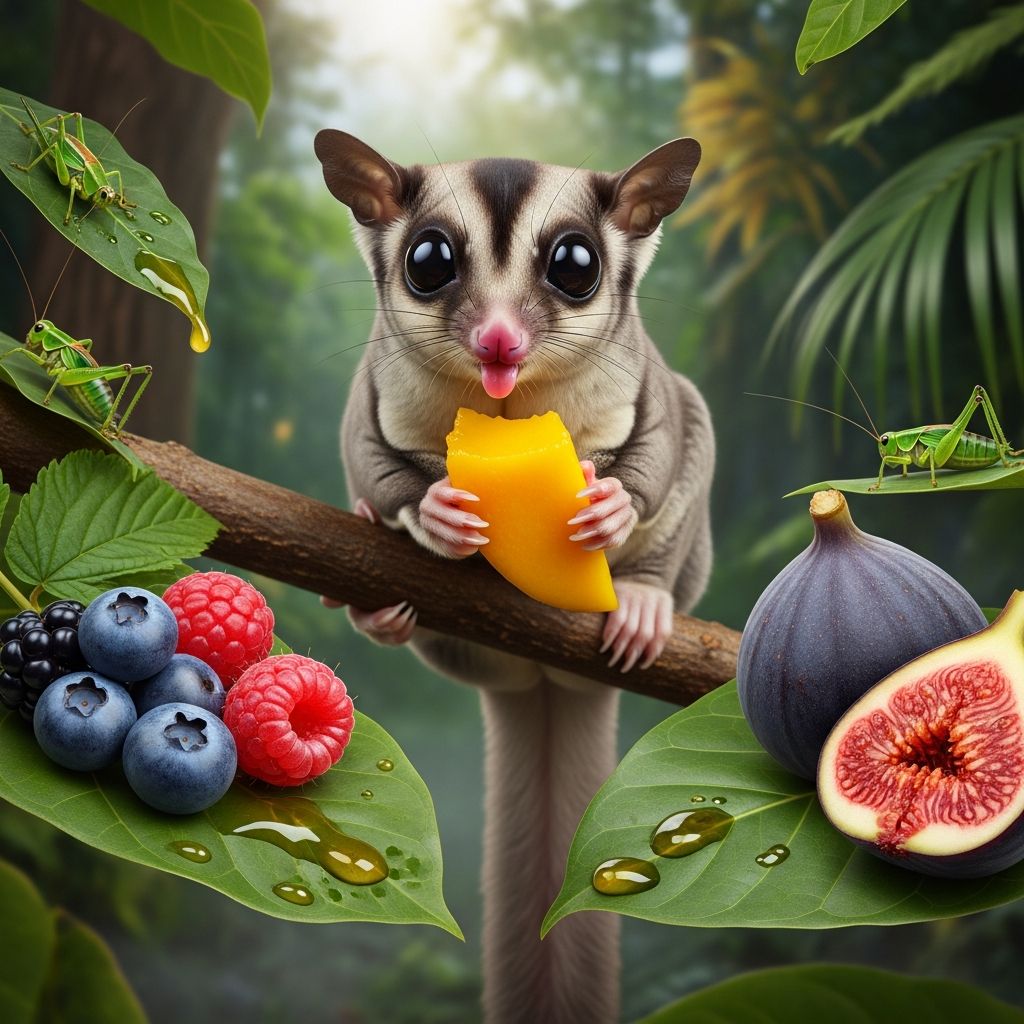
Fresh produce should make up the final third of your sugar glider’s diet, providing essential vitamins, minerals, and fiber. A variety of fresh fruits and vegetables offers nutritional diversity and enrichment for your pets. Acceptable fruits include apples, apricots, bananas, berries, cherries, grapes, melons, papaya, pears, plums, and strawberries.
Acceptable vegetables include carrots, corn, sweet potatoes, and various other vegetables not considered dangerous to sugar gliders. Fresh or organic foods are strongly preferred, as sugar gliders are sensitive to toxins and preservatives. Always wash produce thoroughly and remove any pesticide residue before feeding.
Insects and Protein Sources
Insects should be offered every other day as part of a varied diet. Mealworms and crickets are particularly popular with sugar gliders and provide high-quality protein. Additionally, other protein sources such as cooked turkey, chicken, boiled eggs, and even feeder mice can be offered occasionally to provide nutritional variety.
Critical Nutritional Considerations
Calcium and Phosphorus Balance
One of the most important aspects of sugar glider nutrition is maintaining proper calcium to phosphorus ratios. Sugar gliders require a diet with adequate calcium and vitamin D3 to prevent metabolic bone disease, a common condition in improperly fed sugar gliders. Calcium-based multivitamins formulated specifically for sugar gliders are essential supplements that should be added to their food regularly.
Many commercial multivitamins are designed with appropriate calcium-to-phosphorus ratios for optimal absorption and utilization. It is critical not to use reptile vitamins for sugar gliders, as these formulations are not designed for the specific needs of small marsupials.
Foods to Avoid
Certain foods should never be fed to sugar gliders due to their potential to cause serious health problems. Fruits with pits or seeds should be avoided, as should candy, chocolate, coffee, tea, soda, and canned fruits. Raw sugar, sugar substitutes, and chocolate are particularly dangerous and can cause severe toxicity in sugar gliders.
Additionally, fruits and vegetables known to be high in oxalates should be avoided, as they impair calcium absorption. Foods of concern in this category include raspberries, strawberries, blackberries, spinach, carrots, beets, pears, lettuce, figs, and collards. Raw corn should only be fed very occasionally, as it is extremely sweet.
Insects raised on corn mash, outdoor insects, and raw meats or eggs should be avoided due to potential contamination and health risks. When feeding protein sources like chicken, turkey, or eggs, always ensure they are properly cooked.
Portion Control and Feeding Schedule
Sugar gliders have a tendency to eat excessively when given the opportunity and will preferentially consume sweet foods over healthier options. This natural behavior requires careful portion control from pet owners. Pelleted food should remain available in the cage at all times, while fresh food should be removed each morning to prevent spoilage and overeating.
The recommended daily portion of fresh fruits and vegetables should be small but varied. Since these foods are highly palatable and preferred by sugar gliders, limiting portions ensures that your pets will consume adequate amounts of nutritionally complete pellets and nectar mixtures.
Hydration and Beverages
Fresh, clean water must be available to your sugar gliders at all times. Water bottles should be checked daily to ensure they are functioning properly and not empty. Many sugar glider owners prefer to use filtered water to minimize exposure to potential contaminants.
Pure fruit juices without added sugar can be offered as occasional beverages. Some owners create diluted juice mixtures by combining filtered water with 100% fruit juice, though this should be reserved for occasional supplementation rather than daily consumption.
Introducing New Foods
Sugar gliders can be selective eaters and may show hesitation when introduced to unfamiliar foods. When transitioning your sugar gliders to new diets, patience and a strategic approach are essential. If changing pelleted diets, gradually introduce the new food by mixing it with the old food in increasing proportions over several days.
A typical transition schedule might involve starting with mostly old food and gradually increasing the proportion of new food over a week. Some gliders may take time to adjust, but they will not starve themselves voluntarily. Avoid offering alternative foods during the transition period to encourage acceptance of the new diet.
Safe Feeding Practices
Food Safety and Quality
All foods offered to sugar gliders should be fresh and of high quality. Avoid foods treated with pesticides, and whenever possible, choose organic produce. Remove uneaten fresh food from the cage daily to prevent spoilage, bacterial growth, and mold development.
Commercial diets prepared specifically for sugar gliders should be stored properly to maintain freshness and nutritional integrity. Follow storage instructions on product packaging and check expiration dates regularly.
Monitoring Dietary Adequacy
Regular monitoring of your sugar glider’s health is the best way to assess whether your feeding program is adequate. Healthy sugar gliders should maintain a consistent weight, have clear eyes, display active behavior, and have healthy-looking fur. Any changes in eating habits, weight loss, or behavioral changes may indicate nutritional deficiencies or other health concerns.
Consider consulting with an exotic animal veterinarian to review your feeding practices and ensure your sugar gliders are receiving optimal nutrition. Regular veterinary check-ups can identify nutritional deficiencies before they develop into serious health problems.
Frequently Asked Questions About Sugar Glider Feeding
Q: How much should I feed my sugar glider daily?
A: Sugar gliders should consume approximately 15-20% of their body weight daily. This amount should be divided according to the recommended ratio: one-third pelleted kibble (available continuously), one-third nectar/sap mixture, and one-third fresh produce and insects every other day.
Q: Can sugar gliders eat all types of fruits and vegetables?
A: No. While many fruits and vegetables are safe, some should be avoided. High-oxalate foods like raspberries, spinach, and beets impair calcium absorption. Fruits with pits or seeds should never be offered. Always research new foods before introducing them.
Q: Is it necessary to provide vitamin supplements?
A: Yes. Calcium-based multivitamins formulated specifically for sugar gliders are essential. These should be sprinkled on food regularly as directed. Never use reptile vitamins, as they are not formulated for sugar glider needs.
Q: How often should insects be offered?
A: Insects should be offered every other day as part of the varied diet component. They provide excellent protein but should not be offered more frequently, as they are high in fat.
Q: What water should I provide?
A: Fresh, clean water should be available at all times. Many owners prefer filtered water. Water bottles should be checked daily for proper functioning and adequate supply.
Q: Can I use standard pet store pellets for my sugar glider?
A: No. Use only extruded kibble specifically formulated for sugar gliders or pellets formulated for insectivores. Standard pet pellets do not provide appropriate nutritional ratios for sugar gliders.
Q: How should I introduce new foods?
A: Introduce new foods gradually, especially if changing pelleted diets. Mix increasing proportions of new food with old food over several days. Some gliders may be hesitant, so patience is important. Avoid offering alternative foods during transitions.
Q: Are there foods that are toxic to sugar gliders?
A: Yes. Never feed chocolate, candy, raw sugar, fruits with pits or seeds, canned fruits, coffee, tea, soda, or raw meats and eggs. These foods can cause serious toxicity and health complications.
Creating a Balanced Feeding Schedule
Establishing a consistent feeding routine helps ensure your sugar gliders receive proper nutrition daily. Most owners find it effective to check and refresh pelleted food daily, remove any uneaten fresh food each morning, and provide fresh produce in the evening when sugar gliders become most active.
Keeping a feeding log can help track your sugar gliders’ consumption patterns and identify any changes that might indicate health concerns. Document what foods are offered, how much is consumed, and any behavioral observations related to feeding.
Conclusion
Proper nutrition is foundational to sugar glider health and longevity. By understanding and implementing the recommended dietary guidelines—maintaining appropriate ratios of pelleted kibble, nectar mixtures, and fresh produce—while avoiding potentially harmful foods and providing necessary supplements, you can ensure your sugar gliders receive optimal nutrition. Regular monitoring, consultation with exotic animal veterinarians, and flexibility in adapting your feeding program as needed will help your sugar gliders thrive for years to come.
References
- The Pet Glider Nutrition System — The Pet Glider. 2024. https://www.thepetglider.com/pages/tpg-diet
- Sugar Gliders – Feeding — VCA Animal Hospitals. 2024. https://vcahospitals.com/know-your-pet/sugar-gliders-feeding
- Sugar Glider Care Guide — Bird & Exotics Veterinary Services. 2024. https://www.birdexoticsvet.com/sugar-glider-care-guide
- Introducing New Diets to Sugar Gliders: A Guide to Transitioning — Exotic Nutrition. 2024. https://exoticnutrition.com/blogs/blog/introducing-new-foods-to-sugar-gliders
- Feeding Your Sugar Glider — Merck Veterinary Manual. 2024. https://www.merckvetmanual.com/multimedia/table/feeding-your-sugar-glider
- Sugar Glider Care Guidelines — Animal Rescue League of Iowa. 2024. https://www.arl-iowa.org
- Sugar Glider Feeding Guidelines — Wombaroo Passwell. 2024. https://www.wombaroo.com.au
Similar Articles








Read full bio of Sneha Tete