

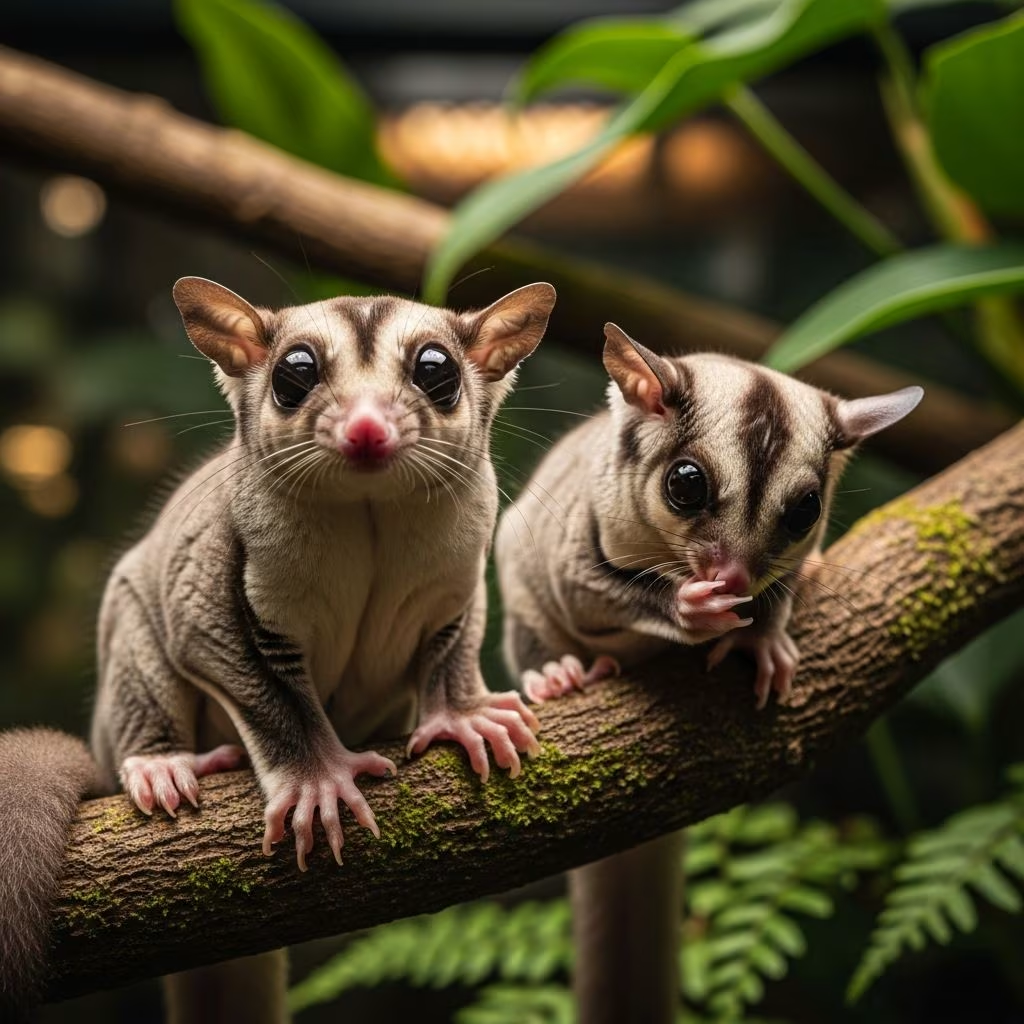
Introduction to Sugar Gliders
Sugar gliders (Petaurus breviceps) represent a fascinating choice for exotic pet enthusiasts seeking animals with distinctive characteristics and engaging personalities. These small, arboreal marsupials originate from the rainforests of Australia and nearby regions, where they have evolved remarkable adaptations for life in the treetops. Their diminutive size, combined with their ability to glide through the air and their highly social nature, makes them intriguing companions for dedicated pet owners willing to meet their specialized care requirements.
The term “sugar glider” reflects two defining features of these creatures: their preference for sweet foods and their extraordinary gliding capability. Understanding both their natural behaviors and their needs in captivity is essential for anyone considering bringing these animals into their homes.
Physical Characteristics and Adaptations
Sugar gliders possess a distinctive physiology adapted specifically for arboreal life. These compact marsupials typically weigh between 90 and 160 grams, making them among the smallest gliding mammals. Their most remarkable feature is the patagium—a thin membrane of skin that stretches from their forelimbs to their hind limbs, creating a biological “wing” that enables them to glide through the air.
The coloration of sugar gliders typically ranges from pale grey to light brown on their dorsal surfaces, with lighter undersides creating a countershaded appearance that provides camouflage in their natural forest habitat. Their facial structure includes large, round eyes positioned to provide excellent peripheral vision, which proves invaluable for nocturnal navigation through dense forest canopies. Additionally, their semi-prehensile tails assist in balance and material manipulation, often holding leaf matter while they return to their nests.
One of their most impressive physical capabilities is their gliding distance. Sugar gliders can effortlessly traverse approximately 150 feet through the air in a single glide, allowing them to move efficiently between food sources and escape predators with minimal energy expenditure. This efficiency is crucial to their survival in the wild, where energy conservation directly impacts survival rates.
Nocturnal Nature and Activity Patterns
Sugar gliders are strictly nocturnal animals, meaning they sleep throughout daylight hours and become active once darkness falls. This fundamental behavioral trait significantly impacts their suitability as pets and shapes how owners must structure their daily routines to accommodate these animals’ natural cycles.
During the day, sugar gliders rest in cozy leaf nests constructed within tree hollows, where they can maintain stable body temperatures and remain protected from predators. Their daytime sleep can be quite deep, with some captive individuals becoming difficult to awaken during peak sleeping hours. Pet owners often report that their sugar gliders sleep so soundly during the day that they require minimal adjustments to household routines during these periods.
When night arrives, however, their behavior transforms dramatically. Sugar gliders become remarkably active, leaping, climbing, and vocalizing as they search for food and engage in social interactions. For potential owners, this nocturnal activity means that these animals may be most playful and engaging during evening and nighttime hours, making them potentially suitable for individuals who work during the day or enjoy evening activities.
Temperature Regulation and Torpor
Sugar gliders demonstrate impressive thermoregulatory abilities that allow them to survive in varying temperature conditions. In hot weather, they employ behavioral strategies such as licking their coats and exposing the wet areas to facilitate evaporative cooling, allowing them to tolerate ambient temperatures up to 40°C (104°F).
During cold periods, sugar gliders employ a remarkable survival strategy called torpor—a state of reduced metabolic activity and body temperature that conserves energy when food becomes scarce or temperatures drop. During torpor episodes, which can last up to 16 hours per day, their metabolic rate decreases substantially, reducing their energy requirements dramatically. In the wild, groups of sugar gliders will huddle together during cold nights, combining their body heat to maintain survival. Pet owners must provide warm environments and adequate bedding to prevent their animals from needing to enter prolonged torpor states.
Dietary Requirements and Feeding Behavior
The “sugar” component of the sugar glider name directly references their dietary preferences. In their natural habitat, these animals consume nectar and pollen from sweet gum and eucalyptus tree blossoms, along with tree sap accessed by stripping bark or creating bore holes with their specialized teeth. They also consume insects opportunistically, though the energy expenditure of hunting typically limits this activity in the wild.
Sugar gliders are classified as opportunistic omnivores, meaning they consume both plant and animal matter depending on availability. Their digestive system includes an enlarged caecum that assists in processing complex carbohydrates obtained from gum and sap. Daily food consumption typically amounts to approximately 11 grams of dry matter, roughly 8-9.5% of their body weight depending on individual factors.
In captive settings, providing appropriate nutrition requires careful attention to dietary composition. A balanced diet should include nectar sources, fresh fruits and vegetables, and protein sources such as insects. Pet owners must understand that while sugar gliders have a preference for sweet foods, providing unlimited access to high-sugar items can lead to obesity and metabolic problems. Responsible feeding involves offering varied nutrition that mimics their natural diet while maintaining appropriate caloric intake.
Social Structure and Bonding Behavior
In their natural environment, sugar gliders are highly social animals living in colonies typically consisting of 5 to 10 individuals. These groups engage in grooming, playing, and sleeping together, developing strong social bonds essential to their psychological well-being. Understanding this social nature is critical for anyone considering pet ownership.
When properly socialized from a young age, captive sugar gliders can develop strong attachments to their human caretakers. These animals are inquisitive, playful, and intelligent, often enjoying cuddling and frequently curling up in shirt pockets where they feel safe and secure. Establishing these bonds requires consistent interaction—experts recommend spending one to two hours daily handling and interacting with pet sugar gliders, ideally during evening hours when they are naturally most active.
However, it is important to note that sugar gliders can suffer significantly when kept in isolation. A single sugar glider may experience psychological distress without adequate social interaction or companionship. Responsible ownership often involves keeping multiple animals together, allowing them to engage in natural social behaviors while still receiving human attention and care.
Communication and Vocalization
Sugar gliders employ a sophisticated communication system involving both vocalizations and scent marking. Each individual possesses distinctive scent glands throughout their body that produce unique scents, making each sugar glider identifiable to other members of their group.
Vocally, these animals produce a diverse array of sounds to communicate different messages and emotional states. They produce barking sounds similar to tiny dogs, particularly when excited or greeting familiar individuals. Purring indicates contentment and relaxation, occurring when animals feel secure and comfortable. A high-pitched crabbing sound—often described as resembling a swarm of locusts or an alien invasion—signals distress, fear, or displeasure. When upset or frustrated, sugar gliders also produce scraping and chattering sounds. These varied vocalizations allow attentive owners to understand their animals’ emotional states and respond appropriately to their needs.
Behavioral Characteristics in Captivity
Sugar gliders brought into captive environments demonstrate various behaviors derived from their wild nature. Their tendency to leap and climb reflects their arboreal origins, as pet sugar gliders often treat their owners like trees, climbing their limbs and sometimes heading toward the top of the head. This behavior, while sometimes startling, represents natural climbing instinct rather than aggression.
Male sugar gliders engage in scent marking behavior by rubbing scent glands located on their heads and chests against objects and individuals to establish territorial claims. Un-neutered males demonstrate this behavior more extensively than neutered counterparts, making neutering a consideration for reducing marking behavior in household settings.
Another characteristic behavior involves scraping with their teeth. In their natural habitat, sugar gliders scrape tree bark to access sap and gum. In captive settings, they may attempt to replicate this behavior on human skin, mistaking arms and legs for tree trunks. Rather than punishing this natural instinct, owners should redirect it by providing appropriate toys and treats that satisfy this foraging impulse.
Defensive Behaviors and Bite Risk
While generally passive when properly socialized, sugar gliders may bite when frightened, stressed, experiencing pain, or insufficiently socialized. A sugar glider typically produces a crabbing sound before biting, providing a warning signal to caretakers. Understanding this warning allows owners to remove their hands and respect the animal’s boundaries.
When truly frightened, sugar gliders may assume defensive postures by standing on their hind legs with extended heads and open mouths. In extreme cases, they may lie on their backs with elevated feet while vocalizing intensely. Some individuals also produce a white, oily secretion from their paracloacal glands that smells of soured fruit—an effective deterrent to potential predators and a clear sign of extreme fear or stress.
Preventing bite incidents involves consistent socialization beginning from young ages, gentle handling techniques, recognizing warning signals, and respecting the animals’ need for personal space when they signal discomfort.
Housing and Environmental Requirements
Creating an appropriate living environment for captive sugar gliders involves understanding their arboreal nature and high activity levels. These animals require spacious enclosures with multiple vertical levels, climbing opportunities, and branches to accommodate their natural behaviors. Temperature control is essential, as sugar gliders function optimally in warm environments between 70-80°F, with humidity levels maintained at 50-80%.
Proper nesting materials allow sugar gliders to construct their leaf nests, creating secure sleeping areas that reduce stress. Providing hiding places and enclosed spaces gives animals security and respects their need for safe retreats. The enclosure design should prevent escape while allowing adequate ventilation and observation opportunities.
Key Considerations for Potential Owners
Prospective sugar glider owners must understand that these animals represent a long-term commitment requiring substantial daily interaction, financial investment in appropriate housing and nutrition, and dedication to meeting their specialized needs. These are not low-maintenance pets suited to casual ownership.
- Time commitment: Daily interaction of 1-2 hours is necessary for proper socialization and bonding
- Social needs: Sugar gliders typically thrive in pairs or small groups rather than isolation
- Nocturnal activity: Peak activity during nighttime hours requires owners comfortable with evening interactions
- Dietary precision: Careful attention to nutritional balance is essential for preventing metabolic disorders
- Lifespan: Sugar gliders can live 10-12 years in captivity, requiring a long-term commitment
- Veterinary care: Finding exotic animal veterinarians experienced with sugar gliders is important for health management
Conclusion
Sugar gliders are remarkable exotic animals that can become engaging and affectionate companions for dedicated owners willing to invest in understanding and meeting their specialized needs. Their unique combination of physical adaptations, social requirements, and behavioral complexity makes them fascinating subjects for study and care. Success in sugar glider ownership depends on thorough preparation, realistic expectations, consistent commitment, and genuine appreciation for these extraordinary animals’ natural behaviors and requirements. Those who provide appropriate care often discover rewarding relationships with intelligent, playful animals that bring joy and wonder into their lives.
References
- Sugar glider facts — World Animal Protection Canada. Accessed February 2026. https://www.worldanimalprotection.ca/education/animal-facts/sugar-glider-facts/
- Sugar Glider | San Diego Zoo Animals & Plants — San Diego Zoo Wildlife Alliance. https://animals.sandiegozoo.org/animals/sugar-glider
- 12 Common Sugar Glider Behaviors — Chewy. https://www.chewy.com/education/small-pet/sugar-glider/12-common-sugar-glider-behaviors
- Owning Sugar Gliders | VCA Animal Hospitals — VCA Animal Hospitals. https://vcahospitals.com/know-your-pet/sugar-gliders-owning
- All About Sugar Gliders — PetMD. https://www.petmd.com/sugar-glider/exotic/all-about-sugar-gliders
- Sugar glider (Petaurus breviceps) Fact Sheet: Behavior & Ecology — San Diego Zoo Global Library. https://ielc.libguides.com/sdzg/factsheets/sugarglider/behavior



