
Sugar Glider Physical Traits: Essential Guide For Owners
Discover the unique anatomy, gliding abilities, and adaptations of sugar gliders that make them extraordinary small marsupials from Australia.
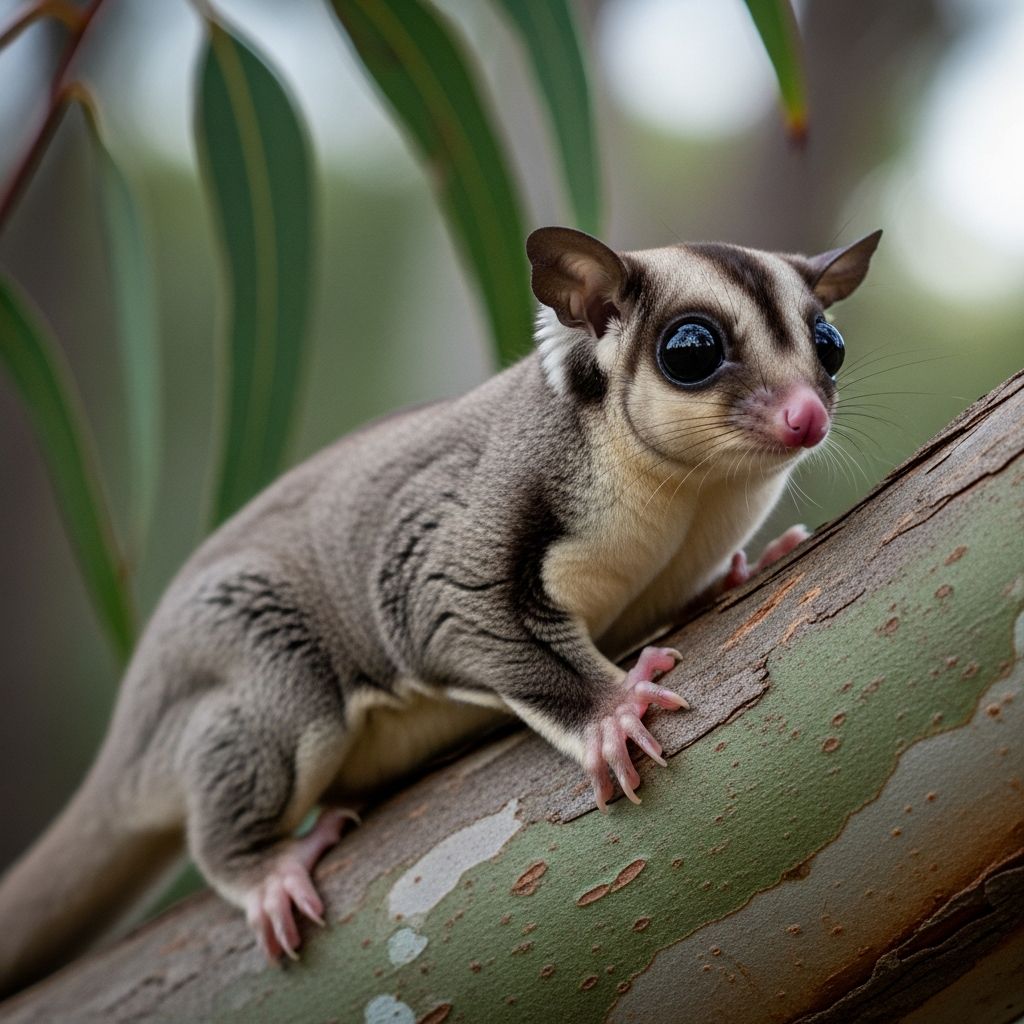
Sugar gliders are small, arboreal marsupials native to Australia, New Guinea, and surrounding islands, renowned for their ability to glide through the air using specialized skin membranes. These nocturnal creatures possess a suite of physical adaptations that enable them to thrive in treetop environments, making them both fascinating wildlife subjects and popular exotic pets.
Body Size and Weight Variations
Adult sugar gliders measure approximately 24-30 cm from nose to tail tip, with males generally larger than females due to sexual dimorphism. Males typically weigh 100-160 grams, while females range from 80-130 grams, comparable to the weight of a baseball. These weights can vary slightly across subspecies and individual health factors.
| Gender | Average Weight (grams) | Body Length (cm) |
|---|---|---|
| Male | 100-160 | 24-30 |
| Female | 80-130 | 24-30 |
This compact size allows them to navigate dense forest canopies efficiently, with males’ slightly larger build linked to greater mate competition in wild populations.
The Remarkable Gliding Mechanism
Central to a sugar glider’s physique is the patagium, a furry membrane of skin stretching from the wrists to the ankles. When the limbs extend, this patagium unfurls, enabling glides of up to 50 meters—nearly the length of a football field. Supported by robust muscles like the tibiocarpalis and humerodorsalis, the membrane allows precise control during flight.
- Launch: Sugar gliders leap from heights, spreading limbs perpendicular to the body.
- Steering: They adjust with arm tilts, wing tension, and tail rudder for direction changes.
- Landing: Hindfeet rotate 180 degrees for smooth tree trunk descents, aided by curved claws.
This gliding prowess serves for foraging, predator evasion, and efficient travel, turning them into agile ‘wrist-winged gliders’.
Fur, Coloration, and Camouflage
Sugar gliders sport soft, thick fur in pale gray to light brown tones, countershaded with creamy white undersides for camouflage against tree bark. A distinctive black stripe runs from the nose along the dorsal midline, complemented by dark eye rings and a pink nose. This coloration blends seamlessly with eucalyptus forests, aiding nocturnal stealth.
Males feature a bald patch on the forehead from their scent gland, used for marking territory and colony members. The fur’s texture provides insulation and sensory feedback during climbs.
Head and Sensory Adaptations
Large, protruding black eyes dominate the sugar glider’s face, optimized for low-light vision and motion detection essential for night foraging. Their wide field of view helps triangulate glide distances by head bobbing before launch.
A keen sense of smell, supported by whisker-like fur and scent glands, aids in navigation and social recognition. Ears are rounded and mobile, capturing faint sounds, while the nose facilitates olfaction for food and kin.
Limbs, Feet, and Climbing Prowess
Front limbs end in five digits with sharp, curved claws for gripping bark. Hind feet boast an opposable big toe and fused second-third digits forming a ‘grooming comb,’ plus 180-degree rotatable ankles for head-first descent. Specialized foot pads enhance traction on smooth surfaces.
The semi-prehensile tail, long and bushy, acts as a balance aid during glides, a stabilizer in climbs, and a tool for carrying nesting materials.
Marsupial Reproductive Features
As marsupials, females possess a forward-opening pouch for nurturing underdeveloped young (joeys). Males have a bifurcated penis and prominent paracloacal glands that secrete a fruity odor during defense. These traits underscore their place in the Petauridae family.
Physiological Responses to Environment
Sugar gliders maintain heart rates of 200-300 bpm and respiratory rates of 16-40 breaths per minute. They enter torpor—a hibernation-like state lasting 2-23 hours—in cold or food-scarce conditions, dropping body temperature to conserve energy. Huddling in colonies supplements this, though torpor is more efficient.
In heat up to 40°C, they lick fur for evaporative cooling and sip water sparingly. An enlarged caecum ferments complex carbs from sap and gum, digesting about 11g of dry food daily (8-9.5% body weight).
Sugar Gliders as Pets: Physical Considerations
Pet sugar gliders retain wild traits like gliding needs (tall enclosures) and nocturnal habits. Their small size demands careful handling to avoid injury, and social nature requires colony housing or owner bonding. Regular scent gland checks prevent bald patches from infections.
- **Housing:** Vertical cages mimicking trees for climbing/gliding.
- **Diet:** Omnivorous mix echoing wild sap, insects, fruits.
- **Health:** Monitor weight (80-160g ideal), eyes for infections.
Behavioral Ties to Physicality
Physical builds influence behaviors: gliding for foraging, claws for grooming colonies, tail for balance in leaps. Defensive postures involve standing tall, vocalizing, or rolling with feet up, releasing oily secretions. Colonies of 5-12 reinforce bonds via grooming.
FAQs
How far can sugar gliders glide?
Up to 50 meters using their patagium, steering with limbs and tail.
What do sugar gliders weigh?
Males: 100-160g; females: 80-130g.
Are sugar gliders nocturnal?
Yes, with large eyes for night vision and torpor for energy saving.
Can sugar gliders climb headfirst down trees?
Yes, via 180-degree rotatable hindfeet and curved claws.
What is the patagium?
Skin membrane from wrists to ankles enabling gliding.
Conclusion
The sugar glider’s physical characteristics—gliding patagium, agile limbs, sensory acuity—equip it masterfully for arboreal life. Understanding these traits enhances appreciation for both wild populations and captive care.
References
- Owning Sugar Gliders | VCA Animal Hospitals — VCA Hospitals. 2023. https://vcahospitals.com/know-your-pet/sugar-gliders-owning
- Sugar Glider (Petaurus breviceps) Fact Sheet: Physical Characteristics — San Diego Zoo Institute for Conservation Research. 2022. https://ielc.libguides.com/sdzg/factsheets/sugarglider/characteristics
- Sugar glider – Wikipedia — Wikipedia. 2024-02-20. https://en.wikipedia.org/wiki/Sugar_glider
- Sugar Glider | San Diego Zoo Animals & Plants — San Diego Zoo Wildlife Alliance. 2023. https://animals.sandiegozoo.org/animals/sugar-glider
- Sugar Gliders! What, Where, How – YouTube — Houston Zoo. 2018-10-15. https://www.youtube.com/watch?v=BVBmBRLO04I
- Sugar Gliders – Purdue University — Purdue University College of Veterinary Medicine. 2021. https://vet.purdue.edu/hospital/small-animal/primary-care/documents/SugarGliders.pdf
Similar Articles








Read full bio of medha deb


