

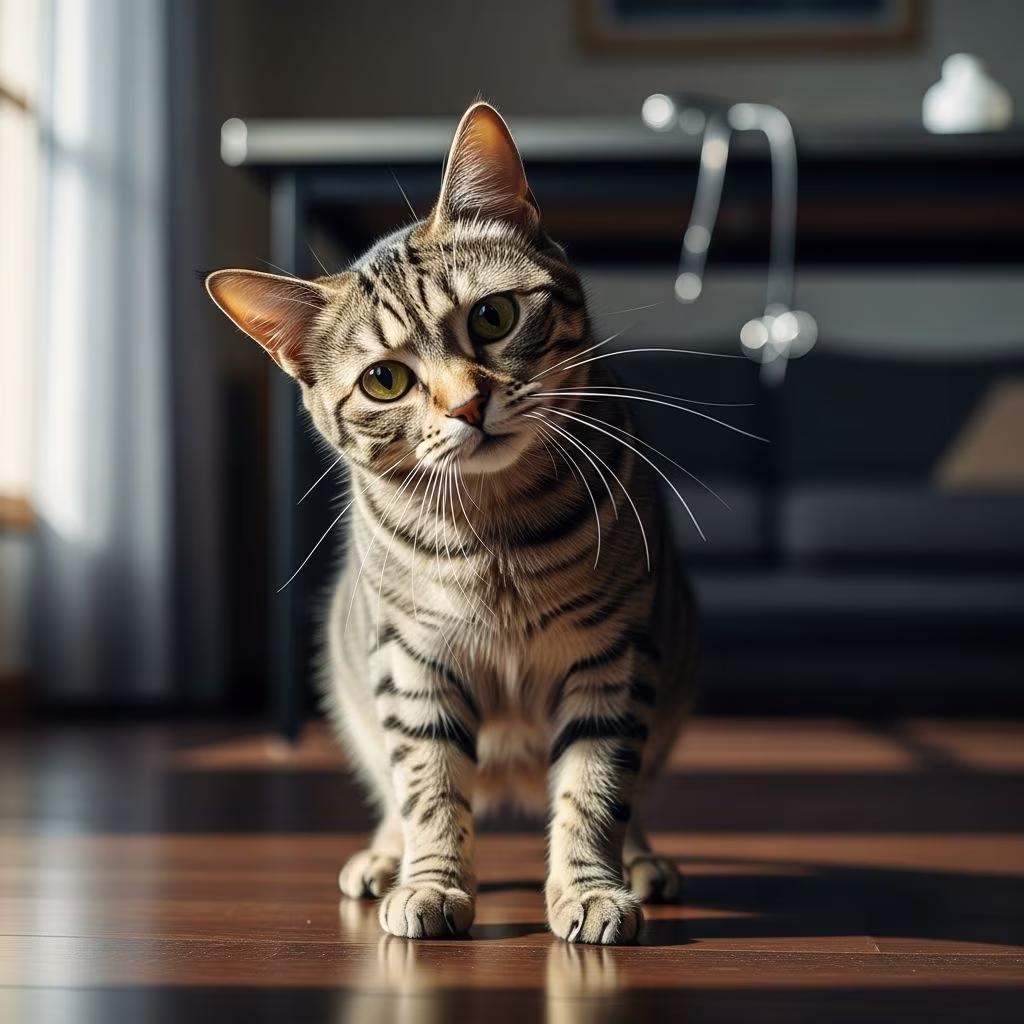
Understanding Sudden Loss of Balance in Cats
One of the most frightening experiences for a cat owner is witnessing their pet suddenly unable to stand or walk properly. A cat that was fine one moment may seem disoriented, unable to coordinate their movements, or even falling over the next. This sudden loss of balance can look as if your cat has suffered a stroke, but the reality often involves the vestibular system—the part of your cat’s body responsible for maintaining equilibrium and spatial orientation.
**Vestibular disease is the most common cause of sudden balance problems in cats**, affecting felines of any age or breed, though it occurs more frequently in older cats. While the sudden onset of symptoms can be alarming, understanding what causes balance loss and recognizing the signs can help you respond appropriately and get your cat the care they need.
What Is Vestibular Disease in Cats?
Cat vestibular syndrome is a condition that impacts your cat’s ability to maintain balance and spatial orientation. The vestibular system is a complex network that includes the inner ear, specific nerves, and parts of the brain. This system coordinates movement and balance by constantly sending information to your cat’s brain about their head position and body location in space.
When the vestibular system functions normally, the inner ear detects head movements and transmits this information to the brain. The brain then sends signals to adjust the cat’s muscles and eyes in response to these movements. When vestibular disease disrupts either the inner ear or brain components of this system, your cat loses their ability to maintain balance effectively.
Common Symptoms of Sudden Balance Loss
The symptoms of vestibular disease in cats typically appear suddenly, which is why many owners are surprised by the dramatic change in their pet’s condition. Recognizing these signs is essential for prompt veterinary attention:
- Head Tilt: One of the most recognizable signs is a persistent head tilt to one side. This isn’t a subtle movement but a noticeable, sustained tilt where one ear appears lower than the other. The head tilt is the cat’s attempt to compensate for the imbalance caused by vestibular disruption.
- Loss of Balance or Coordination: Cats may appear dizzy, stumbling or falling over frequently. They might have trouble walking in a straight line, leaning or veering to one side, or even circling repeatedly.
- Difficulty Standing: Your cat may struggle to get up on all four legs or may fall over after taking just a few steps.
- Rapid Eye Movements (Nystagmus): Involuntary, jerky eye movements occurring side to side, up and down, or in a rotational pattern are common. These reflexive movements indicate the brain is receiving conflicting signals about the cat’s position.
- Nausea and Vomiting: Because the brain center controlling balance is located near the center controlling nausea, cats with vestibular disease often experience vomiting, drooling, or appearing seasick.
- Reluctance to Move: Your cat may be unwilling to move due to the disorienting sensations caused by the condition.
- Additional Symptoms: Other signs can include weakness in the limbs, painful vocalizations, difficulty hearing, and behavioral changes or lethargy.
Causes of Sudden Balance Loss in Cats
Multiple underlying conditions can trigger sudden loss of balance in cats. Understanding these causes helps determine the appropriate treatment and prognosis:
Inner or Middle Ear Infections
One of the most common causes of vestibular disease in cats is inner ear infection, which can cause vertigo and affect balance significantly. Inner ear infections are frequently responsible for balance loss and may produce additional symptoms like head shaking, scratching at the ears, and discharge or odor from the affected ear.
Cerebellar Hypoplasia
A cat that stumbles, walks with stiff legs, or shakes its head repeatedly may have cerebellar hypoplasia, a brain disease that affects muscle control and movement. Kittens contract this disease in utero or if they are malnourished or poisoned during their development. Unlike vestibular disease that appears suddenly in adult cats, cerebellar hypoplasia is present from birth.
Ataxia
Ataxia refers to a loss of balance or coordination and can stem from three distinct causes:
- Cerebellar Ataxia: Caused by damage to the cerebellum at the back of the brain, which is responsible for fine motor control and movement.
- Vestibular Ataxia: Results from disturbance in the inner ear, which plays an important role in balance. This type often appears spontaneously in senior cats without an apparent cause, though untreated deep ear infections can develop into vestibular changes.
- Sensory Ataxia: Occurs when the spinal cord becomes compressed due to a tumor or bulging intervertebral disc. When this pathway is disrupted, cats lose proprioception—their sense of where their body is in space—and may knuckle over, place their feet strangely, or drag affected legs.
Head Trauma or Injury
Injuries such as head trauma or damage to the inner ear can cause pets to lose their balance suddenly. Spinal cord trauma can also lead to balance problems depending on the severity and location of the injury.
Brain Inflammation (Encephalitis)
Encephalitis, an inflammation of the brain, can cause staggering, falling, fever, depression, decreased consciousness, seizures, and paralysis in cats. Fungal infections, tick-borne diseases, and parasites can trigger this serious condition.
Toxin or Drug Exposure
Certain toxins and medications can cause sudden loss of balance in cats. For example, the antibiotic metronidazole is known to cause vestibular symptoms as a side effect.
Tumors and Cancer
Tumors in the ear canal, skull, or spine—especially in aging cats—can disrupt the vestibular system or compress the spinal cord, leading to balance problems. Cancer affecting these areas may also trigger sudden onset balance loss.
Diagnosis of Balance Problems in Cats
When you bring your cat to the veterinarian for balance loss, expect a thorough examination. A physical exam is usually performed to check your cat’s overall health, and this includes a neurologic exam and an otoscopic (ear) exam to visualize the ear canal. Your veterinarian will also ask detailed questions about your cat’s medical history, current symptoms, and whether the onset was sudden or gradual.
Depending on initial findings, your vet may recommend additional diagnostic imaging such as X-rays, CT scans, or MRI to rule out tumors, spinal cord compression, or other structural problems.
When to Seek Emergency Care
While vestibular disease itself is usually not immediately life-threatening, certain symptoms indicate the need for emergency veterinary care:
- Seizures
- Blindness or sudden vision loss
- Muscle weakness in addition to balance problems
- Persistent or worsening vomiting
- Dragging or knuckling of the feet
- Any signs of severe neurological dysfunction
Treatment and Recovery
Treatment for sudden loss of balance in cats depends on the underlying cause. Cats with vestibular disease usually recover over a few days or weeks, though recovery and long-term outlook depend on what triggered the condition. If an ear infection is responsible, antibiotics may resolve the issue. For conditions like cerebellar hypoplasia or permanent spinal cord damage, treatment focuses on managing symptoms and helping your cat adapt to their new limitations.
During recovery, provide your cat with easy access to food, water, and litter boxes placed on the same level to minimize the need for climbing or jumping. Keep your cat in a safe space away from stairs or heights that could result in falls. Most cats with vestibular disease benefit from supportive care and time as their vestibular system compensates for the disruption.
Long-Term Outlook
The long-term outlook for cats with sudden balance loss varies based on the cause. Cats with sudden onset ataxia often experience significant nausea initially, but those with chronic ataxia typically adjust over time and experience less nausea as they adapt. Some conditions may resolve completely, while others may result in permanent changes to your cat’s mobility.
In many cases, especially when the cause is idiopathic (unknown) vestibular disease, cats make excellent recoveries and return to relatively normal function within days to weeks. However, cats with underlying conditions like cancer or spinal cord compression may have a more guarded prognosis depending on the specific diagnosis and treatment options available.
Frequently Asked Questions
Q: Can vestibular disease in cats be cured?
A: The answer depends on the cause. If vestibular disease is caused by a treatable condition like an ear infection, it can be cured with appropriate treatment. However, if the cause is unknown or involves permanent structural damage, management focuses on helping your cat adapt to their symptoms.
Q: Is sudden loss of balance always an emergency in cats?
A: While the sudden onset can be frightening, vestibular disease itself is not always immediately life-threatening. However, you should contact your veterinarian promptly. Seek emergency care if your cat shows signs of seizures, blindness, severe vomiting, or additional neurological symptoms.
Q: Can my cat recover from ataxia?
A: Recovery depends on the type and cause of ataxia. Some cats recover completely, especially with treatment of underlying causes. Others adapt remarkably well to chronic ataxia and maintain good quality of life, though they may have permanent balance difficulties.
Q: How long does vestibular disease last in cats?
A: Most affected cats recover over a few days to several weeks, though the timeline depends on the underlying cause and severity of the condition. Your veterinarian can provide a more specific prognosis after diagnosis.
Q: Should I keep my cat isolated while they recover from balance problems?
A: Not necessarily isolated, but you should keep your cat in a safe environment. Restrict access to stairs, heights, and other hazards. Ensure food, water, and litter boxes are easily accessible without requiring jumping or climbing.
References
- Loss of Balance in Cats – Symptoms, Causes, Diagnosis, Treatment — Wag Walking. Accessed 2026. https://wagwalking.com/cat/condition/loss-balance
- Cats Losing Balance and Falling – Causes and Treatments — Purina US. Accessed 2026. https://www.purina.com/articles/cat/health/symptoms/why-do-cats-fall-over
- Cat Vestibular Syndrome: Signs, Causes, and What to Do — VHA Vets. Accessed 2026. https://vhavets.com/blog/cat-vestibular-syndrome/
- My Pet Can’t Stand & Keeps Falling – Possible Causes & What to Do — Madison Park Veterinary Hospital. 2024-02-29. https://www.madisonparkvet.com/site/blog/2024/02/29/pet-falling
- Ataxia in Cats: Causes and When To Worry — PetMD. Accessed 2026. https://www.petmd.com/cat/symptoms/ataxia-in-cats
- Vestibular Disease in Cats — Joii Pet Care. Accessed 2026. https://www.joiipetcare.com/blogs/health-conditions/vestibular-disease-in-cats
- What Is Vestibular Disease and Loss of Balance in Cats? — WebMD Pets. Accessed 2026. https://www.webmd.com/pets/cats/what-to-know-vestibular-disease-cats



