
Sudden Death In Broiler Chickens: 4 Prevention Strategies
Exploring the hidden causes, pathology, and proven strategies to combat sudden death syndrome in fast-growing broiler flocks for healthier poultry production.
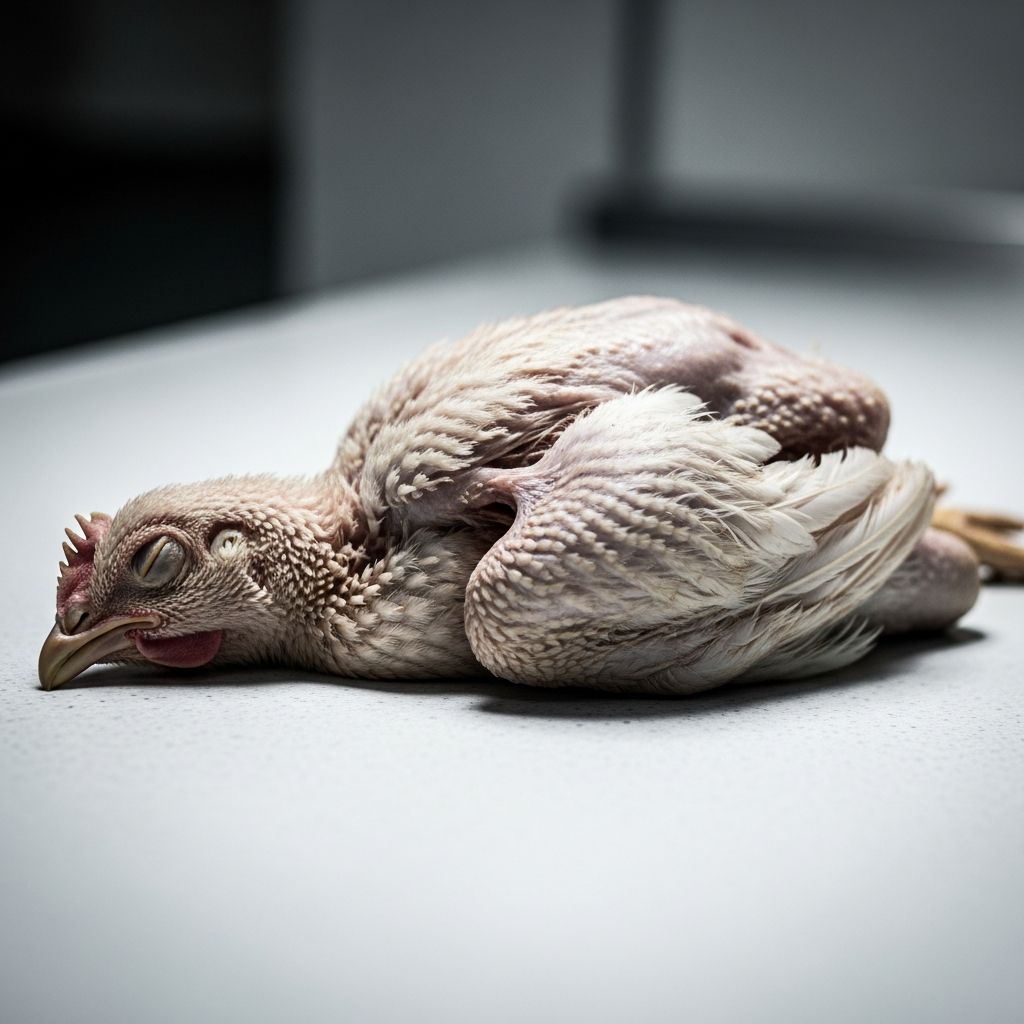
Broiler chickens, bred for rapid growth and high meat yield, face a significant challenge known as sudden death syndrome (SDS), also called flip-over disease. This condition leads to unexpected fatalities in apparently healthy birds, primarily affecting males aged 2 to 5 weeks, with mortality rates potentially reaching 1-3% in flocks.
Defining the Condition and Its Prevalence
Sudden death syndrome manifests as abrupt mortality without prior clinical symptoms, distinguishing it from infectious diseases. Birds often collapse during routine activities like feeding, found dead on their backs with wings extended and legs flexed. Prevalence peaks between 12 and 28 days of age, correlating with the phase of fastest growth. Studies indicate 70-80% of affected cases involve males due to their superior growth rates outpacing cardiovascular development.
In commercial settings, SDS accounts for substantial economic losses, exacerbated by modern breeding for feed efficiency. While exact incidence varies, it remains a top non-infectious cause of broiler mortality.
Unraveling the Underlying Mechanisms
The precise etiology remains elusive, but evidence points to metabolic disruptions, particularly lactic acidosis from high carbohydrate metabolism. Rapid growth demands immense energy, leading to oxygen deficits and heart strain. Genetic selection amplifies this vulnerability, as muscle mass develops faster than supportive organs like the heart and lungs.
Nutritional factors play a pivotal role; high-energy diets rich in saturated fats or carbs without balanced micronutrients provoke imbalances. Deficiencies in vitamin E, selenium, or electrolytes weaken cardiac muscle, precipitating failure. Prostaglandins and physiological stressors further contribute, as noted in veterinary overviews.
Environmental Contributors to Flock Losses
Beyond biology, management practices heavily influence SDS outbreaks. Overcrowding elevates stress, restricts movement, and impairs ventilation, fostering heat buildup. High stocking densities, common in intensive systems, correlate with higher mortality.
Temperature extremes, especially heat stress, overload respiratory and circulatory systems, mimicking or worsening metabolic crises. Poor air quality at high altitudes or in sealed barns induces pulmonary hypertension, akin to ascites syndrome, which overlaps with SDS in 20-30% of male deaths. Lighting inconsistencies disrupt circadian rhythms, indirectly stressing birds.
Pathological Indicators at Necropsy
Post-mortem exams reveal consistent patterns confirming SDS. Affected broilers appear well-fleshed with full crops and gizzards containing recent feed, signaling sudden onset. Key findings include:
- Pulmonary congestion and edema, with fluid in tertiary bronchi.
- Cardiac changes: clotted blood in atria, empty ventricles, and left ventricle hypertrophy; muscle shows fiber degeneration and heterophil infiltration.
- Enlarged liver and kidneys with subcapsular hemorrhages; bile duct hyperplasia noted.
- Distended intestines with creamy contents and empty gallbladders.
These lesions differentiate SDS from trauma or infection, though confirmation requires ruling out other causes.
Recognizing Subtle Warning Signals
While deaths seem instantaneous, precursors exist: irregular panting, lethargy, reduced appetite, isolation, or collapse during activity. Birds may exhibit wing flapping, convulsions, or loud vocalizations seconds before demise, lasting 60-120 seconds. Vigilant monitoring via daily checks can flag at-risk individuals early.
Strategic Prevention Approaches
Mitigating SDS demands multifaceted interventions targeting genetics, nutrition, and environment. Key strategies include:
- Balanced Diets: Formulate feeds with moderated energy (avoid excess carbs/fats), supplemented vitamin E (100-200 IU/kg), selenium (0.3 ppm), and electrolytes. Early-life lower-protein starter feeds curb growth velocity.
- Optimal Housing: Maintain densities below 0.8 ft²/bird initially, scaling to 1.0-1.5 ft² at market weight. Ensure 0.1-0.2 cfm/ft² ventilation, with supplemental cooling in heat.
- Genetic Management: Select slower-growing strains or mix sexes evenly to balance flock dynamics.
- Stress Minimization: Consistent 18-23 hour lighting (20-40 lux), gradual changes, noise reduction, and exercise promotion via perches/space.
| Risk Factor | Ideal Management | Expected Impact |
|---|---|---|
| High Stocking Density | <12 birds/m² | 20-30% mortality drop |
| Heat Stress | 70-80°F, fans/misters | Reduces acute failures |
| Nutrient Imbalance | Vit E/Selenium boost | Lowers myopathy risk |
| Rapid Growth | Slower strains | Balances organ dev. |
Distinguishing SDS from Similar Conditions
SDS mimics other syndromes; accurate diagnosis prevents misintervention. Use this comparison:
| Condition | Key Signs | Differentiation from SDS |
|---|---|---|
| Ascites | Abdominal fluid, cyanosis | Right heart failure, high altitude link |
| Nutritional Myopathy | Muscle pallor, stiffness | Vit E/Se deficiency confirmed via blood |
| Trauma | External injuries | Visible wounds, not metabolic lesions |
| Infection | Fever, lesions | Pathogens in histopathology |
Histology and history aid precise identification.
Long-Term Flock Health Optimization
Sustainable broiler production integrates SDS prevention into holistic protocols. Routine necropsy of 5-10% mortalities informs adjustments. Biosecurity, vaccination, and data tracking via software enhance outcomes. Research urges welfare-focused breeding to inherently reduce SDS susceptibility.
Farmers report 50% mortality reductions post-implementation of combined measures, underscoring proactive value.
Frequently Asked Questions
What is the most common age for SDS in broilers?
Peak incidence occurs between 2-5 weeks, aligning with maximal growth rates.
Can SDS be treated once symptoms appear?
No, progression is seconds to minutes; focus on prevention.
Does sex influence SDS risk?
Yes, males comprise 70%+ cases due to faster growth.
How does ventilation prevent SDS?
It mitigates heat/oxygen stress, easing cardiac load.
Is SDS infectious?
No, it’s non-contagious, metabolic/environmental.
References
- What Causes Sudden Death in Broilers: Key Factors and Solutions — Fidar Feed. 2023. https://fidarfeed.com/broiler-chickens/broiler-diseases/what-causes-sudden-death-in-broilers-key-factors-and-solutions/
- Sudden Death Syndrome – An Overview — Veterinary World. 2009-11. https://www.veterinaryworld.org/Vol.2/November/Sudden%20Death%20Syndrome%20%E2%80%93%20An%20Overview.pdf
- Pathological studies of “Sudden death syndrome” in broiler chickens — PubMed (Avian Pathology). 1979. https://pubmed.ncbi.nlm.nih.gov/436100/
- Sudden Chicken Death Syndrome — Freedom Ranger Hatchery. 2023. https://www.freedomrangerhatchery.com/blog/sudden-chicken-death-syndrome/
- Sudden Death Syndrome, ‘Flipover’ — The Poultry Site. 2023. https://www.thepoultrysite.com/disease-guide/sudden-death-syndrome-flipover
- Common Causes to Pastured Poultry Mortality and Illness — APPPA. 2023. https://apppa.org/Common-Causes-to-Pastured-Poultry-Mortality-and-Illness
Similar Articles








Read full bio of Sneha Tete


