

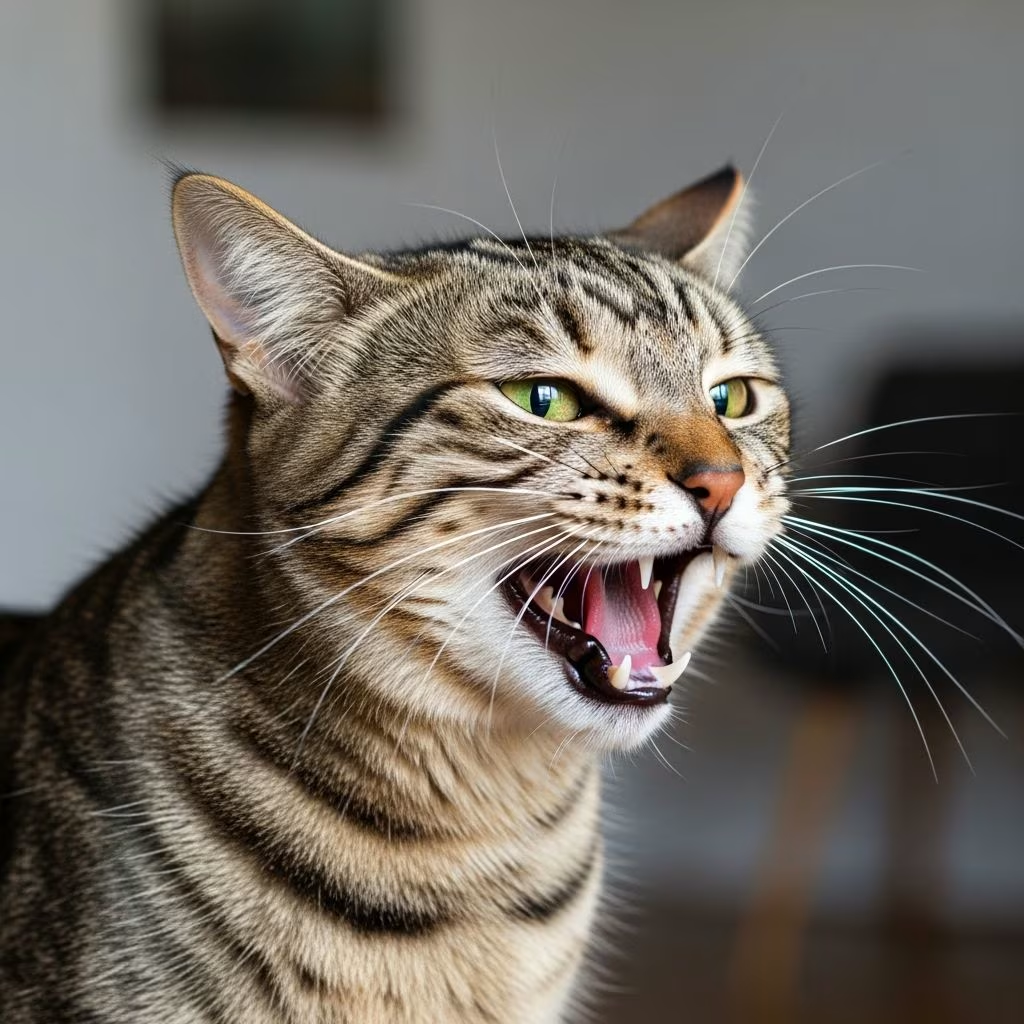
Your once-affectionate cat suddenly hisses at you, leaving you puzzled and concerned. This vocalization is a key communication tool in feline language, often signaling discomfort rather than outright hostility. Understanding the triggers behind this behavior can help you address the root cause and strengthen your bond.
Decoding the Feline Hiss: What It Really Communicates
Hissing serves as a cat’s primary warning signal, akin to a verbal ‘back off’ in human terms. It’s an instinctive response rooted in survival, used to deter perceived threats without immediate physical confrontation. Unlike growling or yowling, hissing is sharp and explosive, often accompanied by specific body postures that amplify the message.
- Accompanying signals: Flattened ears, dilated pupils, arched back, and piloerection (fur standing on end).
- Context matters: Observe if the hiss occurs during petting, near new objects, or around other animals.
Recognizing these patterns allows owners to intervene early, preventing escalation to swatting or biting.
Environmental Triggers: When Your Home Becomes Stressful
Changes in a cat’s territory can provoke defensive hissing as they reclaim personal space. Common culprits include rearranged furniture, new appliances, or construction noise, which disrupt their sense of security.
| Change Type | Common Reactions | Solutions |
|---|---|---|
| New furniture or decor | Hissing at altered areas, hiding | Gradual introduction, pheromone diffusers |
| Household noises (vacuum, guests) | Sudden hisses, puffed tail | Provide quiet retreats, desensitization training |
| Recent moves | Increased vigilance, space guarding | Familiar items in new space, routine maintenance |
These stressors mimic wild threats, prompting cats to hiss to establish boundaries.
Fear and Anxiety: The Emotional Underpinnings
Fear-induced hissing often stems from unfamiliar stimuli, such as strangers, unfamiliar pets, or sudden movements. An anxious cat may freeze before hissing, eyes wide and body tense, signaling a fight-or-flight response.
- Tail flicking or lashing indicates rising irritation.
- Ears rotating backward show discomfort.
- Dilated pupils reflect heightened arousal.
To alleviate this, create safe zones with hiding spots and avoid forcing interactions. Over time, positive associations through treats can rebuild confidence.
Pain as a Hidden Culprit: Physical Discomfort Signals
Cats are masters at masking pain, but hissing betrays acute or chronic discomfort, especially when touched. An injury from a fall, abscess, or arthritis might trigger this reaction during handling.
Watch for complementary signs:
- Limping or favoring one limb.
- Excessive grooming of a specific area.
- Appetite loss or lethargy.
- Avoidance of usual activities.
If hissing accompanies these, a veterinary exam is essential to rule out issues like dental disease or urinary tract infections.
Overstimulation During Interaction: Petting Gone Wrong
Many cats enjoy petting but reach a threshold where it becomes overwhelming, leading to petting-induced aggression. Initial purring may shift to twitching skin, then hissing.
Key indicators include:
- Rippling skin on the back.
- Head turning away from touch.
- Tail thrashing.
Respect these cues by petting in preferred areas like the cheeks or chin, stopping at the first sign of unease, and keeping sessions short.
Maternal Instincts and Kitten Protection
Queens fiercely guard their litters, hissing at any approach perceived as a threat—even from familiar owners. This protective behavior peaks in the first weeks postpartum.
Approach slowly, speak softly, and avoid direct eye contact. Allow the mother space until she relaxes, typically after a few days.
Multi-Pet Dynamics: Interspecies and Intraspecies Tensions
In homes with dogs or multiple cats, hissing enforces territory and hierarchy. A new dog might elicit hisses until scent familiarity develops.
| Scenario | Hissing Pattern | Resolution Steps |
|---|---|---|
| New cat introduction | Targeted at newcomer | Scent swapping, supervised meetings |
| Dog-cat household | At dog approaches | Training commands, separate feeding |
| Established cats | Sudden rivalry | Resource check (litter, food), vet health screen |
Gradual introductions minimize conflicts.
Health-Related Hissing: Beyond Obvious Injuries
Chronic conditions like hyperthyroidism or cognitive dysfunction in seniors can lower tolerance, resulting in uncharacteristic hissing. Monitor for weight loss, vocalization changes, or disorientation.
Routine check-ups catch these early; bloodwork provides definitive insights.
Strategies to Calm a Hissing Cat Effectively
Immediate response: Back away slowly without eye contact, avoiding punishment which heightens fear. Offer high perches or covered beds for decompression.
- Use synthetic pheromones like Feliway to mimic calming scents.
- Enrich environment with toys, scratching posts, and vertical space.
- Establish consistent routines for feeding and play.
- Consult behaviorists for persistent cases.
Patience yields results, often within days.
Body Language Mastery: Reading Between the Hisses
Beyond sound, posture reveals intent. A confident hiss with forward ears suggests irritation; flattened ears indicate fear.
- Relaxed cat: Slow blinks, upright tail.
- Threatened cat: Crouched, whiskers forward.
- Pain response: Tucked abdomen, rapid breathing.
Learning these enhances proactive care.
FAQs: Common Questions on Cat Hissing
Why does my cat hiss at me out of nowhere?
Sudden hisses often tie to undetected pain, stress from changes, or overstimulation. Observe patterns and consult a vet if persistent.
Should I punish a hissing cat?
No—punishment escalates fear. Instead, identify and remove the trigger.
How long does introduction hissing last between cats?
Typically 1-2 weeks with proper management; longer signals deeper issues.
Is hissing always a sign of aggression?
Not necessarily; it’s primarily defensive, warning before potential attack.
When should I worry about my cat’s hissing?
If accompanied by appetite changes, hiding, or limping—seek veterinary advice promptly.
Preventive Measures for a Hiss-Free Home
Proactive steps build resilience:
- Regular vet wellness exams.
- Ample resources to avoid competition.
- Daily interactive play to burn energy.
- Socialization from kittenhood.
These foster a secure environment, reducing hiss frequency.
References
- Hissing Isn’t Hating: Why Cats REALLY Hiss — Sparklecat.com. Accessed 2026. https://www.sparklecat.com/diary/hissing-isnt-hating-why-cats-really-hiss
- Why Do Cats Hiss? 6 Reasons Behind the Behaviour — Purina UK. Accessed 2026. https://www.purina.co.uk/articles/cats/behaviour/understanding-cats/why-do-cats-hiss
- My Cat is Hissing: What Does it Mean? — Bottletree Animal Hospital. Accessed 2026. https://bottletreeanimalhospital.com/blog/cat-is-hissing/



