

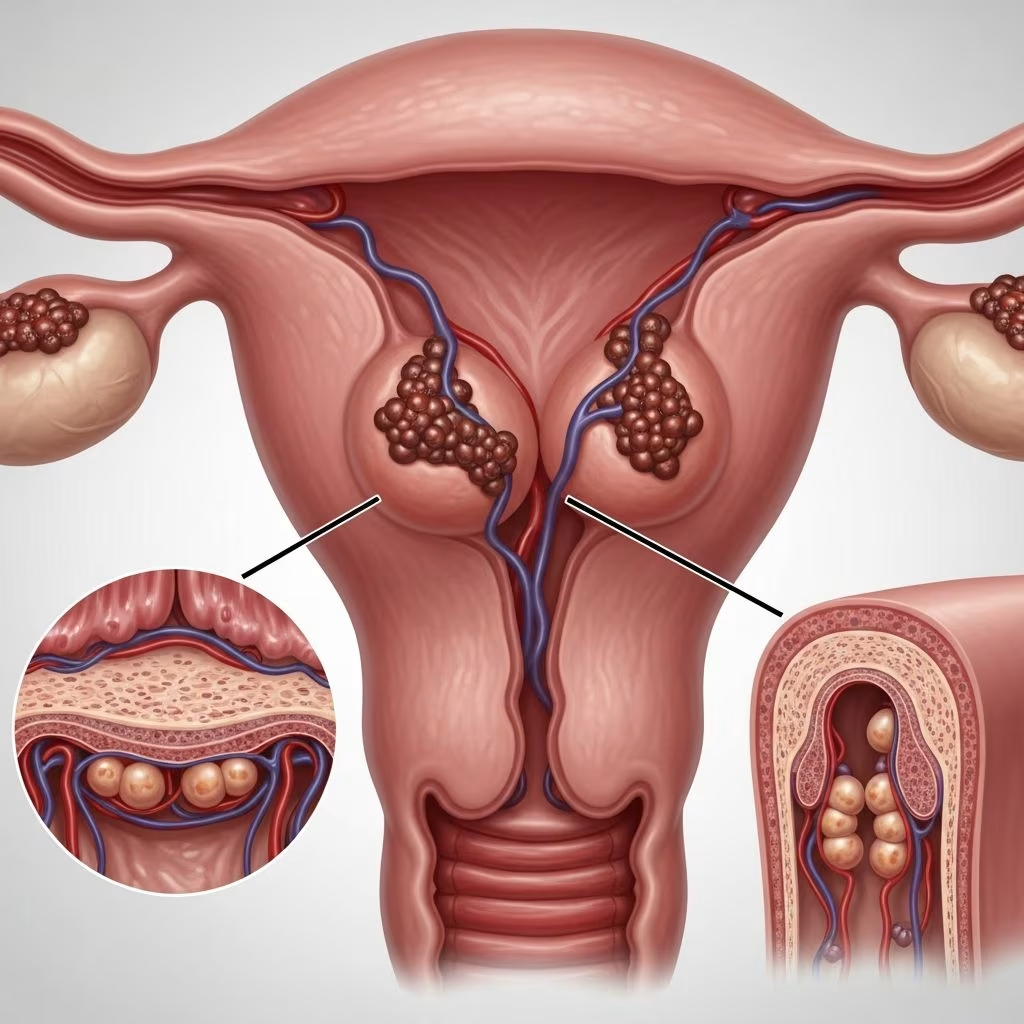
Subinvolution of placental sites (SIPS) represents a common postpartum complication in female dogs, where the uterus fails to return to its pre-pregnancy state promptly after whelping. This condition primarily manifests as extended vaginal bleeding beyond the typical postpartum period, often alarming owners but generally resolving without intervention. Young bitches, particularly those experiencing their first litter, are most susceptible, with the disorder linked to incomplete regression of placental attachment areas in the endometrium.
The Uterine Involution Process After Whelping
Following the birth of puppies, the canine uterus undergoes a critical phase known as involution, during which it contracts and regenerates to its non-gravid size and function. This process typically spans 12-15 weeks, involving the shedding of placental tissues, endometrial repair, and myometrial contraction. Normally, any vaginal discharge transitions from lochia—a reddish-brown fluid in the first few weeks—to clear by 6-8 weeks postpartum.
In SIPS, however, the sites where placentas attached to the uterine wall do not heal properly. Trophoblastic cells, responsible for nutrient exchange during pregnancy, persist and invade deeper layers, such as the myometrium, disrupting normal tissue remodeling. This leads to prolonged hemorrhage, with fresh blood appearing from the vulva for 8-13 weeks or even until the next estrus cycle.
Risk Factors and Prevalence in Canine Populations
SIPS predominantly affects bitches under three years old, especially after their initial pregnancy. Studies indicate it may occur in up to 20% of reproductively active females at some point. Key predisposing factors include:
- First-time motherhood: Immature uterine tissues in young dogs delay healing.
- Dystocia or uterine inertia: Difficult births strain the uterus, impeding involution.
- Premature parturition: Often tied to infections like E. coli or Brucella canis, leading to incomplete placental detachment.
- Nutritional deficiencies: Suspected roles of calcium-zinc shortages or subclinical hypoglycemia, though not fully proven.
- Obesity: Excess fat may contribute to hormonal imbalances affecting uterine repair.
All breeds appear equally vulnerable, and litters are typically normal in size and puppy health, distinguishing SIPS from more severe conditions.
Recognizing Clinical Signs of SIPS
The hallmark symptom is persistent sanguineous vulvar discharge extending past 6 weeks postpartum. This bloody flow, often bright red and sticky, contrasts with normal lochia’s serosanguinous nature. Affected dogs remain systemically healthy—no fever, lethargy, or appetite loss—unless secondary infections develop, altering discharge to purulent.
| Symptom | Normal Postpartum | SIPS Indicator |
|---|---|---|
| Vaginal Discharge Duration | Up to 6-8 weeks | 8-13 weeks or longer |
| Discharge Color/Consistency | Red-brown to clear | Fresh blood, sticky |
| General Health | Normal | Normal (unless infected) |
| Associated Signs | None | Possible secondary infection (pus) |
Owners often notice staining on bedding or fur, prompting veterinary consultation around 8-12 weeks post-whelping.
Diagnostic Approaches for Accurate Identification
Diagnosis begins with history-taking: confirming normal whelping, healthy puppies, and discharge persistence. Physical exams reveal no systemic illness, but vaginal speculum examination may show endometrial hyperplasia at placental sites.
Key Diagnostic Tools:
- Vaginal Cytology: Reveals syncytial trophoblast-like cells, confirming active placental tissue.
- Abdominal Ultrasonography: Detects thickened uterine horns with hypoechoic areas indicating unhealed sites.
- Uterine Biopsy/Histopathology: Gold standard, showing persistent trophoblasts invading myometrium (rarely needed).
- Culture/Sensitivity: Rules out infections like pyometra or brucellosis.
Differential diagnoses include endometritis, neoplasia, coagulopathies, trauma, and coagulopathies. SIPS is presumptively diagnosed via cytology and history, with definitive confirmation via biopsy.
Treatment Strategies: From Conservative to Surgical
Most cases (many spontaneous resolutions) require no treatment, as bitches remain clinically stable. Monitoring for 4-6 weeks post-diagnosis is standard, with rechecks to assess discharge cessation.
For prolonged or heavy bleeding:
- Medical Management: Prostaglandins (e.g., dinoprost) promote uterine involution; oxytocin aids contractions. Antibiotics if infection suspected.
- Supportive Care: IV fluids, blood transfusions for anemia in severe hemorrhage.
- Surgical Intervention: Emergency ovariohysterectomy (OVH) for life-threatening bleeding, though it ends breeding potential.
A case study documented full recovery in a Staffordshire terrier 5 weeks post-diagnosis without surgery, highlighting watchful waiting’s efficacy.
Prognosis and Impact on Future Fertility
Prognosis excels: most bitches recover fully, with no fertility compromise if symptoms resolve naturally. Recurrence risk drops with subsequent litters as uterine maturity improves. Puppies nurse normally, unaffected by maternal SIPS unless severe anemia intervenes.
Prevention Tips for Dog Breeders and Owners
While not fully preventable, strategies mitigate risk:
- Spay non-breeding females to avoid pregnancy-related issues.
- Ensure optimal nutrition pre- and post-whelping, focusing on calcium and zinc.
- Monitor high-risk young bitches closely during/after whelping.
- Avoid breeding immature females (<2 years).
- Prompt veterinary care for dystocia or premature labor.
SIPS poses no contagion risk.
Frequently Asked Questions (FAQs)
What causes prolonged bleeding after my dog gives birth?
SIPS occurs when placental sites fail to heal, common in young first-time mothers, leading to bloody discharge beyond 6 weeks.
Is SIPS dangerous for my dog or puppies?
Usually not; dogs stay healthy, and puppies are unaffected unless rare severe bleeding causes maternal weakness.
How long does SIPS discharge last?
Typically 8-13 weeks, sometimes until next heat; most resolve spontaneously.
Do I need to treat SIPS?
Often no—monitor with vet; treat only if heavy bleeding or infection.
Can my dog get pregnant again after SIPS?
Yes, with excellent prognosis if resolved naturally.
How is SIPS diagnosed?
Via history, cytology showing trophoblasts, ultrasound; biopsy confirms.
This condition underscores the importance of postpartum monitoring in breeding dogs. Consult a veterinarian promptly for any extended discharge to ensure timely differentiation from graver issues.
References
- Full recovery of subinvolution of placental sites in an American Staffordshire terrier bitch — H B Sontas et al. Journal of Small Animal Practice. 2011-01-01. https://pubmed.ncbi.nlm.nih.gov/21175624/
- Subinvolution of Placental Sites in Dogs — PetMD. Accessed 2026. https://www.petmd.com/dog/conditions/reproductive/c_dg_subinvolution_placental_site
- Sub-involution of placental sites (SIPS): An overview — Kumar et al. Entomology Journal. 2018. https://www.entomoljournal.com/archives/2018/vol6issue6/PartB/6-5-296-597.pdf
- Subinvolution of Placental Sites in Dogs — Vetster. Accessed 2026. https://vetster.com/en/conditions/dog/subinvolution-of-placental-sites
- Subinvolution of Placental Sites in Dogs: Veterinary Guide & Care — AskAVet. 2025. https://askavet.com/blogs/news/subinvolution-of-placental-sites-in-dogs-veterinary-guide-care-2025-%F0%9F%90%BE
- Successful Treatment for Subinvolution of Placental Sites — Wiley Online Library. 2014. https://onlinelibrary.wiley.com/doi/abs/10.1111/rda.12172



