

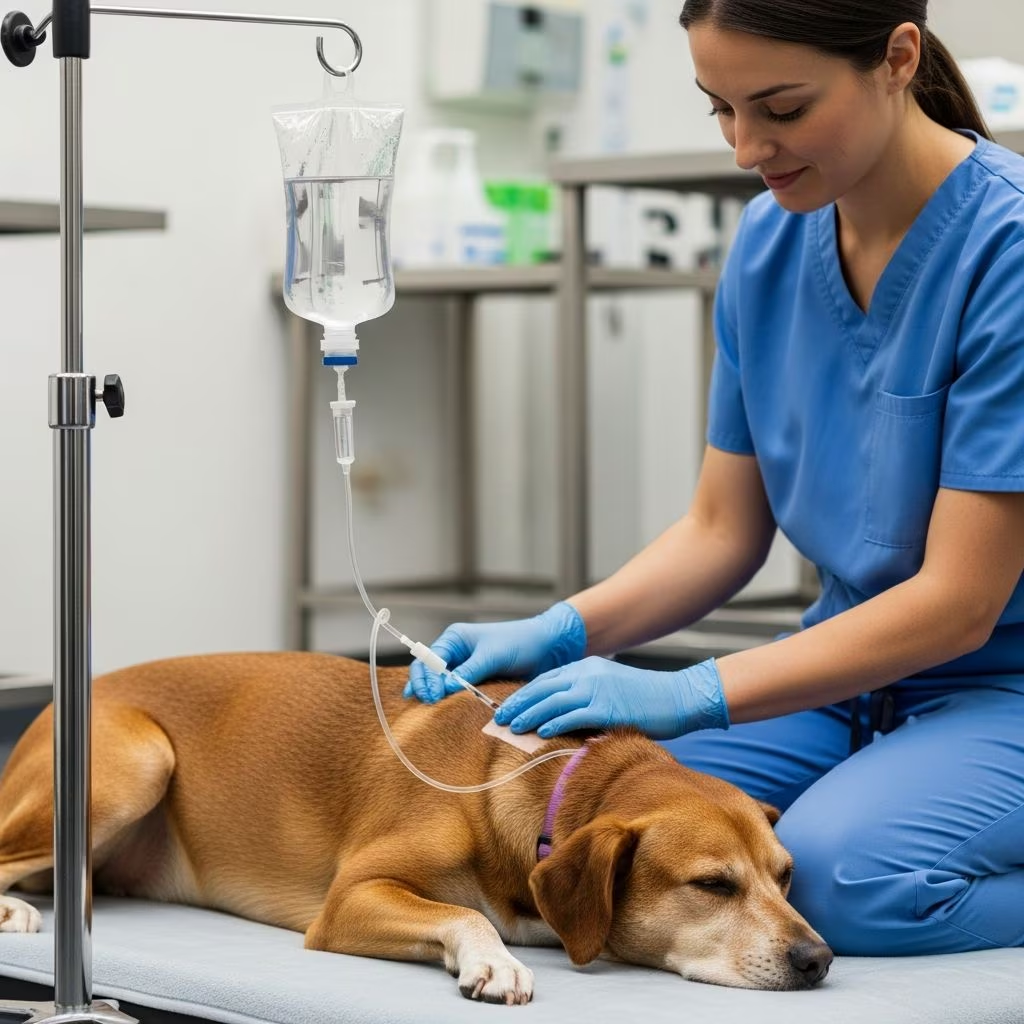
Understanding Subcutaneous Fluid Administration in Dogs
Subcutaneous fluid administration is a compassionate way to provide essential hydration and electrolytes to dogs suffering from various medical conditions. Unlike intravenous (IV) fluids, which require professional administration in a clinical setting, subcutaneous fluids can be given at home by pet owners under veterinary guidance. This method takes advantage of dogs’ naturally looser skin compared to humans, allowing fluids to be safely delivered under the skin layer where they are gradually absorbed into the body.
Many pet owners initially feel apprehensive about administering any treatment to their beloved dogs, especially injections. However, subcutaneous fluid administration is significantly simpler than most people imagine. With proper training from your veterinarian and a clear understanding of the technique, you can confidently provide this critical care in the comfort of your home.
Why Your Veterinarian Recommends At-Home Subcutaneous Fluid Treatment
Supplemental fluids provide tremendous benefits to dogs dealing with specific medical conditions. Home fluid therapy is most commonly recommended for dogs diagnosed with chronic kidney disease, also known as chronic renal failure. However, subcutaneous fluids can benefit dogs with various other conditions including dehydration, inability to drink sufficient fluids independently, and other debilitating diseases that compromise normal hydration status.
Senior dogs and those with certain medical conditions may require subcutaneous fluid therapy as a preventative measure to avoid becoming dehydrated. Your veterinarian will determine whether your dog is a suitable candidate for this treatment and will provide specific instructions regarding the frequency and volume of fluids needed based on your dog’s individual health status, weight, and laboratory values.
Two Methods of Administering Subcutaneous Fluids
There are two primary techniques for giving subcutaneous fluids at home: the fluid bag with drip set method and the syringe with butterfly catheter method. Each approach has distinct advantages depending on your dog’s needs and your comfort level.
The syringe method offers greater control over fluid administration, making it ideal for situations where precision is paramount. The bag method, on the other hand, is particularly suited for administering larger fluid volumes and typically works more quickly than the syringe approach. This guide focuses exclusively on the bag method, which has become increasingly popular among pet owners and veterinarians alike.
Understanding Fluid Requirements and Administration Rates
Every dog’s fluid needs are different and depend on multiple factors including their weight, physical examination findings, laboratory values, and specific medical condition. Your veterinarian will provide explicit instructions regarding the exact amount of fluid to administer and how frequently treatment should occur.
According to professional guidelines, doses for subcutaneous fluids typically range from 10 to 30 milliliters per kilogram of body weight. The volume administered at any single injection site should not exceed 20 milliliters per kilogram. The administration rate can be adjusted by varying the pressure applied to the fluid bag—squeezing it more firmly increases the flow rate, while reducing pressure slows the delivery. For most dogs, the entire subcutaneous fluid administration process takes approximately 5 to 15 minutes, depending on the total volume prescribed.
Preparing Your Supplies and Setting Up the Fluid Bag
Before beginning fluid administration, you will need to gather all necessary supplies. These include a sterile bag of isotonic saline solution or lactated Ringer’s solution (as prescribed by your veterinarian), a subcutaneous fluid administration set with tubing and needle, and alcohol pads for disinfection purposes. Having your pet’s medical records and veterinary instructions readily available is also recommended.
Step-by-Step Setup Instructions
The following steps will guide you through properly preparing your fluid bag and administration set:
Step 1: Remove Protective Packaging
Remove the fluid bag and the fluid drip set from their protective packaging. Keep these items clean and avoid touching the sterile components that will contact your dog’s body.
Step 2: Locate and Close the Line Lock
Find the line lock in the middle of the tubing, also called the fluid line. Close the line lock by moving the roller so it gently squeezes the tubing. On new fluid sets, the lock is usually set in the open position, so this step is essential to prevent fluid from flowing before you’re ready.
Step 3: Prepare the Fluid Bag Exit Port
Find the exit port on the bottom of the fluid bag. Pull the protective cover off this port to expose the hole that will accept the pointed end of the fluid set.
Step 4: Remove the Protective Cap
Remove the protective cap from the top (pointed) end of the fluid set, being careful not to touch the sterile tip.
Step 5: Connect the Fluid Set to the Bag
Push the pointed end of the fluid set into the open hole of the fluid bag, puncturing the bag as it goes in. Attach it firmly to prevent any leaks during fluid administration.
Step 6: Position the Fluid Bag
Hang the bag of fluids on a hook or stand at a level higher than your pet. This positioning allows gravity to facilitate the flow of fluids through the tube and into your pet’s body.
Step 7: Fill the Drip Chamber
Gently squeeze and release the bulb at the top of the drip set until the bulb chamber is approximately half-full of fluid. This chamber helps you monitor the flow rate of the fluids.
Step 8: Fill the Tubing
Remove the protective cap on the lower end of the fluid set. Open the line lock you closed earlier to fill the tubing with fluid from the bag. Ensure that all large air bubbles run out of the tubing and do not allow the lower end of the fluid set to touch anything that might contaminate it.
Selecting and Preparing the Injection Site
For most dogs, subcutaneous fluids are given over the skin of the back, anywhere between the right and left shoulder blades to the right and left hip area. The most commonly used location is between the shoulder blades, or 2 inches to either side of them. This area provides sufficient loose skin for fluid pocket formation and is easily accessible for most pet owners.
Importantly, you should alternate injection sites with each treatment session. By switching areas regularly, you prevent giving fluids in the same location repeatedly, which helps avoid tissue irritation and ensures optimal fluid absorption.
While some sources recommend sterilizing the skin with alcohol before insertion, this step is not usually necessary. Wiping alcohol on the skin does not truly sterilize it and the odor and feel of alcohol may aggravate or stress your dog. A simple wipe with an alcohol pad is generally sufficient if you choose to clean the area.
Inserting the Needle and Administering Fluids
The needle insertion technique is crucial for successful and comfortable fluid administration. Following these steps will help ensure proper placement and minimize your dog’s discomfort.
Step 1: Prepare the Fluids
Before insertion, confirm the exact amount of fluid your veterinarian recommended for your dog’s condition. If administering fluids in two locations on your dog’s body, prepare to give half the amount in each location.
Step 2: Lift the Skin
Gently lift the skin between your pet’s shoulder blades to form a triangle or tent-like structure. This maneuver creates a pocket that will accommodate the needle and fluid.
Step 3: Position the Needle
Lay the point of the needle at the base of the roll of skin (the bottom of the “tent”). Keep the needle horizontal and pointing toward the dog’s head, assuming your dog is in an upright or standing position.
Step 4: Insert the Needle
Advance the needle slightly forward while pulling the roll of skin towards the needle. This motion should be firm and steady, not shaky or timid. This coordinated motion places the point of the needle just under the skin in the subcutaneous space. Some resistance as you enter the subcutaneous space is completely normal.
Step 5: Release the Skin
Once the needle is properly positioned, release the roll of skin. The point of the needle should remain safely under the skin.
Step 6: Begin Fluid Flow
Grasp the line fluid lock in one hand. Move the roller upward to start the fluids flowing from the bag into your dog’s subcutaneous space.
Step 7: Monitor Fluid Administration
Watch the line of fluids in the bag as it descends to ensure you administer the recommended amount. The line starts at the highest amount marked on the bag (for example, 1000 milliliters) and decreases as fluids are delivered. If your veterinarian recommended 100 milliliters and you started at 1000 milliliters, you will stop when the line reaches 900 milliliters.
Step 8: Complete the Administration
When the correct amount of fluids has been delivered (based on your predetermined line marker or post-it note), clamp the IV line and carefully remove the needle from your dog’s skin.
Maximizing Comfort During Fluid Administration
Several practical considerations can significantly enhance your dog’s comfort during subcutaneous fluid therapy.
Fluid Temperature Matters
Ideally, fluids should be administered at approximately body temperature. While most dogs tolerate fluid administration quite well, unusually cold or hot fluids may cause discomfort. Warm the fluids in a water bath to increase comfort and improve the overall experience for your dog. Before administering fluids directly, test the temperature by placing your wrist against the fluid bag to ensure it’s warm but not excessively hot. Never refrigerate subcutaneous fluids before administration.
Post-Injection Care
After removing the needle, apply gentle pressure to the injection site for approximately 60 seconds to prevent fluid leakage. This simple step helps keep the fluids in the subcutaneous space where they belong.
What to Expect After Fluid Administration
As the fluids are running, a lump will form under the skin at the injection site. This is a completely normal phenomenon and should not alarm you. This pocket of fluid will be gradually absorbed into your dog’s body over the next few hours as it distributes throughout the subcutaneous tissue.
If absorption is slower than expected, gravity may cause the fluids to gradually migrate downward along the side of your dog’s body. In rare instances, fluids may even move under the skin of the front or rear legs. Do not be concerned about this occurrence. The fluids will still be absorbed completely, and your dog will experience no pain or discomfort from this migration.
In rare instances, vomiting may occur as a side effect of subcutaneous fluid therapy. Additionally, if your dog experiences any coughing or difficulty breathing that begins after subcutaneous fluid therapy, contact your veterinarian immediately.
Monitoring for Complications
Infection at the injection site is uncommon when proper technique is followed. However, you should contact your veterinarian if you observe persistent redness, swelling, pain, or discharge (beyond the temporary clear discharge that is normal after giving fluids) at the site where fluids were administered.
Disposal and Hygiene
After completing fluid administration, dispose of the needle properly in a designated sharps container. Never place needles in regular trash. Wash your hands thoroughly with soap and water after completing the procedure to maintain proper hygiene and prevent the spread of any potential pathogens.
Frequently Asked Questions
Q: How often will my dog need subcutaneous fluids?
A: The frequency of subcutaneous fluid administration depends entirely on your dog’s specific medical condition and your veterinarian’s recommendations. Some dogs require fluids daily, while others may need them several times per week. Your veterinarian will establish a treatment schedule based on your dog’s individual needs and response to therapy.
Q: Is it painful for my dog to receive subcutaneous fluids?
A: When proper technique is used, subcutaneous fluid administration should cause minimal discomfort to your dog. The needle insertion itself causes only brief, mild discomfort similar to a vaccination. Most dogs tolerate the procedure very well, and many become accustomed to regular treatments over time.
Q: Can I give my dog subcutaneous fluids in multiple locations?
A: Yes, if large volumes of fluid are prescribed, your veterinarian may recommend administering fluids in two separate locations on your dog’s body. In such cases, you would divide the total prescribed volume in half and give one portion at each injection site during the same treatment session.
Q: What should I do if I accidentally touch the sterile needle?
A: If you accidentally contaminate the needle or any sterile component of the fluid administration set, discard that set and use a new one. Using a contaminated needle increases the risk of infection and compromises the safety of the procedure.
Q: How long does it take to administer subcutaneous fluids?
A: The entire process typically takes between 5 and 15 minutes for most dogs, depending on the total volume of fluid being administered and the rate at which fluids flow through the tubing.
Q: Will the fluid lump under my dog’s skin go away?
A: Yes, the fluid pocket will gradually be absorbed into your dog’s body over several hours following administration. Complete absorption typically occurs within a few hours, though this timeframe may vary depending on your dog’s individual metabolism and circulation.
References
- Subcutaneous Fluid Administration in Dogs: Bag Method — Veterinary Care Associates (VCA) Hospitals. Accessed November 2025. https://vcahospitals.com/know-your-pet/subcutaneous-fluid-administration-in-dogs
- Administer Subcutaneous Fluids — Kindred Heart Animal Hospital. Accessed November 2025. https://kindredheartvet.com/administer-subcutaneous-fluids/
- How to Give Subcutaneous Fluids to Dogs and Cats — PetMD. Accessed November 2025. https://www.petmd.com/general-health/how-give-subcutaneous-fluids-dogs-and-cats
- Fluid therapy: Determining routes and rates of fluid administration — American Animal Hospital Association (AAHA). Accessed November 2025. https://www.aaha.org/newstat/publications/fluid-therapy-determining-routes-and-rates-of-fluid-administration/
- Considerations for Creating a Fluid Therapy Plan — University of Illinois Veterinary Medicine. December 2022. https://vetmed.illinois.edu/2022/12/04/considerations-for-creating-a-fluid-therapy-plan/
- Administering subcutaneous fluids to a dog — Veterinary Specialist Services, YouTube. March 14, 2022. https://www.youtube.com/watch?v=iBQzz862SA4



