

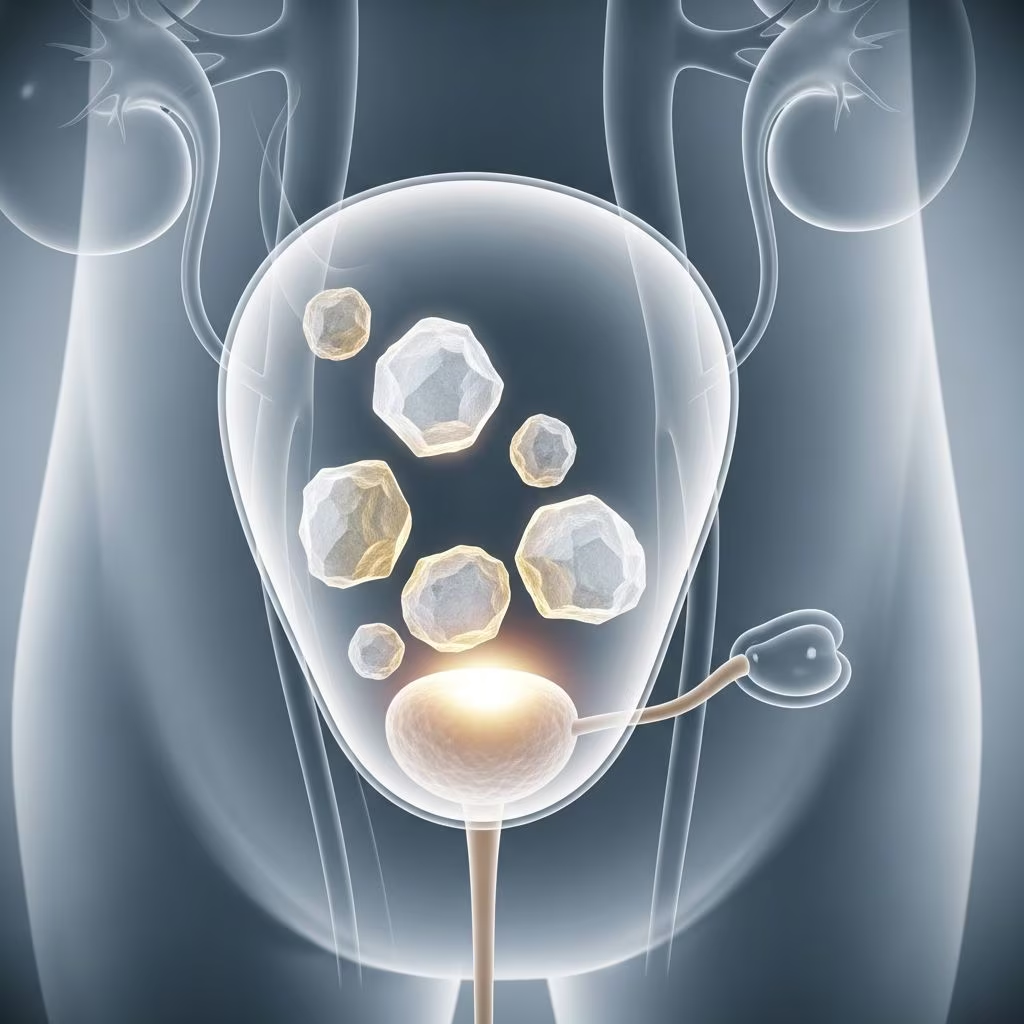
Understanding Struvite Bladder Stones in Cats
Struvite bladder stones are mineral deposits that form in a cat’s bladder, representing one of the most common urinary problems in feline medicine. These stones, also known as uroliths, are composed of magnesium ammonium phosphate and develop when specific conditions exist within the urinary tract. Unlike calcium oxalate stones, which are sharp and jagged, struvite stones are typically smooth in appearance. Understanding this condition is essential for cat owners, as early detection and appropriate treatment can prevent serious complications and ensure your cat’s long-term health and comfort.
Struvite stones are the most prevalent type of urinary stone observed in cats, accounting for a significant portion of feline urinary calculi cases. These stones develop when the urine becomes overly alkaline, creating an environment where magnesium, ammonium, and phosphate crystals can combine and form solid deposits. The condition can affect cats of any age, though it tends to occur more frequently in middle-aged and older felines.
What Causes Struvite Bladder Stones in Cats?
Several factors contribute to the development of struvite bladder stones in cats, with some being more significant than others. Understanding these causes can help pet owners take preventative measures.
Urine pH and Alkalinity
The most significant factor in struvite stone formation is urinary pH. When a cat’s urine becomes alkaline, with a pH above 7, struvite crystals begin to form and accumulate. This elevated pH creates the ideal chemical environment for mineral precipitation. Struvite stones begin to dissolve only when the urine pH drops to between 6.2 and 6.4, which is why dietary management focuses on acidifying the urine.
Urinary Tract Infections
Bacterial infections in the urinary tract frequently contribute to alkaline urine and subsequent struvite stone formation. Certain bacteria produce urease, an enzyme that breaks down urea and creates ammonia, which increases urine alkalinity. However, it’s important to note that not all cats with struvite stones have concurrent bacterial infections, as the condition can develop independently.
Dietary Factors
Diet plays a crucial role in struvite stone development. Cats consuming food with high levels of magnesium, phosphorus, calcium, chloride, and fiber are at increased risk. These minerals are building blocks for stone formation when combined with alkaline urine. Additionally, cats that don’t drink adequate water may have more concentrated urine, which increases the likelihood of mineral precipitation.
Genetic and Breed Predisposition
Genetic factors significantly influence a cat’s susceptibility to struvite stones. Siamese cats and other Oriental breeds appear to be genetically predisposed to developing struvite uroliths. This hereditary component suggests that some cats have metabolic characteristics that make them more prone to stone formation regardless of other environmental factors.
Sedentary Lifestyle
Indoor cats with limited activity may be more prone to struvite stone development. Physical inactivity can affect urinary function and contribute to urine stasis, where urine remains in the bladder longer, allowing minerals to crystallize.
Recognizing the Symptoms of Struvite Bladder Stones
Identifying struvite bladder stones early is important for preventing complications. While some cats show no symptoms and the condition is discovered during routine examinations, many cats exhibit noticeable signs.
Common Symptoms Include:
Urinary Symptoms: Straining to urinate (stranguria) is one of the most common signs. Cats may also experience increased frequency of urination, producing small amounts of urine each time. Blood in the urine (hematuria) is frequently observed and appears as a reddish or pink discoloration. Some cats may urinate outside the litter box, sometimes in unusual locations like sinks or bathtubs.
Behavioral Changes: Cats with bladder stones may show reluctance to jump or play, displaying decreased activity levels. Lethargy and lack of energy are common, and some cats experience a poor appetite or reduced interest in food.
Pain Indicators: Pain in the rear quarters or abdomen is typical, and affected cats may lick their genital area excessively due to discomfort. Some cats vocalize their pain while attempting to urinate.
Asymptomatic Cases
Importantly, some cats have bladder stones without displaying any apparent symptoms. In these cases, the condition is often discovered incidentally during routine abdominal palpation by a veterinarian or when radiographic imaging is performed for other reasons. This underscores the importance of regular veterinary check-ups.
Urinary Obstruction: A Medical Emergency
The most serious complication of struvite bladder stones is urinary obstruction, which occurs when a stone blocks the urethra and prevents the cat from passing urine. This is a medical emergency requiring immediate veterinary attention.
Signs of urinary obstruction include:
Repeated, unsuccessful trips to the litter box with little or no urine produced; straining to urinate without passing urine; severe abdominal pain and distension; yowling or crying while in or near the litter box; vomiting and nausea; loss of appetite; and lethargy. If untreated, a complete urinary blockage can lead to urine backing up into the kidneys, causing kidney damage. This condition can be fatal within days, so immediate emergency veterinary care is absolutely critical.
Diagnosing Struvite Bladder Stones
Veterinarians employ several diagnostic methods to confirm the presence of struvite bladder stones and rule out other conditions.
Physical Examination
The initial step involves a thorough physical examination. Your veterinarian will palpate the abdomen to assess pain levels and may detect bladder enlargement or discomfort. The examination helps determine the cat’s overall health status and whether immediate intervention is needed.
Radiography
X-ray imaging is the primary diagnostic tool for identifying struvite bladder stones. Since struvite stones are radiopaque due to their magnesium content, they appear clearly on radiographs. Multiple radiographic angles may be taken to determine stone size, number, and location within the bladder.
Ultrasound Imaging
Ultrasound provides additional diagnostic information, particularly useful when radiographs are inconclusive. Ultrasound can visualize the bladder wall, assess for inflammation, and detect stones that may not be clearly visible on X-rays. It’s especially helpful in evaluating cats where radiation exposure is a concern.
Urinalysis
Analysis of the cat’s urine is crucial for several reasons. Urinalysis determines urine pH, identifies crystalluria (crystal formation in urine), and reveals the presence of blood, protein, and other abnormalities. A urine culture is essential to detect any bacterial infections, as the specific bacteria present determines which antibiotic should be used during treatment.
Treatment Options for Struvite Bladder Stones
Treatment approaches vary depending on stone characteristics, cat age, overall health, and the presence of complications. Treatment can be medical, surgical, or a combination of both.
Medical Treatment and Dissolution Diet
For uncomplicated struvite stones, medical treatment using specialized prescription diet is often highly effective. The most commonly prescribed dissolution diet is Hill’s S/D (or similar veterinary therapeutic diets), which works by creating urine that is undersaturated with the mineral components that formed the struvite stones. This undersaturation literally causes the stones to dissolve gradually in the urine, which is then eliminated when the cat urinates.
How the Dissolution Process Works: The therapeutic diet modifies several aspects of urine chemistry. It reduces urinary magnesium, phosphorus, and ammonium concentrations while acidifying the urine to a pH between 6.2 and 6.4. This environment is inhospitable to struvite crystal formation and actively dissolves existing stones. The dissolution process is gradual but usually effective, with many cats experiencing relief from straining and hematuria symptoms shortly after beginning the diet.
Treatment Duration: The therapeutic diet should be fed for a minimum of 30 days after the stones are no longer visible on radiographs. This extended period ensures complete stone elimination and prevents immediate recurrence. Small, sterile struvite stones may dissolve within 1 to 2 weeks, while larger stones may require several weeks. Radiographic rechecks every 2 to 4 weeks monitor progress and confirm when stones have fully dissolved.
Antibiotics and Infection Management
If bacterial urinary tract infection is identified through urine culture, concurrent antibiotic therapy is essential. The specific antibiotic chosen must match the cultured organism’s sensitivity profile to ensure effectiveness. Antibiotics are typically continued for the entire duration of dissolution diet therapy plus 30 additional days after stones are no longer radiographically visible. Using the correct antibiotic based on culture results is critical to treatment success.
Supportive Care
Increasing water intake is an important supplementary measure. Improved hydration dilutes urine and promotes more frequent urination, both of which help prevent recurrent stone formation. Encouraging cats to drink more water can be achieved through multiple water bowls, cat fountains, wet food diets, or other methods that suit your cat’s preferences.
Surgical Treatment
While many struvite stones can be dissolved medically, some cases require surgical intervention. Large stones that cannot be dissolved, stones causing persistent obstruction, or cases where medical treatment has failed may necessitate cystotomy (surgical opening of the bladder) to physically remove the stones. Surgery has an excellent success rate and most cats recover quickly, though the procedure carries inherent surgical risks and carries a small risk of scar tissue that might predispose to future stone formation.
Other Treatment Modalities
Additional treatment options may include bladder flushing or voiding urohydropropulsion, where sterile fluid is introduced into the bladder to flush stones out through the urethra. Lithotripsy, which uses shock waves to break up stones, may also be considered in select cases, though this approach is less commonly used in cats than in dogs.
Long-Term Management and Prevention
After successful stone dissolution or surgical removal, preventing recurrence is crucial for long-term feline urinary health.
Maintenance Diets
Most veterinarians recommend long-term dietary management to prevent struvite stone recurrence. Hill’s C/D (Urinary Care) or similar maintenance diets are formulated to promote optimal urinary health and maintain appropriate urine pH. These diets can typically be fed indefinitely and are helpful in preventing feline lower urinary tract disease (FLUTD) development. Hill’s S/D can also be continued long-term in cats prone to recurrent struvite stones, as it is not protein-restricted and remains nutritionally complete.
Hydration Support
Maintaining adequate hydration is essential for prevention. Ensure fresh water is available at all times, consider using multiple water bowls placed in different locations, and discuss dietary modifications such as increased wet food consumption with your veterinarian.
Regular Monitoring
Periodic veterinary check-ups with urinalysis help detect early signs of crystal reformation before stones develop. Some cats may benefit from semi-annual urinalysis to monitor urine pH and crystalluria.
Frequently Asked Questions About Struvite Bladder Stones in Cats
Q: Can struvite bladder stones be prevented in cats?
A: While complete prevention isn’t always possible, particularly in genetically predisposed breeds, several strategies reduce risk significantly. Maintaining optimal urine pH through appropriate diet, ensuring adequate water intake, managing urinary tract infections promptly with antibiotics, and feeding high-quality, mineral-balanced cat food all contribute to prevention. Regular veterinary check-ups help identify early issues before stones develop.
Q: How long does it take for struvite stones to dissolve?
A: Dissolution time varies based on stone size and numbers. Small, sterile struvite stones may dissolve in 1 to 2 weeks, while larger stones may require several weeks. Most stones show significant dissolution within 4 to 12 weeks of appropriate dietary therapy. Radiographs every 2 to 4 weeks monitor progress accurately.
Q: Are male cats more prone to struvite stones than females?
A: Both male and female cats develop struvite stones, though male cats face greater risk of life-threatening obstruction due to their narrower urethra. While females can still develop stones, males experience more serious complications when obstructions occur.
Q: Is surgery always necessary for struvite bladder stones?
A: No. Many uncomplicated struvite stones dissolve successfully with medical management using therapeutic diet and appropriate antibiotics. Surgery is typically reserved for large stones, persistent obstructions, stones that fail to dissolve medically, or emergency situations involving complete urinary blockage.
Q: Will my cat need to eat prescription diet forever?
A: Many cats benefit from long-term prescription diet therapy to prevent recurrence, but this depends on individual circumstances. Some cats can transition to regular diet after a period of successful management, while others require permanent prescription diet. Your veterinarian will recommend the most appropriate long-term dietary plan for your specific cat.
Q: What should I do if my cat cannot urinate?
A: If your cat is straining without producing urine, displaying severe abdominal pain, vomiting, or crying in the litter box, this indicates a medical emergency. Contact your veterinarian or emergency animal hospital immediately. Complete urinary obstruction can be fatal within days if untreated.
References
- Feline Struvite and Calcium Oxalate Urolithiasis — Today’s Veterinary Practice. 2024. https://todaysveterinarypractice.com/urology-renal-medicine/feline-struvite-calcium-oxalate-urolithiasis/
- Urine Crystals and Bladder Stones in Cats — PetMD. 2024. https://www.petmd.com/cat/conditions/urinary/urine-crystals-and-bladder-stones-in-cats
- Bladder Stones in Cats: Symptoms, Causes, and Treatments — WebMD Pets. 2024. https://www.webmd.com/pets/cats/bladder-stones-cats
- Struvite Problems in Cats — Brit Veterinary Diet. 2024. https://britvetdiets.com/health-info/605-struvite-problems
- Bladder Stones in Cats & Their Symptoms — Montevista Veterinary Hospital. 2022. https://www.montevistavet.com/site/blog/2022/04/30/bladder-stones-cat



