

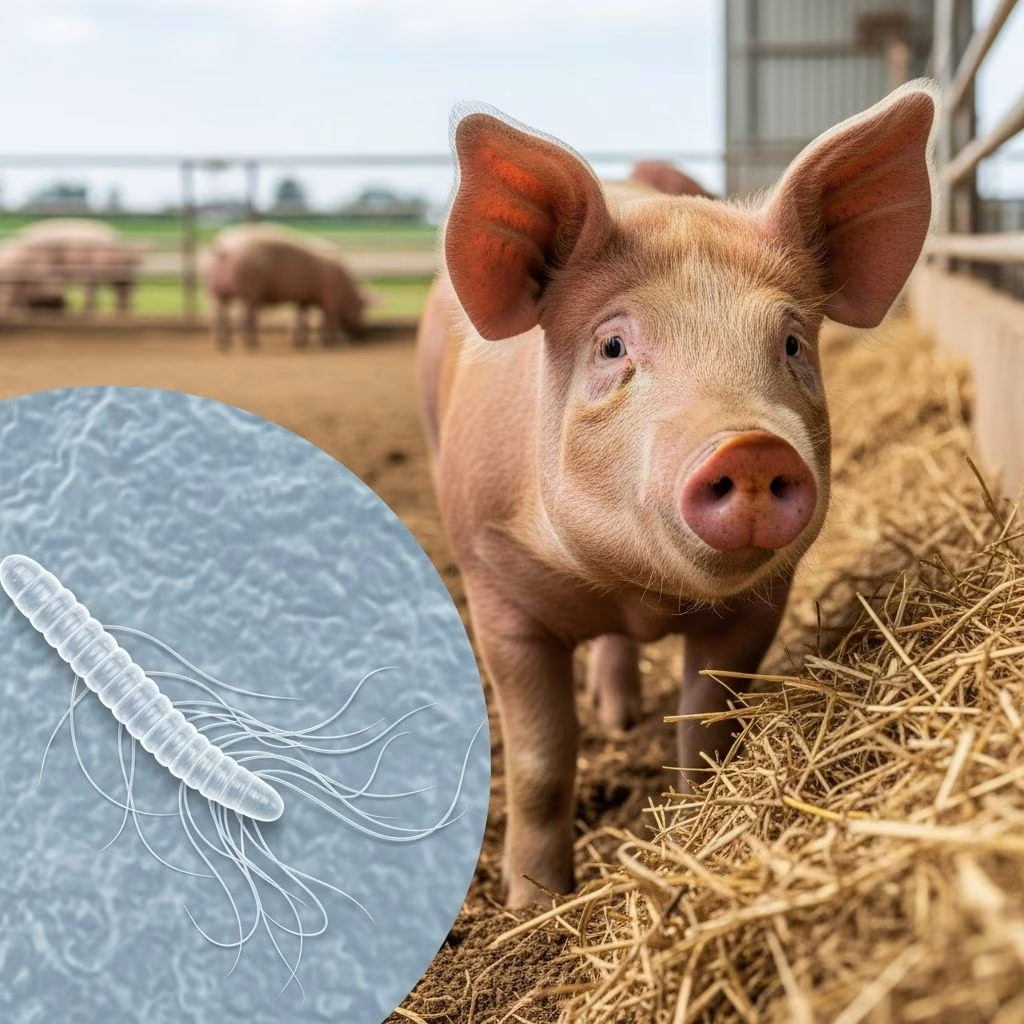
Strongyloides species represent a significant parasitic threat to young pigs, particularly those under three months of age, where they can trigger severe gastrointestinal disturbances and growth setbacks. These threadworms embed themselves in the small intestine’s mucosal layer, leading to potential fatalities in neonates.
Biology and Life Cycle of Strongyloides in Swine
The lifecycle of Strongyloides in pigs is remarkably adaptable, incorporating both parasitic and free-living phases that amplify its persistence in farm environments. Adult females, typically measuring 1-1.5 mm, tunnel into the epithelial layer at the base of intestinal villi in the small intestine. They produce larvae that can follow multiple pathways: direct development into infectious forms, free-living reproduction in feces, or transcolostral passage via the sow’s milk, which shortens the prepatent period to as little as 4-5 days.
This lactogenic transmission is a key concern in farrowing units, as it rapidly infects suckling piglets. The standard prepatent period for oral infections spans 7-9 days. Environmental factors like warmth and moisture favor larval survival and free-living generations, making contaminated bedding a persistent source.
- Parasitic phase: Females burrow in intestinal mucosa, laying eggs that hatch into larvae.
- Free-living phase: Larvae develop into adults in feces, producing more infective larvae.
- Lactogenic route: Larvae migrate to mammary glands, infecting nursing piglets.
Recognizing Clinical Signs in Affected Pigs
Infections often remain subclinical in light to moderate burdens, especially in pigs over three months, due to acquired immunity. However, heavy infestations in piglets under 3 months manifest as watery diarrhea, progressive anemia, unthriftiness, and emaciation. Piglets younger than 2 weeks face the highest mortality risk, with death resulting from dehydration and secondary complications.
Sows typically show no signs but serve as reservoirs through milk transmission. Immunity develops post-infection, protecting older stock, though stress or poor nutrition can reactivate burdens.
| Age Group | Common Signs | Severity |
|---|---|---|
| <2 weeks | Diarrhea, weakness, death | High |
| 2 weeks – 3 months | Diarrhea, anemia, poor growth | Moderate to High |
| >3 months | None or mild | Low |
Diagnostic Approaches for Accurate Detection
Confirming Strongyloides requires fecal examination, ideally using the Baermann technique on fresh samples to detect characteristic L1 larvae, which are slender and measure about 0.25 mm with a notched tail. Direct smears or flotation may miss low-level infections due to larval motility preferences.
Post-mortem findings include adult worms in intestinal tunnels and epithelial disruption. In live diagnostics, repeated sampling is essential, as larval shedding fluctuates. Differentiate from coccidiosis or bacterial enteritis via larval morphology.
Effective Treatment Protocols for Swine
Benzimidazoles like fenbendazole or oxibendazole, fed continuously for days around farrowing, target intestinal stages and curb milk transmission. Ivermectin (0.2 mg/kg) or doramectin effectively kills adults; sow treatment 1-2 weeks pre-farrowing minimizes lactogenic spread.
For piglets, oral ivermectin or fenbendazole regimens are adapted from small animal protocols: fenbendazole at 50 mg/kg daily for 3-5 days, repeatable if needed. Combine therapies for stubborn cases, monitoring via fecal checks. Supportive care includes fluids and electrolytes for diarrheic piglets.
- Benzimidazoles: Feed additive pre- and post-parturition.
- Ivermectin: Single dose to sows; repeat in litters.
- Fenbendazole: 50 mg/kg/day for 3-14 days based on severity.
Prevention Strategies to Safeguard Herds
Hygiene is paramount: daily pen cleaning, dry bedding, and all-in-all-out systems disrupt larval cycles. Raise sows in parasite-free environments pre-breeding to eliminate carrier status. Strategic deworming timed to farrowing reduces transmission.
Vaccination is unavailable, so integrated management—combining sanitation, medication, and monitoring—yields best results. Quarantine new stock and avoid overcrowding.
Economic Implications for Swine Producers
Unchecked Strongyloides leads to culling, veterinary costs, and growth losses, hitting farrow-to-finish operations hardest. Piglet mortality and weaning weight drops compound feed inefficiencies, with outbreaks potentially costing thousands per barn.
Proactive control boosts average daily gains by 10-20% in vulnerable groups, enhancing profitability.
Zoonotic Risks and Public Health Considerations
While primarily porcine-adapted, Strongyloides ransomi poses low zoonotic risk to humans, unlike S. stercoralis in dogs. Farm workers should wear PPE during cleaning to avoid skin penetration by larvae. No direct human cases from swine strains reported.
Research Updates and Future Directions
Ongoing studies explore resistance patterns and novel anthelmintics. Genomic sequencing aids vaccine development prospects. Recent guidelines emphasize multi-drug approaches for hyperinfective scenarios, though rare in pigs.
Frequently Asked Questions (FAQs)
What causes Strongyloides outbreaks in pig farms?
Contaminated farrowing pens, poor hygiene, and sow-to-piglet milk transmission drive epidemics, especially in humid conditions.
Can older pigs get sick from Strongyloides?
Rarely; strong immunity prevents clinical disease, but they can harbor and transmit larvae.
How soon after treatment should I check feces?
Weekly for 2-3 weeks post-treatment to confirm clearance.
Is ivermectin safe for pregnant sows?
Yes, when dosed 1-2 weeks before farrowing to suppress larval milk excretion.
What’s the best way to prevent reinfection?
Strict sanitation, dry environments, and timed deworming programs.
References
- Strongyloides sp in Pigs – Digestive System — Merck Veterinary Manual. 2023. https://www.merckvetmanual.com/digestive-system/gastrointestinal-parasites-of-pigs/strongyloides-sp-in-pigs
- Strongyloidiasis — Companion Animal Parasite Council. 2025-07-02. https://capcvet.org/guidelines/strongyloidiasis/
- Strongyloides sp in Small Animals – Digestive System — MSD Veterinary Manual. 2023. https://www.msdvetmanual.com/digestive-system/gastrointestinal-parasites-of-small-animals/strongyloides-sp-in-small-animals
- Manifestations, diagnosis, and treatment of Strongyloides stercoralis infection — PubMed. 2007. https://pubmed.ncbi.nlm.nih.gov/17940124/
- Clinical Care of Strongyloides — Centers for Disease Control and Prevention (CDC). 2023. https://www.cdc.gov/strongyloides/hcp/clinical-care/index.html
- Swine Gastrointestinal Parasites — Ohio State University Animal Sciences. 2025. https://ansci.osu.edu/sites/ansci/files/imce/files/Factsheets/Swine%20Gastrointestinal%20Parasites%20AS-SW-14-25.pdf



